Cosmos
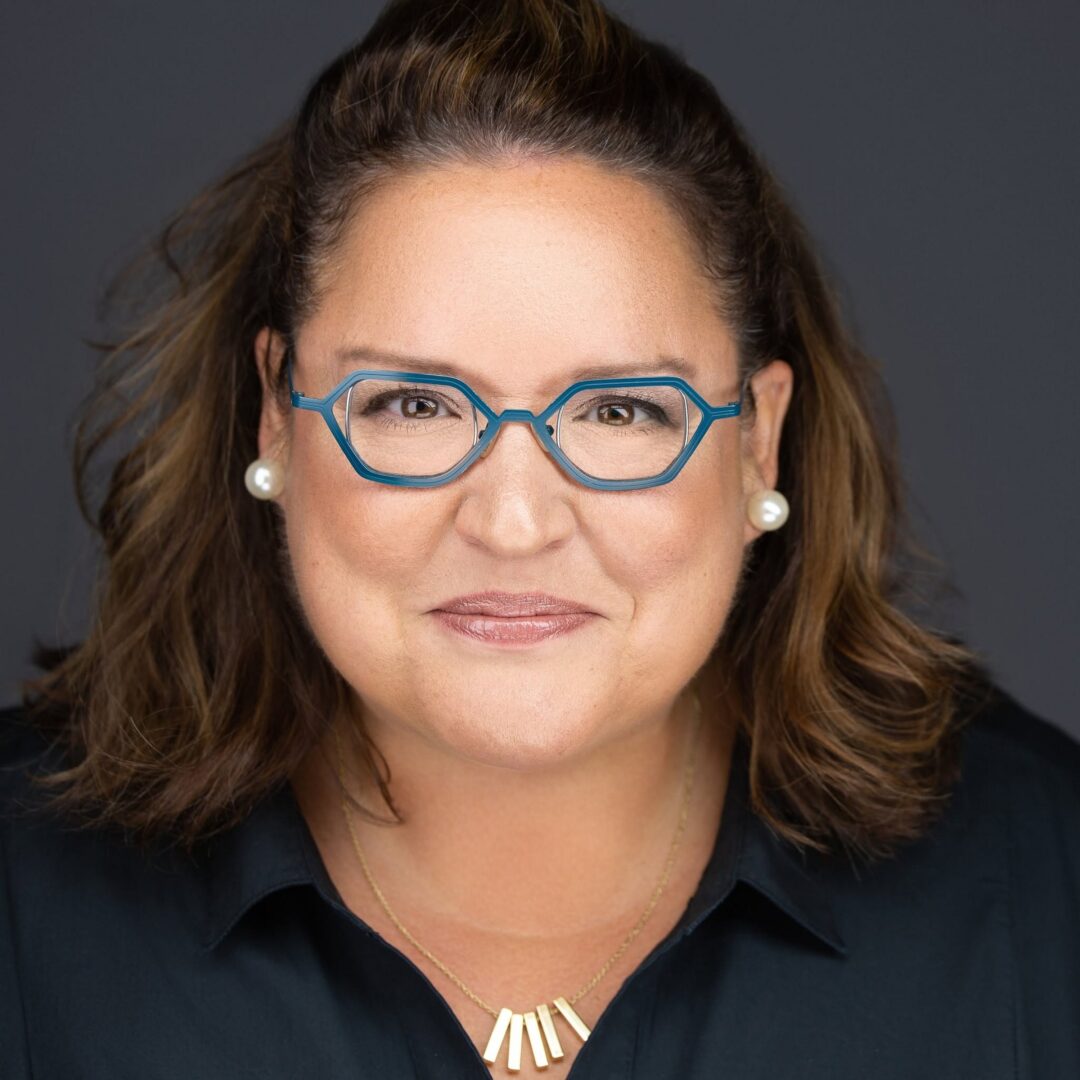
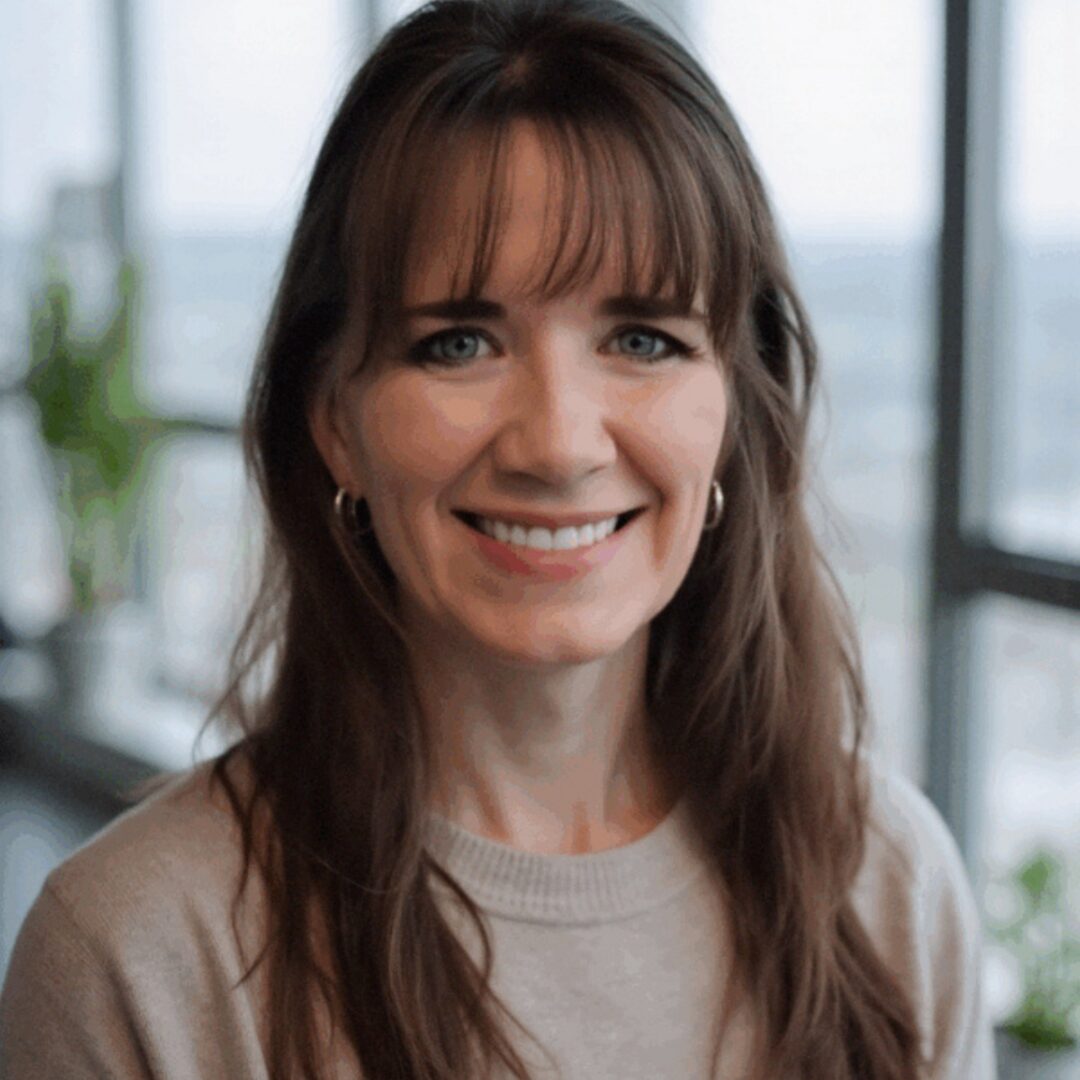
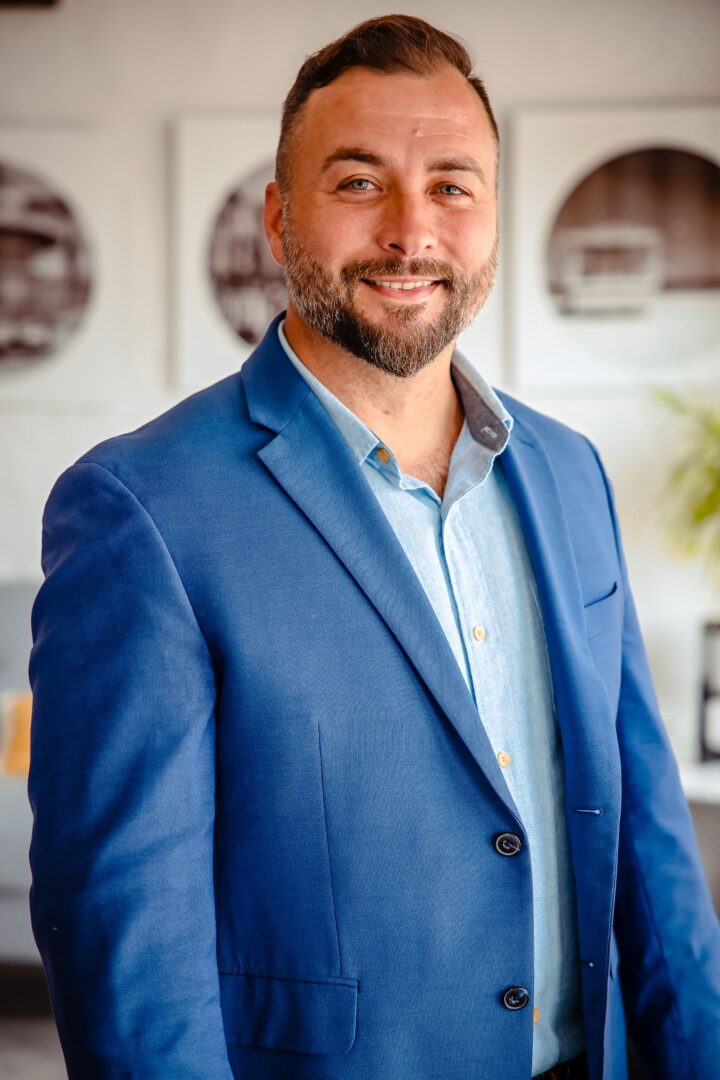
Welcome back to the show, my fellow extraordinary Americans. Our guest today is Clint Harris. Clint is a professional real estate investor and entrepreneur, and handles capital raising and investor relations at Nomad Capital. He owns Going Coastal Property Management and hosts the Truly Passive Income podcast.
With a background in medical sales, Clint built a lucrative multi-family real estate portfolio that converted into high-performing Airbnb Properties. Frustrated with management services, he founded Going Coastal Property Management.
For diversification, Clint transitioned to self-storage investments, eventually joining Nomad Capital as a general partner and buying old big-box retail buildings, converting them into self-storage. Having raised capital for over $150 million in stabilized assets, he aims to inspire financial independence for investors in both location and time. He’s an extraordinary American, and I’m glad and honored to have him on the show. Clint, thank you so much for taking the time to be here.
Clint Harris:
Yeah, thank you for having me. I’m looking forward to the opportunity to connect. This is going to be great.
Cosmos
No, for sure, Clint spent 16 years working in cardiology before becoming an investor.
So, Clint, can you tell me, the audience, a little bit more about yourself, your background, and your story?
Clint Harris:
Yeah, absolutely. I’m 43 years old. I’ve been married for 14 years to my beautiful wife, Abby. We have two little boys, six and two years old. I spent 16 years working in cardiology, implanting pacemakers and defibrillators in medical sales. And that’s kind of a young man’s game.
And it’s got a high ceiling in terms of income, but it will wear you down. Being on call nights and weekends. Heart problems are not Monday through Friday, 9 to 5. So for 14 of those 16 years, my wife and I were investing in real estate, single-family homes, and then small multi-families and some flips, and converting to Airbnb, and then eventually found our way towards a more passive strategy.
And now, these days, we focus on raising capital from our investor partners, buying old, vacant Kmart buildings, grocery stores, and warehouses, and converting them into climate-controlled self-storage facilities across the Southeast. You transitioned from medical sales to real estate investing to self-storage.
Cosmos
Wow. So you’ve gone through quite a journey, like you were in the medical field, and then you transitioned to real estate investing and Airbnb properties, and finally self-storage.
So what was your strategic vision like from your time in medical sales to where you are now? And, like, did it evolve?
Clint Harris:
It did. That’s actually a really great question. And it did evolve. And most of the reason it evolved is that I did everything wrong. At first, my entire focus was on financial independence. How do I reach financial independence and financial freedom? And I think that’s become a buzzword that a lot of people talk about. And the first time we built up a small portfolio of nine single-family houses, before we figured out it was a really slow way to get ahead.
And so we offloaded those and did some 1031 exchanges into small multi-families, which we converted into Airbnbs at the beach. And I couldn’t find a management company to manage them, so we started one. We built, and spent two years building, a management company that manages our 14 Airbnbs and another 75. But the challenge was that when I finally replaced my income from working in surgery at the hospital, I achieved the financial component, but I still had to be in the same area. I couldn’t take a month or two off, which is the goal. Like I still had to be in the same location, especially during peak season.
And I’d still essentially be on call or have dedicated time even to manage the managers when I wasn’t at the hospital. And I realized I did it all wrong because I was focused on financial independence. What we’re really looking for, if you get down to brass tacks, is a combination of financial time and location independence, because that creates independence of purpose. The independence of purpose is what we’re looking for, right?
That’s where you can go, when you want, and do what you want. You can take your time to focus on what’s important to you. It’s going to look different for everybody. Hopefully, you’re doing something that has a positive impact on your family, on the people around you, and on your community. But ultimately, it could be building things, it could be going skiing, it could be getting drunk on the beach. It’s going to look different for everybody. But just that financial component is a really shallow goal.
A lot of people hit that before they realized they did it wrong, which is what happened to me. And that’s when I was like, okay, let’s go back to the drawing board here. Let me focus on an asset class that is not so laborious and such an active investment strategy. Like, I think Airbnb is probably one of the most active investment strategies in real estate, maybe right up there with wholesaling and flipping. Wholesaling and flipping are very transactional. You get paid once, and the day you stop working is the day you stop getting paid. And in that scenario, you’re constantly trading time for money.
And if you want to break that cycle. It really requires a dedicated focus on independence of purpose, which is the combination of financial time and location freedom. How do you define time independence versus financial independence from your perspective?
Cosmos
I mean, this is a very interesting topic that we were just talking about because, yeah, you’re right, a lot of people talk about financial independence, but you. You can never. You can get back your money. If you lose your money, you cannot get your time back. But from your perspective, Clint, how do you define time independence versus financial independence?
Clint Harris:
For me, like, everybody’s got an idea of what their number is, of what they need to hit in terms of income. I actually challenge people to say the number is not what they think it is. It’s. If you get to the point where you replace your income and decide to leave your job behind, you usually end up with more time on your hands, and you often spend more, especially if you’re traveling.
So whatever you think your number is, it’s probably 30-40% higher. And I wouldn’t give up on your job until you’ve got that secured. But the key is making sure that, as you build your financial freedom or independence, it’s not at the cost of location independence or time independence. If you. Suppose you have a set amount of time to spend. In a place or in front of a computer screen to make your business work, then you’re really just focusing on one of those three components, and you kind of have to focus on all of them.
Usually, you have those three components, and you get to choose two of them. If you want all three, you really have to be very, very intentional. But I do think that because of where we are right now, with the rise of AI and the ability to network and educate ourselves, we have more opportunity now than we ever have. It’s easy to get caught up in the doom and gloom of political turmoil, violence, or what’s happening in the world. But the reality is, we have more opportunities now than we ever have. But we also have more noise.
There’s more noise and fluff in the world than there ever has been. And so it can be a challenge to cut through that to the resources you need to help your business. But the key is to make sure you’re focusing on all those time, financial, and location independence factors together if you really want to achieve that freedom of purpose. And that means if you’re going to focus on a laborious, very active strategy. You’d better be really good at systems and automation to put the pieces in place so that someone can dedicate time to it, and it doesn’t have to be you. You were managing Airbnb properties, and then you shifted to self-storage.
Cosmos
So, just to elaborate on this, right, so I know you were doing Airbnb properties, and then you shifted from that strategy to doing self-storage.
What was the catalyst that led you to do this? And how did it affect, like, your goal of attaining time independence?
Clint Harris:
Yeah, the catalyst was burnout. The catalyst was, you know, I was operating at the hospital, implanting devices. I was on call and running clinics. And I was also buying small multifamily properties on the side. Duplexes, triplexes, and quadplexes, when converted into Airbnb properties, were 3.5 to 4x the gross potential rental income. It’s a great strategy, but the one thing about Airbnb that you can’t control is how many other people are doing it around you.
When I bought my first property in my market, there were 1128 active listings. And this past summer, the summer before this last, there were 3,600 active listings. Now it’s down to 32 because a lot of those people bought wrong, interest rates hurt people, and some of that’s going away. But the reality is that the strategy is very aggressive, and you can’t control how much competition is entering the space.
So when I realized I had built that out the wrong way, I decided to get some wise counsel. And I identified a small group of real estate investors who were all quite a bit older than me, quite a bit more successful than me. And I went to them individually and asked, “Hey, you know, you seem to be living the life that I’m looking for.” You have the freedom to go to these places, do these things, and take care of your family in this meaningful way. What are you in?
And, how does that look? And even after a lifetime of real estate investment strategies, they typically ended at one of three places. And it was hard money lending and note lending, and I didn’t have the seven figures to get started there in a meaningful way. It was mobile home parks.
And remember, I just told you I was burned out because I had a bunch of Airbnbs and multiple tenants in every property every month, and it was wearing us out. And then, number three was self-storage. And I said, ” Wait a minute. Self-storage? Let me get this straight. No one’s living in the property. There’s no kitchen, there’s no bathroom, and you’re renting someone a box of air. Got it. That’s the one for me. And so that is what drove me to look into the industry. What caused us to jump into the industry was what we’d already been doing: buying underperforming properties in one asset class and then converting them to a different asset class with bad long-term tenants.
And over time, we would move the tenants out, renovate the property, stage it, and convert it to an Airbnb, which would 3 1/2 to 4x the gross potential rental income and the property’s value based on the net operating income.
So the value of the property shoots up, allowing you to recapitalize via a refinance if you’d like, and continue to scale. It’s, it’s brrrr. The brrr strategy is where you buy a property, renovate it, rent it out, refinance it, so you get all your money back, and you can continue to reinvest and do it again. And you can use the same money over and over and over. That same concept applies to self-storage. If instead of building a 90,000 square foot building for $8 million, we can buy a 90,000 square foot Kmart for $1.5 million that’s been out of business for 12 years, and it includes the land and the parking lot, we can convert that for two and a half to $3 million. We’ll be into the whole project for 4.5 to 5 million, which would have cost us close to 8 million just to build the building, plus the cost of the land.
So if we wanted to do that construction, it would take us 2.5 to 3 years. But instead, we can buy the old, nasty building, convert it into storage in 10 to 12 months, and we’ll have half the cost basis of the construction, including the cost of the land.
So it’s basically self-storage. That is half the price of ground-up development and in less than half the time by converting an old asset. Because what you’re doing is you’re buying a property that’s basically worthless. There’s, it’s, it’s not. But the value attributed to the property is based upon what somebody is willing to pay for it. We can buy these buildings for $20 per square foot, while the replacement cost might be $130 per square foot.
Now, after we buy it for 20 bucks a square, we still have to put $40 to $45 per square foot into it, but we can end up owning these properties for $65 per square foot, including the cost of the land, versus buying the land and then building on top of it for $130 per square foot.
So that’s what got us into it. And typically, our projects now look like we buy a building for 2 to 3 million. We put 2 to 3 million into it to stabilize it as a self-storage facility. They’re going to appraise for 12 to 15 million, sometimes M17 million. We can do a refinance, pull all the money out to pay the investors, and have a few million left over for Nomad. We can move on to the next one.
And right now we’re at 150 million in assets under management, with two more under construction and two more under contract. Adaptive reuse or cap-rate arbitrage is an interesting real estate investment strategy.
Cosmos
Well, Clint, this is really interesting because you mentioned hard money lending and mobile park homes, and those are also pretty effective. But self-storage is something that we do relatively less of. Like, normally, when you think of real estate investing, they talk about multifamily homes and Airbnbs.
This is a very interesting strategy, and my question is: what lessons or revolutions did you have when you realized this was working, compared to the other strategies you were using before?
Clint Harris:
That’s a great question. I think the reason this strategy works for us is that we’re utilizing our individual talents. Like my partners, the founder of Nomad has been doing construction since the 90s and built their first self-storage in OH6. They have done conversion projects in the past. I have also done small conversion projects. And then I have a connection to the medical community, a background in education on new products and strategies, and a high-net-worth community that I’ve been involved with for 16 years.
And so we essentially took my partner’s ability to develop and create value out of thin air, by doing the conversion, and then my ability to connect with high net worth audiences and give them something that they are struggling to find other places, which is a way to create value that doesn’t require their time. You still have to have three things to have success with any level of real estate investing. It’s time, experience, and money. You don’t have to have all of those things, but you have to have some combination. So when we started syndicating, which is just where you’re taking a pool of Money from a group of investors to take on a project larger than what any one individual could accomplish on their own. And the whole is greater than the sum of its parts.
And after you go full cycle, everybody shares in the profits; we’re taking capital from our private pool of investors. We are partnering with our time and experience to convert an old Kmart building, grocery store, warehouse, boot factory, furniture store, whatever it may be, into climate-controlled storage, which maximizes the net operating income. And keep in mind what we’re doing here, it’s called adaptive reuse or cap rate arbitrage. We are buying something not on a cap rate. We’re buying it at a dirt-cheap price per square foot and converting it into a different asset class: storage. When you convert it to a different asset class, you change the formula used to value the asset. Now it’s valued as a self-storage facility, which is the property’s net operating income divided by the market’s going cap rate, so there’s a multiplier.
Here’s something really important for your investors. Let’s say you’re. Even if you’re flipping houses, you don’t make your money when you sell it. You don’t make your money when you renovate it. You made your money when you bought it dirt cheap because it smelled like dogs and cats. It’s the same kind of thing.
But the difference is in a flip property. How do you establish the after-repair value of the property? It’s a residential property, so the value is the bricks and the sticks, plus what the neighbor paid for theirs. It’s a comp-based analysis, which means that if you’re in a neighborhood, the average price per square foot of similar homes with similar bedrooms, bathrooms, and condition is what will determine the price per square foot. That needs to be applied to your property. In a commercial, the value is not compared to the other buildings around you. The value is based on the net operating income.
So when you take a giant big box like an old Kmart, and you chop it up into 800 little boxes, and you rent them out. You maximize the price per square foot, and the net operating income shoots up. Then, as that net operating income reaches a cap rate multiplier, it significantly increases the property’s value. And even though that building used to make sense for the people of that community within a 1-, 3-, 5-, and 7-mile radius, with great visibility and a high vehicle traffic count, they used to drive to that building to buy their home goods. And even though Amazon and Walmart have put Kmart out of business, the location is still a great one for those same people in that community to drive back to the same building and sometimes pay us to put the same stuff right back inside it. It’s just an inverse flow in that microeconomy, really changing what the asset is. We didn’t change the location or the exterior structure, but we changed what the asset is, and that changes the formula, which drastically increases the value. And that’s what allows us to recapitalize, pay out the investors and ourselves, and all move on together to the next project.
Cosmos
So, Clint, connected to what you just said? On a macro scale, like a lot of people and economists believe that next year or within a five-year timeline or less, there’s going to be a recession, meaning a depression. Right.
So many people are considering real estate investing as a strategy to achieve financial freedom. How do you think the strategy that you have would be affected if the real estate, like there’s a bubble burst or something like that, in the
Clint Harris:
It’s a great question, and I can relate to many people’s fears. I’ll tell you the absolute truth. A recession is coming now. Nobody knows if it’s happening tomorrow, a year from now, or five years from now. But a recession is always coming. It’s happened over and over in history. It will continue to happen throughout history. For instance, at the end of 2022, our interest rates just shot up. They were at 2.85%, and they shot up to almost 8%, and the interest rate rose higher and faster than ever before. And in commercial real estate, the areas that got hit the hardest were office, which was still recovering from COVID; people working remotely; and multi-family, and basically anybody that used variable-rate debt. You had variable-rate debt, and all of a sudden, it shot up. The cost of your debt skyrocketed, bringing down many projects. Luckily, these are smaller projects for us. We’re not using any variable-rate debt.
So we’re protected there. However, you know what happened after that? In 2023, 2022, 2023, and the first half of 2024, the housing market froze. So the number one driver for storage is people moving, right? Death, divorce, downsizing, and displacement are the drivers of relocation. Now, death and divorce are still always happening. But downsizing and displacement really slowed. And when the interest rate shot up, if you had a $500,000 house and you have an interest rate of less than 4% on your house, which is what 58% of the population in the country has, and you want to downsize to a house, that’s $400,000 house, so the house is $100,000 less than where you live right now. Your monthly payment would still be 1200-1500 dollars more per month than if you just stayed put.
So, in terms of self-storage, we have been in a recession for the last two to three years, and the data clearly shows that we’re finally pulling back out. This past Wednesday, we got our second rate cut, 25 bips. It should have been 50; it should have been three months before, but neither here nor there. Even during a really tough time when office and multifamily have struggled, self-storage, once again, has remained fairly inflation-resistant, just like it was through 2008, when we had a massive market correction.
And now we know pandemic-resistant and inflation-resistant. The only thing that can change the rates faster than a month-to-month self-storage lease is a hotel or hospitality setting, where you can literally change the rates on a night-to-night basis. M commercial, where people have a two-year lease or a ten-year triple-net lease. There are some escalators built in there somewhere. But inflation resistance is navigated by being able to adjust your pricing rapidly. And that works well with storage because it’s month-to-month.
So a recession is always coming. One of the tricks is to be careful about market saturation. And there’s a widespread misconception that self-storage is overbuilt. And it very well may be, in parts of the country. But you know what really matters for self-storage? 7 miles. 7 miles is about as far as people will drive. You’re not driving 15 miles to the other side of your town to get a unit that’s $25 cheaper per month. It’s about proximity. The other thing is that the younger generation now is actually using more storage than anyone else.
You typically would think it’s the baby boomers. It’s not because the younger generation, unfortunately, can’t buy houses. They are renting. When you rent, you rent based on the square footage that you get. When you buy, you get an attic, a basement, you know, depending on where you are, a garage. When you’re renting, it makes more sense for people to rent a smaller space and get a climate-controlled storage unit as an extension of the closet or garage, instead of paying for an extra bedroom in a condo they’re not going to really need. And they just want to store their winter clothes.
So there’s some adaptive reuse happening on the consumer side as well, and we have to make sure we’re listening to it. And if you’re going to do storage, there’s a big difference these days between the low slung metal buildings with baby boomers in there two to three times a year, and the what we are doing, which is safe, secure, well lit, easy access, climate controlled storage that is centrally located with good visibility and traffic count, with QR codes on the door and touchscreen kiosks.
And everybody in town knows where the old Kmart is or the old textile mill, and you’ve got great residential density around there. And we’re moving into the small secondary in towns, picking up that building, converting it into storage in 12 months. Even if the competition can find the 5 to 7 to 10 acres to build a facility, it’s typically going to be really expensive or farther out of town. And the average right now is 2 years and 10 months for entitlement permitting, engineering, and construction. And at the end of that time period, the facility is empty, and now they have to fill it up. Our biggest advantage, in my opinion, is not the price per square foot; it’s the speed. We can move into a secondary or tertiary market across the Southeast, snap up an old big building that we know will work based on a feasibility study, and convert it in a year. We’re at half the basis of any other competitor, and we’re doing it in less than half the time.
A recession is always coming. So I would avoid anything right now.
Cosmos
Wow, Clint. I mean, there’s so much to like, get into from here. But like what you talked about, recession and how to beat it, is so relevant because a lot of people in this audience want to get into real estate basically, and they’re looking for a macro strategy, right? So some of them have some money, but they will know how to go about it, whether they’re going to do Airbnb, multifamily, or single-family.
So let’s say you had to coach somebody from the audience, and they’re just starting in real estate investing or just in real estate in general, and they know that a recession is coming. What would you tell them to do again?
Clint Harris:
Recessions are always coming. So I would avoid anything right now that keeps your money locked up for a long time. Like, I wouldn’t do any 8-to-10 or 12-month flips right now. Just because I think that’s a really long way away, and at times, there’s some political turmoil. So I would think that, you know, doing things on a shorter term is okay. But again, I think that you have to have. You know what? I’m going to change my answer slightly. I would say this. When I present an offering, one of our deals that on paper looks like a great deal, I try to educate people that what the deal looks like and the return profile actually is not what makes it a great deal. What makes it a great deal is that it fits with the goals you have for your life and what you are trying to accomplish.
So where you need to start is don’t listen to a guy like me on a podcast, don’t see an ad on Facebook, and be like, that looks good. Let’s click on that. Oh, man, they’re turning Kmarts into storage. That’s genius. Let’s invest. Don’t start there. Start with a conversation with you. Your wife, your husband, your spouse, your partner, your family, and say, what are we trying to accomplish for this family that’s going to allow us to accomplish our goals?
And hopefully the goals are broad enough that it’s something like, I’d like to spend more time with my kids because we’ve created independence of purpose, and that’s going to give us the best chance of them turning out to be good people, as opposed to just giving them money, which is probably going to make them bad people, unhappy people. And three generations later, the money’s gone, and they’re probably bad people. Right?
So I think you start with your goals. What are we trying to accomplish for our family? And then look at: okay, what strategies will help us get there? And are we pursuing just financial independence, or have we done a good job of building our goals around a combination of financial independence, time, and location? Independence. And will this help us accomplish those goals? That is what determines whether what you’re looking at is a great deal. It’s actually not so much about the deal as about whether this accomplishes the goals I have for my family.
Cosmos
No, I mean, what you’re saying is so relevant and also regarding, like, not just financial independence, but time and location independence. Because many people focus on financial matters, time and location are important as well. If not, it’s not more important than the other one.
Clint Harris:
Yeah. One other thing I would add is that, you know, especially for people that are getting started, I think syndication, for anyone that’s a high-income earner, is a really great place to look. Because if you are making really good money, there is no reason for you to go start flipping houses and moving toilets. Your time is worth more than that. That’s ridiculous. You’re in that situation, it’s usually better for those people to invest their capital with other operators because that money is going to get up and go to work when you don’t feel like it. Right. Your money represents your store of life energy. Right. That represents time that you likely spent doing something you didn’t want to do, away from your family, in a place where you maybe didn’t want to be.
So that needs to be protected. But if you can take that money, we are going to really struggle in this day and age to save our way to retirement. We can’t play defense; we’ve got to play offense. We have to invest our way to retirement because inflation is eroding the value of our dollars faster than we can save.
So if you know that the only real risk is not doing something differently, and I think you have to look at the value of your time. If your time is valuable, you probably want to invest your capital and let someone else use their time and experience. If your time isn’t worth much and you’re trying to build your skills, it’s easy to get stuck in analysis paralysis. I think coaching and masterminds are a great idea. I don’t pay for them. You shouldn’t. I think there are plenty of free educational resources. You can start with some small single-family properties, and so on. And I think that’s a great place to start. But keep in mind that any project you take on, no matter the size, is going to take up a certain amount of your mental energy, time, and focus.
So if that’s the case and you’re going to take a bite, you might as well take the biggest bite that you can. And I think that it’s important for people to know that risk is a muscle. There’s a difference between risk and calculated risk. And I’m talking about calculated risk. But calculated risk is a muscle. And the only way you get stronger is by working that muscle.
And so start with what you’re comfortable with, with partners if you need to, or with syndication, and just follow closely with what they’re doing. But what you’re doing is working that risk muscle and making it stronger. And as you go up to bigger and bigger projects and start raising 5, 10, $20 million, or whatever it may be, the only thing that really changes is the zeros, because your fundamentals are there. What is the ideal portfolio that somebody should have to beat inflation?
Cosmos
So, Clint, since you mentioned inflation. Right.
One of the things that a lot of people are trying to beat inflation these days is gold and silver as an asset class, or cryptos, and some people look into real estate, and they’re just trying to get their portfolio.
But from your perspective, what is the ideal portfolio that somebody should have to beat inflation?
Clint Harris:
I have gold and silver, so I’m not going to knock it. But I do think that if you look at historical averages, it stays fairly stable, and then there’s going to be some weird situation, which we have right now, where gold just shot up to an all-time high.
So it’s like, you know, it looks like a fairly stable return, but it’s really like if you miss those one or two days, and it’s shooting up, a lot of times you can miss a lot of that value. Gold doesn’t cash flow.
So I think it’s a good hedge and nice to have. One of the reasons I have it is that I’ve got two young boys, and we’re collecting coins and other stuff together. I think it makes for cool conversations and good training. The question is, you know, gold is for silver’s challenge because it’s hard to have enough of it to really affect the financial velocity of your life. Gold is easier because it’s the easier store of value. But it doesn’t cash flow. And the only way you cash it in is by selling it.
So I am more in the business of taking dollars, which are daily losing value, and converting them into cash-flowing, inflation- and recession-resistant dirt, which is kicking off cash-flow depreciation and going up in value every day.
Cosmos
No, I mean what you mentioned is so interesting about, like, the keyword over here is cash flow because, yeah, a lot of people want to protect from inflation, but to have a consistent cash flow is actually pretty relevant, and a lot of people bypass that.
Clint Harris:
Yeah. And one option is to invest in passive debt or cash flow funds right now, where you can partner with an operator. And depending on how much you have to invest, you can get 8 to 12, which is a challenge for those people to raise capital right now, because you can do, you know, for the last five to 10 years, you’ve done over 10% in the stock market. But we all know those are paper assets, and you’re betting on someone else to execute their business plan. A
nd there are a lot of external factors, and eventually the stock market will return to a 50- and 100-year average like that. It’s so if we just had a really good run and it’s way above that average, just know it is going back to that average. And to do that, there’s going to be a major dip at some point.
So I watched early in my career when 2008 happened: there was a group of five to eight cardiologists I worked with who were on the verge of retiring. There was a young crowd coming in, and the old crowd was on the way out. And then the market corrected, and they ended up having to work for an extra five years just to get back to where they were before that correction.
So the stock market is great. I fully believe in investing in it. I have converted most of my retirement accounts to self-directed and invested them in real estate, debt funds, and other businesses. Because the one thing you can’t control with stocks and the stock market is when you want to exit, hoping that the market is in a good spot.
And so it’s a good idea to create some diversification, and in my mind, focus on cash flow that you can touch before you’re 59 and a half. And doing that across asset classes that are not tied to paper assets, I think, is a safe diversification play.
Cosmos
I’m so grateful that you’re actually talking about this, because this is something people are trying to figure out as they go into the next one to five years. Right. Because right now, they know that when the recession hits, the banks will print money, and they’ll lower interest rates.
And so now it’s, you’re reaching a point where there’s a recession, but there’s also the possibility of even more inflation. And what is the right strategy? What is the wrong strategy? Like, people are trying to figure this out for sure.
Clint Harris:
Yeah, it’s a challenge. It’s a lot. I mean, we’re. Things are messy right now. Things are very, very messy right now. And you know, a lot of people like, oh man, I want another recession so I can buy more property. That’s great. But remember what happened in 2008. Everything was on sale, and nobody could get a loan. If you have cash, okay, that’s great, you can invest in things.
And that’s why I think something like a fully funded cash-value life insurance policy might be a good option. Like, I use the infinite banking concept myself: over-fund a life insurance policy, then borrow back out of it to put that money into cash-flowing assets.
So it’s making a little bit there. I get a death benefit, which I don’t need. I also get tax benefits. And then on top of that, the money’s working for me in two different places. And I can borrow up to 100% of that at any time with no tax ramifications. So that when we have a recession in the future, I’m not going to a bank. I am the bank. And I can pull money from my own bank and use it to buy things when they’re on sale, because the bank isn’t willing to lend. After all, its liquidity is compromised.
So I think positioning yourself as bold when others are scared is probably a smart strategy. But again, nobody’s got a crystal ball.
Cosmos
No, Clint, ah, you mentioned the Infinite Banking Strategy. And I’ve had a few guests on my show who talked about that. And they talked about reading ” Becoming Your Own Banker ” by Nelson Nash. And it’s actually a pretty good strategy to hedge against inflation. And I find it interesting that you mentioned that because that’s something that will jolly few people, do.
Clint Harris:
Yeah, it’s a confusing concept. And I read that book probably 15 years ago. It was probably only a year ago that I actually implemented the strategy, because I found someone in a group who really helped me understand it in a meaningful way. And of course, there’s been a lot of nuance since becoming. You know, that book was. I don’t even know when it originally came out, but it’s been at least 20 years. There’s been some nuance that’s changed a lot there, and laws and rules change.
So I think having a relationship with somebody whose job it is to really stay on top of that stuff is helpful. But the reality is like, I think everybody’s looking for a silver bullet to solve inflation and everything else, and there’s not one. It’s going to be a combination of strategies, and what those strategies are and what works the best.
Again, it depends on your family’s goals and what you’re trying to accomplish. So before you can decide if anything else is great and if it is, it’s what you should be doing, you got to look at it through the lens of what you want to be doing with your life 5, 10, 15, 20 years from now, and map it out like, at this age, I want to have this relationship with my spouse, I want to have this relationship with my kids. I want to be in this health. I want to be able to do all these things.
I’m 43, and I read Outlived by Dr. Peter Attia, and he gives you this idea of like, okay, if you want to be 85 years old and be able to squat down and pick up your grandkid and put them on the counter, well, that’s a 40-pound goblet squat. And if you want to be able to do that at that age, you need to be able to do a 70-pound goblet squat. When you’re 75, you need to be able to lift 100 pounds.
When you’re 60, you should be able to lift 150 pounds. Now, like, right? You can work it backwards from where you want to be, and you can do that for your physical, emotional, and mental health. Your spiritual health, your financial health, and you can work backwards from all of those things. It doesn’t make it easy to implement, but at the end of the day, direction determines destination. So you need to know what that destination is and use that to give you your direction.
Cosmos
No, for sure, Clint.
And Clint, on another note, like, I know you have this podcast, Truly Passive Income. Can you tell me a little bit more about that and what this podcast is about?
Clint Harris:
It’s a little bit of a joke in retrospect, because, you know, the. One of the first things I learned is that there’s no such thing as truly passive income. But the reality is everything’s on a spectrum, right? Something is the most passive, and that’s going to be something like a savings account, right?
And you’re going to. There’s very little risk; it’s very easy. And because of that, the return is almost zero. And then there will be the most active things. Flipping houses, wholesaling, things like that. And everything else is on a spectrum. But even if it just means that, like, the work that you’re doing up front is building a relationship with an operator that you know, like, and trust. You believe in their ethics, core values, transparency, and communication. You can build that relationship once and then continue to invest with them passively for the next 20 to 30 years.
So I think everything’s on a spectrum. And then I’ve really used that podcast as a weapon because I, I don’t. I have an ego just like everybody else, but I don’t really care that much about how many people listen to the podcast. Now, I say that, but the last few months, we’ve actually, the viewership, for whatever reason, has done really, really well. And I take pride in that.
I guess I do care, but I always treat it like, you know what? That’s not the purpose. The purpose is actually: if I find the smartest person in the world, and let’s say I want to learn about 1031 exchanges, 721 exchanges, and Delaware Statutory Trusts, that can be used as a debt fund or something like a veteran move, right?
If I’m trying to learn about something in depth and I want, or even like one of my favorite authors, if I ask them to go to lunch, they’re going to say no. Or. And maybe it’s somebody who usually would charge money for that, right? But if I ask them if they would like to be on my podcast, they are much more likely to say yes. And now I get to talk to them for an hour, grill them with questions, and record it for posterity.
So for me, it’s the. I didn’t realize that hosting a podcast kind of turns you into a lightning rod for these really great conversations. And a lot of the wisdom that people hear coming out of my mouth is not my wisdom. I’m not that smart. It’s. It’s repeating content from people who are smarter than I am. And that has made a big impact on my life. And it’s a virtual way to put myself in that situation weekly, where I’m the dumbest guy in the room, so that I can learn from the people around me. That’s what it’s done for me. I used to think that if you really want to learn something, you should listen to podcasts.
And I’ve changed that. Now, I say if you really, really want to learn, you should start a podcast and use that to build your relationship equity and your own education. And I think it goes back to the 100-hour law. The law of 100 hours says that if you spend 100 hours learning about any one subject that you’re interested in, in a year, you will know 95, more than 95% of the population on Earth about that subject. And 100 hours in a year is only 18 minutes a day. So if you have a commute in your car daily that’s longer than 18 minutes, you can use that windshield time to invest in yourself. And after a year, you’re going to know more about that subject matter than 95% of the people in the world. I think that’s powerful.
Cosmos
It’s so true because I know from the podcast I’ve been doing that I’ve met a lot of people who are just like geniuses in their field, and they’re really smart when it comes to finances. And I. In the process of asking them questions, I learn a lot myself. And it’s, it’s. And it also develops relationships over time.
So, it’s pretty relevant. And I would advise anybody listening to this to definitely check out your podcast to learn strategies for passive income, because it’s pretty relevant today.
Clint Harris:
Thank you for that. I appreciate it. It’s been something I thought we were doing to educate others and raise capital for our deals, and obviously, that has happened. But what I didn’t give enough credit to was how much I was going to learn, and my co-host was going to learn. It’s been something really positive.
Cosmos
No, for sure.
And, Clint, are there any other projects that you’re doing right now that you’d want the audience to get a glimpse into?
Clint Harris:
We have a project right now. We’re converting a Kmart building with a big retail strip mall in Rocky Mountain, North Carolina. That offering is up on our website. If you want to keep track of anything that we’re up to. We’re trying to do six to eight projects a year, buying old, vacant big-box buildings and converting them across the Southeast.
We operate across North and South Carolina, Tennessee, Virginia, and Georgia. All that information is on our website. And that’s also the best place to schedule a call with me about Airbnb, property management, or anything else. I’m in the relationship business, and you’re not going to get me trying to sell you on our Deals. I’m going to ask you about your goals, so if you don’t know what yours are, my suggestion is spend some time on that before we connect. But if you’re interested in what we’re doing or want to talk to me about anything, I can help. Our website is Nomad Capital US, and that’s. That’s the best place to go.
Cosmos
That is amazing, Clint. And. And so let’s say somebody wants to connect with you personally and just reach out, and then, like, for any reason, how would they be able to do so? On a personal level?
Clint Harris:
2 ways you can do it through the website nomadcapital.us. any. Any call you try to schedule there will eventually end up with me. Man, just text me. My cell phone number is 910-515-1785. I’m on the East Coast, and I have two little kids, so please be respectful of that. But shoot me a text and let me know what we’re talking about, and we’ll find time to connect.
Cosmos
That is amazing, Clint. And, Clint, I’m so glad you took the time to come on this show and share your wisdom and knowledge about real estate investing, because it’s such a relevant topic. I definitely hope you take the time to come back to the show later.
Clint Harris:
Well, thank you. I appreciate the invite. It’s been great to connect with you, and this has been a journey for me. I do not doubt that it’ll continue to be that. And as I learn from the people around me, who are smarter and wiser than I am, I’m happy to share what I’ve learned with anyone.
Cosmos
I can, for sure. Clint, that’s amazing. And I want to conclude this episode by letting my fellow strong Americans know that, hey, there’s an extraordinary within each of us, and it’s our duty to awaken it and unleash it. Until next time. Bye for now.

 Amazon Music
 Apple Podcasts
 Audible
 CastBox
 Castro
 Google Podcasts
 iHeartRadio
 Listen Notes
 Overcast
 Player.fm
 PocketCasts
 Spotify
 Stitcher
 TuneIn