Cosmos:
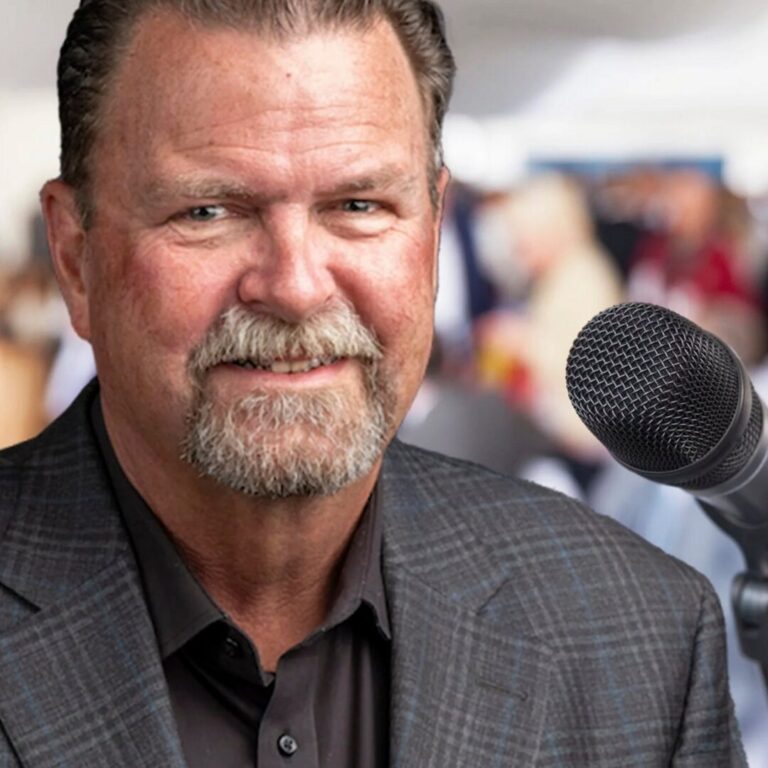
Welcome back to the show, my fellow extraordinary Americans. Our guest today is Mike Conrad. Mike entered the electronics manufacturing industry in 1985. Nearly four decades later, he continues to dedicate his career to advancing reliability within the industry. In 1992, he founded Acoustic Technologies, an equipment manufacturer serving the electronics sector. Becoming an entrepreneur was never part of his plan. He simply had a passion for a product he designed. When the employer declined to build it, he realized the only way forward was to create himself.
Today, with 40 years of industry experience, Mike shares both his technical expertise and his entrepreneurial journey, offering lessons from personal and professional growth, the near misses that almost derailed him, and the strategies that carried him forward. Mike is a sought-after speaker at technical conferences and symposia, where he addresses topics such as electronic reliability, cleaning and process control, and on university campuses, where he speaks to engineering students about the realities of entrepreneurship.
He’s also the author of The Reluctant Entrepreneur and Anatomy of a Business Startup, from Uncertainty to Unstoppable. He’s an extraordinary American, and I’m glad to have him on the show. Mike, thank you so much for taking the time to be here. It’s truly an honor.
Mike Conrad:
Well, and the same back at you. Thank you, Cosmos, for inviting me on your show. I really appreciate it. I’m looking forward to this.
Cosmos:
No, for sure.
And, Mike, can you tell the audience a little more about yourself, your story, and how you got started?
Mike Conrad:
Sure. I was 24 and had the opportunity to work for a startup in the electronics manufacturing space. You’ll notice some common themes in my story: I am known for very exaggerated expectations that contrast with the reality of what actually happened.
So I expected to work for a startup. I’m going to be their first employee. Maybe after two or three years, they’ll go through all these seed rounds of investment, then they’ll do the ipo and then I’ll cash out my stock. And the only dilemma I face is, do I drive my Ferrari and tow my Lamborghini back home, or do I drive my Lamborghini and tow my Ferrari? That wasn’t the case, but that’s what I thought. And while I was there, there was some government regulation that was coming down that was going to radically affect how a certain part of the circuit board manufacturing process was going to occur, or in this case, not going to occur.
And, this government regulation freaked out our industry. And I looked at it as an opportunity to develop another technology that would be compliant with the environmental rules coming down. And I pitched it to my boss, and he was at first not interested.
So I sweetened the pot and said, “Look, I’ve got this design idea in my head.” I really think it’s a good idea. Why don’t I pursue it on my time, my money, my risk, and I’ll bring you. If I’m successful, I’ll bring you a completed project. And he said, ” Okay. So I did that. Nights and weekends. I worked with a childhood friend of mine who was quite clever. And he and I designed a new type of machine to perform a specific function. And I brought it to him about six months later, put it on a truck, and brought it to him. And he liked it. And we threw it at a trade show. We happened to have a trade show coming up. M. North America’s largest trade show for our industry was just around the corner.
So we stuck it in the booth, put the company name on it, stuck it in the booth and sold five of them. I mean, right off the floor. So that got his attention. So I had another series of exaggerated expectations about a year or two later. And then, eventually, I should say, I sold him the technology, and it became their product. And then a year or two later, we had a product design meeting. And the purpose of that meeting was to determine which products we would sell over the next several years.
And I thought this was part of my expectations. I thought I would be crowned king. I would be carried in on a chariot and fanned with grape leaves, you know, during the meeting, because I had this great idea. It was really good for the company. It was very profitable. It really improved their bottom line. And there was another competing idea from another employee. And I pitched my idea with full expectations that they would accept it. And it was basically the next generation of design, only this one would be even more environmentally responsible. way more. And I pitched it to them. The other person pitched their idea, and my boss said, ” We’re going to go with the other idea, Mike. And I looked at him, and I said, I think you’re wrong. And then he said one word that started my company. One word. Cosmos. It started with F. It had four letters. And it’s not the word that’s in your head. It should have been. It might as well have been. I said, I think you’re making a mistake.
And he looked at me in the most dismissive manner possible, and he said, fine. I don’t care what you think; we’re not going with your idea. And in that very nanosecond cosmos, I determined that I was going to start my own business and do it. I had a passion for the product.
So I went back home, converted my garage once again into a mad scientist’s laboratory, and worked on my idea. And about nine months later, I had built a proof of concept and a prototype model, and everything looked good. So I thought, okay, I probably need to leave the company and, you know, pursue the idea now that I know it worked.
So I gave my notice. I gave a two-week notice. I was also upfront and transparent about my intentions: that I might, if I’m successful, end up being a competitor, and I’m willing to walk out the door this very second under that circumstance. And he asked me to stay for a month. So he clearly didn’t take me that seriously.
So I stayed for the month. And on my way home on my last day, I signed a lease for a very small business unit in a multi-tenant industrial facility. And hung a sign on the door, and that was the beginning of my journey.
Cosmos:
Wow, this is incredible, Mike. Normally, when people get rejected by bosses, they just move on or might even switch jobs. You actually started your entrepreneurial journey because of a rejection from your boss, which is incredible. But my question is like, did you have like a, like from that point on, like what, how did your vision evolve over the years about entrepreneurship? Like once, like your boss rejected your idea?
Mike Conrad:
Well, I completely underestimated what it would be like, actually, to run a business. My entry into business required two things. It required good technical acumen, which I had, and some knowledge of business, which I did not. But I, I, and I knew that, and I was quite naive then. I was 32. That was almost 34 years ago. And I thought, well, okay, I got the hard stuff down. The hard stuff is the tech. I got that down.
So how hard can business be? It can’t be that difficult. Well, it turned out to be very difficult. And I made every mistake any entrepreneur could make. In fact, the book you referenced earlier is not a how-to book; it’s a how-not-to book. It’s every mistake I ever made and, perhaps more importantly, every lesson I learned from those mistakes. I found it very, very, very difficult. We were always, for the first five years at least, chasing cash. You know, I bootstrapped the company. I took a small loan from my father with interest, and within about a month of officially starting the business, my former boss sued me.
And it turned out that you’ve heard of buyer’s remorse. You buy something, and then you wish you hadn’t. In this case, it was the opposite. It was non-buying remorse. He wished he had taken the idea, but he didn’t. And his strategy was to bankrupt me through litigation, which, on paper anyway, he did. But I was so ignorant of all business that I was too ignorant even to know we were insolvent. I just, we had no money.
But it didn’t stop me. It just, I just kept showing up and, you know, we’d get one deal that would keep us going a little longer, and then we’d run out of money, and we’d get another deal. And that would keep us going, you know, for another week or two. And it was quite literally hand-to-mouth for several years. We ended up winning that lawsuit completely. We were awarded much of our attorney’s fees back, which we never received for several reasons. But that was a very turbulent start to my business. It took a year out of my life to fight that lawsuit. And that was a year I was not paying full attention to the business. And it was a year of survival tactics. Just, just don’t die. Right. But we got through that. And my first goal and my only goal after we won the lawsuit, which is not a goal I would recommend, but it was helpful, and that was to get revenge. That was my goal.
So I made a lot of decisions that were solely designed for revenge and were not healthy for the company. And, but I’m grateful for that now. Cosmos. Because if I hadn’t been so angry and so hell-bent on succeeding, I don’t think I would have. I think I would have had a rough day at the office one too many times, and I would just give up. But my ego wouldn’t let me give up. To me, it was more important to win at any cost. And again, not a healthy emotion to bring into a business, but it was the exact emotion that allowed me to persevere in light, despite all of the challenges, financial and otherwise, that were in front of us.
Cosmos:
So, Mike, I mean, I’ve seen that movie, Steve Jobs, and it’s not. Your story is not exactly like it, but it’s so similar. But except that the boss here, like he kicks, like you basically leave. The boss realizes that, then that is actually working, and then he does like a lawsuit. This is crazy stuff, Mike.
Can you walk me through the audience, like, how you got through this time? Like, like how did you like, overcome this challenge altogether and this tough time in your life?
Mike Conrad:
Sure. After several years of being on the brink of disaster, bankruptcy, and insolvency, I realized that my bag of tricks was empty. And I learned that the skills required to start a business are very, very different from the skills required to sustain and grow a business—a whole different toolkit. I had a toolkit to start a business. I had ego, I had passion, I had naivety, and I had a very poor assessment of risk, which were actually perfect ingredients to start a business against all odds. And I eventually realized that I needed to adapt new skills to the scale of our business at the time.
So I did learn some new skills, but more importantly, I gained them through strategic hiring. There was a time in the cosmos where I could honestly say, and it’s not an ego-based statement, and I’ll explain. For the first several years, I was always the smartest person in the room. Not because I’m that smart, but because I couldn’t afford people who were smarter than me. We were on a shoestring budget, and my goal was to become the stupidest person in the room because I consider myself, at least technically, quite bright. And if I could be the dumbest person in the room, I would surround myself with people. That’s what ended up doing. I ended up bringing in talented people who knew more about everything I didn’t. And that filled in a lot of gaps.
And then I hired a, I don’t think she would call herself a business coach. I refer to her as a mentor. And she started giving me some advice, which I at first completely rejected. It was wild and counterintuitive, and I thought she was nuts. But my back was against the wall, and the building was on fire. I’m standing on the edge of the building, and I either need to burn the fire or jump.
So I jumped, metaphorically speaking. And that jump was to embrace a whole new business mantra that was completely foreign to me. Counterintuitive. And as I did that, the business started turning around.
And, I’ll give you a couple of examples. She said, ” You’re spending too much time talking about your product. If you want to sell more product, stop talking about your product. Well, that made no sense to me because the product is us. That’s what we do, that’s what we live and breathe for. But what she really meant was to connect with your potential customer base on a different level. Not, not on a transactional level, but on a relationship level. And what I eventually determined was that a more consciousness-based marketing approach was way more successful than a traditional chest-thumping, braggadocious advertising campaign, which we were well known for.
So we, one year, many years into our business, just stopped advertising. 100% stopped advertising. We stopped exhibiting at trade shows and substituted that energy for a new energy: value-based content. So instead of running ads in magazines, then eventually banner ads on websites, and spammy email campaigns saying how great we were, how many awards we’ve won, and all of that, we switched to an education-based model. We started creating webinars that were 100% non-commercial, just based on best practices and reliability. I started instead of going to a, ah, every trade show has basically two elements to it. There’s the trade show floor, the exhibit floor, which is normally downstairs in the convention center, and upstairs are the technical conferences where people go to learn. I switched floors, I stopped exhibiting downstairs, and started educating upstairs.
And I became well known in my industry, as an educator and as a speaker. We started producing webinars again, totally non-commercial. We started podcasts in that space, where I interviewed subject-matter experts on reliability. It turns out our equipment doesn’t actually make anything. You don’t put ingredients in one end of the machine, and out pops a product. What our equipment does, without going too deep down the rabbit hole, is take the customer’s board circuit board assembly and make it more reliable in the future by performing specific tasks.
So our machines don’t make anything. They make what our customers make better. So that requires a lot of education because there was a very specific technical problem that our equipment was designed to mitigate. The problem was that the industry didn’t understand the problem they were having, why their electronics products were failing. We understood it. So we just thought, all we have to do is talk about our equipment, and people will draw the line. Well, they, they didn’t, they don’t. We had to discuss their problems and the best-practice solutions. Nothing to do with our equipment, then. There was a time when discussing our equipment was appropriate, but only after the end user was educated and understood. Okay, I get it now. I now understand the nature of the problem. I understand what needs to be done. Where do I find someone who can do that? That’s us.
So, I’m guilty of coining phrases that other people have coined. But the phrase I coined was “conscious marketing,” which is about connecting on a relationship, not a transactional level. And the other is the concept of guided discovery, where we provide the data and facts, and the viewer or listener draws the line themselves to the solution. We just arm them with all of the data. And we’re fortunate to work in a very scientific world. All of our customers are pretty much engineers or scientists of some sort: chemical engineers, manufacturing engineers, electrical engineers, and reliability engineers. And you know, so they think, you know, quite, analytically.
And so the data is what they live for. And once they draw a line that leads towards us, they will fall on their sword to get our equipment in the building. They will give a pitch to management, arguing that they need our equipment because of their problems, what those problems cost them, and what it would cost to make those problems go away.
So we adopted that philosophy and never looked back. We haven’t run an ad in 12 years, 15 years, not one. And now I travel around the world all through the year, speaking on the subject of reliability, not on our equipment, only on reliability and the specific issues that our industry is facing. The best practice solutions to solve those issues.
Cosmos:
Well, Mike, I find this so interesting because you’re mentioning conscious marketing and education-based marketing, which is basically giving value to the audience and then not even focusing on the product. This is, like, relatively different from how many people would advertise or market their products.
And at what point do you realize that this is, like, how do you realize that this is successful compared to the original one? And what, what was the point at which you were like, wow, this is
Mike Conrad:
Actually working two ways, Cosmos. One way was that we stopped spending ad money and started education. And sales surged. And at first I thought, well, maybe that’s a coincidence. There’s a lot of momentum behind all the other advertising efforts we’ve done. The flywheel was turning. It’s not going to stop tomorrow just because we stop advertising. So one of my concerns was, are we busy despite ourselves or because of ourselves? And time would tell, after a year or two of doing it the new way, and sales continued to rise. I realized, okay, this is working.
But even more importantly, we started attracting a different type of customer. When we led with braggadocious chest-pounding advertising, beating any competitor’s price, even if that meant we lost money on the sale. We attracted a different type of customer. We attracted a toxic customer, someone who just led with price. And those customers, our equipment is sophisticated. It requires maintenance. It requires, you know, knowing what you’re doing to run our equipment. And they were, they wouldn’t fulfill their end of the bargain. So we ended up with huge warranty costs and even out-of-warranty costs because they weren’t maintaining their equipment; they were only buying based on price. They didn’t want to spend any money on maintenance.
When we switched to the education model, we completely got rid of the toxic customers and trolls we had in the past. And we ended up forming a more relationship-based relationship with the customer rather than a transactional one. And that changed everything. Even if our machines had an issue, our new customers would partner with us to determine the cause and suggest design changes to prevent it in the future, which we were very grateful for. So it became a very collaborative relationship.
There’s a rule in chemistry for anyone viewing or listening to this. If they’re chemists, they’ll be familiar with this. It’s called Hansen’s law of solubility. And basically, the phrase that comes out of that rule is like attracts like. It’s true in the chemical world. Well, I think it’s true in life. You receive what you put out. And we were putting out toxic, horrible ads. And we were attracting people who found that attractive.
And when we started producing purely educational content, we sought a higher-caliber, higher-level customer. And we weren’t the first ones to discover this. There’s a company you are familiar with, and probably every listener and viewer is familiar with it. And that would be Nike. Nike sells shoes. Cosmos. Have you ever seen a Nike ad that talks about the quality, comfort, or design of their shoes? Never. What do they do? They create ads celebrating athletes and athleticism. Some of their ads don’t even show their shoe. And you know, they are one of, you know, number one, number two brands of shoes in the world. And they don’t talk about their product. They connect on an emotional level. That’s conscious marketing. Other companies have done. Apple used to be that way. Now they’re a little bit more Transactional.
But Apple used to create ads that attracted creators, and they didn’t talk about their specs; they talked about the artistry, beauty, and artwork of their product, what can be created with it, and the types of people who use Apple products. And that attracted legions of very dedicated, very loyal customers. And I think that when you’re transactional, people will buy your product. But when you implement conscious marketing, they don’t just buy your product; they join your tribe. You become a tribe. I mean, how many people will buy? They’ll go to Nordstrom or Macy’s or wherever, and they’ll buy a T-shirt with a Nike swoosh, an Adidas logo, or whatever brand they’re into. They’re buying their merchandise and proudly wearing a baseball cap with a company’s logo. And that’s because they’ve joined the tribe. It’s more than just transactional; it’s relational, and on a much smaller scale. That’s what we managed to do.
And again, I didn’t invent it; I discovered it. Other companies had discovered it well before I did. And I was quite surprised that it worked for us in a highly technical, business-to-business environment. I can see that working more in a B2C environment, business-to-consumer environment. But I was shocked, amazed, and gratified that it worked on a business-to-business level as well.
Cosmos:
This is incredible, Mike. So, like, let’s say, suppose somebody in this audience has a business where they’re like trying to sell the product, and they’re not listening to you, and then they know, they just heard about conscious marketing.
How would you advise them to use conscious marketing to basically sell their product, rather than what they do now, where it’s just them talking about the specifications?
Mike Conrad:
One of the mistakes I made in business was that if I needed more revenue, I focused, laser-focused, on getting more revenue. And I got that revenue at the expense of something else, at the expense of profit. If I concentrated only on profit, I improved it, but I lost somewhere else. If I concentrated on market share, I could improve it, but I would lose elsewhere. I believe that in business and in life, but in business, in this context, profit, market share, and revenue growth are not the results of chasing profit, revenue, market share, or growth. They’re the results of making good decisions. And when we realized that and focused on making great decisions across the board, everything started to rise.
But I think the mistake we used to make, and I believe the mistake many companies make, is that they have come up with some arbitrary growth number. Public companies are largely guilty of this because they’re beholden to shareholders. They put shareholders above customers, unfortunately. And so they make very short-term decisions to increase shareholder value. And that usually means increasing profit so they can pay more dividends. Usually means increase revenue, of course. And shareholders, you know, demand a goal. Analysts say, ” Okay, your company needs to grow by 15% or 25% next year, and if it falls short, stocks will crash.
You know, you made money, you brought in more revenue, you’re profitable, but it wasn’t enough profit. I think when we put all our focus on growth and profit, we take our eyes off other important things. So, I think we have to be comfortable with the authentic, organic results of our efforts. Whether that’s 1% growth, 0% growth, 100% growth, don’t have the goal to grow, have the goal to run a great company, to make the best product you can make, to be best in class, to make great decisions, and then sit back and see what those decisions yield you.
And that is organic. We’ve had the same business bank for quite some time. And every few years, we get a new business relationship manager who likes to come in, meet with the owner, and, you know, check a box. And he met with me, and he said, ” You know, I can see you had so much growth last year, in the last three years, you know, what are your growth expectations for next year? And I looked at him quite sincerely. I wasn’t trying to be smart with him; I just said, “Well, we don’t have growth goals.” And he looked at me like, what? And he goes, “There’s no box to put that in.” I’m supposed to put a number in here on my form. And I said, well, that’s my answer. We don’t chase growth. Growth comes, or it doesn’t, but it’s the result of the efforts that we’re making. And if the efforts are disappointing, if the results are disappointing, we modify the effort and find out where we’re not making the best decisions. And you know, bankers don’t like to hear that, but our history has proven that it works for us anyway.
So, that’s our reality, and it works for us. And it really comes down to trusting the process. That’s all I can say, really. You have to trust the process. You may not understand the process. I didn’t understand how this would work, but now I understand it does work. It works 100% of the time. The time we’ve tried it. And my trust in the process is based on historical experience. And that’s enough for me: the mechanisms, the psychology, all of that. I don’t claim to understand everything. I understand some of it, just enough to feel comfortable with it. But the history of it has never let us down since we implemented it, and that is enough for us to keep practicing it.
Cosmos:
You know, Mike, one of my. One of my mentors back in the day, like a business mentor, always told me that most businesses are focused on making money. But if you. But money essentially chases value.
So if you’re giving value and focused on creating value, then you. And then later on, you monetize it. Like, that’s actually a far better way to create money than, like, going after money and focusing on that. And like, what you’re saying, seeing right now just reminded me of that time
Mike Conrad:
When he told me that many years ago, I learned to fly airplanes, and I got my pilot’s license when I was 30. And, which was 35 years ago.
Whether you’re a commercial pilot or a private pilot, every pilot has been trained on the same rules. And that’s anytime you’re in that cockpit, anytime you’re flying the plane, you need to do three things. Always three things. Aviate, navigate, and communicate. One of my morbid curiosities is that I like to read NTSB (National Transportation Safety Board) accident reports on commercial aircraft. Why did this plane go down? Because I fly so much. I’m always very interested in that.
And in almost every case, it comes down to pilot error. And in almost every case where there’s pilot error, it’s the flight crew that stops doing one or two of those things. For example, there was a plane, I think it was an Eastern Airlines plane, many years ago, probably in the 70s, in Florida, that they were getting ready to land. They put the landing gear down, and there are three main. There are three gears: the nose gear and two main gears. And each one of those, when they’re down and locked, produces a green light.
So you always want what they call three greens, right? You want three greens. You can’t land with two or one. You can only land with three greens because that means one of them may not be down and locked. It might be that the lights are out, but you don’t know.
So they went into troubleshooting mode, trying to figure out why one of the greens didn’t light up, and they didn’t pay attention. They had the auto-throttle and course set, but not the altitude. And it was dark, and it was a new moon.
And they were over the Everglades in Florida. And so there was no light at the bottom. They couldn’t see the horizon. And over time, while they were trying to figure out why this green light bulb didn’t come on, they crashed into the Everglades. They stopped aviating and navigating. So they stopped doing one of the three things you always have to do. And I think that analogy plays well into business. In business, there’s an equivalent of aviate, navigate, and communicate. And if we’re only concerned with revenue, we’ll do it at the expense of other valuable things we also have to watch over in the company.
And we may fix the revenue issue, but then we may proverbially, metaphorically hit the mountain or auger into the ground, as we’re doing. So, it’s important to make good decisions constantly. Aviate, navigate, communicate; however, how those examples translate into business is based on the business. But it’s important just to make good decisions constantly. Don’t chase micro goals; keep making good decisions. And if you make a mistake, recalibrate, ready, aim, fire.
In our case, we used to do fire, ready, aim. And we say, okay, if we miss, we’ll just recalibrate and do it again. Now it’s sometimes it’s ready, aim, ready, aim, ready, aim, fire. And when we do that, we get good results in all categories in profit and growth and market share, in goodwill, in reputation. All of those things come out as an A plus. If we concentrate on one or two issues at the expense of the others, we may get an A+ on those, but we’ll get a D or an F on the others. And that could cost you your company.
Cosmos:
No, for sure, Mike. And Mike, there’s something else. I wanted to connect you to this. Right.
But it’s just like, about revelations, like from your perspective, like throughout your entire career, what is the biggest revelation or life lesson you learned in terms of like life and business?
Mike Conrad:
That’s a good question. So many. I think the one that’s probably the most counterintuitive is that there’s one word in our business that has made us more money than any other single word. And that word is no.
And we used to say yes to everything when we were hungry and chasing revenue. And maybe half of those things we said yes to. Cost us money, didn’t make us money. So the good yeses were flattened and reduced by all the bad yeses that we said.
So embrace the word “no” when it’s appropriate. And to do that, you have to stop making fear-based decisions. I made many fear-based decisions, and they never resulted in a positive outcome. Maybe it bought some time, but it was ultimately bad for the company.
So I think when it comes to making decisions, one needs to take two things off the table: time and money. Let’s assume our business is at an intersection. We need to go left or go right. Which way should we go? Well, I really want to go left. I think we should go left. But we don’t have the time or the money to go left.
So we’ll just go right. Well, my mentor taught me, well, Mike, which way should we go? Well, I think we should go left, but we can’t. We can’t afford it. We don’t have enough time. We’re going to go right. She goes, ” Okay, well, what if you had all the time and the money? I said, ” Well, if I had all the time and the money, I’d definitely go left. She goes, well, then that’s the right decision. Wow. And it sounds so simple. But I couldn’t make the right decision due to time and money constraints. The lens of time and money. Once I took that lens off, I could clearly see the right decision was to go left. And then I would say, okay, we’re going to go left. I don’t have the time or the money to do it, but we’ll figure that out. And once I made the decision that we’re going to go left, guess what worked out? Time and money. But we couldn’t even fathom working out time and money because we hadn’t even made the decision to go left in this example.
So I think that once you commit to something, the details almost manifest themselves. Right? They become, instead of impossible, difficult but possible. And then we started putting our effort into, well, how do we clear time? What projects are taking up our time that aren’t very profitable? What projects, what activities, what energy are we spending that’s using our cash that really would be better spent directed toward going left? And so we found it quite easily, actually. Take time and money off the table; stop making fear-based decisions. Make the right decisions, make good decisions, and all the KPIs will be in your favor.
Cosmos:
So what you just said is that it’s more of a scarcity-versus-abundance mindset. Because a lot of people, when they’re making decisions, are making them based on scarcity. But if scarcity was not an option, they thought from a place of abundance that everything just falls into place. But it’s easier said than done when you’re short on money and time.
Mike Conrad:
Totally. And when you look through those lenses, you never get to the point where you make a decision, or an easier one you could make with no time and no money. And those are rarely good decisions. They’re compromised decisions. And the results are compromised.
Cosmos:
No, for sure. I mean, it’s so relevant. Like it’s like when you’re looking at, from the lens of abundance, like everything ends up, we end up doing everything. Right.
Mike Conrad:
Yeah, 100%. I totally agree.
Cosmos:
So Mike, on another note, I know you wrote this book, The Reluctant Entrepreneur. Can you tell the audience a little bit more about this book and what it’s about?
Mike Conrad:
Let me tell you what it’s not about. It’s not a how-to book. It’s really more of a how-not-to book. It’s outlining my journey, every mistake I made, every fear-based decision I made, every decision I made through lenses. And most importantly, it’s all the lessons I’ve learned from that and all the struggles that we went through. The lawsuit, recessions, terrorist attacks, pandemics, and bank crises, where they took away pretty much all their clients’ lines of credit, all those things, and how we navigated through this sea of disasters, and how we came out the other side.
So it really is, a very brutally honest exposé of what business is like. There’s a great misunderstanding in the cosmos about what it’s like to be an entrepreneur.
My friends and family have all said to me at one time or another, “You’re so lucky you own your own business.” You can take as much time as you want; you can buy things on the company dollar for yourself; you can write yourself a check; you can make your pay anything you want. And I just laugh. I don’t know what world you’re living in. That’s not the entrepreneurial world, at least not at first. And you know, the reality is, you know, when they say you’re your own boss, that’s the furthest thing from the truth. What’s more accurate is that everything is my boss. I report to my customers, my team, my banks, the weather, and the economy. I report to everything. I have to respond to everything.
And, you know, if you’re working a 9-to-5 job and you’re signing the back of the check, not the front of the check, there’s nothing wrong with that. The world runs on that. I’m grateful for people who have jobs like that. But all those worries, all those decisions are made by other people. You just have to worry about doing a good job and, hopefully, the company’s doing well. But you don’t really have the same control.
When you’re in business on your own, you’re responsible for absolutely everything, whether it’s in your control or not. So, it’s difficult right now. One of the reasons I wrote the book is that, according to the U.S. Bureau of Labor Statistics, 80% of all business startups ultimately fail—80%. Only 20% survive by year 15. Half are gone by year five. A third are gone in the first two or three years. Those are terrible statistics. That’s one of the reasons I’m grateful for my naivety. When I started the company, I didn’t even know that. And maybe I wouldn’t have started it if I had known that. But 20% of businesses ultimately survive, which is terrible.
And one might conclude that business is risky. Only 20% survive—80% fail. So business is inherently risky. I don’t believe that’s the case. I believe the reason 80% of businesses fail is because 80% of the founders make the same mistakes, particularly the ones I used to make. And I was almost part of that 80%. And fortunately, through great counsel from mentors and a great team around me, I figured it out. I think there’s. If someone knows ahead of time what the pitfalls are, what human nature is like, and what mistakes others’ predecessors have made, maybe they can avoid some, maybe all, but certainly some of those mistakes and defy the odds. And maybe we can change the odds from 80, 20 to 20, 80. That’s a Pollyannish goal.
So I wrote the book really just to demystify and debunk many of the myths associated with entrepreneurship. It is, at the best of times, hard, very hard. Lots of sleepless nights, blood, sweat, and tears, quite literally. And I would do it again in a heartbeat. And any entrepreneur who’s been successful, I think, would say the same thing. It’s hard, but you know, it’s like having kids. It’s not easy, but you can’t live without them. Right? You couldn’t imagine a life without it. I couldn’t imagine a life without this experience. And so I would do it again. But I think anyone who’s going to get into business, if they’re contemplating starting their own, would do themselves a favor by sitting down with a bunch of entrepreneurs who have been through that gauntlet and being mentally prepared. Because, in some cases, Cosmos, I believe.
And I know some associates of mine who have done this; they have two or three bad things happen to them, and they just give up. And I can’t blame them for that, because it’s hard and not everyone can do it, or even should. But maybe if they’re aware of it, they can be better prepared, both mentally and financially. And maybe they could avoid some of the mistakes that will make it not quite as hard as it was for me and so many others. So the motivation for the book is to lay out what a real, unvarnished look at entrepreneurship is.
Cosmos:
No, I mean, what you’re saying is true, like entrepreneurship can be hard and a lot of people go at it alone. But if they know that there are others, such as yourself, who have also been through there, and if they find a community of like-minded people, it can definitely make things easier. So I appreciate you writing that book. Definitely.
Mike Conrad:
Thanks.
Well, yeah, and one of the great blessings of writing this book for me is that now I interview, like you, founders, entrepreneurs, and business owners. And when I hear their stories, I can tell it. It’s the same as mine. Same but different.
You know, each one has a specialty of its own. But the mistakes I made, they made. It really is a rite of passage, and we will make mistakes. Some of the most famous business owners, such as Richard Branson, are good examples. He’s lost businesses spectacularly. Right.
And he’s very successful, mainly because he doesn’t really run any of the businesses he owns now. He owns more than 100, and he puts in awesome teams to run those companies. And he’s the company’s spokesperson, which he does quite well. But I used to beat myself up over the mistakes I made. I went into it pretty cocky, you know, I know enough, I’m smart, and there was a time when I was just like, I gotta be the stupidest guy on the planet. I can’t believe I’m so stupid. I’m just making all these mistakes, and, you know, wow, that totally messed with my self-esteem. But as I started later, comparing foxhole stories with fellow entrepreneurs, I realized they did, too. And it’s okay. I’m grateful for the mistakes I made
now because I learned something valuable from them that I may not have learned otherwise. And I’m grateful for the lawsuit because it gave me the passion and the energy to keep going against all odds. I’m grateful for the Great Recession, when the bank called our line of credit, because it made us look at cash differently. Not just, well, we’ll just borrow more. You know, we became much more self-sufficient.
So I’m grateful for all these things. Ah, they made us stronger, they made us wiser. And without those things, we would be vulnerable. So I think it’s a necessary part of growing a company. Making mistakes and not being okay with them, which means not taking a lesson from them. Make the mistake and be grateful the mistake happened. And be grateful you have the opportunity to use that mistake as a change agent and learn from it so it never happens again. That’s one mistake you won’t make again.
Cosmos:
What you’re talking about, mistakes and adversity, is so relevant because a lot of people look at that, look at adversities and mistakes as negative or damaging.
But the perspective is that it is actually a doorway to better and greater things. But in that moment of darkness, we don’t realize that it’s only when we reach the light that we, in hindsight, realize we needed to get to the next level.
Mike Conrad:
Right? Yeah, totally.
Cosmos:
I know you have a podcast by the same name, the Reluctant Entrepreneur. Could you tell us a little bit more about that as well?
Mike Conrad:
Yeah, I started. I have a couple of podcasts. I have a reliability-based, nerdy egghead, you know, down-the-technical-rabbit-hole podcast that I call Reliability Matters. And then I started this podcast on entrepreneurship a little under a year ago. And I interview entrepreneurs, and we have very candid, very authentic talks about their journey. And I break each episode into two segments. The first segment is about their journey—the highs, the lows, the challenges, what keeps them up at night, and the victories.
You know, the real, unvarnished, dirty, messy, gritty story of their journey. And then on the second half of the show, I dive into their specific business. So if, for example, I interviewed a patent lawyer, which I did recently, we’ll start talking about best practices and protecting IP, and, you know, through patents, and what mistakes people make when they’re trying to seek a patent, how to find a good patent attorney, what patent attorneys expect from their clients, things like that.
So the first half of the show is about their journey. The other half of the show is about their expertise. And that’s the format I’ve been using since I started the show; I’ve learned so much from it. And every time I interview an entrepreneur, it further reinforces that we are. We are enrolled in the same university, the University of Entrepreneurship, and we’re all in this PhD course together. We don’t all realize we’re in the same course, but we’re all being taught by the same professor: the professor of business life, metaphorically speaking. Everything that’s happening to us in the business world is all curriculum. It really is a curriculum. It’s an opportunity to learn.
And to me, it’s very refreshing to hear that my struggles were not unique. They were unique to me at the time because I hadn’t experienced those before. But they’re not unique in the larger scope of things. They’re very common, part of the curriculum, and we should celebrate them rather than despise them.
Cosmos:
No, this is amazing, Mike. And I would definitely recommend that my audience take a look at your podcast, as listening to stories about entrepreneurship is inspiring.
And, Mike, how would the audience connect with you and learn more about you and everything you do?
Mike Conrad:
Sure. The easiest way is through the entrepreneur’s website. If they want to email me, it’s mikereluctant@entrepreneurpodcast.com. The website is reluctant entrepreneur podcast.com. That’s the best way to get a hold of me.
Cosmos:
Okay. That’s amazing. I’m so glad and grateful that you took the time to come on this podcast and share your story and your wisdom on entrepreneurship and business, because it’s so relevant. Because a lot of people go through business, and they do it alone. So knowing hardships and overcoming them is so relevant. And I hope you take the time to listen to this podcast later.
Mike Conrad:
Yes, absolutely. I’ve watched a few of your episodes. I like what you’re doing. I’m grateful for what you’re doing. I think we need more voices in this arena because there are so many misconceptions about what it means to be an entrepreneur.
And I think I’ll end on this. Being an entrepreneur doesn’t necessarily mean you’re starting a business. You can be entrepreneurial while working in a cubicle for someone else. It’s really just a way of thinking and of controlling your own destiny. It doesn’t necessarily mean you have to invest in a business and open a Subway tomorrow, or start something from scratch. I think a lot of the lessons in the book, and the ones my guests and your guests talk about, can be applied even if you’re a regular 9-to-5 employee working in a cubicle somewhere. I think those lessons are really life lessons applied toward entrepreneurship rather than uniquely entrepreneurial lessons.
Cosmos:
Mike, I’m so appreciative once again for taking the time. And I want to conclude this episode by letting my fellow extra Americans know that, hey, there’s an extraordinary person within each of us. It’s our duty to awaken it and unleash it. Until next time. Bye for now.

 Amazon Music
 Apple Podcasts
 Audible
 CastBox
 Castro
 Google Podcasts
 iHeartRadio
 Listen Notes
 Overcast
 Player.fm
 PocketCasts
 Spotify
 Stitcher
 TuneIn