Cosmos
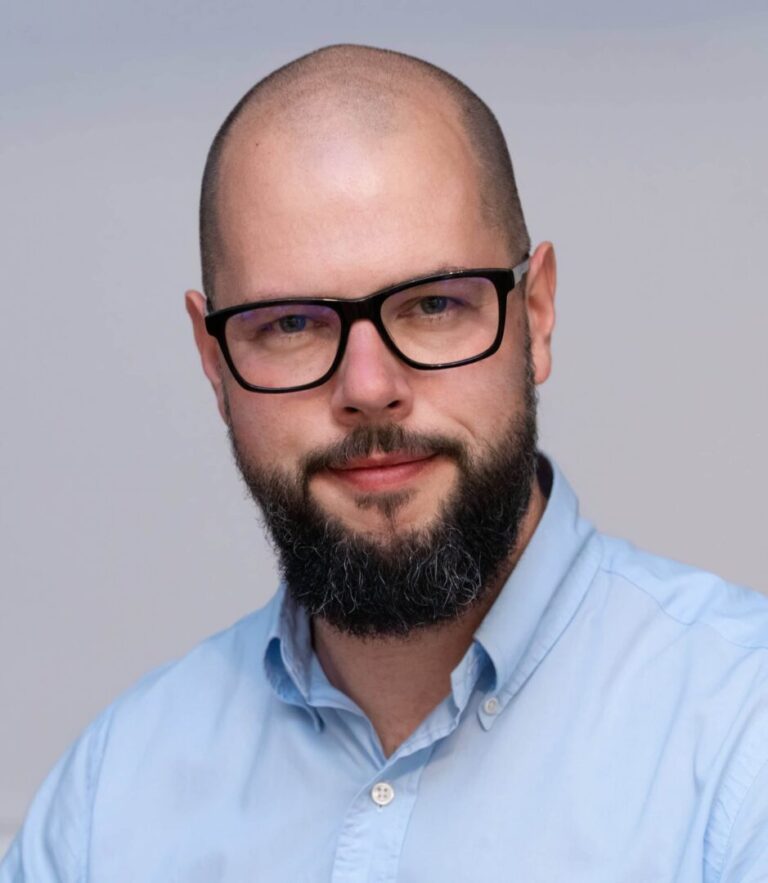
Welcome back to the show, my fellow extraordinary Americans. For today’s guest, we have Mike Honda. Mike is a former multiple business owner turned rev ops and CRM consultant, helping growing companies create processes and implement systems that scale. With over 17 years of experience in sales, marketing, and entrepreneurship, Mike has built and sold multiple businesses and worked with international agencies, including WPP, the world’s largest marketing agency, to develop and launch scalable growth systems.
After years of seeing how disorganized data, unclear processes, and disconnected tools slowed companies down, Mike shifted his focus to helping B2B business leaders bring structure to the chaos of growth. He’s a McKinsey Ford-certified consultant and an ICF-credentialed coach who works with sales and marketing teams to create, optimize, and standardize lean processes and implement systems that reduce manual labor, making growth measurable and predictable.
His approach blends real-world business experience with a coaching-style curiosity about how people and systems work together. He’s known for his clear, no-fluff explanations of complex processes and his ability to turn messy operations into organized, scalable systems. He’s an extraordinary American, and I’m glad to have him on the show. Mike, thank you so much for taking the time to be here on this podcast.
Mike Honda:
Thank you for the beautiful introduction as well, and I love the energy.
Cosmos
No, thank you, Mike.
So, Mike, can you tell me a little more about your story, your background, and how you got into marketing and sales?
Mike Honda:
Right, so a little bit about my background. As I was growing up, my family had an accounting firm, and I interned in accounting, but I didn’t really enjoy studying accounting law. I found it daunting.
So I went into studying marketing because I wanted to influence the numbers, not just record them. I obtained a degree in marketing, and later, in 2006, I started an online business called capitalinvest.co.uk, where people could upload their business plans and pitch their ideas to potential investors. Now, this was a really tough learning experience for me because this business went under during the 2008 financial crisis, when the appetite for investment dried up.
So, for full transparency, it was a tough learning experience. But I took a lot away, and I launched my second startup in 2015, which was an email deliverability platform, which consequently got acquired in 2020. So, that worked out pretty well, and I’m really proud of that achievement. I was mainly in finance and revenue operations, and I managed the sales side.
So I gained a Lot of experience, experience. And I launched a few other businesses since then. Helped many other founders as well. I had a consulting company with a finance professional, and we helped companies write business plans, pitch decks, and all that. But now I just focus really on the rev ops and CRM, sales process side of things. Because ultimately, every single business plan and every investment idea comes down to profitability.
So if you can make your business profitable, there is no shortage of investors. But you have to have a process, a clearly designed path on how you are going to make money with your business and how your investors are going to see returns on their investments.
Cosmos
Well, Mike, you’ve had so much success, like doing multiple businesses and also scaling them. What was the motivational factor that made you become a serial business owner in the first place?
Mike Honda:
That’s a good one. Actually, it was my background in accounting, to be honest with you, because I saw so many medium-sized business owners and how hard they work and how honest they were, and really, that they just wanted to provide a good service, they wanted to help people.
I was fascinated by the work ethic and, you know, just the good hearts of these people, and I really wanted to help them. So that was my main motivation, and it still is today.
Cosmos
Wow, that’s amazing, Mike. And Mike, for the sake of the audience, I wanted to know a little more about what exactly RevOps is and why companies are suddenly talking about and using it.
Mike Honda:
That’s a great question. I love that you asked that. So, RevOps essentially is optimizing your internal processes for profitability. Right. It’s actually analyzing your finances, putting your expenses in perspective, and you know, when your company is growing, ah, you’re selling more services, your costs, your residual cost go up also.
So it’s about figuring out where the sweet spot is and what is the best path to maximum profitability, and kind of reverse engineering that process into a sales process or into an internal process as well that fully supports that to ensure there is no friction between the front line and the back end of the business.
Cosmos
Well, this is interesting, Mike.
So because m. The entire point of business is that they have a vision and they want to have profitability.
So from your perspective, what do you think most business owners are getting wrong when it comes to the internal processes that lead to profitability?
Mike Honda:
That’s another great question. And actually, a lot of founders, especially product-led founders, are too focused on the product and don’t consider revenue first, which is okay. It’s good to be passionate about your product and to want to help people. It’s good to want to deliver a product, a service, or a transformation of some sort. And I do admire that. At the same time, money is the heartbeat of your business.
So if you can’t make money with your business, it’s only going to last so long. So it’s about considering both and finding the balance between them, where you have someone who keeps a keen eye on how your business is performing financially, and you keep an eye on your product or service and make the most of it.
So, of course, people focus on social media content, product development, and so forth. And there are so many different hats to wear in a business, especially when you’re small, and you don’t have enough people, you’re wearing multiple different hats. But finance is really a priority because, as I said, that’s the heartbeat of your business. And without revenue, you won’t survive.
Cosmos
I think, Mike, from my own experience, people fall in love with the product so much. They originally started the business because they love their product or because of their vision.
But in the process, they often don’t think as much about the revenue side as they do about the product’s design, making sure it’s perfect. But what is your experience? For what, how do business owners operate about this?
Mike Honda:
I’ve been through the notions of it myself, and, to be honest, it’s an easy mistake to make when you just start an ad. For example, I worked with a client who spent about a month redesigning his logo.
Right? Because he wanted to make it perfect. Was that the best use of his time and his resources? Probably not. Right.
So it’s just these small traps that you start obsessing about, or, you know, it’s like your baby. You want it to be perfect, you want it to be amazing. Right? But you really need to learn how to prioritize.
And of course, the results you deliver to your clients should be your main priority, because that’s what drives the business. Right. And second to that, or equal to that maybe, is your revenue, like how you’re acquiring clients and for what, which of your products and services, does it make the most sense to require acquiring customers for? Right. Because at the end of the day, like, that’s what profitability comes down to
Cosmos
There are a lot of things that people have to take into consideration. But one of the things I noticed, Mike, is that when people are first starting their business, it’s a lot of stress and financial risk. But on top of that, one of the biggest factors they would consider is the scalability of whatever systems they create.
So, from your perspective, how do you advise someone who’s starting over a five-year time frame on how to generate revenue first and then scale their systems?
Mike Honda:
That’s a really complex question, and it really depends on what type of business you’re running.
So, service-based businesses are typically not as scalable, and there are only so many ways you can scale a service-based business. So let’s cover that first because it’s a little bit simpler than product-based businesses.
So when you’re delivering service, of course, you can hire more people. That’s one way to scale a service-based business. But hiring people also comes with risks. There is, ah, employee churn, right? That’s something that you need to consider in advance. Then you can launch some online products that don’t require human input. Let’s say you launch a course, or, I don’t know, something that doesn’t require your input specifically. And that’s good, you know, because that’s more scalable, but that’s about it. Like, there is really no other way to scale a service-based business, per se. Right?
Or you can launch group courses that serve more people simultaneously. When it comes to product-based businesses, I think the key is really if you’re just starting to develop an MVP, a minimum viable product, validate the idea, get some paying customers behind, like make sure that it’s not just people saying yes, I would use that without the financial commitment. Because, really, the financial commitment from your customers or prospects is the validation. It’s not enough that they say yes, I would use that; it’s when they pay for it that you validate.
So once you have that, the MVP should really just solve one clearly defined problem, and it doesn’t have to be too complex; you can build on it, right? So start with the MVP, maybe even do a pre-lunch, get, get, get subscribers on board early, or get people to commit even before you launch, and then, you know, use that data to validate the product. Gather feedback, then improve based on it. Get lots of reviews, testimonials, and the like, and build on them.
So that’s a more sustainable way to grow. Of course, if you raise funding or operate on a different business model, that’s a completely different ballgame, because some businesses don’t make any profit for five years. Like, if you create an enterprise solution, you know, the sales cycle for enterprises can be two to three years, and you might not make any revenue during that time. And if you have funding, that’s completely okay as long as there is transparency and the expectations are managed.
Cosmos
Wow. So there’s actually, yeah, like the concept of an MVP you’re talking about. I actually read the book Lean Startup, and it was one of the great books I have read in my life.
And I would definitely recommend to anyone who wants to start a new business with a similar product to take a look at that. But a lot of people, a lot of people, A lot of people, like when they think they don’t really do an MVP, like they just have like an. They just fall in love with the idea of a product, but they don’t actually test it out to see whether their audience would like it. Because there’s a difference between what an audience says they want and what they respond to.
And it’s that subtle difference in that book that made me realize the difference between success and failure.
Mike Honda:
Absolutely. I 100% agree with that. And there is another great book on this, called the Startup Evolution Curve. It’s written by Donatas Jonikas, who has a PhD in economics. He’s an academic tutor and a business mentor as well. He’s definitely rolled up his sleeves and been in the trenches.
So he’s not just a teacher. I highly recommend his book as well. If you start without funding, it will give you some perspective about how to build and sustain in a financially sustainable way.
Cosmos
There are some books that you read over your life, like The Lean Startup. And then the book that you’re recommending is just a translation. It just creates what is called a paradigm shift. You know, you thought you knew how to do business like you see in the movies, like The Social Network or Steve Jobs, and everything.
And then there’s like the actual, when you’re in reality. And like, these books are actually kind of a shortcut in a lot of ways.
Mike Honda:
Absolutely. I mean, a lot of those movies and these founder stories are highly glamorized, and they don’t really show the full scope of what goes into it. I really like the TV series Silicon Valley. If you’ve seen it, it’s super funny and gives you a little bit more realistic view of what actually goes on behind the scenes when you build at a startup. It’s a fun series to watch, and it has some educational parts as well that you can take away a lot from.
Cosmos
I mean, now I have to make sure I watch this at some point. It’s called Silicon Valley, right?
Mike Honda:
Yeah. Ah.
Cosmos
Mike, one of the things I want to know is, like, how can a founder start building scalable processes before hiring a big team?
Because I know, like, they had to focus on revenue first, and then, when they go from there, just scale how they go about doing so.
Mike Honda:
See, I have a bit of a controversial view on this personally, and you can disagree if you like, but one of the biggest mistakes early-stage founders make is trying to do everything by themselves. So, like, you only have 24 hours a day and limited mental bandwidth. Right.
So when you try to do everything yourself, you end up spreading yourself thin, and nothing gets done properly. Right. So I do encourage people to either find a co-founder, somebody who’s invested with sweat equity or possibly some finances as well, or just join a community and start building a team as soon as possible, because they will go further.
So there is no Fortune 500 company built on the back of one person. And yes, you hear that Mark Zuckerberg coded Facebook in his dorm. Did he really? Like, I don’t know if he did it by himself, but I mean, I question things like that. Like, there is only so much you can do by yourself. Right. And if you build a team early, it just shows that people see your vision, you know, they buy into it.
And together, you can build much bigger things much faster. And if you delegate a task, you might have a friend who’s good at finance, another who’s good at graphic design, and you’re good at programming. Get your friends involved. It’s better to have a smaller percentage of a bigger pie than you know, to try to bake the pie by yourself and fail at it, because you might burn out or mess things up if you do everything by yourself.
Cosmos
No, Michael, what you’re talking about, delegation is so relevant, but a lot of people don’t like it; they want to do everything by themselves, and there’s a reason why 90% of businesses fail.
And I think delegation is very important because you cannot do everything by yourself. You have to be the architect of your vision, and then you have to see that everything is being done properly. But yeah, delegation is very important in this matter.
Mike Honda:
So, for instance, I worked with a very, very successful founder who built an application that is kind of like a search engine for courses, specifically, and it’s a really fantastic app. He, he, he, he wasn’t a programmer, right? And he wasn’t a marketer. He just had an idea, and he got people on board. He hired the programmers, he hired the marketers, he hired the content writers, and he basically was the conductor right in the orchestra. And that’s what business leaders do.
So yes, it’s good to be a technical founder. Still, at some point, either you or someone you know and trust has to become the conductor in that business, who organizes everything and makes sure the machine works in sync, because there is literally only so much you can do given time limitations and your mental bandwidth in the day.
Cosmos
No, no, for sure.
And one thing I wanted to know, Mike, was: what do you think are the highest invisible costs when it comes to, like, poor systems and processes?
Mike Honda:
I think manual labor is the biggest one right now. Like everything that you have to do manually that requires human input is at all because it takes your time, right? So, for example, when you hire people, you also have to brief them on the projects they will be working on. You need to tell them what outcomes you expect. And it’s again a fine balance, for instance, not to micromanage people. And it’s the same with setting up automations, right? So maybe you’re not good at setting up automations, or you don’t know how to do it, so you hire people to do it instead of spending a month learning it and doing a half-baked job.
So at the end of the day, it really is labor, like manual labor and whatever. You can just try to automate it, or hire people who can automate it for you. And then, when back-end tasks run automatically, you can focus your time elsewhere on more meaningful tasks that actually drive the business forward.
KPIs are essentially key performance indicators, and they should be tied to your revenue goals. So let’s take a simple example. You want to make a million dollars, right? Let’s say you’re building an application with a monthly $100 subscription, right? So now you need, you know, like ten thousand subscribers to get to the million dollars. Or do you know what the customer life cycle is? Like, how long do they stay? Like, what’s your churn rate?
So you need to kind of estimate that. And based on this, once you reverse-engineer your financial goals and how you plan to achieve them, you need to translate them into KPIs. So let’s say the people stay on average for three months. Now you’re left with 3,333 users, right? How are you going to get 3,333 users? How many people do you need to reach to convert that many? Right. And you really need to go through the mathematics because it’s all just math. Under, under the business, even under the universe, everything is just math, right?
So you just need to reverse engineer the mathematics of your business and turn that into measurable actions that will get you there. And once you do that, you don’t need to look at it. You just need to hit the KPIs every month. And as long as you do that, you’ll get there. And if you’re not getting there, you identify where the impact improvement needs are, where you need more training, and where you need help. And you get people who’ve been there, done that, got the T-shirt to help you out.
Cosmos
No, I mean, this is like feedback, right? And Mike, like this, this like, this concept of like key performance indicator is so important because a lot of people, in businesses, they’re not succeeding because they’re not measuring the growth consistently to see where they’re failing and where they’re succeeding.
So I think this is important.
Mike Honda:
Yeah, and you also need to set realistic targets. That’s the other part. You know, some people say, ” Oh, we’re going to get like 5,000 users this month. Okay. Do you have the resources even to get 5,000 users? And by resources, I mean time, money, and, you know, even the database. Like, you know, if you want to get 5,000 users, you potentially need to reach out to 100,000 people. How are you going to do that in a month? If you’re going to do it by ads, you know, 100,000 impressions, it’s going to cost you. It’s fine, as long as you have the capital for it. By all means, go for it. And if it makes sense commercially, considering the cost of customer acquisition.
Cosmos
No, for sure. Mike.
And Mike, what do you think is like the biggest like in your all your time, like doing multiple businesses and just like doing sales and marketing. What is the biggest revelation or lesson you learned during your career?
Mike Honda:
relationships. Really like businesses, don’t do business with each other. People do business with each other, and relationships and your network are your biggest assets. So really, that is the biggest thing.
And if you focus on only one thing, it should be building meaningful relationships, networking, strategically growing your professional network, and improving your communication skills so you can convey your vision clearly. and making sure that people feel good in your presence. Right.
So that it’s not about being liked by everyone, you don’t have to be liked by everyone. Elon Musk is a very polarizing character. And it’s fine, right? It’s not about that. But you really need to build a network because people will open doors for you, and that’s the only way you can grow. It’s free connections with other humans.
Cosmos
a relevant topic, Mike, because like, yeah, a lot of people, they don’t focus on the network, they focus on the product or on scaling. But there are so many moving parts to a business. Like you have to, somehow balance all of it and put it together like a conductor in a symphony.
Mike Honda:
Absolutely. And let me ask you this. Let’s say you’re pitching for a founding role, right? Which VC is going to respond to you? The one you’re emailing code to, or the one you met at a networking event who remembers your face and your introduction?
Cosmos
The latter, obviously.
Mike Honda:
There you go. It’s as simple as that. It really is. Everything is built on human connection. So that’s why many people are advocating these GTM M automated solutions, like these Code Outreach platforms and whatever. I mean, it’s not 2015, where you can just like spam a million email addresses and then see some results. Like, people are immune to that in 2025, 2026, possibly by the time this podcast goes out, right?
And you know, people are thirsty for meaningful human connections and real relationships, especially after Covid. And they want to feel the personal touch; they want to be appreciated. And of course, it is very difficult to scale. But like, you can’t be completely personal with everyone and research every lead for a day. Just to write a clever line to open the doors with them. But you have to find a balance that makes that happen.
Cosmos
So Mike, one thing I wanted to know from your perspective. As you know, over the last two decades, social media has grown significantly and has revolutionized marketing and sales. But in the last few years, AI has come along as well.
So, how do you see marketing and sales evolving, given all the new technologies that have emerged in the 21st century?
Mike Honda:
Again, it’s a great question, and AI is fantastic for certain things. If AI were amazing, it would tell you how to build a million-dollar business in three months. It cannot do that. It literally can’t. I’m sure many people have tried and failed. It’s not going to happen. It doesn’t come up with these things, or it can’t write you a cold outreach email that converts at 50%. It’s just not able to do that.
So it’s about understanding how to use AI best, and there are different levers in your business, and you need to know where to apply AI leverage. So what I have seen is that AI can handle the administrative side, the research, the logging, and, you know, the data and all of these things very well. It saves you a ton of time. But don’t outsource your sales and marketing to AI because it’s going to fail epically.
Cosmos
I went to a networking event, Mike, and people had such polarizing views on AI. Like me, there’s one person who told me that all the coaches will be out of business within 5 years. And another person told me that you can use AI for a wide variety of things, like writing books and all that. But I, I see your perspective on this matter,
Mike Honda:
right? I mean, when you talk about books, for instance, Amazon is putting measures in place to scan your books when you upload them, whether AI wrote them. And if they detect it was written by AI, they’re not going to promote it, and your book is going to get rejected. Right? So, sure, you can self-publish a book. Are people going to read it? Probably not. Right? That’s the reality of it. And as you know, with the coaches and therapists being out of business, many people have tried, and there is even an AI cycle, where people have fallen victim to the AI coaches or psychologists, because essentially, the AI doesn’t challenge you per se. It usually validates your ideas, or it has this self- validating bias; it tells you what you want to hear, or it helps you find a way according to your mental model of the world, which is not necessary or healthy, especially if you’re already going down the right path. You just have a robot that is cheering you down the cliff.
Cosmos
Mike, you just hit the nail on the head. But here’s the problem. Like human nature, it’s part of human nature to want validation, and you want to be told what you want to hear. And AI is like the perfect tool for your ego.
And so I think it’s more of a human nature kind of thing than anything else. Most people want to be told what they want to hear and to be validated by their own ideas.
Mike Honda:
I see your point there. And there’s another big problem with AI: people are less open to taking advice from others because they think, “Oh, I’ll just ask ChatGPT or whatever, like you know, and it will give me the advice I need.”
So instead of reaching out to other people, like mentors perhaps who’ve been there, done that, who went through the experience, who can share some real-life experience, they think they can get that information, information, out of the AI. And that doesn’t really happen either. Like, you know, it’s just, it’s not suited for that. For data management, reporting, administrative tasks, and back office tasks. Sure.
Get it to write code. Cloud is great at writing code, or you can use lovable or whatever. Like you know, it can do so many things, but you need to know how to use the best AI and where human connections are more valuable, or where human connections will provide you with better insight or direction.
Cosmos
No, for sure. Like, I feel like now in the 21st century, as human beings, we’re losing connection. Like what it means to be human and how you connect with people as human beings, that we’re losing that touch, you know, like we got connected, connected to social media, the Internet, AI, and all that. But at the same time, we got disconnected. It’s like the ultimate paradox in a way.
Mike Honda:
That’s an interesting notion. And there is a very famous British tech philosopher named Tom Chatfield. He wrote a piece on this many years ago, actually. And he wrote that we are already cyborgs because, even though the technology is not built into us, the way we interact with it and how much we depend on its performance already make us cyborgs.
So the fact that it is in your hand, or on your computer, whatever, and it’s not in your brain yet. That doesn’t really make a difference. But we interact with technology, so we are cyborgs.
Cosmos
So, Mike, I have to ask you this. So, like, in 100 years, how do you see the world? Like, let’s say it’s the beginning of the 22nd century. AI goes into its full thing, the Internet goes big, and everything. like it goes to its full capacity and potential. Do you think we’ll be living in a utopia or a dystopia?
Mike Honda:
It depends on us. It really depends on us, how we navigate this change, and how much self-discipline and control we have. Right. Because if you want to live in a utopia, we need some self-control measures in place. Right.
If you give a kid a phone, they will be scrolling on TikTok all day and playing games on the phone, and their brain is going to get completely hooked on the dopamine addiction that they get out of it. And you know, they never make anything of themselves in life if you allow them to go down that path. Ah. So we also need to be parenting this transformation through technology and AI. And I think, for example, Neuralink is a great concept, and you know, blending with technology could be the next step in evolution. But you know, if the tech turns into something like YouTube, where it starts serving you ads based on your thinking, and you have to pause for 30 seconds to get there, an ad is playing in your head, that would be a total disaster. And you know, you call social media “brain-rottenness” sometimes. Imagine the brain rather than Mike.
Cosmos
How can you combine comedy and horror in the same way, like in the same emotion? That’s basically what I’m feeling right now. Like that is the most comedic and horrifying thing I can ever think about. Oh my God.
Mike Honda:
Well, it can happen, you know. Oh, you forgot to pay for your neural link subscription. Now here’s an ad.
Cosmos
Oh man. No, I mean, I’ve actually thought about how the world is going, and I realized that technology without morality is going to be a disaster. If our moral aptitude is not on par with our technological advancement, we as a civilization are doomed.
Mike Honda:
Absolutely. And when you think about the industrial revolution, a couple of hundred years ago, right? We created machines to make work easier, but those weren’t thinking machines. They needed an operator.
And the machines we have today still need an operator. But it’s also the operator’s self-control and behavior; they influence how the tool behaves. Right. So, like, even with AI, you can, as I said, use it for very good things. You can make good use of it, or you can, like I don’t want to be gross, but there was a guy who turned AI into a suicide coach, and he ended up committing suicide. And now one of the AI companies is being sued for this. How can they allow this to happen? I mean, they didn’t create that thing. It was the guy who created it inside. It’s, it’s how you use the tools. It’s like a knife. You can use it to butter your toast, or to step on somebody. It’s down to you how you use the tools you are given; they’re very powerful for self-awareness.
Cosmos
I mean, it’s a very powerful tool with that. But yeah, it’s, it’s, it’s fascinating.
But Mike, are there any other projects you’re working on right now that you’d want the audience to get a glimpse of?
Mike Honda:
I’m working with a HubSpot Platinum solution partner. So, as you know, HubSpot is a sales CRM. It’s a little bit like Salesforce, but more for mid- to entry-level companies. Salesforce is more enterprise-level, and HubSpot is more mid-market. And basically, it’s fully customizable, it’s adapted to your unique sales processes.
But it’s a lot out of the box.
So what I do is go into companies, learn about their revenue goals, help them understand how their revenue works better, design their sales processes around that, and then translate that into sales processes inside their CRM. So that’s my main focus these days. And of course, I work with a variety of different businesses, but I really enjoy what I do.
Cosmos
So, Mike, can you tell the audience a little more about what a CRM is and how important it is for sales and marketing?
Mike Honda:
Right. So essentially, like you need to manage your sales, and of course, if you’re in e-commerce, that’s a different ball game, or where you sell low-ticket products, and you have repeat business. But when you do B2B sales, especially you, you know, the sales cycle can be anything from one month to two years, perhaps in some cases.
And you need to be able to manage these conversations better. You need to learn which conversation frameworks convert the best, which are the most effective, and which ones People respond to best. And that’s what the CRM is for: to keep all your customer data in one place and to see the entire sales process or the entire customer journey from the first point of contact through conversion, and beyond, with the service management or service hub layer.
Cosmos
Okay, yeah, I just wanted to ask, it’s a lot, and there might be people that don’t know what a CRM is, but it is so relevant in today’s world, for scaling businesses to have a CRM where you have all this data.
Mike Honda:
Right? So basically, when you run any kind of business, you identify your target audience. And because the Internet is so saturated, if you just put the website up, it’s like throwing a brick into the Grand Canyon. It’s not going to make much of a difference, really. Nobody will see it.
So you need to get your message out to people. And as I said, social media and the Internet generally are just so saturated. If you’re talking to everyone, nobody is listening, right? So if you niche down and identify a clear problem or use case for one specific type of user or audience, then when you target those people or communicate it properly, they are more likely to listen and become more receptive.
So you know, then your message doesn’t just fade away in the emptiness, right? And then, you got your icp, you got your messaging, right? Now you need ICP data, and there are many data providers and tools available.
So you need to gather a list, and then start targeting it. Whether you target them with ads and generate inbound leads, or target them with outbound, or combine the two. If you have the resources, you really need to manage the sales cycle. And especially if you’re working with hundreds of leads, it’s difficult to keep on top of that conversation. If you’re like managing that in an Excel sheet and your inbox, that’s not going to get you very far.
Cosmos
So Mike, if you had to tell the audience the most important thing that they should know about sales, marketing, and business, like if they had to prioritize and focus on this one thing and it’ll lead them to success, what would that be?
Mike Honda:
I don’t think there is one thing. It’s, it’s really like a recipe for cooking, right? So you have to have all the ingredients; otherwise, the meal will be missing something, or it won’t turn out the way you want. So there, there is not one single thing. The communication strategy is definitely a big one.
So when you get your messaging right, again, I strongly encourage you maybe not to write that with GPT, or at least not with one like straight out of the box.
Cosmos
Some of the guests on the podcast love AI.
Mike Honda:
I love AI too. I, I really do. It’s just, again, very useful to know where to use it and where not to use it. Right. Yeah. So it’s like if you write your landing page copy and all your social media posts with AI, you’re probably not going to get very far. Like, let’s be realistic. Everybody can, you know, read between the lines. CDM, dashes, and you know, the elevate and whatever. You know, the typical AI terms, then you recognize it, and people just skip on to the next one. We live in an attention economy. It’s about like getting people to pay attention and listen. And for that, you need to connect with them personally. And to do that, you need to understand their problems. You need to speak their language.
So, for example, NLP has two meanings. It’s natural, language processing in AI, right? But it’s also a science from way back called neuro-linguistic programming. Right. And neuro-linguistic programming teaches that you need to speak in the same terms as the person you’re talking to. Right? So let’s say you’re targeting, for example, a travel company. You need to speak to them in their terms, in their own terms. You can’t use technical jargon, or if you were talking with a wholesaler or manufacturer, or a production company, you would use different language. Because in their reality, in their model of the world, that’s the normal terminology.
So you need to be familiar with the terminology your target audience uses and speak to them in their model of the world.
Cosmos
I read that book Frogs into Princes by Richard Bandler, and it was, like, when I first came to America, one of those really, like, profound. Oh my God. Like, he was the founder of NLP.
Mike Honda:
Obviously. Like, you read the book? Yeah.
Cosmos
No, yeah. But like the way, the way it’s used in sales, and just like in everything, like people that know this, they just have this magical ability to influence other people. And I don’t know, like, why more people don’t understand this, but, like, yeah, it’s very relevant in sales and marketing, especially.
Mike Honda:
It’s really not magic. And if you think about it, like when you talk to your friends, right? You understand each other and your friends because your model of the road is very similar. That’s what brings you close because you kind of have the same model of the world, and that’s essentially what you want to achieve in business as well. And that’s why it is important to do something and to work with the people that you’re happy working with, that you’re naturally inclined to work with. Right.
So, for me, for instance, it would be a stretch to work with e-commerce businesses because it’s just outside my scope. I don’t speak the language, and I don’t understand retail. It’s just not my model of the world. Whereas software companies, for instance, I’ve been there, I built the software myself. I understand how technical founders think, their personal biases, etc. So I find the language with them much easier.
Cosmos
No, for sure.
Mike. And Mike, there’s so much to talk about regarding sales, marketing, and scaling, but obviously, we’re coming to a close with the podcast. But like, if the audience wanted to connect with you and get to know more about you and your work, everything you do, and if they
Just wanted to reach out for advice. How would they go about doing so?
Mike Honda: You can find me on LinkedIn under Mike Handa. I post every day about sales and processes, and of course, you can just email me at mikenter4eu. And that’s our website for the HubSpot implementation and the rev ops services that we provide.
Cosmos
That is amazing, Mike. And Mike, I’m so grateful that you took the time to come on this podcast and share your knowledge about sales, marketing, and scaling businesses, because this is such relevant stuff, especially in today’s world. And I do hope you take the time to come back to the show later on.
Mike Honda:
Thank you so much for having me as well, Indra. Neil and I really appreciate the time together. It was a great conversation, and I hope it was useful for your audience as well.
Cosmos
No, for sure, Mike and I want to conclude this episode by lettering my final fellow extraordinary Americans. Know that, hey, there’s an extraordinary within every one of us. It’s our duty to awaken it and unleash it. Until next time. Bye for now.

 Amazon Music
 Apple Podcasts
 Audible
 CastBox
 Castro
 Google Podcasts
 iHeartRadio
 Listen Notes
 Overcast
 Player.fm
 PocketCasts
 Spotify
 Stitcher
 TuneIn