Cosmos:
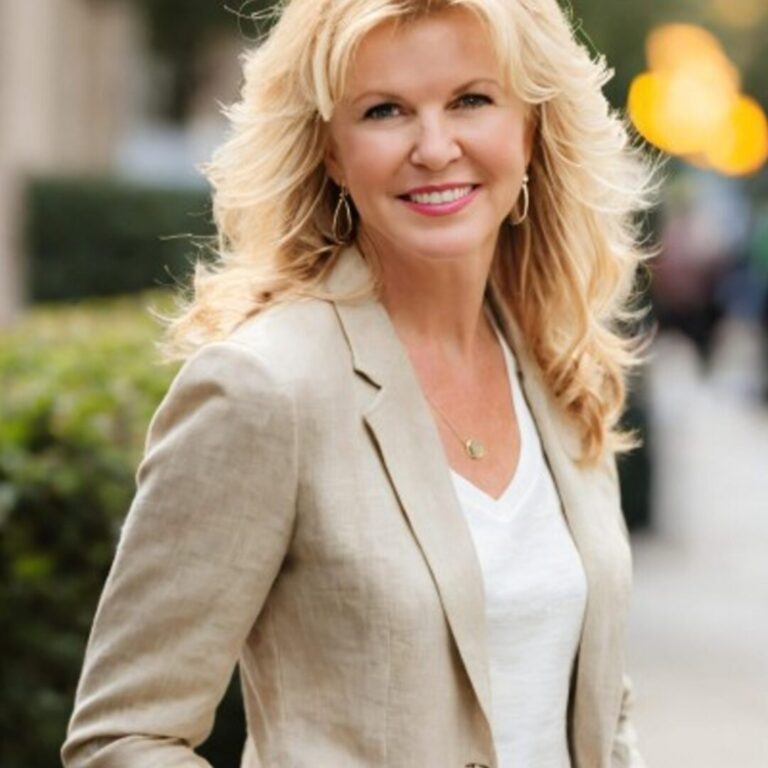
Welcome back to the show, my fellow extraordinary Americans. For today’s guest, we have Ginger Faith. Ginger has been a successful real estate investor for 30 years. She’s a real estate broker, builder, and CEO of Golden Canyon Properties, Inc., and has flipped over 52 houses, two of which were featured on an edgy TV show.
An Airbnb superhost and landlady-banker, she bought her first large, profitable commercial real estate investment in 1994. She’s also the founder of your Wealth Network Meetup group and the Women’s Wealth Network in the San Francisco Bay area. She has been seen on Fox, CBS, NBC, and Yahoo Finance.
She’s an extraordinary American, and I’m glad and honored to have her on the show. Ginger, thank you so much for taking the time to be here. It’s truly an honor.
Ginger Faith:
Happy to be here. Thank you for having me.
Cosmos:
So Ginger, can you tell a little bit more about yourself, your story, and your background, and how you got started?
Ginger Faith:
I got started in 1994, actually, in New England. And basically, it was really simple. It was way before all the YouTube videos, podcasts, BiggerPockets, and, you know, videos like this one. All we had to learn was where we would go if we didn’t have a mentor, which I did not have. You had books. And so I started reading books on real estate, then I jumped in, and the rest is history, as they say.
Cosmos:
So, Ginger, I have a question. So what got you like, motivated? Like, what was it like, what was it like, the vision and the motivational factor that got you into real estate versus like anything else?
Ginger Faith:
Well, it was more of a feeling of kind of like a, an edginess to learn. I’ve always been a learner and a grower, and I started listening to Tony Robbins tapes back then. And I started listening and thinking, what could I do? You know, what, what makes, you know, what makes me. I started getting excited about the idea of growing and doing things beyond my current capabilities.
And you know, listening to Tony Robbins will do that to you. In addition, I was reading Robert Allen’s books at the time, and the education was nothing down, like how to buy real estate with nothing down. And I thought it was fascinating. Could you really do this? And basically, I’m a self-starter, but I started by reading books and being inspired by other people who did bigger things than I did.
And I am still in that way. And I think a lot of us, anybody who’s on this podcast right now today, are people who want to learn from other People, you know, what, what else is? What is somebody else doing that I’m not doing that I can learn from? And so I got started with that vision by reading books.
Cosmos:
I see.
So if you had to, like, so let’s say for real estate, if you had to tell the audience the top three books to read on real estate investing and also just like real estate in general, what would that, what would those books be?
Ginger Faith:
Well, I went back to the classics. It depends on what you want to learn. There’s so much out there now. There are hundreds of millions of books. Right? So, what is it? What do you want to learn about? And so, there’s a phenomenal book by Gary Rapoport called Investing in Retail Properties.
Friends of mine who purchased retail strip centers use that as a playbook on how to do that. But if you want to start, maybe flipping a house, for example, my friend Diana George wrote a beautiful book on flipping houses. It’s an amazing book. So look her up. Diana George, Million Dollar Flipper.
And she is a million-dollar flipper. And her book is really fabulous. It’s really brass tacks and simple. And then, you know, Getting Rich with Rentals by Kathy Pettke. If you want to be more of a passive investor by buying smaller units, it’s a good way to get going. So those are three books that are a little less well-known than some of the popular ones, but they’re still outstanding. But again, what is it that you really want?
The book that I’m creating now is 21 Ways to Stop Chasing Hustle and Use Real Estate to Fund Your Dream Life. Gives you an overview of 21 different things that you can do. Anything from becoming an Airbnb co-host as an income stream without owning property to buying commercial property. Something much more advanced. There are many different ways you can become successful in real estate.
So it just depends on your orientation. And if you don’t know your orientation, I’d recommend going to these real estate meetups. You know, go to meetup.com and then just start attending these meetup groups. Find out what other people are doing and read a variety of books before you actually put your money and your time on the table. You can kind of get a feel for it. And when you talk, you talk about, and you learn about what other people are doing, you could say, ” Ah, that’s not really for me. You know, but other things might spark your interest.
00:05:00
Cosmos:
No, for sure.
And, Ginger, I know that in, like, 1994, you got your first profitable real estate investment. Could you tell me in the audience a little bit more about the first time you got this, and what the experience is like, and how you’re feeling emotionally, and all of that stuff?
Ginger Faith:
Well, I like to say I had more. More brawn than brains. More, more guts. You know, I really didn’t know what I was doing, but I thought, well, what’s the worst that could happen? I just bought this big, big commercial property. At the time, for me, big was a 7,000-square-foot multi-unit, you know, other. I had no people who started with 156 units. So like, for me, that was big. So, a 7,000-square-foot Victorian in a great location. It was absolutely a mess.
The first property that I purchased, the thinking behind it was basically, you know, like I said, I was motivated by books, and let’s see what could happen. So basically, I did the numbers. I ran the numbers, and I found out this one house was. It could be profitable. It was pretty simple math. How, you know, how much could I get for rent, how much would be the utilities because it was all on one, and how much would the mortgage be with insurance? And I got it at such a deep discount because it was in a distressed situation. And I didn’t do it because of some fancy method.
All right. That we all talk about now, I did it because I was cheap. Like, I don’t want to be underwater. So I’m like, okay, I can afford this. So at the end of the day, I end up living in one of the units and fixing up the others. But I didn’t have to go very far to fix it. All I had to do was paint the outside a really nice color in a beautiful neighborhood. And people started lining up, handing me applications, wanting to move in. And they said, ” We’ll fix the inside. Just give us some paint and some spackle, and we’ll fix the inside.
So it was a really seamless process, and then at the end of six months, I was making $500 a month, plus I was living for Free. So I thought, ” Wow, this really works nicely. So I did it again, pulled money out of that house to buy another house, and then did it again. Kind of a monopoly. And it was pretty, it was pretty straightforward at the time.
Cosmos:
It’s interesting, right, how you can like, buy your first house or your first property, and then you have people renting that property, and you’re starting to make like, you’re starting to make like, income out of that. And it’s just, like, a unique feeling because, like, you have a house that you can live in whenever you want, and then you have people who are just, like, paying you money to live in that place.
So it’s a pretty interesting experience the first time you do something like that.
Ginger Faith:
Yeah, yeah, it absolutely is. Yeah.
Cosmos:
But Jenner, what I wanted to know is, like, you ended up flipping and fixing and flipping like a lot of houses, right? You went about more than that, and, like, you managed to scale this.
So could you tell me in the audience about how you go from like, your first property to scaling more than 50 houses, or maybe like 100 houses, like that. And like, what’s the process of scaling and growing your business and investments?
Ginger Faith:
I like to talk about the cycles of real estate because that’s the reality for me. I’ve done many things in real estate over the decades, really.
So I started off buying multifamily. I did my first flip in 1996. But then I put it on this table because it really didn’t excite me. In 2001, I moved to California from Massachusetts and started working as a mortgage broker. So I went deep into that, and I processed and originated over 500 loans as a single solo entrepreneur between 01 and 06 when the crash happened.
00:10:00
So when the crash happened, everything shifted. But when I moved to California, the numbers didn’t work again. I was like, I’m cheap. I’m not going to buy something and then have to write a check. It didn’t make sense to me.
So I stayed away from the market. As far as I know, I didn’t flip anything. I didn’t buy anything right away until 2009. In 2009, at the very bottom, July of 2009 was the absolute nadir of the recession’s craziness. I started buying properties and flipping them, then keeping, you know, a property here, a Property there, building an ADU here or there. And I started doing that in 2009. I went gangbusters again.
So I went, you know, crazy gangbusters with the mortgages. And then the crash happened. It was a time of retooling, trying to help people the best I could, and then realizing that short sales were the way to go. And then, eventually, in 2009, it turned out that flipping was the way to go. And so it was really just a matter of paying attention to the market, what the needs of the market are, and where I can best serve. And stepping in, in that capacity, it was an avalanche of work that had to be done.
And so I started doing the flipping, and I did that until 2014. And, so again, I pivoted. I got out of the game for a couple of years to day trade, which I don’t recommend to anyone, personally, then jumped back in because I realized I wasn’t where I belonged. And, you know, so started doing, flipping again, and, you know, residential sales as well. And right now I’m working on another luxury flip. Well, it’s not a flip. It’s a luxury build. We took a couple of acres in a really, really prime location, and we’re building four homes on it. We’re splitting the lot and then doing. Doing builds of luxury homes.
So it’s just a matter of pivoting, serving wherever you can, and paying attention. And that’s why I was recommending, you know, reading number one now, so many podcasts. That’s how I dabbled in Airbnb and became a superhost. It was through podcasts, in and through, you know, just kind of seeing what was out there. What are the other options for passive income? And you can make more money, usually as an Airbnb host. But now that’s getting heavily regulated.
And so I’ve been stymied in a couple of places, and I’m going back to traditional renting, you know, with that. So everything is, like, keeping you on your toes between, you know, the market dynamics, which are always in flux, and the government bureaucracy and changes that keep you on your toes.
So being an entrepreneur, a real estate entrepreneur, is not for somebody who just wants a paycheck every day. You’ve got to want; you’ve got to be open to the market and to how you can best serve. But there’s always an opportunity. There’s absolutely always an opportunity. And that’s why these REI meetings are really valuable.
Cosmos:
No, Ginger, this is amazing. The Stuff you, you fix and flip. Like in 2009, most people just lost hope. They’re like, oh, man, this is a crash. But that’s ex. When you invest, when everything is just down, and then, that’s when the real wealth starts, right? When you have a recession and a downturn. The rich people know that.
And, Ginger, I wanted to ask you about Airbnb and, like, the strategies, like the Airbnb strategy of creating wealth and everything. So, from your perspective, how does Airbnb work, and how can people use this strategy to succeed in real estate?
Ginger Faith:
Well, the first thing I have to say, with a disclaimer, is that it’s becoming saturated in many areas. So, I intended to buy many homes and Airbnb them, just like I bought homes back in the day for people to live in long term, because you can make more money, and with prices higher, it makes more sense to have a higher income. But now it’s being highly regulated, and it depends on the area.
So you have to hear first. My honest opinion is don’t. Don’t put all your eggs in one basket. For example, I wanted to go to Cleveland, Ohio, and buy 10 houses. I bought a house, and then I started seeing some shifting. I found out what happened with Houston, and then I had another Airbnb in California being shut down because of politics.
And so I decided. And I also became very enamored with commercial real estate through the Commercial Academy. So I decided to put a pause on that.
So I have the one there, but that one has been restricted. And so they’re saying you can only do seven-day rentals. Well, nobody wants to go on a seven-day vacation, usually in Cleveland, Ohio.
00:15:00
Ginger Faith:
So I’m pivoting now and working to attract nurses, right next to the Cleveland Clinic and Case Western. And so my recommendation is that, on the one hand, you want to have a portfolio that’s close to you. On the other hand, if you’ve got 10 houses and you get it, you’ve got one county restriction. What happens then? Right?
So there’s a lot of really great books and podcasts on, you know, I’m going to areas that need Airbnbs. But I have, at this point, we have to challenge that because the hotel industry has been beat up really severely, and they’re, in my opinion, it looks to me like they’re really trying to save themselves at the expense of these small operators, even in areas that are traditionally Airbnb.
So, just buyer beware: you can easily get involved. And I think it’s a great idea. The editor of my book took one of my ideas, and she said I ran with it. And so she’s off to the races with this idea: to do arbitrage.
So you rent a building from someone who doesn’t really care about it. They’re like absentee landlords, or they’re like old landlords that don’t care much and then fix it up for them, but get a longer-term lease. Tell them what you’re going to do. Like, look, I want to invite professionals. I’m going to have cleaning; give them examples of others you see, you know, that we’re going to keep pristine for you.
One of the benefits of having an Airbnb is that your house always looks great, even when something goes wrong. Negative, you know, negative, there’s a leak, somebody tells you, the cleaning person or the guest tells you, you know, so it’s always in great condition. So you’re preserving your asset.
So you can use Airbnb arbitrage that way, without a huge investment. You can basically, let’s say, a person bought the property for, you know, $200,000, depending on your area. You can rent it from them at market rent in a dumpy condition, put some paint on it, fix it up nice, you know, do some nice shopping, using court furniture, really nice high-end furniture for cheap, not like the podcasts. All the Airbnb podcasts want you to spend like $70,000 on furniture. And I don’t believe in that. And then, yeah, just, oh, buy from this person who’s sponsoring the video. Right.
And so, you can go to Court furniture, get some really good deals, and then rent it out. And now you’re getting passive income. But you know, if there’s a big restriction, you’re only out your furniture money and whatever you invested, you’re not out purchasing an entire house and a mortgage, you know, and the insurance and all of that. You’re not underwater like that. You have to flip the script now and try to get long-term tenants in there and try to wiggle.
So it’ll give you a little bit more freedom, which I think is one of the big goals, these days of restrictions. So just be aware. But if you do decide to do this, it’s very viable because you can usually make more money. I’ve got a great video. I did a ton of research on finding it. You know, there are great areas where you can actually buy. You buy one here, buy one there, buy one there. You can. It’s not hard to do it remotely. You do need to get a good ground team. You’ve got to get a great cleaning, ah, person. Absolutely.
You’ve got to make it look beautiful and have great professional pictures. And then you’ve got to get, have, I’d say one or two great handypersons, and you know, in other professionals like h, Vac guy, and you know, bummer, just in case, you know, just have them on tap when, when things go wrong. But if. As long as you find people that you can trust, there are trustworthy people. There are scammers everywhere, but there are trustworthy people too.
So you can as long as you have a ground team. Remote is not an issue at all anymore. Used to be, but it’s not really anymore.
Cosmos:
So.
Ginger, there are so many questions I wanted to ask you because this is a very fascinating topic, and you made it sound so simple and effective. One thing that came to mind is: why aren’t more people doing this? Right.
But one thing I wanted to ask about, for the audience’s sake, was the concept of arbitrage, since I know the wealthy use it to the fullest.
So could you tell the audience, like, what arbitrage is and how you can utilize it in real estate to make a lot of money?
Ginger Faith:
There are a thousand ways to use arbitrage, and it’s an awesome word. Basically, it’s about, it’s about the gap, right? So you take out a home equity line of credit, let’s just say you have great credit, and you, you know, the bank will give it to you, give you this money for 6%. And you know that there’s an operator who does great forced appreciation property,
That you can invest it in, and you can get 13%.
00:20:00
Just say they’re doing, I don’t know, college, college campuses. They’re creating housing for college campuses, making bank, and are willing to give you 13%. Well, now you’re taking your home equity line of credit, paying out 6%, giving it to them for 13, and getting 13%. That’s spread, right? That’s arbitrage. The way I was telling you about it a minute ago was simple. You’re using somebody’s apartment or house, and they’re giving it to you for, I don’t know, $1200 a month. Let’s just say, okay, maybe it’s around here, it’s like 3,000amonth. But can you? But can you Airbnb it and earn an extra $1,000 per month? Can you do this? You know, do the numbers work? If you can, then you’re in my. In the money. Right?
So it’s using this spread intelligently. because. And that’s where the rub is when you say the rich do it. Well, the rich know how to underwrite. That’s like, that’s like the big thing, the big secret nobody talks about. Oh, the rich do that. They know how to underwrite. Or they have really great underwriting teams, people who pay a lot of money to crunch all the numbers to make sure all the numbers line up properly. You know, when you apply for a bank loan, they know how to underwrite because they don’t trust you. They want. They want to make sure their money is returned and that the dog is spayed. Right.
And so they ask for. Underwriting is the experience we have as consumers when we get a home mortgage, and they ask for everything you can imagine, including your blood type and your firstborn as collateral. Right. So they want your pay stubs, your tax info, your tax returns, and letters explaining any credit issues, you know, your credit. They have questions about everything because they’re underwriting you and the asset; they appraise the asset. And that’s why they’re wealthy, because they know how to underwrite, so if you want to be really wealthy, being a good underwriter or having someone on your team who you trust, who can become a good underwriter and explain the. To you, the underwriting details. And the more sophisticated the asset, the more sophisticated the underwriting needs to be.
Cosmos:
Wow. No, yeah, because arbitrage is, ah, very overlooked by most people. And, most people don’t utilize it to their full advantage. When it comes to real estate, and not just real estate, like business or anything else, it’s something that people need to know, like they need to utilize the gap and then make a profit over there.
Ginger Faith:
Yeah. And the only way you’re going to do it is to know the value. Really, no value, right?
Cosmos:
No, for sure.
And, Ginger, I know you have years of experience in real estate. Like, from your perspective, what are the best real estate strategies to use and why?
Ginger Faith:
There’s no answer to that, because it depends. The best real estate strategy is to know your own genius. To know what you’re good at. And what you are, what you’re skilled at, what you can do well. Right?
So once you know what your natural genius is and you act on it, that real estate is everywhere. It’s ubiquitous. It’s like the air we breathe. Right? You’re sitting in real estate, I’m sitting in real estate. We look around, and there’s real estate everywhere. There are a thousand ways to make money in real estate, but you want to make money in a way that isn’t. That goes in accordance with your nature, right?
So if you love building, if you love putting things together, and solving problems that way, that’s where you need to be. If you love people, that’s where you need to be. There are tons of ways to get wealthy just in sales as a salesperson, you know, selling mortgages, selling real estate itself as a, you know, broker or an agent, or commercial real estate. There’s, you know, plenty of money. Of course, to get really wealthy, you need to be an owner. That’s really important.
So you can sell for, till. Till the day you pass. And if you haven’t saved anything in hard assets, you will be poor no matter how good you are. But there’s no, there’s no one way. But the one way is knowing your skill set, what lights you up, and what makes you want to. What makes you want to? To go to work, you know, to go to work that day.
Cosmos:
No, what you’re saying is relevant, junior, but like a lot of people in this audience, they’re like, they’ll probably look at this, and they’re like, huh? Some of them will be like, “I want to do fix-and-flipping.” Others will be like, I want to buy some properties and rent them out. Others will be like; I want to do Airbnb. And it’s just like, there’s just so many different directions to go.
And is there, like, a way for somebody to know their purpose? let’s say they’re looking to real estate to become successful, like, know what they’re attuned to,
and then develop a proper strategy to ensure guaranteed success.
00:25:00
Ginger Faith:
learning and thinking and learning and thinking. Okay. That’s one of the reasons I’m motivated to write. The book I’m writing is titled 21 Ways to Stop Chasing Hustle and Use Real Estate to Fund Your Dream Life. Because ultimately, there are broad brackets of genius, right? So people, people who love people working with people, building things and systems, people who love systems, right. So those are some broad buckets.
So find out where you can take, you know, the Strong’s aptitude test or the Myers-Briggs test. I would say take, you know, do a lot of introspection. There are many tests you can take to determine your orientation. You probably already know your orientation based on what you want to take in school and what you hate in school. Right. And so do you know, drill into that and then get a list of. Okay, I love building. Well, what does that mean? Well, there are a lot of things you can do as a builder, right? You can, but ultimately you don’t want to be hammering nails for the rest of your life. Ultimately, in real estate, you want to be an owner and a lender, like the banks, right? Ultimately that. But you start building, building beautiful things, things that you’re proud of, and then selling them. Right.
And if you’re a people person, then you start by selling and start selling things that you can be proud of and helping people in ways that are significant to them, and then use that money to buy and own hard assets that are going to appreciate over time, and then also help you weather storms.
Cosmos:
No, that is amazing advice, Ginger.
And as a continuation of this, from your perspective, what is the best way to create generational wealth?
Ginger Faith:
I love that question. by thinking generationally. Okay. And that sounds silly, but it’s true. Okay, I was just listening to Charles Munger last week, and he said that most people who become grandparents start thinking generationally when they have a baby they can see. Then they start thinking, oh, wow, I would have loved to have had some more savings for this baby.
So use your imagination when you see your first child born, okay? Hopefully, that child will have another child. So he came up with this crazy number. If you bought a ten-thousand-dollar savings account, as you bought stocks in the S P500, don’t quote me on this, but it was multiple. But when that baby turns 60, if you never touched that $10,000 and it was in the S&P for its entire 60 years. Multiple. Multiple. I thought the number was $550 million, but I was a little distracted. But it was an outrageous amount of money if you just, you know, do this.
So start thinking in general racial terms. Most of us do not think that way. We think, oh, you know, we have to do this, we have to do that. Right. We are thinking day to day. Maybe we think five, five years out if we’re really sophisticated. But do we think 60 years out?
Cosmos:
No. Most people would.
Ginger Faith:
Right. So generational wealth is really about thinking that way. land, ground leases are a way to have generational wealth. The Rockefeller Center is on a ground lease. The Rockefellers created dynasties because they thought in generational terms.
So start thinking generational. I would say listen to some of Charles Munger’s work. That’s great about you, you know, thinking long term and creating dynasties. He said basically, you know, starting businesses and owning real estate, but owning quality real estate over the long term, long-term, and then ground leases. Those are some things to keep in mind that will help you to think generationally.
Cosmos:
So, Ginger, there was this book that I was reading, the author was, I think, Mike Maloney, and it was about gold and silver. He basically talked about how, over the past century, if you looked at the stock market and then at gold and silver, and then at certain times, there’s this thing called cycles of wealth, about risk, and about precious metals. If you buy and sell at the lows and the peaks of each over time, you could take a hundred-dollar amount, invest in gold, then take it off and invest in the stock market. And then, when the stock market is at its highest, basically take it off and invest in precious metals.
You could make millions and millions of dollars if you know how the cycles work and when to sell off at the peak. But basically knowing when the peak is, that’s like the difficult thing with regards to these cycles. But if a person can understand the cycles of wealth, they will be very successful.
00:30:00
Ginger Faith:
Yeah, but most people don’t.
Cosmos:
No, I mean it requires, like, studying over time. And it’s, it’s a, it can be very hard. But it was just, like, fascinating knowing how you can turn a hundred dollars or a thousand dollars into millions by just knowing when to buy and sell, by observing the stock market, and then the gold and silver prices, different assets altogether. And it was, it was truly fascinating to me.
So that’s what this conversation, like, started to make me think about.
Ginger, I know that over the past three decades, you’ve had more than three decades of real estate investing experience. What are the biggest lessons you learned during your time in real estate investing and life in general?
Ginger Faith:
Yeah, there’s a ton of lessons. I, some of them I already said, underwriting. Learn to underwrite; be aware; be careful. Richard Branson put it nicely. He said, ” If you protect your downside, the upside will take care of itself.
So it’s about protecting, protecting from the wolves, while you grow your wealth.
I would say that’s probably one of the biggest lessons
Cosmos:
Can you elaborate on the wolves? Like, what do you think are the wolves of real estate investing?
Ginger Faith:
Yeah, well, the bigger the numbers, the bigger the sharks. And this is an arena with a lot of predators, because there’s m. There are also many sheep and many predators.
And, I consider myself a shepherd. And so, there are a thousand ways of saying, “let me see what of many ideas.” There are scammers out there doing similar Ponzi schemes with real estate, especially in high-end areas like San Francisco. They’re out there, they’re at these REI meetups. They prey on people who are new, eager, excited about getting into a deal, and have money, and they will show them properties and say, “Oh, you know, invest with me.” We’re going to flip this property. We’re all going to be, you know, rich. We’re going to make, you know, 20% on our money. They’ll sign whatever you need to sign, you know. And what you don’t realize is that they’re stacking notes on top of notes on that property.
So it’s underwater. So by the time it goes into foreclosure or gets sold, nobody gets paid. Maybe the bank is paid, maybe not. They flip LLCs. They’ll, just discard LLCs. They’ll start one, a fresh one, and then discard it. Discard one. Most REITs go broke because of the business model. I’ve known a lot of people who have trusted their money to REITs, and it’s gone. Bye-bye. And you don’t realize it’s gone because of all that. They have tons of disclosures, 75 pages that you e-sign. You have no idea what you’re getting into. And because of the business model next, your money’s gone. It just vaporizes.
So a lot of people lost a ton of money in the crash. You know, there are just so many uncertainties. But a trusted team is everything. You know, the other day, somebody just basically gave me a hundred-thousand-dollar check. It’s a deal for a deal. I’m going, I’m working on now. It’s a one-hundred-thousand-dollar check. And he didn’t even, he was just like, oh, here, Ginger, here’s a hundred-thousand-dollar check. Now, to me, that’s like a sacred trust. That’s a sacred trust. I was like, you know, and it happens regularly. People will, you know, hand me money to invest in my deals.
But it’s, like, such a big deal. It’s such a sacred trust. But I’ve seen people just write those checks out because they trust somebody. Now, this person did not do their due diligence. I have a 20-year relationship with this person, and I would die before I would have anything happen to his money. But it dawned on me how easy people just, they just. He didn’t underwrite. He just trusted me. Well, what about if you’re trusting the wrong person?
What if you did do background checks on everybody? You’re gonna, if you’re gonna hand over money for a deal, you’re gonna underwrite it, and you’ve got to do background checks on everybody. You know, if they had a bankruptcy recently or if they have liens or judgments against them, if they even have, you know, traffic tickets, like, okay, how many? Right. And not that everything is, you know, but you have to just look at the character, the overall character of the person, and be wise with your money.
So I mean, that’s just one, a couple, a couple of things. Of thousands of things I’ve seen. You know, some people think it’s sport to chop your head off, take your money, and leave you for dead. It’s a sport.
00:35:00
Cosmos:
Wow.
You know, how would you identify a scammer or a shark in the real estate world?
Ginger Faith:
I gave a presentation on that. I created a PowerPoint on that. It’s one of my better PowerPoints because I’ve seen so much of it. And what you need to do is check yourself. You need to check yourself and them. So, for example, if you’re getting fomo, fear of missing out. If you’re in Greenland. If your Greenlands are firing, you need to simmer down, because that’s it. That’s what you have to check. Right. numbers and numbers. You’ve got to pay attention to the numbers. And, as far as the person, the more charismatic, the more. Like, charisma is beautiful, but it is dangerous, you know? Right.
So, the people that I find that are more like Steady Eddie, they’re not really charismatic, but they just think they run their numbers, they know what they’re doing. They’re just very, you know, same today, same tomorrow. Those types of people. And if you want to invest with them, you do. But the more flamboyant, more charismatic. It’s not necessarily that they’re. They’re wrong, but I’ve seen so many people topple with that. You’re laughing because you know what I’m talking about. You’ve seen it.
Cosmos:
No, I mean, it’s funny because most people take care. Like, if you call them charismatic, you’ll take it as a compliment. But let’s say you’re calling somebody charismatic. They’ll be like, oh, man, I gotta watch out now.
Ginger Faith:
Yeah, yeah, yeah, yeah. That’s 30 years. That’s not 10 years. That’s not five years. Right? That’s 30 years. Yeah, it’s. It’s just the way it is. Like, I like charisma, and it’s entertaining. But don’t let. Don’t. Don’t let me. Don’t. Don’t ask me to sign anything. Sign a check. Right? Don’t ask me to sign a check.
Cosmos:
There are different types of charisma, but is there charisma where you’re like, okay, I’ve got to watch out for this type of person?
Ginger Faith:
not necessarily. The last big, big scammer that I dealt with was just funny. He was funny, and he was. He wasn’t the normal charismatic kind of guy that you would think would be a red flag. He was like Santa Claus, you know? Yeah. Yeah.
But do background checks. If you’re going to get invested with anybody, do background checks on them. Talk to other investors who have gotten involved. You know, make sure that they have a solid reputation. You know, there are some good, good actors out there for sure. But you do. You do need to know what you’re doing. Unless you just want to write checks. If you have so much money, you just want to write checks and let it fly out the window. But most of us don’t feel that way; that’s how we want to conduct our business.
Cosmos:
No, that would not be a good way of conducting business, that’s for sure. Yeah, yeah.
So Ginger, on another note, what does the American dream mean to you personally?
Ginger Faith:
I never think about that. I never think about the American dream. I think that it’s. Unfortunately, we do have a story about what the American dream means, and I think many things are corrupting it—many, many crosscurrents in our world.
Right now, I don’t want to get political, but you know, it’s just, it’s harder to do the starter home. You know, the number of people in a family has severely shrunk over the last few decades because of, you know, political issues. It used to be a six, you know, six children in a family was normal, and now, so people can’t afford two. If you have four, you’re like, oh, what’s, my goodness, they have four kids. What’s up with that? Right?
So, I don’t know. I don’t know what the American dream would be for anyone. I know what the story is. For me, I personally think having meaningful work, meaningful relationships, and financial comfort, and then you share with other people, that’s a life worth living.
Cosmos:
No, for sure. I mean, the American dream means different things to different people. And for sure, like, in today’s world with inflation and soaring prices, and, like, our wages not catching up to that, it definitely makes it difficult to have a family with multiple children, like, little, alone, like six.
Ginger Faith:
Right. Right.
Cosmos:
Yeah, for sure.
And Ginger, on another note, I know you have a company, Golden Canyon
Properties Inc., could you tell me a little bit more about the audience and the premise? How did you get that started?
00:40:00
Ginger Faith:
Well, before that, I had a mortgage company, and I was in mortgages exclusively from 2001 to 2010. And then, when I switched to a primarily real estate role, I worked with Golden Canyon Properties, which represents buyers and sellers and helps them buy and sell homes. So that’s my corporation, which works and helps people in that area. I never flip or hold property in my corporation. I do that separately, according to my accountant’s advice. But it’s basically just a brokerage.
Cosmos:
And that’s amazing.
And I also know that you’re the founder of a meetup group called Your Wealth Network. Can you tell me a little bit more about the audience? And what is the premise of you getting that started?
Ginger Faith:
Yeah, so for. I was doing a. We had a really good, great group with a partner of mine up until Covid. Then my partner didn’t want to do Zoom, so we took a hiatus. And then I started back a couple of years ago, and then it morphed because I have some really great friends who are very, very successful in commercial real estate.
And so they decided to do this with me. And ultimately, we were attending a lot of lectures and presentations by various people, including title representatives, 1031 exchange specialists, and people who are really in the know about various aspects of real estate. And, you know, some commercial investors, like Neil Bawa, attended our meetups.
At this point, we’ve morphed into a mixer. And that has to do with time constraints. And so we show up at this point, the first Thursday of every month in Dublin, and we, you know, meet each other, exchange cards. Who’s doing who, you know, what are you doing? What are you involved in? And we just get to know each other and encourage each other on the real estate path at this point.
Cosmos:
It’s always good to have networking and connections because, you know, like, this is saying your net, your net worth is your network, and so having meetups, that’s where we get knowledge, and just like, the ability to do business and, like, connect with the right people.
So I admire what you’re doing.
Ginger Faith:
Yeah.
Cosmos:
And, Ginger, if someone in the audience wants to connect with you and learn more about you, your work, and everything you do, how would they go about doing so?
Ginger Faith:
Probably the easiest way would be to go directly through Facebook. I’m on LinkedIn and everything else, but I’m more active on Facebook, so direct message me.
Cosmos:
Okay, that. That is awesome.
And, Ginger, I’m so glad and grateful that you took the time to come on this podcast and, like, talk about real estate investing and strategy and all that, because real estate is definitely one of the main avenues where people can become really successful and become financially free. And I do hope that you take the time to come back to the show later.
Ginger Faith:
Thank you so much. I appreciate being here and am happy to be here.
Cosmos:
And I want to conclude this episode by letting my fellow extraordinary Americans know that, hey, there’s an extraordinary within every one of us. It’s our duty to awaken it and unleash it until next time. Bye for now.

 Amazon Music
 Apple Podcasts
 Audible
 CastBox
 Castro
 Google Podcasts
 iHeartRadio
 Listen Notes
 Overcast
 Player.fm
 PocketCasts
 Spotify
 Stitcher
 TuneIn