Cosmos
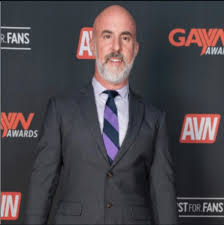
Welcome back to the show, my fellow extraordinary Americans. Today’s guest is Brian Gross. Brian, president of BSG pr, has been in media and public relations for over 32 years. Companies including Deaf American Recordings, Warner Brothers Records, Reprise Records, Elektra Entertainment Group, Vivid Entertainment Group, and organizations such as the Lollapalooza Tour have employed gross. Brian was an executive producer for Reality X, the Search for Adam and Eve.
His background spans all facets of public and media relations, including work with some of the world’s largest businesses, celebrities, and music acts. Clients of bsgpr, past and present, include Gene Simmons, Sasha Gray, Maitland Ward, Adam and Eve, plus one, Adult Time, Penthouse, Phoenix Books, the Avian Adult Entertainment Expo, Joanna Angel, Burning Angel, Greg Lansky, the Vixen Media Group, Pink Visual, Evil Angel, Girls Way Autoblow, AI Camcon, the Fearless Man, Nina Hartley, Luke Fiantes, Kendra Sunderland, LA Pop Art, Liberation Entertainment, Tony Clifton, Sherry’s Ranch, Big T’s Toys, Sophia Rose, Sherry’s Ranch Once again, Wood Rocket, Jane Wild, and many others.
He’s an extraordinary American, and I’m glad and honored to have him on the show. Thank you so much for taking the time to be here, Brian.
Brian Gross:
Thank you for having me, Brian.
Cosmos
can you tell me, the audience, a little bit more about yourself, your background, and your story, and how you got started?
Brian Gross:
Yeah, I got started, actually. During my senior year of high school, I interned at Deaf American, a record label. And three days a week, my senior year, I would drive down and work out of the office with the PR department. I was doing all the grunt work as far as, you know, filling out, putting together the other press kits and copying, and just everything that was asked of me by that department and the people in it, for their daily job of promoting the artists on the label.
So I got a firsthand look at how PR works and, you know, dealing with artists and working with artists and musicians and, you know, other people at the company. It was an incredible experience at such a young age.
Cosmos
Brian, you have attained so much success in your life. Can you tell me and the audience what your strategic vision was from the beginning, and did it change over time?
Brian Gross:
I’ve always been a fan of doing your job and, once you. I was fortunate to figure out what I wanted to do at an early age. I know that’s sort of uncommon, but from there I just put in the hours, learned, had some incredible mentors, and really focused on, you know, the day-to-day of how do I get better every day.
My career is certainly not boring. Every day is something new. I’m here talking to you this morning. It’s one of those exciting things where you get up and see what the day brings.
Cosmos
Brian, I know you’ve worked with celebrities, including Gene Simmons and Alma Rosso, who’ve been on The Apprentice and all of that. What is it like working with celebrities, and what is that world like? Could you give me a brief overview of that?
Brian Gross:
Yeah, they set a high bar, and you’ve got to work up to it. You’ve got to make sure you’re working at their level and giving your all to what they want to accomplish. They’ve got the goals that they’ve already, you know, achieved, and they’ve got more goals ahead of them. They’re always thinking about the future, working in the present, and learning from the past.
So with that in mind, when you work with people like Omarosa or Gene, you’ve really got to be focused, and you’ve really got to stay ahead of the game. You know, you’ve got to listen, and you’ve got to react, and you’ve got to be smart about your actions and what you say and what you do, because ultimately you’re serving these people in this regard, and you need to live up to what the expectations are.
Cosmos
let’s say you’re working with somebody that’s just like relatively anonymous versus somebody that’s like a, ah, celebrity. What are the mean differences that you have noticed in their behaviors and their attitudes?
Brian Gross:
Yeah, that’s a great question. I mean, certain people, as you say, the anonymous ones, might have specific intentions and goals. So again, it comes back to listening to what it is they’re looking for us to achieve. And from there you’ve got to live up to that. You must listen. You know, it doesn’t matter how famous they are. It doesn’t matter, you know, who they are. Whether it’s an A-list celebrity, someone completely anonymous, or someone up-and-coming, you’re treating them in the same manner and with the same respect.
Cosmos
I see.
Brian, what was one of the motivational factors, or the why behind what made you go into this industry versus anything else?
Brian Gross:
I just wanted to be in the music industry, you know, at a young age. I just love music so much. So that was the driving force behind the opportunity to spend time at work at record labels, around musicians, incredible music, and people who shared my passion. It really came from passion. It was a desire to be in an industry I wanted to be in, and I knew I had to work hard to get where I wanted to go.
Cosmos
During your time in this industry, what is the greatest revelation or lesson you learned? You had, like, while working with all these people and just being in this environment?
Brian Gross:
I think it comes down to the human aspect of just being around some of the biggest bands in the world and having some of the most incredible conversations.
But, honestly, realizing as talented and as incredible as these people are at their craft, they’re just human, just like me. And I would have incredible times and conversations, and I would smile, laugh, and really enjoy being in their presence and learning from them.
Cosmos
One of the things that a lot of people think is that the celebrities are like they’re on another level, or like, they’re basically like, kind of almost like, on a demigod type of level. But what you’re saying is pretty true. They’re ultimately only human.
And then when. When we have podcasts like this, we tend to realize that we’re all just people at the end of the day, which I find interesting.
Brian Gross:
Yeah, no, I completely agree. Completely agree. Please keep that in mind. You know, I learned at a very young age that there’s no room for getting starstruck. You can admire and be in awe, but if you’re actually starstruck, you have to set that aside and realize you’ve got a job to do.
Cosmos
So, Brian, is there, like, a story during your career where it was like a profound experience that you had that basically changed the way you saw the world?
Brian Gross:
I probably had more than one of those, to be honest. I don’t think I can point at one, but just different opportunities and being in different places here and around the world, with artists, with people that I work with, with media people, honestly, with friends, with people that I’ve been around that have either done or said things that have really struck a nerve or really opened my eyes so hard to point at one thing.
But I think it’s a culmination of many things that have, you know, guided my path.
Cosmos
Brian, one of the things that I wanted to understand, at least from your perspective, was because you know, in these days a lot of, ah, a lot of media tends to be untrue, right? People don’t know what is true and what is false. Like they, some people call it fake news, right?
So, from a perspective, what is ethical, ah, and integrity-based, like media public relations, versus what is not? Who can we trust, and who can we not trust?
Brian Gross:
That’s such a great question. I mean, you want to stay out of the algorithms, you want to stay out of the wormhole. You still can trust, you know, the large media that exists, even as much as they’re being talked down upon.
But you know, you want to get your information and then fact-check on your own. There are so many great documentaries and still incredible news resources. I still believe in the media. There are incredible journalists out there. It just might take a little more time. I think the aspect of being able to just sit on your phone and doom scroll is quite, you know, you can question the health of that and where that information is coming from and why you’re being fed specific information. It takes a little more time to get off that, go to the news sources, you know, do your own research, and really study specific topics that you want to be more knowledgeable about.
Cosmos
as a continuation of this, right, like a lot of people think that media sources have a bias, they have an agenda, right? And when they do their public image for like people, it’s to promote propaganda or an agenda. Many people don’t think there’s a neutral option. But from your perspective, how do you view all of this?
Brian Gross:
I think it’s straightforward. Listen to both sides, right? Watch all the news, watch it from all sides, be educated from all sides, take things from all sides, and ultimately decide for yourself what you believe and what you believe in your heart.
And you’ll find an inner peace with that. But taking only one side and not the other is unhealthy and does not imply one side is better than the other. It’s a matter of taking in all the information and making your own decision.
Cosmos
Brian, let’s say somebody in this audience is watching this, right? And they want to take their product or service to all the media outlets, but they don’t know how because they’re anonymous and new to this. What steps should they take to take their business to the next level?
Brian Gross:
They should research PR firms that handle the specific product type or brand, whatever it is, because there’s PR. There are thousands and thousands of PR firms out there that you can find the right one that fits what it is you want to have promoted, have conversations with these firms, get proposals from them, and then ultimately decide which one fits the best for you and your product or your brand. It’s a personal business. It’s a business with a significant human element: you’re putting your trust in someone who will hopefully garner attention and accomplish the goals you have set.
Cosmos
From your perspective, when you’re doing all these public relations, there’s obviously a public image. Right? And how does that work when it comes to celebrities and people who are high up over there?
Brian Gross:
Well, I mean, often it’s very strategic. It depends on said celebrity. It depends on the person. Everyone has their own niche and their own identity. There’s authenticity you can feel. So with that in mind, it’s, you know, it. To each his own, I would say, as far as that goes.
Cosmos,
So one of the things that people believe is that, like, celebrities and big-time people, people who are famous and rich and famous, they tend to be very difficult people and challenging people deal with. Is that true from your perspective, or is that just like a stereotype?
Brian Gross:
It’s very much a stereotype. I think everyone has their challenges. You don’t have to be a celebrity to be challenging. We just put that out there because we see celebrities more than most celebrities have put them out there, whether it’s reality shows, interviews, or what have you. We see them more than most people do, and ultimately, we stereotype.
Sure, some might be more than others. Overall, humans can be challenging; some are more so than others.
So it’s a stereotype. There might be some reality to that. Sure. People have their stories, but ultimately it’s because we see them more than we see a regular person that we go, you know, and wonder, you know, if they’re, you know, a pain in the ass or not.
Cosmos
No, I mean, totally. So, as a Continuation of this.
I know you’ve been dealing with people for like three decades now, right? What is one of the great revelations you’ve had about people and human nature?
Brian Gross:
I think technology. I think it comes to technology and how when I first started, you know, on my computer, when as a teenager, I was in Prodigy chat rooms, right? And then it was AOL, Friendster, MySpace, and Facebook, and we’ve gone on and on. Basic communication between people remains. The technology, how people use it, and its impact on people. I think it’s pretty incredible.
And certainly it depends on your generation. You know, an older generation came just from telephones. My generation came of age with computers and the early Internet. And now you have kids who, if I say something like Friendster, they’d be like, “Well, what was that?” You know, Friendster is now 25-30 years old. So, I mean, you know, pretty interesting, the technology changes and how that affects humanity.
Cosmos
I mean, as a continuation of this, I’m actually curious because, you know, like, I was born in the early 90s.
it was a time right before the Internet, right? The only way to promote your public relations and media efforts was through radio and television. Then the Internet came into being, followed by social media.
The world we live in is very different from how it was 30 years ago. So, from your perspective, how has social media changed the entire ball game of your industry?
Brian Gross:
Access. So now, a celebrity is on social media and is quote-unquote accessible, right? You can DM them or comment directly on their post. We obviously have a troll society now, where people feel the need to express their opinions.
So that’s where social media has definitely changed everything: access to other people.
Cosmos
Well, so do you not feel like social media creates a kind of bubble of biases, like where we go with our own people that want to tell us what we want to hear, and then we have this thing, and then with the rise of AI, like we don’t even know what is real and what is unreal anymore.
So, like, do you think it’s negatively affected things, or it’s just been more positive in general?
Brian Gross:
I think it’s both. I think it’s both. I think it’s what you take from it, right? We all can see the negatives. We all can see the positives. I think it’s ultimately up to you, the way you look at things, to figure out how it affects you. It’s a personal thing, right? How does everything affect you?
Societally, we can definitely focus on the negatives, but there are plenty of positives as well. Ultimately, it’s up to the individual how much they let technology, social media, and communication affect them. Personally.
Cosmos
No, I mean, totally. In today’s world, social media has been a significant factor.
But Brian, on a different note, I wanted to ask you: what does the American Dream mean to you, and how did you go about achieving it?
Brian Gross:
Yeah, I mean, for me, it’s the ability. You know, obviously, I was lucky enough to be born and raised in this country and given the freedoms to go after what I wanted as far as a career, as far as, you know, making, you know, economic decisions, and ultimately freedom of speech and everything that goes with sort of the basis of this country. There are many places where I would not be able to do what I’ve done. And certainly, this country has given me that freedom.
Cosmos
So, Brian, when I first came to America, I realized there were two different American dreams people were chasing. On one hand, it was the white picket fence with the house and the family, the wife and the two kids.
On the other hand, there was the culture of celebrity and fame. The one that you find in New York, you know, where you’re on the billboards, like people are on the tablets and everything, and people just want to be famous and rich and successful.
And they look at all these stars, the NBA athletes, all the music, the musicians. From your perspective, is the American Dream an individual pursuit? Or is. Is. Is there like a broad generalization of what it should be?
Brian Gross:
Oh, I think it’s individual. I think it’s very individual. It’s up to each person who is either born here or comes here to, for lack of a better term, take advantage of the opportunity given to them, or to achieve the goals they’ve set for themselves, ultimately.
Cosmos
Many people say we have become a superficial culture. Where it’s just become a celebrity culture, we need to be more spread out, spiritual. Do you think we’ve gone too far to the other side? We, as Americans, have a balance between spirituality and the rich-and-famous life.
Brian Gross:
No, I think that’s perception versus reality. I think everyone teaches their own, based on their personal spirituality. Certainly, it doesn’t get played out in the media as much as content that attracts more attention, gets more eyeballs, and goes through algorithms, which the more negative tends to do. But by all means, there’s plenty of spirituality.
Many people believe in a higher power and in everything around us. So, that’s definitely a perception versus reality thing. I think there’s plenty of spirituality. I think there’s plenty of belief. I think there’s plenty of hope out there. I’m a big, you know, stay-positive type of person. Even through thick and thin, things will always get better.
Cosmos
one thing that came into my mind, right, is just like, the idea of like, perception and the. And like, basically, how perception tends to be reality more often than not, at least in the media. At least. At least when it comes to the media. Right. Because there’s obviously a reality of who we are as people.
And then, you have a perception that is going on, and it’s just like a powerful combo. And once we understand human nature and perception, we can better promote our business.
Brian Gross:
I always have discussions every day of perception versus reality. You know, there’s perceptions of me and my life and, and, and, and what I do for a living. And, honestly, the reality is probably far different than what people see.
But I’m a big fan of whatever people want to think. God bless them; let them believe whatever they have about my life. Ultimately, I work hard, work for my clients, and do my best for myself, my company, and the people around me. With that in mind, I think it’s important to focus on reality rather than perception.
Cosmos
Yeah, I mean, the reason I’m talking about it is that the thought came into my mind is that a lot of people talk about famous people, but they don’t even know who they are. They have an idea of them from different sources, form an opinion, and, most of the time, an unfair one.
And it’s something that is relatively less discussed. It’s just something that came to my mind.
Brian Gross:
Yeah. No, I totally understand.
Cosmos
Yeah.
Brian, what, what do you personally do for ah, like in your free time, right, when you’re not working, and you’re not busy with clients or anything, what is, what does a day in the life of Brian look like?
Brian Gross:
Yeah, I mean, my day is my work during the day, and I go to a yoga class at night. Whether it’s a hardcore yoga sculpt with cardio and weights or a more mind-bending, sort of intense yoga class. You know, I love sports, whether it’s watching or playing. And then, you know, I travel as much as I can when my schedule permits.
So I live a pretty simple life in that regard. Focuses on my work, my clients, personal fitness, and self-care.
Cosmos
If you could go back in time to when you were 18 or 20 and knew the life you would lead over the next few decades, what advice would you give that person?
Brian Gross:
Stay on the path. Enjoy every moment, but stay on the path. Stay with what you’re doing. It got you to where you wanted to go. It got you to where you wanted to be. And the focus, dedication, and sacrifice I gave enabled me to reach this point and beyond.
Cosmos
The reason I’m asking is that many people, as they get older, wish they had made different decisions. they lost this concept of a time machine, where you want to go back in time, and it just differs from person to person. So I was curious.
Brian Gross:
Yeah, that’s not me.
Cosmos
No, I mean that’s great. We need to always live in the present moment. And just like, like we, we should never. I want to share this with the audience as well: we should never have regrets. Whatever you do, you need to go all in. If you have a dream, a desire, or a life you want to live, you should do your best to attain it, regardless of anything else.
Brian Gross:
I totally agree. Totally agree.
Cosmos
So Brian, if there’s one question I had. If someone is listening who wants to follow in your footsteps and is just starting, how should they proceed?
Brian Gross:
They should contact me, you know, reach out to me. I’m always helping young people who are looking to enter the field of public and media relations. At some point, we’ll share my contact information, and I’m happy to speak with anyone who wants to learn more about this profession. It’s all about paying it forward.
Cosmos
I see.
And is there something about public and media relations that, m. Do you think most people don’t know, and should they?
Brian Gross: I think the importance of it, the importance for your brand, for your product, that it’s vital to use what’s out there, the tools that are out there, the media that’s out there, to promote, to reach a larger audience. I think it’s more important than some people know.
Cosmos
So there are a lot of things out there, on the Internet. Right.
How can someone identify the right firms, tools, and resources to take the next step in improving their brand and reputation?
Brian Gross:
Research. Research. Research.
If you do your research and do it well and know what you’re looking for, you will find the tools and resources that are going to help you. But it will take time to educate yourself, as with anything, to ultimately achieve what you want.
Cosmos
No, I mean, totally. Doing research is the main priority. There’s just, like, so much too much information out there. These are. It’s funny, right, how like, 100 years ago, there was too little information. People would value books and knowledge. Now there’s too much information. Many people are overwhelmed by it.
Brian Gross:
They’re overwhelmed. They’re overstimulated, and you need to pull yourself back. You really do. You’ve got to practice. Hey, don’t get caught up in everything that’s going on. Make sure you stay focused.
Cosmos
Brian, can you tell the audience a bit more about your company, BSG pr, and how you got started?
Brian Gross:
Yes, I started my firm, BSG Public Relations, in 2001. And it’s my initials, it’s my name on the door. I have an incredible team.
And our daily goal is to accomplish what our clients set for us, to work with them closely, and to accomplish everything we can for them in terms of public media relations, connections, strategies, synergies, whatever we can do in that regard, to help our clients and to go above and beyond.
Cosmos
That’s awesome, Brian. And are there any projects you’re working on that you’d like the audience to get a glimpse into?
Brian Gross:
Oh, I mean, I’m working on so much stuff. So, I mean, it’s, you know, I put a lot of stuff on my Twitter and my Instagram, so there’s plenty of places for people to check it out. Hopefully, discover the. The people that I’m working with, the products I’m promoting, and the events I’m promoting.
So it’s always easiest to find me on social media and hopefully read about my clients in the media.
Cosmos
No, for sure. And let’s say somebody from this audience wants to reach out to you and connect with you and get to know more about work, or they just want to talk to you, how do they go about doing that?
Brian Gross:
Yeah, the best way is either through my Twitter or Instagram. It’s @BSGPR. DMs are open, so feel free to reach out.
Cosmos
And the last question before we end this podcast is: Do you have any advice for the audience? Any tips or insights you’d like to share?
Brian Gross:
I mean, you know, find your passion, find your calling, find what you love to do, and then the infamous 10,000 hours, you know, put in the work to accomplish what you’re looking for. And as the old football coach in America once said, Bill Belichick, it’s just important to do your job.
Cosmos
I mean, yeah, the 10,000 hours is so relevant, but very few people can do that.
Brian Gross:
Yeah, it’s important. Very important.
Cosmos
Yeah. Brian, I’m so glad and grateful that you took the time to come on the show and share a little bit about your story and your point of view. I hope you’ll come back to the show at a later date; it was a pleasure speaking with you.
Brian Gross:
Thank you for having me. I would love to come back and discuss more insightful questions. And so let’s do this again soon.
Cosmos
No, for sure, Brian. I appreciate that. And I want to conclude this episode by letting my fellow extraordinary Americans know that there’s an extraordinary within each of us, and it’s our duty to awaken and unleash it. Until next time. Bye for now.

 Amazon Music
 Apple Podcasts
 Audible
 CastBox
 Castro
 Google Podcasts
 iHeartRadio
 Listen Notes
 Overcast
 Player.fm
 PocketCasts
 Spotify
 Stitcher
 TuneIn