Cosmos:
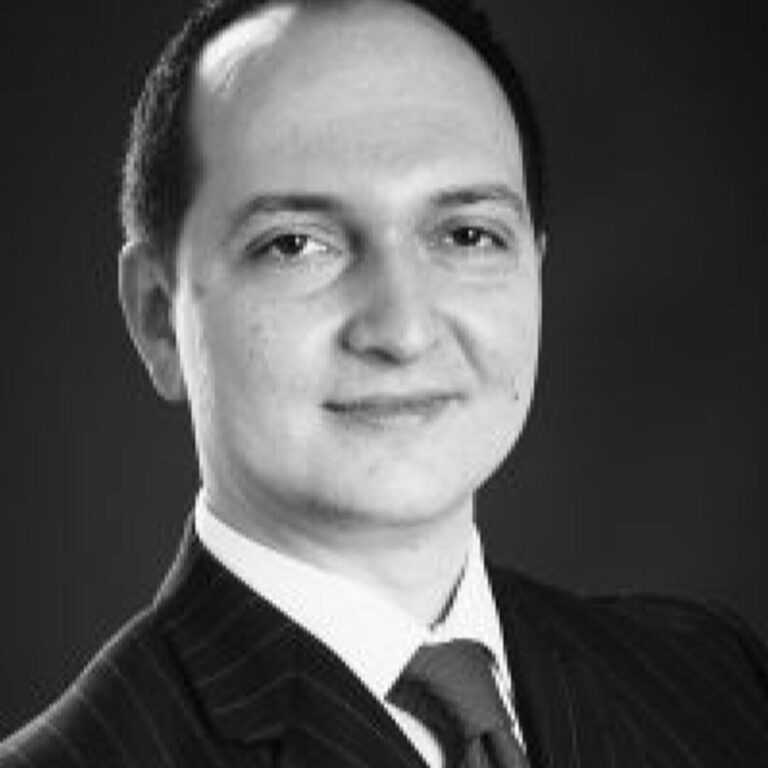
Welcome back to the show, my fellow extraordinary Americans. Today’s guest is Eugene Gershman. Eugene is a real estate developer and the CEO of GIS Companies. He’s a seasoned business executive with nearly 20 years of experience in real estate and construction. His expertise spans finance and technology, and he takes pride in his ongoing pursuit of innovation and growth. After a short stint in financial services, Eugene formally joined the family business in 2004.
Under his leadership, Gis successfully managed several real estate development projects ranging from the construction of luxury single-family custom homes to large commercial projects. Gershman repositioned the GIS niche to partner with property owners and less experienced developers through joint ventures or co-GP structures, bringing their projects to fruition. Notable projects include Park 12, GIS Plaza, and Madison Plaza.
He’s an extraordinary American, and I’m glad to have him on the show. Eugene, thank you so much for taking the time to be here.
Eugene Gershman:
Cosmos.
Thank you for having me. I’m super excited.
Cosmos:
So, Eugene, can you tell the audience a little bit more about yourself, your background, your story, and how you got started?
Eugene Gershman:
Yeah, absolutely. I mean, you covered pretty much the gist of it in the intro, but I run a family business. I joined it over 20 years ago. My father originally started the company as a commercial construction company.
So, we were the general contractor, and I never really wanted to be the builder. I pursued my education in economics and then earned my MBA. My first job out of college was working for a financial services company.
And I thought that I would dedicate my life to financial services, except for my last year of MBA. My father called me about a project he was working on, which was a potential investment opportunity he wanted me to help him review. I reviewed the project and attended a couple of meetings to help him understand and underwrite the deal.
And the next thing I knew, I was on a plane to join him and open one of our branch offices. So that’s kind of. He lured me into the family business. I stayed there. Eventually, we began acquiring properties and developing them ourselves, transitioning the company from a pure construction focus to real estate development. And since then, Dad’s retired. We’ve closed our construction division.
I never wanted to be a builder, and I didn’t end up being one. However, we closed down our construction division and focused 100% on real estate development, developing multifamily and single-family residential projects. A few years ago, we discovered a niche that we believed would be distinct, exciting, and, at the same time, enable our business to grow, allowing us to bring the most value to the market and the environment.
And that was partnering with owners to help them develop their sites. Today, that’s exclusively our business, as we don’t buy properties ourselves. We partner with folks who have the land. We’re not investors, but we help them find investments if needed. We manage projects, assemble the design and construction teams, and oversee the entire process from start to finish.
Cosmos:
Eugene, for the sake of the audience, can you tell us a little bit more about what the real estate development industry is like and what the nature of this thing is? Because when people think about real estate development, they usually just think of the New York skyscrapers or any metropolitan city. But there’s obviously so much more to that, right?
Eugene Gershman:
Absolutely, absolutely. And what’s interesting is that the majority of people don’t really know many developers. I mean, if you ask somebody, name the top five famous developers, they’re probably going to say Donald Trump, and then they’re going to get stuck, right?
People are often unfamiliar with developers, but essentially, the easiest way to describe a real estate developer is that’s not my example; I stole it from somebody else. But the easiest way to describe it is to compare a real estate developer to a movie producer. It’s the person or company that doesn’t really do anything physically with their own hands, but rather manages everybody.
Therefore, when we undertake a development project, we must collaborate with the landowner. Some developers purchase land and own it themselves. But we have the landowner, we have investors, we have an architect, we have a lot of different engineers, we have the municipality, and we have you know, from plan reviewers working for the city hall to building inspectors out on the job site. Then we have contractors, and it’s not just one general contractor.
We’re typically involved in all the major trades that occur on site. And you know, most GCs take care of their subs, and they hold them under their umbrella, and I welcome that. However, I still want to know who they’re working with, and I need to understand how the costs are calculated. Two, finally, the lender is the construction lender, who will finance the project, and the Takeout lender. If it’s a for-rent property, then we need to work with a permanent lender.
Sometimes, these are government agencies that offer permanent loans, which are involved in the process and ultimately reach the end consumer. If it’s a for-sale product, then we need to work with the realtors, who then work with buyers. If it’s a for-rent product, then we work with the property management company and the tenants of that building. We are the glue that holds all these pieces together.
And without proper management and control of the process, project development does not work effectively. And that’s one of the biggest pieces of education that I typically give to my potential partners: trying to bridge the gap. Some people I talk to think that real estate development is so complicated that they would never consider it. And others think that it’s so easy. What could be? What’s the problem? You hire an architect, you hire a contractor, you get it done.
And it’s really not that simple, and it’s not that hard, somewhere in between. But it requires proper management. And if you don’t know what you’re doing, you could make a lot of mistakes that could end up costing a ton of money.
But yeah, you could develop from, you know, a single-family house to a duplex to a townhome to an apartment building, condo building, you know, warehouse, hotel. A developer typically manages all aspects that require construction. In many cases, a single family may have a developer as their contractor. You know, they’re called builders. Builder. I don’t particularly like that term, but typically a builder assumes that it encompasses both a developer and a contractor. And it’s typically used in single-family home scenarios. However, even government projects, when the government hires someone to build a school, a jail, or a bridge, typically involve hiring a company to do the development work for them, who keep all the pieces together.
Cosmos:
So, Eugene, there are a lot of people who would want to be real estate developers, but they believe that they have to deal with a lot of, like, just like people. There’s a saying in real estate development, especially in the New York area, where a lot of people are cutthroat in that regard. Additionally, it requires millions of dollars. But is that just like, ah, is just, just like the stereotype, or is there, or is there more to this?
Eugene Gershman:
I mean, stereotypes are not born out of a vacuum. Right. They’re typically born from real stories. And yes, a lot of development is difficult. A lot of development has to do with who, you know, big cities, you know, conservative areas like New York City are pretty cutthroat. Most of the reason for this is the intense competition. However, if you’re in Albuquerque, then perhaps the competition isn’t as bad, and the demand may not be any worse than it would be in Manhattan.
Real estate is all local. There’s no such thing as one rule applies to all. You must always check the local rules. And you know, I recently had an experience. I came to a small rural town, and I thought it would be easy because I knew how it was done.
I went to the city hall to explain what I wanted, but I got a blue screen of death. You know, remember the old Windows computers, when they would freeze up and you saw the blue screen? That’s how I would describe it. They’re like, ‘ Wait, we don’t know if you can do that. ‘ And, and then it took me into a several-month loop, back and forth, emails with the folks over there trying to explain what I want.
And then they didn’t know how to approach it. They needed to research the code and ultimately decided that it wasn’t very beneficial for me. I can work with it, but, you know, it’s. I wouldn’t say it was easy. We arrived at our destination. We got the answer that we needed. But it took about four months, which I didn’t think should take that long. It is definitely very dependent on relationships. Relationships are extremely important, but they also depend on experience. You know, if you come into the city hall or meet with a contractor and they sense inexperience, then they might take advantage of you and not take you seriously. So that’s why, you know, I tell my partners that, look, you can do it on your own. It’s not hard. I can teach you how to do it. I can teach you what to say.
And you know, I’m not going to charge for it. I figure education is free. However, this is what we offer our partners: if we’re at the table, we can have those difficult conversations and know how to navigate them.
Cosmos:
Eugene, usually in real estate, develops. And you’re dealing with like millions of dollars. Right?
So, from your perspective, how do you manage risk, like financial risk, when you’re doing a project?
Eugene Gershman:
I think it’s all relative. I mean, you could be building a hundred thousand dollar addition, you know, maybe $50,000 ADU, accessory dwelling unit. And your relationship to risk is about the same. I mean, if you invest $100,000 and don’t receive any reward for it, it’s essentially money lost. It’s no different than if you sank $100 million.
You know, it’s all a matter of scale. Usually, people don’t spend all of their own money on deals. Typically, larger projects involve more people. That’s how most deals happen. Of course, if you look at some large developers, they might be using their own discretionary funds. However, even the larger the development company is, the larger the private equity company is. Usually, it means they have more investors. And so, the relationship to that risk remains the same. The ratios we examine are very important. How much are you borrowing? You know, if it’s a $100,000 project, or if it’s a $1 million project, or if it’s a $100 million project. How much are you borrowing? And, what happens if you cannot pay off the loan?
Let’s say you borrowed $80,000 for a $100,000 project. You tried to sell that little house, but couldn’t get the money you were hoping for. Nobody buys it; nobody wants to pay $ 120,000 for it. So what do you do? You have to discount it. You discount it to 100, then to 80, and possibly even lower than 80. However, you’ve borrowed $80 million, or $80,000, and now you have to repay it.
So what is your relationship with that risk? It’s really no different. And so, what I tell people is that the number one question you have to answer is how much you are willing to borrow. Because you can always find a lender who can loan you more, it’s harder now. You know, a couple of years ago, you could borrow 95%, maybe even 100% of the project cost. But what is your worst-case scenario? What if you can’t sell it? What if you can’t refinance it? Then you have to go under. And then, you know, what are you going to lose? And so it is with both small and large projects. I don’t think the dollar amount is really a concern.
Cosmos:
So, Eugene, like, speaking of risk, you know, like in 2007, 2008, they had the real estate financial crash, right? It was a significant event that profoundly affected many people. So, from your perspective, did that affect you? And so, like, how did you overcome that period of time?
Eugene Gershman:
You know, we personally, I don’t know, maybe we got lucky a little bit. But we didn’t have any active projects under construction around that time. We were building; we had one project in the permitting process. The permits were ready to be approved, and we couldn’t find the financing.
It was 2007. We contacted everyone we could think of to try to secure financing for the project. We could not get the loan. Our permits were approved right around the time of the subprime crisis, I believe in July or August 2007, or possibly September.
And that’s around the time when our permits were ready to get approved. And then, financial markets essentially came to a standstill. Nobody would invest; nobody would loan. And so that project got put on hold. Our other project was a single-family luxury home that we were building on spec. It was under construction in a high-end neighborhood in Bellevue, Washington. You know, where all of the Microsoft millionaires lived.
So we felt relatively safe. But right around that time, fall of 2007, we were able to resell the house. We had a buyer who started customizing the home, and we closed on that sale in March or April 2008. And I swear that was the last high-end transaction recorded in that area for like the next three or five years.
Cosmos: Wow.
Eugene Gershman:
So maybe we got lucky. If we didn’t sell it at the time, what would we have done? I mean, we would probably have to try to refinance, possibly leaving some money on the table, or sell it at a discount. We would probably have attempted to rent it out and ride out that wave.
However, a large commercial project didn’t start, and our small residential project was sold. Fortunately, we had some land that we were holding at the time. I think it was around the end of 2008 or 2009 that we decided to sell one of the parcels. It was on the market for a considerable amount of time. It would not sell.
However, it eventually worked out in our favor. So that time wasn’t too difficult. The recent turmoil following the COVID-19 pandemic was much harder for us. We ended up losing a project to foreclosure, but for the same reason, it was too highly leveraged.
Cosmos:
So Eugene, how do you see real estate development in the next five to ten years? Especially when many people are discussing a potential recession and all that. All of that. Like, how do you? How do you perceive it?
Eugene Gershman:
So I read a lot of economic news and forecasts. I happen to like this one group. It’s called ITR Economics. I follow them regularly and read their forecasts. And I seem to trust their forecast more than others. However, where we agree is that I believe the next five years will experience the next wave of growth.
I personally think that the current interest rate reduction we’re experiencing is a little too premature. There’s not enough softness in the market. However, that being said, it will likely stimulate additional growth. Most economists agree that we’re likely to see one or two additional rate cuts, which will likely trigger another round of growth. There will be money readily available. My personal concern is not really a recession. My personal concern is the inflation that it will trigger.
However, I believe we have a period of growth ahead of us over the next five years, until approximately the early 2000s. Beyond the 2000s, that’s when I would be really concerned. I do think that our economy was slated for quite a bit, a rather unfortunate contraction, in the early 2000s and 1930s. I would also caution anyone who invests in new construction or real estate to be mindful of that time horizon.
But today is actually. I think today is a great time to start a project. A typical commercial project usually takes around two years to complete. In most large municipal areas, it takes a metro area. It takes approximately 18 to 24 months to obtain the permit. So, you have a window of about four to five years to start and finish the project before that decline, which I see happening in the 2000s, takes effect. I think the near future is going to be pretty bright. And especially projects that could be turned around quickly. Those I would definitely seriously consider right now.
Cosmos:
So Eugene, if somebody who’s watching this right now wants to get into real estate development and they don’t know how to go about it, go about it. How do you? How would you advise such a person on what to do and how to get started?
Eugene Gershman:
Well, I think the first thing that I would advise anybody to do if they haven’t done it before is to align themselves with somebody who has done it before. Definitely, do not try to reinvent the wheel. It may seem easy, but it’s very easy to make costly mistakes.
A simple way to participate in the development project is to become a limited partner, which involves investing a small amount of money in a syndication. There are plenty of opportunities. We offer some opportunities. Other syndicators offer opportunities to invest in projects as a limited partner. Additionally, there are opportunities to invest as a general partner, which allows you to be a bit closer to the decision-makers. You take a little more risk because you come into projects earlier and get to learn the process.
However, in our case, we invite anyone with a piece of land to talk to us, and we would have them contribute their land as an investment in a joint venture, an LLC where we would serve as the managing partner and manage the project. I am very open with my landowners. If they want to take an active role in a project, they want to sit in meetings with architects and engineers. If they want to sit with lenders, I welcome that. I never, you know, push them away.
Some developers would partner with owners, but they would make them as silent as possible. So, please give us the land and then leave us alone. We don’t do that. We’re super open. Unless they don’t want to be. I once had a landowner who said they didn’t want to participate in meetings and make decisions. They said, ‘Make us a limited partner and run with the project.’ I’m okay with that. I’m fully capable of running the project. However, if they are willing to learn, I enjoy sharing my knowledge.
Cosmos:
So I find it interesting that you use the concept of strategic joint ventures to scale because that’s very interesting. And then I’ve seen it in different businesses. However, in the real estate development industry, I am aware that this is also a common practice. So it’s pretty cool.
Eugene Gershman:
Absolutely. It’s not very common. Most developers dislike it when others tell them what to do and how to do things. The majority of developers would much rather acquire the land and do it themselves. I believe that this way, we can accomplish a great deal more. Many more people can benefit from the efforts we contribute, and it allows us to grow, as well as for other investors to see the Upside.
Cosmos:
So, during your entire time in the real estate industry, what was the biggest challenge that you had to face? And then how did you go about overcoming it?
Eugene Gershman:
The biggest challenge was definitely in the last three years. In 2022, when the Fed began increasing interest rates rapidly over a short period, that’s when we saw the biggest market downturn. We’ve seen massive cost escalation caused by inflation after COVID. COVID itself, interestingly enough, wasn’t particularly severe.
Yes, we did have to shut down for a couple of months there in March of 2020. But that wasn’t too bad. However, post-COVID inflation and supply chain shortages caused massive disruptions in our business. And ultimately, as a result, due to cost escalation and interest rate increases, we ended up losing a couple of projects, because they were too highly leveraged.
And you know how we dealt with it? Well, unfortunately, we had to surrender the projects to the lender. That hurt. Good. The news is that we didn’t have any external investors on those projects. It was the original property owner and us. We didn’t have anyone else to blame but ourselves, because we chose to take on fairly aggressive financial terms and obligations. The loan was expensive, it was a private loan, and it was highly leveraged. We didn’t have the downside. We didn’t have enough equity in the deal initially. We’re excited because we can start building the project without diluting ourselves or bringing in additional investors. But that’s probably the biggest lesson that we learned is that greed in the beginning could bite you in the butt in the end. I would much rather get diluted and survive a turmoil when it happens and have this massive upside.
So yeah, we had to regroup. We had to start over and rebuild the business. Another thing we started doing is opening our doors to taking on business outside our area. For the last 20 years, we have been predominantly based in the western Washington area. However, we are now examining projects nationwide. And so that’s, you know, the ups and downs of the last 12 months. We’ve experienced growth. We’ve taken on new projects and new opportunities. And very grateful for, you know, as much as it was painful to experience, grateful for that experience, no matter how bad it was.
Cosmos:
Yeah, I was asking because a lot of people, like, they feel like they want to get into real estate development, but they feel overwhelmed by the different challenges and just the changing conditions of the markets. It’s interesting to understand how your mindset and thought process work when facing such challenges.
Eugene Gershman:
It’s an honest experience, because I have lived through that. Some people enjoy discussing their track record. And my attitude is that when somebody tells you they have an impeccable track record, meaning they’ve never lost money and never had a bad project, it usually means that either they haven’t been in business long enough or they’re lying to you. It’s impossible not to have negative experiences if you’ve been in business long enough.
And I think those experiences are what help you learn and prevent things like that from happening in the future. And that’s why I’m super open, talking about it, you know, if somebody asked me, if I ever lost money, yeah, I lost a shit ton of money. Pardon my language, but I now know what to do so that investors who work with me don’t lose a penny in the future. We structure deals, protect the downside, know what to look for, and ask the right questions.
Cosmos:
So this is what you’re saying is so relevant because, like, I’ve interviewed a lot of, like, entrepreneurs and business leaders, and one of the things they have in common is that the negative experiences in their life actually help propel them towards success. They perceived it differently because many people are afraid of failure, and they don’t want to take those risks and chances. But that’s how you learn the fastest. And you get what is called, like, data collection.
Eugene Gershman:
Exactly, exactly. And, you know, up until a few years ago, I would never work with somebody else’s money. I would never take on external investors. And part of that reason is that I didn’t feel comfortable doing that. I didn’t feel like I had enough experience to take somebody else’s money.
But, now honestly, I can say, look, I’ve seen it all. I’ve seen both the upside and the downside. So, I feel like I know how to structure deals so that the downside doesn’t happen again.
Cosmos:
So, Eugene, what would be the biggest lesson you learned during, like, the two decades you’ve been in the real estate development industry? Like, what is, like, the most profound lesson you learned during all this time?
Eugene Gershman:
I think the most profound lesson was that while it is important to focus on delivering the product, it is extremely important, maybe even more important, to dedicate resources and plan for how you’re going to sell that product or service. And I think that was the biggest challenge we, as builders, faced.
See, I still consider myself a builder. We always focus on how we are going to build this building, including how we will design it and what it will look like. And then we don’t start talking about how we’re going to lease it up, how we’re going to refinance it, how we’re going to sell it until it’s ready to be sold.
However, the problem is that by the time you finish building it, it’s already too late. It is extremely important to plan for that exit almost as early as you start and to begin executing the plan for that exit as soon as possible. That was probably the most valuable lesson: today, when I start working on a project, I don’t say, ‘ Let’s build it first, and then we hire a broker who buys and sells. ‘ No, we start our marketing and sales efforts before we start construction.
Because I need to know that the market is ready for it and that there will actually be a buyer, whether it’s a buyer or a tenant, I need to know today before we spend a lot of money going down that road.
Cosmos:
Yeah, I mean, some would call it that, the like jumping into the water first and then, and then figuring out how to swim versus, versus. Taking a more nuanced approach, so.
Eugene Gershman:
Exactly. Exactly. I mean, one of the biggest lessons my father tried to instill in me when I joined the business is not to cut costs on design and engineering. And it also follows the same expression that you just mentioned. You cannot start construction without fully developing, designing, engineering, and completing all the project specifications, as it’s very costly to make changes during construction.
But I took it a step further. To me, that is sort of a given now. I made those mistakes in the past as well. You know, negotiate the hell out of your consultants, have them design or give you a design bid for as low as possible of a price to later found out that the way they got there, by cutting scope and then you get to, the job site and your contractor made a bunch of assumptions and it’s not what you expected because you never paid for the full design. But so that is, I don’t know. It’s not unimportant. It’s definitely important.
And whenever somebody brags to me about how little they paid for the design, it’s usually a red flag for me because it means the quality of the project and the design documents is not that great. However, to me, it’s far more important to understand how you’re going to sell this product when it’s complete before you spend millions of dollars building it.
Cosmos:
Interestingly, you mentioned this because, you know, there’s like throughout time there’s been like these two different approaches, like the market-oriented approach versus the product-oriented approach. Some people would say that to build a quality product, the buyers will come.
This is in contrast to a marketer-oriented approach, where you must allocate resources to marketing and sales. What you just mentioned here is a very interesting contrast.
Eugene Gershman:
Yeah, I mean, you know, the classic field, of dreams, you know, build it and they will come. Yes, sometimes that works, but not always. You can build it. I mean, there are so many projects and buildings sitting empty because they were built, but not yet occupied.
But nobody’s coming, and they’re not coming because it’s freaking expensive, you know. Yes. When you’re building an entertainment facility in an area that didn’t have it, yeah, people will come. But when you’re building housing and mortgages just shot through the roof, well, maybe it’s not that easy. You know, three years ago, people could get a mortgage with a rate of 3% or less. Now we have to wait for the paychecks to grow proportionately so that people can afford to buy again.
So it’s very important to test that, you know, you can run as many models as you can. But, you know, you have to test it. I tend to be more like Steve Jobs in a way when it comes to interior design and exterior design. I feel like if you ask people what they want to see in the unit, you’ll never get the right answer.
So, you have to take some risks, sometimes experiment, and see what works. But when it comes to the big picture, I think you definitely have to test the market.
Cosmos:
Yeah, it kind of reminds me of this one book that I read, The Lean Startup, where they talked about the minimal viable product, where they basically told in the book that you cannot ask the buyer what they want. You essentially need to create a product, albeit a very minimal viable one, and then observe how they respond to it. And then you build after that. And it’s somewhat nuanced because what works in one industry may differ from how it works in another.
Eugene Gershman:
Absolutely, absolutely.
Cosmos:
So, Eugene, on another note, what does the American Dream mean to you, and how do you go about attaining the American Dream?
Eugene Gershman:
I mean, I’m an immigrant myself. You know, I came here in the 90s, and I think I’m living it. It’s essentially an opportunity to pursue your dreams, to try something and fail, and then get up and try again until you succeed. And, that’s what it’s all about. I firmly believe in the freedom of choice and the freedom of expression. And I live it every day.
Cosmos:
Eugene, for most Americans who are trying to attain their own American dream, but, like, they’re basically living paycheck to paycheck, or they’re struggling financially. How do you think they should go about overcoming the financial hurdles to attain what they truly want in life, basically?
Eugene Gershman:
It’s hard, right? If you’re living paycheck to paycheck, it’s really hard to get that opportunity. But the way I would look at it, as I was, I would look at two things. One is, what does your budget look like? What are you spending money on?
And if there’s an opportunity to set aside some of the money and start saving. I would definitely encourage that. Many employers offer 401(k) matches, contributing $50 a month if you can, and let your employer match. It’s free money. Right? So definitely try to save as much as you can.
Additionally, on the entrepreneurial side, you can still maintain your W-2 while exploring other opportunities on the side. There are many opportunities for side gigs these days, thanks to the Internet and social media, which offer a wide range of options. And you know, I personally never believed in social media until I started trying. About a year ago, I started posting content on multiple channels. And you know, I tripled my LinkedIn followers in one year.
You know, not without help, but it’s doable. Depending on what the product is. I would definitely try side hustles. However, the goal should not be to make $10 million in a year. The goal should be to take one small step forward, then follow it up with another small step forward, and then follow that with another small step forward. And that’s how you grow. You know, if you set up an overly ambitious goal that doesn’t seem realistic to yourself, you’re likely not going to achieve it. But if you set yourself a small goal, then that might be doable.
Cosmos:
I think what you’re saying is so irrelevant. I believe people should have a clear vision and set specific goals, and then work towards achieving them. Because many people dream, but ultimately, they’re not building their lives. Like they blame outside circumstances. But what I’ve learned over all these years interviewing different entrepreneurs is that they take destiny into their own hands, and then they forge their own path.
Eugene Gershman:
Absolutely, absolutely. It’s, I mean, yes, some people get lucky, while others get unlucky. Right? You can’t forecast; you can predict. However, I think what’s important is to recognize that numerous opportunities are available. I mean, study up, research, you know, if you like real estate. There are so many ways to make money in real estate. If you live in an area, you know, Silicon Valley or ah, up here in the Seattle area, where real estate is expensive, you can’t afford to buy a million-dollar house to rent that out.
Well, maybe you could go to, I don’t know, Michigan, and buy an old house for $30,000. Maybe you could make a deal with somebody who would loan you some of that money so that you could get started. Yes, there’s hustle. You have to be creative and imaginative. And the bottom line is, look, nobody can do it on their own. You have to talk to people, you have to find opportunities, and you know, try a hundred things until you figure out what works.
Cosmos:
Totally.
And, Eugene, can you tell me a little bit more about your company, specifically the GIS companies, and what they’re about and what they do?
Eugene Gershman:
Yeah. As we began, we partnered with property owners to develop real estate. So, if you have a piece of land, an old house that you’ve inherited, or if your friend has a house or an old piece of property that could be developed and has equity in it, don’t try to do it. If you haven’t done it before, give us a call and let us take a look. We can also help you navigate the process. We take on projects nationwide, as I mentioned.
Cosmos:
And Eugene, are there any of the projects that you’re doing right now? That you would want the audience to get a glimpse into.
Eugene Gershman:
So there are a few projects that we have in the pipeline. I’m not quite ready to start publicizing them. But we have recently announced an investment opportunity. We call it a Special Situations Fund, and that’s an investment opportunity where we would acquire distressed assets, financially distressed assets that are in physically good condition, and hold them until the market stabilizes, rent them out, derive some income, and then flip them three to five years later, for a market rate. The advantage of this investment is that we can typically acquire these assets from lenders, receiverships, or bankruptcies at significant discounts. And we would pass those discounts down to our investors. That’s one product we are currently marketing. Another product that we recently announced is a GP General Partner Fund. It’s yet another investment opportunity that allows investors to participate in early-stage project development.
So, it’s kind of like, if you look at us, if you think of a startup, it’s kind of like seed capital. So, early capital would allow us to proceed through the early stages of project development, including design and permitting, before construction begins. In both cases, investors participate as limited partners.
And you know, we’re happy to provide details, but those are the two investment opportunities we’re currently promoting. Regarding specific projects, we have a few in the pipeline that we will announce shortly.
Cosmos:
That is amazing. And Eugene, if someone from the audience wants to connect with you and learn more about you and your work, how would they go about doing so?
I’m active on various social media platforms, including developer-focused sites like Instagram, Facebook, TikTok, and YouTube. The most common way that people reach out to me is on LinkedIn. Look me up, Eugene Gershman. I think I’m the only Eugene Gershman out there.
Additionally, our website, GIS Companies Co., offers a wealth of resources. Our blog offers a wealth of information on real estate investing and development. Let’s see what else. Oh, and definitely, check out my podcast, Real Estate Development Land to Legacy. We talk to various professionals about real estate development. It’s meant to be educational. If you’re considering developing a property, be sure to check out a few episodes on the process. We had lawyers, accountants, designers, architects, and capital raisers on the show. There is also a lot of useful information available.
Cosmos:
No, I would definitely recommend that anybody watching this, if they’re interested in real estate development or want to get into it, check out your podcast. And,
Eugene, I’m so grateful that you took the time to come on this show and share your knowledge about real estate development. I hope you’ll consider coming back to the show at a later time.
Eugene Gershman:
It would be my pleasure, Cosmos. Thank you for having me. It was very well designed. I love your questions. And, yeah, I would love to be back again.
Cosmos:
No, I appreciate Eugene. And I want to conclude this episode by letting my fellow extraordinary Americans know that there’s an extraordinary person within every one of us. It’s our duty to awaken it and unleash it. Until next time. Bye for now.

 Amazon Music
 Apple Podcasts
 Audible
 CastBox
 Castro
 Google Podcasts
 iHeartRadio
 Listen Notes
 Overcast
 Player.fm
 PocketCasts
 Spotify
 Stitcher
 TuneIn