Cosmos:
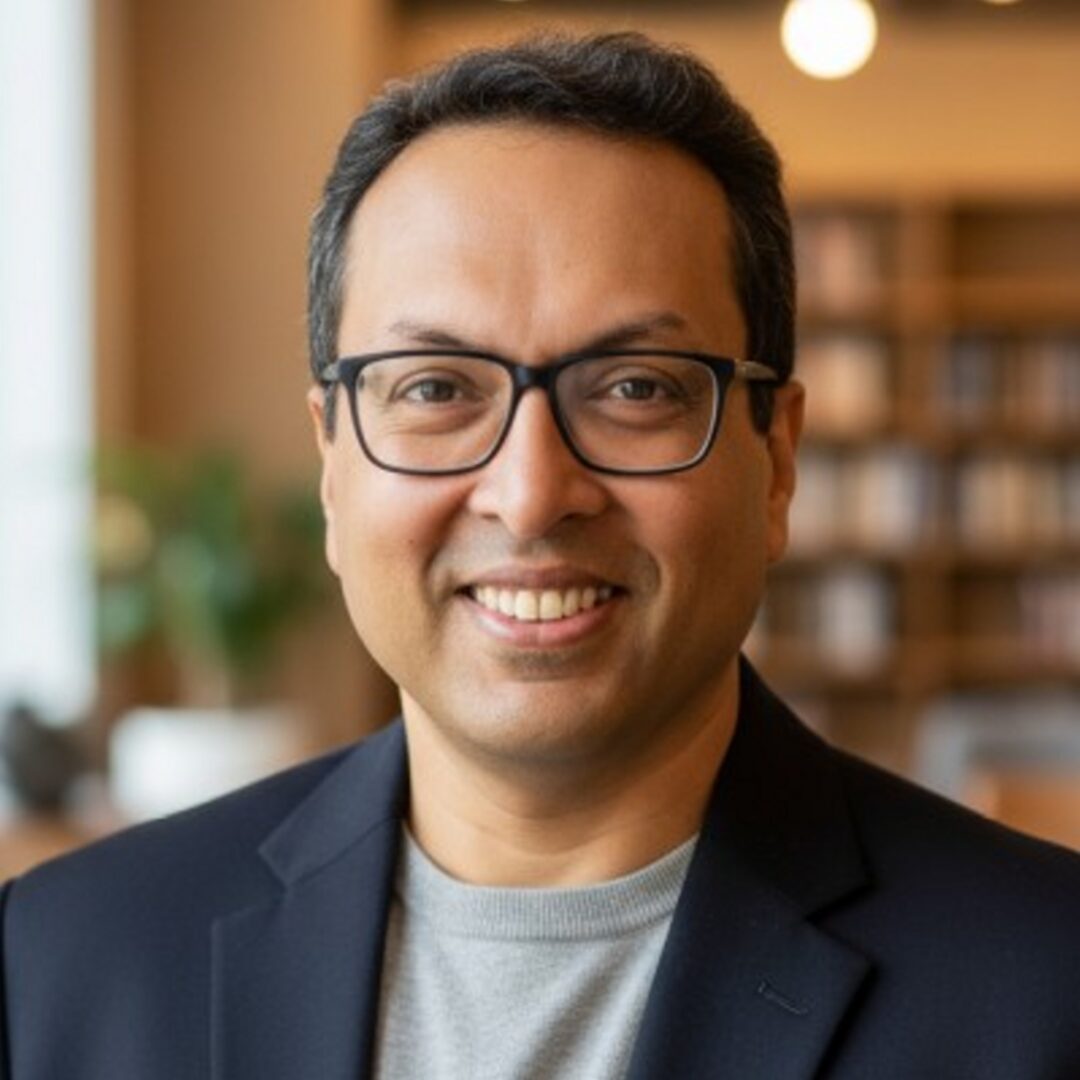
Welcome back to the show, my fellow extraordinary Americans. For today’s guest, we have Joey Seaman. Joey is the CEO and founder of Nova Echo, the number one platform for training, managing, scaling, and monitoring human-like conversational voice AI employees for phone calls.
The AI systems handle both inbound and outbound calls with precision, empathy, and speed. Working 24. 7 in 30 plus languages and up to 80% lower cost than traditional teams. Designed for seemingly limitless scale, Nova Echo’s technology can make many thousands of calls per hour, ensuring businesses never miss a lead, a sale, or a customer interaction. He’s building a world where automation doesn’t replace people but frees them to focus on higher-leverage tasks that AI can’t match in quality.
He also founded a networking group for entrepreneurs called the Next Job, which hosts exclusive events worldwide for successful people and those who will be. He’s an extraordinary American, and I’m glad to have him on the show. Thank you for taking the time to be here.
Joey Seaman:
Thanks for having me.
Cosmos:
Joey, can you tell me, an audience, a little bit more about yourself, your background, and how you got started?
Joey Seaman:
Sure. Before I joined this AI company, I worked in marketing and gained experience in product sales, marketing, and networking. And through that process, I met people who introduced me to other types of businesses—for example, AI voice agents. I had one very high-level mentor.
And he started to get interested in voice AI agents for sales because he knew, as I did, that it was going to change the entire world, given how volatile this industry is. It will significantly impact people and businesses. There’s significant money involved, so there are many ways to proceed. In 2023, I joined one of the first companies to start distributing conversational voice AI technology.
And since then, we’ve been growing, scaling, and developing new technologies and features within the voice AI platform that no other company has. We’ve implemented this technology for hundreds of clients, and it’s been working very well.
Cosmos:
Joey, what was your vision for your life? Did you always think you were going to go into the A industry, or was there a time when you had other plans?
Joey Seaman:
I’ve always loved technology. It’s actually funny. When I was 8 years old, my mother asked me what I wanted to do, and I told her I wanted to build robots and be an actor.
Earlier this year, I wanted to launch a business reality TV show for my AI company. So, I guess it’s been my vision for a long time.
Cosmos:
Wow.
What is the motivational factor that motivates you to like, to go through, like business and entrepreneurship, versus anything else? What I’m asking is: what is your Why?
Joey Seaman:
There’s a lot of wisdom. There’s a lot of wisdom, but the first and foremost, I think, is just fun. It’s just a game, and I love winning.
And not fun in the sense where it’s always happy and jolly, but fun in the sense where there’s nothing else to do, really. And it’s extraordinary. I’ll put it like that. The experience of winning is extraordinary.
Cosmos:
I see for sure.
AI is a relatively new subject, right? It came to the forefront in 2023. Can you tell me, the audience, a little bit more about the AI world and what it is and how it’s going to change the world in the coming few years?
Joey Seaman:
I think many people underestimate AI, believing it will stop improving and won’t change much. I understand that there will eventually be a drop-off in the rate of improvement. I don’t think we’re there yet, personally, but I do know it’s going to change significantly.
Many people think it will never replace jobs, because we’ve had other technologies that were expected to do so and didn’t. I don’t necessarily agree with that, but I do think that we should try to prolong jobs as long as possible.
So, for example, in our company, what we do is whenever we implement this technology for a company, let’s say it’s for customer service, we give them AI customer service agents. Still, we consult with them on elevating their current customer service agents to a higher level of service.
That way, they don’t need to fire anyone, so they can scale, increase capacity, bring on more clients with the same team size, and leverage our AI. But over the long term, I think almost everything we do will be assisted or automated by AI. And what that does for humanity is going to be extreme, either very good or very bad.
Cosmos:
Just to elaborate on the extreme case, so when some people think of AI, they think of things like Skynet or the Matrix.
Do you think humanity will reach a point where AI eventually takes over? Or do you think human beings will always have ultimate control over AI?
Joey Seaman:
That’s a good question. I don’t think humanity is very good at maintaining control over the masses. Most people don’t even have control over their own lives, and they’re fine with it. So, yeah, I do see us giving up control eventually.
Whether that’s good or bad is another matter. And that I don’t know. But I definitely think we will eventually give up significant control, because with every other technology, we’re in the loop. We have to either create the technology or build the technology that builds the technology. We’re in that loop, or we can stop the technology with AI.
I think it’s different from everything else we’ve invented because, when it reaches the point of being able to create and train itself, it’s already there. Then it no longer needs us in the loop if it can reproduce and eventually improve itself. Not sure it’s there yet, but I think eventually it could be. Once we’re outside that loop, it can continue to grow without us. And that’s different than any other technology we’ve ever had.
Cosmos:
Wow. I mean, just thinking about it, it’s kind of crazy because on one hand, AI is kind of like cryptocurrency, right?
You can liberate the world financially or technologically, or you can enslave it. If an authoritarian government actually gets hanged for, like, advanced technology like that.
Joey Seaman:
Yeah, it’s really important who wields it at the beginning. I think, ultimately, AI will wield AI, but at the beginning and throughout the middle, we need the right people to handle it, because that will determine what kind of AI handles the AI in the future.
And you’re right, it could either be enslavement or prosperity. I think it will create either a utopia or a dystopia. And if it creates a YouTube utopia, which I’m hoping, and I actually do think that that’s more likely because we have a lot of smart minds that are really focused on bringing us there, if that does happen, then we’re going to have to find other things to do. This raises many other questions that AI may help us address.
But typically, everyone’s purpose in life, at a base level, is just to work because there’s nothing else to do. So, when we don’t have to work anymore because there are no jobs to be done that humans are more capable of compared to AI, now we’re going to need to find something else to spend all our time doing.
I think that if we do achieve utopia, there will also be negatives we’ll have to work to overcome. And the work itself to overcome them is what’s actually going to give us purpose at that time.
Cosmos:
So, I suppose, a lot of people would wonder in that case, like, how are they going to earn a living?
Or they’ll have to retrain for other jobs, and new jobs will have to be created, as they have throughout human history.
Joey Seaman:
Yeah, yeah, yeah. So, and just to clarify, in the short term, like the next five to ten years, this is, I don’t at all think this is what’s going to happen. That’s why I’m really excited about Nova Echo, because it’s going to help humans and help, well, help everyday people and help workers and help business owners all together.
So that’s why I’m so excited about it. But over the long term, a few decades out, this is what I think will happen. Right. So, when we’re at that point, I don’t see a reason for money, which concerns me because money is what drives capitalism. If you don’t have money, capitalism is useless.
And so if I say that I don’t need a, I don’t see a reason for money, I’m basically saying I don’t see a reason for capitalism, which is horrible because I love capitalism. But the root of capitalism is innovation, and when we’re no longer the best at innovating on Earth, there’s no reason for it. That gets messy.
There’s going to need to be a lot of politicians and philosophers who find a better way for us to live outside of capitalism because it sure as hell is not communism or socialism.
Cosmos:
I’ve been thinking about the future scenario ever since AI came into being, and it’s fascinating. It could go, it’s going to be an extreme, but in one of two ways, like a utopia or dystopia, just like you were mentioning.
But just a continuation of this, let’s say, like you had to envision a future, let’s say the year 2100, and like AI fully evolves, just like you see it evolving. What do you think the world will look like in one century from now?
Joey Seaman:
I think the world will look like people having an absolute singular focus on creativity and connection. Because that’s something that AI has never even been close to replacing. AI has never been creative; it’s never been good at actually connecting. It’s good at pretending it can and copying the patterns of people who can. But that’s to the extent of it. I think that in 100 years, if AI is doing everything, people will become artists.
Everyone’s going to be an artist, and everyone’s going to be hanging out with their friends. So it’s going to take us back to where we were a while ago, before we were all working these day-to-day jobs; however, we’re going to have prosperity.
So we’re all going to be, in my mind, everyone’s going to be with their friends, hanging out socially the entire day, having a good time, and creating art and being creative and creating new ideas that AI will implement. AI will never be able to create. At least I don’t see AI ever being able to generate brand-new ideas.
That’s not something that LLMs are, in my eyes, capable of doing at all. They’re very good at implementing specific tasks and at pattern recognition.
Cosmos:
I see, that’s interesting.
So, you foresee a future where people do you think they’ll have to earn a living? And if so, what would happen if nobody had to do jobs in such a scenario?
Joey Seaman:
Well, theoretically, if AI has a very low cost at that point, then, again, in a capitalist economy, it doesn’t really make sense because AI doesn’t have needs.
So, AI doesn’t need to get compensated. It requires only electricity and data, so it doesn’t require compensation and can operate at no cost. If labor is free and money is just the time-stored energy of people, then there’s no real reason for it anymore. Which means that if we have AI farming all the food, we don’t have to pay the farmer, which means we don’t have to pay for the food because the only reason we’re paying for the food is to pay the farmer and so that he can buy the, you know, the tractors and everything. If we don’t need to pay for the Food, it could be free. But then everyone will buy anyway.
Everyone’s going to take way too much food, right? But we can just make more because we have way more free labor. We then get to: Is there a limited number of resources on Earth? Of course, I don’t think it’s as limited as some people believe.
But hopefully by this time, when AI is that advanced, it’ll also help us develop ways to explore other planets and more. But that could go in a whole other direction. My point is that when we no longer need money, people will be able to meet 100% of their basic needs for free, and also get what they want for free. The weird thing is that if I want a Lamborghini and I get a Lamborghini, and you want a Ferrari, do you get the Ferrari?
But if we go back 100 years, we see the Ferrari was a little more expensive then. It feels unfair. So now I want a Ferrari too.
However, you now also want a Lamborghini. And it can start as an ego contest that leads us both to take up all the resources on Earth. So that’s the hard part. I think we’ll need to train people to be comfortable with not having everything exactly equal and to accept a situation more like a family dynamic, where, for example, if I get married to someone. I’m not like, “Hey, I’m going to pick the kid up from school; you drop them off.” It won’t be a 50/50 split.
I’ll do what I can to help you. You do what you can to help me. It’s not going to be exactly 50, 50. That’s fine. If everyone adopts that mindset and we have sufficient resources, I think it could actually be a very successful society. But training people to do that will be the hard part.
So, I don’t know. There are a lot of things here that I haven’t thought of, where I don’t know the answer yet, but I’m optimistic about it.
Cosmos:
Yeah, Joey, I was thinking about it because, you basically, in your words, you were saying about capitalism, it might actually, it’ll actually be capitalism. But then a new economic ideology will have to take hold to support the new world, because people will be confused for a little while.
Once AI gives you all these free resources, right?
Joey Seaman:
Exactly, yeah. Many processes are already being automated, and it’s significantly reducing costs. Once computing costs continue to decline, AI will become even less expensive.
So eventually, everything will be very inexpensive, and we won’t. When we close the loop with AI and take ourselves out of it, we no longer need money. Because the only reason we would need money is to pay people, let’s say, to enter the data, or to pay them for the data, or to pay them for the electricity. But once AI handles all of that, there’s no longer any need for funding, and we could share those resources.
But that sharing resources in that way tends towards socialism, which I don’t think is. It’s never been proven to work. And to be fair, to play devil’s advocate, even though I hate it, it’s only ever proven not to work when humans were in the loop. We’ve never tested it without human decision-makers.
But that just sounds like we’re out of control. I don’t like that. So, I think we need a new philosophy, which. I’m not sure what it is yet.
Cosmos:
Yeah, I mean, I was just going to say, like, a lot of people think that the new world in the 2100 world, it’ll be more like a sort of AI-based socialism or communism.
But they’ll basically say that once AI takes over, there won’t be a human element for many people. There are many things to consider. It’s beyond the comprehension of many people right now. But it’s going to be a very challenging world, that’s for sure. Yeah.
So, Joey, on another note, what are some of the revelations or lessons you learned during your time in business?
Joey Seaman:
There are many things, but I would say my three most important things for business are: one, being able to control your mind. This is hard for many people, including almost everyone I meet. If you can’t control your emotions, or you can’t stop yourself from thinking something, or you can’t force yourself to think something, you’re going to have a real hard time being successful in life. Forget about business.
Because your mind is the only thing you can control, and it influences everything in your life. If you let it go and let it spread negativity, you won’t be successful. The most successful people usually have strong control over their minds and thoughts. The second would be your team. Once you can control your own mind, learning to lead other people’s minds is extremely important, because you need others to build something big and succeed. And you need their knowledge, their skills, their expertise, their time, at least until AI can do it. So that’s very important.
And then number three is speed: interacting with others, leading others, and engaging your own mind and the things around you as quickly as possible. I think once I had all three of those things, everything else became much easier. I could learn anything I wanted really fast because I had people to learn from. I’m going to learn it quickly because of the pace and because I can control my own mind. I can choose when and how I learn, and even if I don’t like the way I’m learning, I can still force myself to do it.
Cosmos:
No, totally.
And what are you mentioning with the mind that is so relevant? Many people experience negative chatter, which is negative self-doubt that can affect their self-esteem. One thing I wanted to elaborate on is: what methods did you find useful for controlling and mastering the mind, at least for you?
Joey Seaman:
Yes, I’ve been thinking a lot about this because I want to teach it well. I’ve had people ask me this before, and it’s hard for me to explain why I don’t like it. Because I absolutely believe anyone can do it.
But I think the simplest way I can put it is that I’m just very, very aware of my thoughts. It didn’t happen immediately, but over years of being highly aware and trying new things, I can now choose what I think and feel. I can just choose it. It’s hard for me to explain because there are several perspectives I need to consider understanding what the other parties are thinking and feeling.
And that doesn’t even make sense when I say it out loud. So, long story short, whenever you feel a Strong emotion, be mindful of what you’re feeling and why, step back, and see if you can change it. If you’re feeling anger, try reframing it as excitement. If you’re feeling nervous, try reframing it as excitement. It could be the same thing. And also try vice versa. If you’re feeling happy, try changing it to anger. To maintain that control in both directions, it doesn’t always have to be positive. You just want to have that control.
And I think it’s different for everybody. So maybe just being aware and then doing experiments with your own mind will help.
Cosmos:
So, Joey, I’m not sure if you’re familiar with Zen Buddhist meditation, which emphasizes stoicism, detachment, and stepping back to observe emotions and thoughts.
So, what you’re saying is, in alignment with that. What I find interesting is that this is highly relevant: if most people do this, the world will be different. The ability to control and influence your thoughts and actions at will is profound. Because ultimately, you are not. Your thoughts and emotions, like, you can basically take a step back if you will it.
Joey Seaman:
Exactly. Yeah. Once you start doing this a lot. And I. I wasn’t aware of that, so that’s interesting. Maybe I should study that more. That meditation, but. Or those. Those group meditations.
At least the way I think about it, you’re like a combination of a lot of different things. I don’t want to call them people, but maybe perspectives within your head. Once you do this regularly, you’ll be able to see it. You’ll be able to shift into different perspectives and become a different person, with different emotions, different thoughts about what you’re seeing or hearing, and more.
Maybe it’s not choosing the emotion, but choosing the perspective on something, and that automatically shifts the emotion. Maybe that’s a better way to put it. When you think about how you view something, you step back and can choose the perspective you want to take. That will. That will help you choose the emotion you want.
Cosmos:
Yeah, I might still do yoga and meditation, practicing twice a day. The practice involves taking a step back to observe your thoughts, then focusing on one point. And then you realize that, at the beginning, it’s difficult to control your thoughts.
But if you take a slow breath and step back, as you mentioned, you can begin to influence your mindset. If you can do that, you can respond to any situation in your environment and adjust accordingly.
Joey Seaman:
Exactly. Yeah. I have done that kind of meditation in the past, where I used to do it just for like 10 minutes a day. Maybe that helped as well: I would sit down and focus on a single thought, like my breath.
And now I’ve gotten to the point where just walking, you know, walking throughout the day, moving throughout the day, I can, I guess, meditate throughout the day. While I’m working out, I can meditate on my set to avoid distractions. Or while I’m working, I can meditate on my work. If I have a certain emotion, I can meditate on another. Only focus there. So, yeah, I guess it is just a form of meditation that you can do constantly.
Cosmos:
No, for sure.
And then the second thing you mentioned was about, like, leading teams, right? And I was. I was wondering about your perspective on “Team You.” How do you deal with people, and like, just human nature in general? Is there a lesson that you learned during your time doing business regarding that aspect?
Joey Seaman:
Yeah. No. Many things come. That’s important in leadership. But I’ll give you the. I don’t know if you’ve heard of the 80/20 rule, but I will give you an example. Yes, I’ll give you the 20% that I think accounts for 80% of what’s important. Number one: you incentivize people the right way.
That is, it’s a big part of leadership. It’s extremely important. When you know how to incentivize people, they will just. It’ll be much easier to manage them. And a lot of people try to look past that, and they think about, like, what they’re saying and doing more.
You can tie everything to someone. You can tie back everything someone does to their incentive to do it, across the board. Everything a human has ever done, they’ve had an incentive to do it. If you incentivize people the right way, it makes their job much easier afterward.
First, get to know everyone on your team individually. You want to know what they like, what they hate, what they want to get in life, and what their why is. Right. You want to learn about them fully.
Once you do that, you can set a specific goal for them and consistently reinforce it. That way, they know what they’re going towards. You can set up something in the background that they don’t want, which is also pushing them. So now they have something to aim for and something that’s pushing them. Pushing them could mean not getting fired. It could be whatever, right?
And what they want could be money, fame, recognition, or promotion. Then you have rules in place to keep them inside the boundaries. They’re not going too far to the left or right. And the rules can just be, “Hey.” Some of them are common sense. When you come to work, wear a shirt. We’re not going too far out of bounds. It could be whatever. There’s a whole list.
Then once you have this, they’re kind of in a container, in a good way, because it’s a container pushing them towards their goals. That’s the whole point of being a leader. You help people achieve their goals.
So, you have their goal and what they’re running away from. You have the boundaries. And then the last thing is just acting like the person you want them to be. And that will push them even further and ensure they don’t give up. If you have that box and you’re up here acting exactly as you want them to, they will. They will always go where you want them to, I think. That’ll do 80% of the job.
Cosmos:
No, I mean, knowing what incentivizes and motivates people is one of the means of, like, influencing them. But I think many people overlook that in business. It’s supposed to be common sense, but often it’s not. It’s helpful that you’re bringing this up.
Joey Seaman:
Yeah, certainly.
Cosmos:
Yeah.
So, Joey, on another note, in business, like, what do you think is, like, the biggest challenge you had to face during your career, and how did you go about overcoming it?
Joey Seaman:
I’ve had a lot of—a lot of challenges.
That’s interesting. I don’t know if I can point to one specifically, but there’ve definitely been times when I lost a lot of money because of a bad decision. You know, totally my fault. I pretty much. I blame everything on myself. I also think that’s an important thing to do. But the way I got around it was by taking a step back and seeing which perspective we’re really looking at from.
Some of them make that a good thing, some of them make it a bad thing, some make it horrible, amazing, whatever, and then choose the perspective that I think would benefit me the most in that situation. And then at that point, forgetting about it, remembering the lesson, and continuing, like, really that simple. I really don’t try to spend too much time thinking about those kinds of things.
. I spend considerable time thinking about it. I pull out the lesson: next time I need to do this first, do this after, or not do this, or do this. I make sure that I remember it. Then I choose the perspective that best reflects that past situation to ensure it benefits me the most. And I just keep going. And that’s it. There’s not much to add there.
Cosmos:
Yes, I’m asking: many people want to start a new business, but they know they’ll face challenges. And often, successful entrepreneurs have a certain way of doing things and handling adversity and failure.
Usually, they have a different perspective, and it works better than that of people who don’t succeed in business.
Joey Seaman:
Yeah, it’s very important because, I mean, anyone who thinks it’s going to be easy is completely delusional. Or they’ve been spending too much time on social media. Social media, which is, you know, the same thing.
So, if they’re thinking that and then they get into business, and it’s like, oh, wow, this is actually harder than I thought. And they don’t have any way to view those challenges effectively. They’re not going to make it. They’re just not.
Cosmos:
No, for sure, but connected to this.
But I wanted to ask you, what is your version of the American dream? Like, what does the American dream mean to you, and how do you go about achieving it?
Joey Seaman:
So, I think the American dream is everyone having a simple, good life. I think it’s similar. I went to Costa Rica recently, and everyone was saying “pura vida,” which means “simple life.” And that’s what they say everywhere. It’s like saying hello. They just say it, and it means a simple, good life. I think that’s the same as the American Dream.
It’s not necessarily something I want. I don’t really want the American Dream, but I think it’s remarkable. I think it’s an amazing thing to have in society. What I mean is that the American Dream is much better. There is no American Dream, because no one is trying to do all these crazy things.
And the reality is, you know, 1% of people, or whatever it is, are going to be successful. And then 99 percent of people are, you know, lying down on dirt. Better yet, almost everyone has a solid baseline. A nice family, food, a home, like, you know, they have everything they need. They’re fulfilled, they’re happy. Those who want to take risks can choose to do so. I think the American Dream is a strong baseline, and I love it for society. I just don’t feel fulfilled when I don’t reach for something else.
Cosmos:
Yeah, actually, I was thinking, like when you were mentioning this, I was just thinking about, like, the conversation we had about the 2100 AI utopia.
Right. I was thinking that even when people have all their needs met, it is human nature to keep wanting more. People will never be satisfied, and you’ll just keep going forward and forward. So, I think, yeah, it’s kind of strange.
It’s an aspect of human nature: no matter how much you give, they keep moving forward. Like they’re never satisfied.
Joey Seaman:
Exactly. Yeah. I mean, it’s interesting you connected that because, yeah, in 2100, if we have that AI running everything, it’s just a permanent American Dream for everybody. Which, again, is really cool because that’s. Many people who currently don’t experience the American Dream will now be able to do so. So actually, that’s a perfect way to say it.
If AI takes over, it will be an American dream for everybody. But, you know, that can get old, eventually. And I think people also want more. So what I see happening is art, and I forgot to mention sports are going to become huge because if people don’t have something they actually need to do, but you don’t actually need to go hunt to get food, they’ll create their own competitions, their own challenges that’s sports, that’s video games, that’s board games, that’s art. That’s, you know, creating new ideas. So, it’s just going to be constant competition that we create ourselves.
Cosmos:
Yeah. And joy. American identity is also about pursuing happiness. Right. To which the American dream is connected. In your personal life, how do you approach achieving happiness?
Joey Seaman:
Yeah, I try not to think too much about happiness. I think one of the best ways to achieve happiness is not to strive for it, but to strive for other things. People who focus on being happy often end up just chasing pleasure, which typically doesn’t make them happy in the long run. That’s just what I’ve seen. People who pursue happiness typically end up pretty sad. But people who have the goal of, you know, having success, of winning, in some cases, of being healthy. These are the kind of people who will just naturally be happy as a side effect.
And I do actually want to touch on health because I think that one’s very big and often overlooked and a little separate from, like, winning or success or, you know, achieving health, I do think is the basis of so many things that we do, including being happy. I would say that whether you’re aiming for success or a simple, you know, Buddha Vida life, you should focus on health.
Because I. I know that if I don’t get enough sleep, don’t work out, and don’t eat, I won’t feel great that day. I’m just not. I’m just not. But if I’m really healthy, my happiest meter, I can feel it going way up, even if I have a terrible day. So I think health and not focusing on happiness, but focusing on fulfillment, is what actually brings happiness.
Cosmos:
Yeah. Actually, Joey, our entire conversation made me wonder about the future. AI was like, I. It reminded me of the Matrix movie, where Agent Smith was talking to Morpheus.
He was like, we created this structure, this thing to make people happy, but no matter how hard we tried, we couldn’t find the formula for human happiness. Like, something along those lines. So that just came to my mind. I just wanted to share that.
Joey Seaman:
Yeah, that’s interesting. I like that because I, I mean, I. I also don’t think humans are really meant to be happy all the time. I don’t think that’s in our nature. And that’s why we always want the competition. If we wanted competition or happiness, we wouldn’t want competition. Competition is not necessarily fun the whole way through. It’s not going to be easy, with a high risk of not winning and ending up a loser. And that’s the only thing that actually makes us feel fulfilled.
So it makes no sense. That does not correlate with happiness. So I think, you know, that’s another explanation for it, where if people chase happiness, they’re not actually doing what humans are meant to do, which actually makes them happy, because they don’t understand what happiness is at its core.
Cosmos:
It’s ultimately a paradox if you think about it. Yeah, but you’re right. Competition is the opposite of peace, serenity, and happiness. But it’s in our DNA to be competitive.
This is interesting, but it occurred to me.
Joey Seaman:
Yeah, yeah. Like the constant pursuit of innovation and creating new things is also a similar driver to, Whoa, I lost the word, the competition. Excuse me. I also think that people who are constantly chasing happiness often fail to recognize they’re in a paradox that makes them even less happy. I mean, it’s wild. We can cure diseases, we can go to the moon, but we still can’t be happy. Society at scale still isn’t satisfied, especially in the most advanced nations. It doesn’t make any sense. It’s clearly backwards.
Cosmos:
I think a lot of people get joy in the journey, in the process of achieving a goal. Even if the process and drive toward a utopia are the same, the source of happiness differs.
But once you get there, it’s like reaching the top of the mountain. Like, now what? And then I think, yeah, it’s just human nature to be dissatisfied unless there’s like some spirituality or spiritual principles involved.
Joey Seaman:
Yeah, exactly. I mean, that’s one of the reasons I don’t necessarily believe in the concept of religion, as most people do, but I see why it’s so important. Because, as you said, without religion, there’s nothing else except endless competition.
And what I will say also is that a lot of people will say what you said, and then basically tell people never to focus on getting to the top of the mountain. Just focus on the climb because that’s like the enjoyable part. I don’t necessarily think that’s the right advice, because while the climb is enjoyable, it’s only enjoyable. After all, there’s a top to the mountain. You need both. If you were to climb an endless mountain, I don’t think that you would enjoy it. And if you were to reach the top of a mountain without climbing it, I don’t think you’d enjoy it, aside from the view and the coolness.
But I’m saying like theoretically. So you need to climb, you need the reward, and you need the lottery of not knowing whether you’ll be able to do it. The lottery portion is also key. If we have a 100% probability of reaching the top, we also won’t enjoy it. We need that, you know, that back and forth. That’s why we like movies and dramas so much. Because it’s that back and forth. We don’t know what will happen.
Cosmos:
No, for sure.
And, Joey, on a different note, I know you’re the founder of Nova Echo. Can you tell me a bit more about that and the premise for how you got it started?
Joey Seaman:
Yeah. As I mentioned, in 2023, I started in voice AI and joined another company that was the first to launch voice AI globally. I became their top agency, sold it, and then started a software company to build better technology than they had. And so far, we’ve done a great job. We offer a conversational voice AI for employees that sounds human, handles customer service and sales calls, and can also make outbound sales calls.
So let’s say you upload a list of leads. It can call all of them, book appointments, live, transfer to a human when someone’s interested, take notes, run surveys, whatever. Over 95% of people can’t tell it’s AI, and vice versa. They can call in, and the AI can pick up and say Hey, this is whatever from whatever. How can I help? You can answer support questions, send documents and text emails, and book appointments. It can be a receptionist, support agent, or salesperson for you, and it’s typically 80% less expensive. It’s much easier to train, manage, and motivate.
The goal is to have AI handle all of your first-level customer service and your setting, and then have all your setters become closers, and have all your first-level customer service guys become second- and third-level.
And now you have much more capacity. You can bring in way more leads, have way more customers, and each customer will get way better support because they’ll be AI, they’re available for their basic questions immediately. For more complex questions, you have more people available to respond immediately. Now everyone gets instant support, and you’re not spending much more.
Cosmos:
I found it fascinating that you mentioned 95% cannot tell if it’s AI on the other end.
Joey Seaman:
Yeah, it’s, it’s gotten really, really realistic.
Cosmos:
Yeah, it’s fascinating.
I know you also founded a club called the Next Up Club. Can you tell the audience a little bit more about that?
Joey Seaman:
Yep. Yeah. My partner Sergio and I also founded that company in 2023. It is a club that organizes trips and brings together entrepreneurs who are already very successful or those we believe will soon become very successful.
We just bring everyone into a room or a large villa. That’s how we like to do it. We host events where we have a lot of fun, and while doing so, everyone gets to meet each other, gets very close, and ends up talking about business, and a lot of good things come of it.
So, for example, the last one we did was in Costa Rica. That’s why I mentioned I was there. And we brought together 12 guys, entrepreneurs, some that had sold, you know, eight, nine-figure companies, some that were just starting, and they had only, you know, made their first like six figures in business, let’s say. Everyone was great, and everyone had a great time. We visited the rainforest, went on hikes, and took a car ride there. We chartered a yacht and went to a private island.
And what else do we do? I know we did some other cool thing. Throughout the event, everyone was talking to one another, getting some business done, learning from one another, and bringing good people together.
Cosmos:
That’s amazing. I think networking and connecting with other like-minded people are important to success, because you need the right mentorship and community, and business ideas come from there.
Joey Seaman:
Exactly.
Cosmos:
So, Joey, if someone in the audience wants to connect with you and learn more about you, your work, and everything you do, how would they do so?
Joey Seaman: You can find me on Instagram. My name is J O E Y S E E M M A N. I’m also on YouTube under Nova Echo, and you can find us on our website at Nova Echo AI.
Cosmos:
And Joey, I’m so thankful that you took the time to join this podcast and share your knowledge about business, AI, and the future, because this is all relevant stuff. I hope you’ll take the time to come back to the show later.
Joey Seaman:
Thanks for having me.
Cosmos:
No, thank you for being here. I appreciate it. And I want to conclude this episode by letting my fellow extraordinary Americans know that there’s an extraordinary within each of us. It’s our duty to awaken it and unleash it. Until next time, bye for now.


 Amazon Music
 Apple Podcasts
 Audible
 CastBox
 Castro
 Google Podcasts
 iHeartRadio
 Listen Notes
 Overcast
 Player.fm
 PocketCasts
 Spotify
 Stitcher
 TuneIn