Cosmos:
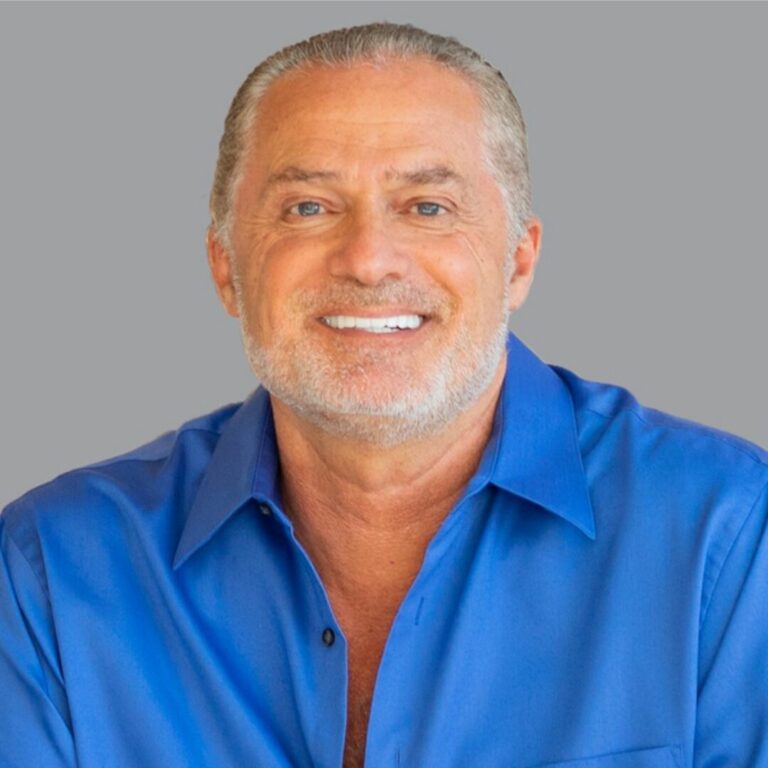
Welcome back to the show, my fellow extraordinary Americans. For today’s guest, we have Rod Khleif. Rod is a multiple-time business owner and philanthropist who’s passionate about business, high-performance real estate, and giving back.
As one of the country’s top real estate and peak performance luminaries, he has also owned over 2,000 properties. Rod soared from humble beginnings as a young, impoverished Dutch immigrant to incredible success. His experience involves both remarkable triumphs and spectacular failures, which he affectionately calls seminars. Rod knows the mindset required to recover from losing $50 million in the 2008 crash to the success he enjoys today.
And he brings incredible authenticity and insight to his approach to real estate, mindset, success, and life. Rod also founded the Tiny Hands Foundation, which has benefited more than 100,000 children in need. He’s also the host of the world’s largest commercial real estate podcast, Lifetime Cash Flow Real Estate Investing, with over 12 million downloads to date. He’s an extraordinary American, and I’m glad and honored to have him on the show. Rod, it’s so good to have you here on this podcast.
Rod Khleif:
Thanks, Cosmo. I appreciate you saying all that. The bio is a little dated. I think we’re actually approaching 30 million downloads on the show. But who’s counting, right? But thanks for having me. Let’s have some fun today.
Cosmos:
No, for sure.
Rod, can you tell me a little bit more about yourself, your story, and how you got started?
Rod Khleif:
Well, I’m going to go way back. So I’m a Dutch immigrant. As you mentioned, I was born in the Netherlands, you know, wooden shoes and windmills. I immigrated to this country when I was 6 years old with my brother Albert, my mother, Vanche. And we didn’t have much. I remember growing up, we ate expired food. Believe it or not, there was a store that sold expired food—true story.
And drank powdered milk with our cereal in the morning because it was cheaper than real milk. And trust me, it sounds better than it is. And you know, I wore clothes from Hand Me Down, from the Goodwill and the Salvation Army, all the way through junior high school, until I finally got a job at Burger King flipping burgers so I could buy my own clothes and ultimately buy a car, which every kid that age wants.
And you know, and I’m sure you’ve got listeners that had it harder than I did, or maybe have it harder now, but I knew I wanted more. Luckily, my mom had an incredible work ethic, so she babysat kids so we’d have enough money to eat and so on. And with her babysitting money, she was a bit of an entrepreneur, despite having no formal education.
So she successfully invested in the stock market. She also invested in real estate. Well, her first real estate acquisition was the house directly across the street from us. She bought them when I was about 14 from a family named the Jewels. I remember she bought it for about $30,000.
Then, when I was 17, she told me she’d made $20,000 in her sleep that had gone up in value. 20,000. And I was like, what? You made 20,000? You didn’t do anything. And this was when 20,000 was a lot of money, mind you. Okay, this was 1977. And I said, screw college. I’m getting into real estate.
So I went and got my real estate license, and I was going to be rich in real estate. Well, I was still living at home. And my first year in real estate, I made about $8,000. And my second year, maybe $10,000. But in my third year, I made over $100,000, which was some pretty decent money.
And so what happened between years two and three that caused me to 10x my income? Well, what happened was I met a guy who taught me about the importance of psychology and mindset. Really, 80 to 90% of your success in anything comes from your mindset; only 10 to 20% comes from your actions. The mechanical stuff we talk about on our podcasts, you know, it’s really the do, and it’s the keep doing.
And, you know, you fast-forward to today. As you said, I’ve owned over 2,000 houses that I’ve rented. Long term, I now own thousands of apartment units. In 2006, my net worth went up $17 million while I slept. And you might say, wow. And I said, wow. And I got ahead so big I could barely fit it through a door. I thought I was a real estate God.
And, you know, when that happens, God of the universe will give you a nice little smackdown. Well, that was 2008. In 2008, I lost $50 million conservatively. And so what I’m known for talking about on my show and at my events, my boot camps, is the mindset it took to have 50 million to lose in the first place.
But probably, if not more importantly, the mindset to recover from the success I’m blessed to have today. And the strategies I used in both cases are the same. Someone would use it to get started. So I’m happy to drill down on those if you’d like. Cosmos.
Cosmos:
No, for sure. There’s so much to ask you, Rod.
But what I’m curious about is that you had massive success, and then the 2008 crisis happened, and you lost, in your own words, more than $50 million. Like, oh, can you tell us a little bit more about that time period?
Rod Khleif:
Sure, sure, sure. So what happened was I had 800 houses rented and multiple apartment complexes.
And by the way, I was only at a 30% loan-to-value. I only owed 30 cents on the dollar. People are like, when I talk about this online, you know, I get hate, like, oh, you were overleveraged. No, I was not overleveraged, but it was the houses that pulled me down. See, every house has its own taxes and its own insurance.
And, so my 800 houses were scattered up and down the Gulf Coast of Florida. Florida has no state income tax, so the taxes are higher here. Property taxes impact cash flow. I had some properties in wind and flood zones. You know, we get hurricanes here, which affect cash flow because insurance premiums are higher. But the big thing that killed me was, you know, if I. At my apartment complexes, we could stockpile parts. And these were C-class houses, by the way. It’s A, B, C, and D class houses.
So A is brand new, D is the hood. Stay out of the hood. These were C. Okay, they were working-class houses, but older and tougher, with lots of maintenance because they were older and had a tougher demographic. And so lots of maintenance. Well, see, if I sent someone to one of my apartment complexes, we could stockpile parts.
So maintenance guy, literally the plumbing parts, appliance parts, electrical parts, door locks, window locks, all that stuff that breaks, they can be in and out in an hour. Well, if I had to send it to one of my houses, it might be an hour away. They had to see what was wrong. Every house is different. Then they had to find a Home Depot or a Lowe’s where we have an account and get the stuff. And I don’t know about you, Cosmos, but when Rod tries to fix something, he ends up going to Home Depot more than once. And it’s the same thing with maintenance. And what took an hour at one of my apartment complexes took all day at one of my 800 houses.
So it was the houses that really, you know, tanked me. And also, I didn’t pay attention to the tenant demographics back then. So if they had a good job, good credit, and paid a deposit, I let them rent. Well, what I discovered was that a lot of them were contractors, plumbers, electricians, drivers, painters, and roofers. And all that work fell off a Khleif in 2009. And so they didn’t have work.
So it was like the perfect storm. So that’s what happened. That’s what, that’s why. And. But what was interesting and the reason I started my podcast, I don’t know, about 10 years ago, I guess now, was what I noticed was that my apartments did just fine. Yeah, they pulled back about 11%, but they would have survived if I hadn’t cross-collateralized them with packages of houses, you know, to save a half a percent interest, you know, 50 basis points. I refinanced them with packages of houses.
So I lost everything, but they would survive, otherwise I’d still own them. And so that’s why I started my podcast to tell people, if you’re going to buy and hold real estate, for God’s sakes, do multifamily, don’t do single-family. Ask me how I know. You know, in my boot camps, lots of times I’ll say, ” Don’t do that. Ask me how I know. And now one of my students gave me a shirt that says, ” Ask me how I know that we give out now at the boot camps. But anyway, so that’s what happened, and I conservatively lost $50 million. And it was very painful and not fun, but it was happy. As I say, drill down on some of the strategies I used, if you’d like some of the, you know, mindset-related strategies, etc.
Cosmos:
For sure, Rod, because like, losing 50 million, that’s. If anybody else had that, they would be suicidal.
Rod Khleif:
You know, like, oh, people died. People jumped off buildings back in 2008. Nine, of course, in the Great Depression, you know, they lost everything. Hell, that crypto guy just shot himself in the Lambo. A few months back, I noticed some people can’t deal with loss.
And I mean, listen, m. Excuse the expression, it sucked. Let me tell you, it was no fun. Okay? And I hid under a rock for a few months, but, you know, with my eyeball poking out, feeling sorry for myself.
But ultimately, you know, I did what I’d love to share with you to turn that around, because like I say, it’s the same strategies that you would use to get started. You know, maybe you’re in a job you don’t love, you don’t have the freedom you want, you know? So, you know, it’s the same strategies that you use to get started.
Cosmos:
My next question is, how did you recover? And, how do you first, a mindset question is, how did you recover from such a painful setback, and emotion, and then from there.
Rod Khleif:
Sure. Well. Well, let’s get into it. Okay? So, the first thing I had to do was reassociate with my goals, okay? Because you’ve got to create a burning desire or a hunger. Okay? Like, if you come to one of my boot camps, the first thing we do is goal setting on steroids, because how do you get anything if you don’t know what it is? Or more importantly, you don’t know why you want it? Okay?
And so you’ve got to want it bad. You’ve got to have written goals. That’s how you push through fears. That’s how you push through limiting beliefs. You know, that’s how you get out of comfort. You know, the comfort zone is a nice, warm spot, but nothing grows there, right?
And so you’ve got to create what Napoleon Hill calls a burning desire in his book Think and Grow Rich. You’ve got to want it, and that’s how you push through all those things. And then, you know, and. And get hungry. And so, you know, as I say, it starts with goals. You should get pictures of your goals and put them around you. I’ve got them in a planner. I’ve got them on the wall around me.
And you should, you know, very carefully articulate why you want those goals. So it starts with goals, but then the next piece is you’ve got to make a decision. So, if you’re just listening and haven’t done anything yet, you’ve got to decide. Like, you know, if, you know, a lot of people fear failure, so they won’t.
So they won’t make a decision. And I will tell you, I’m not talking about, you know, thinking about doing something. I’m not talking about dipping your toe in or one foot in, one foot out. You make a decision. It is done.
The Latin root for the word decision means to cut off. If you’re going to attack the island in battle, you burn your ships because you’re taking their dang ships home. Okay? That’s a decision. It’s done.
And then once you’ve made that decision, you’re committed. And then you’re like a train on a track. If you don’t make a decision, you’re going to get knocked off track. And so, you know, it’s not a 99% thing, it’s 100% thing. And when you own 100% of your life, all the good things that happen to you and the bad things that happen to you, it’s actually very freeing. It sounds counterintuitive, but it starts with a decision. You have to make a decision. And then the next piece, cosmos. You’ve got to take that first step. You know, I will tell you, you know, Dr. Martin Luther King said, you don’t have to see the whole staircase. You take that first step in faith, and the next step will be revealed. Lao Tzu said, ” The journey of a thousand miles begins with a single step. But you’ve got to take that step. And sometimes the most important decision of your life is to take that first step.
You know, a lot of people, analytical people, particularly, you know, they have to check off every box before they make a move. And you can’t do that to get on something. And I love you if you, you know who you are, and you’re some of the most successful people in what I teach and how to buy apartment complexes. Because there are many numbers associated with apartment complexes. But you got it. You’ve got to take action. You’ve got to take that first step.
And I’ll give you an analogy. You can ride all the way across the United States, drive all the way across the United States at night with your headlight only seeing, like, 50, 60ft in front of you, and you know you’ll make it.
You may have obstacles, but you know, other people have done it before you. And I’ll tell you, you know, I see this dynamic with my students. You know, I’m going to brag for a minute. I’ve got coaching students who now own, I think, close to 300,000 units. We’re counting, and we’re at about 280,000 right now. We know there’s a lot we don’t know under my tutelage, and I’m very proud of that. But I see it with them. Sometimes it’s like six months. They haven’t got a deal yet, even after eight months. And I’m kicking in the butt. You know, stay positive, stay focused, keep making the calls, keep doing what you have to do. Then they get one, and the next thing I know, they have three. I’m like, what just happened?
You know, it’s called the Law of the first deal. It’s the scariest, it takes the longest, it’s the most stressful. But when they realize that it’s all between their ears, that’s holding them back. That’s what happens.
And, you know, I would tell you, a lot of people fear failure, you know? And I’m going to tell you, don’t fear failure. Fear of regret. Fear of being in the same place you are right now, two or three years from now. Unless you absolutely freaking love where you are right now. And I’ll give you a little story on this. There’s a nurse in Australia, a hospice nurse, okay? So she takes care of patients when they’re about to die.
Her name was Bronnie Ware. And she asked him a question. Cosmos. The question was, ” Do you have any regrets? And she even wrote a book about it. It’s a bestseller—something like The Five Regrets of Dying. You know what the number one regret was? Not living the life I could have lived. Living someone else’s life, not doing what I know I’m capable of. I can’t think of anything worse than that. Okay, so fear that. Fear. Regret. Don’t fear failure. Right.
So I could keep going. There are a few more. A few more pieces here. Like, next, I would talk about fear and limiting beliefs.
Okay, so what is fear? Some people think it’s F everything and run. Right. I like the analogy. It’s false evidence appearing real, because it usually is. We’re fearing the emotion of fear rather than the actual thing we’re fearing. But, you know, I hope you’ll adopt the analogy. Face everything and rise. Because every successful person has fear, they just move through despite it because action mitigates fear.
Okay, now let’s talk about limiting beliefs. When I immigrated to this country, I didn’t speak English. I got thrown into school. I found out what bullies were. For the first time, I had learned how to fight back. And then my mom, proud Dutch woman that she is, I happen to have the props right here. Hang on. Send me to school in these wooden shoes. These are the actual shoes because we found them when we put her in a living situation. And these leather shorts the Germans wear for Oktoberfest were like crack cocaine for the bullies.
So I got my ass kicked again. And then the bullies would chase me home, and I’d get chased off with a, She’d chase them off with a fly swatter. So the next day, butt-kicking. And I developed this belief that I wasn’t good enough. I used to ask myself, how can I show them I’m good enough? You know, of course. Which presupposed I wasn’t.
And see, a lot of people have these limiting beliefs. Like, I’m not old enough. I’m not young enough. I’m not analytical enough. That was another one of mine. I’m not smart enough. I don’t have enough money. Yeah. I will tell you, there’s a reason the acronym for belief systems is BS, because 99% of them are BS. They have no basis in fact, but we believe they’re real based on childhood experiences.
So if you’re listening and you’re consciously aware of one of these BS belief systems, I would ask you to drag it out into the daylight, look at it through your adult, rational mind, and realize it’s B.S. I mean, who’s going to reject me? I’m a beautiful soul. I’m a gift from God. Anyone who rejects me just doesn’t know me.
And I had to come to that realization. I mean, I used to be afraid to raise my hand in front of 10 kids in a classroom, and now I speak in front of thousands of people a year in flip flops, typically, you know, but, you got to drag it out in the daylight consciously, and look at it, and it’ll start to diminish and go away.
And so, you know, if you know, if you’re aware of it now, sometimes you’re not aware of these limiting beliefs, but hopefully, you know, if you are, that you consciously deal with them, because they can. They can impact your entire life. I mean, they impacted me for decades until I finally realized, you know, another piece, cosmos, and just stopped me anytime, because I keep going. There are about three or four more. Okay.
Cosmos:
This is very important, so keep going.
Rod Khleif:
Okay. All right, good.
So the next piece is focused on the power of focus. You know, wherever your focus goes, energy flows. And I will tell you, the most successful people on the planet have the highest degree of focus. I mean, look at Elon, look at Jeff Bezos. You know, but here’s the thing that people don’t realize. Whatever you focus on grows, whether positive or negative.
So if you’re focused on negative things, they’re going to get bigger. Like, for example, I’ll get people to call me and say, you know, not my students. They know better. But other people will call and say, ” You know, how do I get out of student loan debt? And I say, wrong question. How do you make so much money that debt’s irrelevant is the right question. Okay.
Another example is that they asked Mother Teresa, while she was alive, whether she was anti-war. She said, “No, I’m pro-peace.” Right? I mean, you see the analogy here, and you know, I will tell you. You know, I get excited about my 30 million podcast downloads. I listen to two podcasts. One of them is Tim Ferriss, and the other one is Joe Rogan. I try to have both sides of the aisle. I’m definitely on one side, but on the bottom. We won’t go there. But on the Tim Ferriss show, he interviews the best of the best in the world. It’s a very intellectual conversation, a very stimulating conversation.
The best in the world, like athletes like Michael Phelps, NFL, NBA players, billionaires like Ray Dalio, heads of the CEOs of the biggest companies, like Zuckerberg, actors like Jamie Foxx, Arnold, Hugh Jackman, Ed Norton, people like that. And he deconstructs their success. Fascinating conversation, but I started to hear a pattern in the cosmos. They almost all meditate. What does meditation enhance? Focus. Right?
I don’t know about you, but I’ll be sitting there watching Netflix with my phone in my hand, scrolling through freaking social media, which kills your focus, okay? So pay attention to that, guys. You know, try to enhance your focus, not. Don’t distract it, because you’re making those micro decisions every couple of seconds.
And so, you know, so focus is super, super important, you know, and another piece is, you know, in my business, I teach people how to buy apartment complexes and other commercial real estate, senior housing, industrial flex space, mobile home parks, self-storage, you name it.
My students own tons of it. But here’s the key. They play to their strengths, okay? A lot of people try to get you to build on your weaknesses. But my business, commercial real estate, is a team sport, and there are lots of different hats. You can, you know, you can be the person who finds the deal. You can be the person who underwrites the deal. You can be the one who raises money. You can be the one who manages the asset after you buy it. This is all these different pieces, but you’ve got to play to your strengths. Why? Because your strengths are your greatest assets, okay?
Don’t try to maximize your m weaknesses; when you’re playing to your strengths, you love what you do because you’re good at it. You know, and success is much faster when you maximize your strengths and you. Then you align, hire, or partner to address your weaknesses. Okay?
When you love what you do, success is inevitable. You know, I see it in my business: an analytical person will get together with an outgoing person, and an analytical introvert will get together with an outgoing one. I’m sorry, analytical, introverted. We’ll get together, yeah, with an outgoing extrovert. I’m the mouthpiece, obviously, on the relationship side. I’ve had. I’ve had, you know, partners that are CPAs, things like that. And so, you know, play to your strengths.
Why? Because when you’re playing to your strengths, as I said, you love what you do, and you never work another day in your life, but you’re also passionate about it. And passion is required to influence people. You know, to raise money, to find deals to influence. And, you know, when you’re operating in what you love, and you’re passionate, you know, besides, you know, your ability to influence, it’s the fuel.
You know, if you have a speed bump, you get, you know, your nose bloodied. That passion will keep you going. And it breeds creativity, it breeds innovation. You know, it minimizes or even eliminates fear. So, again, play to your strengths. One or two last pieces. One. One peer group. You know, when I was losing everything in 2008, I was in Tony Robbins’ platinum partnership. It’s a mastermind, okay?
And, I was around maybe 60 people in that mastermind. I was around people. And this was in 2008, okay, when I was in it, and I was around people who were killing it in that crash, okay? They had. They had figured it out. I didn’t figure it out in time. And they figured it out, and they were massively successful. And they’re like, get up, you puss: 50 million, shmillion. Get up and make something happen. That’s who you want to be around when the proverbial shit hits the fan, right?
And so, you know, you show me your three best friends, I’ll show you who you are in every aspect of your life. Your happiness, your health, and definitely your finances.
So here’s the sad reality, though. Cosmos. As you know, most people will default to people they went to school with or work with, who may have their own limiting beliefs and fears. You want to be around people who think what you think is hard is easy. It’s why my coaching program is so successful, my warriors, because they lift each other. They validate each other, they praise each other. You know when. When a deal closes, and you want to be. Because a rising tide lifts all ships, right? But if you’re around people who will hold you back. They’ll hold you back out of fear. Fear of losing you, fear of feeling less than if you succeed, or several other things.
And sometimes it’s family. And I’m going to tell you: love your family, but proactively choose who you allow to influence you and who you hang around with. You want to be around people who want more out of life. You want to be around people who think. Like I say, that’ll hold you accountable. Thinking what you think is hard is easy. You know, if you’re going to play tennis, do you want to play somebody better than you or worse than you? I mean, you know the answer, right?
And so that’s super, super important. And so, you know, a lot of people fear problems or failure. I’m going to tell you, I have, you know, I call them seminars. That was a $50 million seminar, okay? It was a. It was an expensive freaking seminar, but you know, it’s only a failure if you don’t get back up or you don’t get the lesson right?
And so I’ve built 29 businesses in my career so far. I was shocked when I counted how many there were, several worth tens of millions of dollars. But most were spectacular flaming seminars because we. You fail your way to success. Don’t fear failure. Like I said, fear regret. Don’t fear problems. Problems are a gift. They give you feedback. You know, the only people that don’t have problems, frankly, are six feet underground.
You know, I got to meet the billionaire owner of Spanx, you know, the women’s undergarments that hold everything together under clothes. Guys probably don’t know what that is, but her name’s Sarah Blakely, a beautiful human being, and I met her at a Mastermind, actually, and she told me that her dad used to ask her and her brother pretty much every week, what have you failed at this week? And I thought, what an awesome freaking question to ask your kids so they don’t fear failure. Right?
So anyway, those are some of the most important pieces, but I want to bring you one I think is the most important. And you’re going to probably think it’s foofy if you’re listening, guys, but I’m going to tell you that would be a mistake, okay?
So stay with me here. And that’s gratitude. Gratitude is the most important foundational emotion we have available to us, okay? Here’s why. It strengthens our immune system. It makes us stronger when we face adversity. You can’t be grateful and fearful at the same time. You can’t be grateful and angry at the same time. It makes our hearts stronger. It lowers our blood pressure. It brings us closer to our spirituality. And it’s how you attract everything you want into your life.
So most mornings I will sit in my recliner or even lie in bed sometimes, and I’ll just be grateful for the things I want, as if I already have them. And then I’ll be grateful. I’m sorry, I’ll be grateful to the people in my life. Sorry, I’ll do that first. I got that reversed. I’m grateful for the blessings in my life, the family I love, and the people I love. But then I’ll be grateful for the things I want if I already have them. And I’ve gotten emotional being grateful for things I don’t even have yet. And I know I lost some of you analytical ones on that, but this is how I had 50 million to lose and how I got it back.
So ignore it at your peril, okay? Because it freaking works now, you know? And gratitude: when you start your day with it, my God, it’s extraordinary the day you’re going to have, and you focus on being grateful. Would you agree with me, Cosmos?
Cosmos:
Yeah, no, gratitude. Gratitude is, I mean, it’s a part of our spiritual practice, right? It helps you connect with God, and everything gives you a positive mindset.
Rod Khleif:
I’ll share one more story with you, and then we’ll take it wherever you want to take it. So, you know, I immigrated, I lived in Denver, okay. But I knew I wanted to live on the beach. And there’s no beach in Denver. It’s in the middle of the country.
And so. But I would visualize the palm trees, the sand, the surf, and all that. Twenty years later, I built what’s now probably about an 8 to $10 million house on the beach. I owned the beach on one side. I had my boats on the backside. It was a slice through an island. It was called a Gulf-to-Bay property. It’s spectacular. I mean, just describe it briefly.
There was a big waterfall from the second-floor balcony into the pool. You had to walk through the waterfall to get to the pool, pools, and magazines. It was extraordinary. A big spiral staircase up through the middle of the house. Wine cellar, elevator on the second floor. I had aquariums built around the staircase that cost me almost $200,000.
So this gives you an idea of the house. Two months after I moved in, I worked in that house for 20 years. Okay? That’s, I knew that’s how long I worked for it. And that’s, that’s a, that’s a tip here, people. When you’re setting your goals, people underestimate what they can do. I mean, overestimate what they can do in a year, they’ll overestimate what they can do in a year, they’ll underestimate what they can do in 5, 10, or 20 years.
So don’t limit yourself when you set your goals, okay? And by the way, I do a goal-setting workshop. It’s on my link tree. It’s rodslinks.com. It’s at the bottom. There’s a guide you can download. It’s about an hour—the Sad Reality Cosmos.
And you know this. People spend more time planning a freaking Christmas party than they do designing their lives or birthday party. This is designing your life. And I’m not going to try to sell you anything. If you watch that goal-setting video, have your spouse do it; have your kid do it if they’re 10 years old. It’s very powerful. It’s only about an hour. Extremely powerful. But anyway, one of the pieces of that is not to limit yourself. Okay?
Just again, we overestimate what we can do in a year and massively underestimate what we accomplish over time. So I built that house on the beach. It was spectacular. I’m floating in the pool at night, two months after I moved in. So I worked for it for 20 years. Two months after I moved in, I’m floating in the pool. I’m looking up at this testament to my ego, which is really what it was. It was to prove to the world I was good enough. I mean, if that didn’t do it, forget it, you know, my beautiful family’s inside sleeping. I had all the toys, the Maserati, the Rolls Royce, you know, all the stupid shit that I thought was important at the time. And I got depressed.
And I don’t mean to be a little depressed. I mean, I got really depressed. I’m like, what is going on? I’ve just achieved success, like 10,000 times. And that’s the message I want to share. Several things were happening that were very important. One is that you should never achieve a big goal without having other goals lined up behind it. You know, as the good book says, without a vision, the people perish. You need a vision for the future. And I didn’t know what I was going to do next.
So that’s number one. Number two is it’s never about the goals. You need the goals to create that burning desire and that hunger to actually get off your butt and make something happen.
They say the happiest days of a boat owner’s life are the day they buy the boat and the day they sell the boat. Right. You know, it’s not about the goals. You need them, but it’s not about that. Happiness comes from progress and growth, continual progress and growth. And part of my goal-setting workshop at Rod’s Links, and that’s the first thing we do at my boot camps, by the way.
But part of my goal-setting workshop thereafter is my weekly planning process. Okay, it’s 15 minutes. And I teach you how I manage two very large companies at the same time and keep control of a very powerful exercise you can do every week to stay, you know, minimize distractions, stay really focused, and kick ass.
But one part of that weekly planning process is to look at what you accomplished and consciously acknowledge your progress and growth so you’re happy. Because you’re going to have delays and setbacks, but if you’re progressing even slightly, you’ll be happy. So anyway, I digressed a little bit on that.
But the third piece, which I realized after all this happened, and I ended up meeting Tony Robbins, who helped me figure this out, was that I’d been totally focused on myself. Rod, Rod, Rod. Show the world I matter. Show the world I’m good enough. You know, blah, blah, blah.
And I went and saw Tony Robbins that year, you know, because I had to get it back. I had to get my mojo back. And I saw that he fed families for the holidays. And I’m like, what a concept, you know, do something for someone else. I’m embarrassed to say. I had to be 40 to get that memo.
And so I called my brother in Denver because I was going to visit him for Thanksgiving. I said, bro, let’s feed five families. So he called his church, and he found five families that really needed help. The third family changed my life. Cosmos. When we went up to this house in Denver, it was like a shack. It was like a one-bedroom shack. I mean, it was terrible. There was a Hispanic woman in there with five kids. And we bought toys for the kids, frozen turkey food, you know, a bunch of stuff. We put it on the porch. And she came out and saw that, and she started crying. Her kids came out. Two of the older ones started crying. I started crying, and I was hooked. And I’m blessed to stay in the last 20.
And please, this is going to sound like ego, and I’m bragging. There’s a real message here, guys, so don’t tune this out. In the last 26 years, I have fed over 150,000 children in my area for the holidays, including at-risk children. I provided tens of thousands of backpacks filled with school supplies to local kids. Kids, you know, don’t get me started. Living in the greatest country on Earth, and they don’t have school supplies.
We did 2,000 just a couple of months ago. I provided thousands of teddy bears to local police departments for officers to keep in their vehicles if they encounter a child who’s been in a traumatic situation. I just gave 500 to the Sarasota Police Department a couple of months ago. And, you know, we’ve been taught in the cosmos to achieve, to be happy. Like, we really shouldn’t be happy until we’ve achieved something.
And this is going to sound like a play on words, but it’s an important one. When you give back in any fashion, you’re happily achieving. And I know, again, it’s a play on words. Tony Robbins calls it the science of achievement versus the art of fulfillment. Achievement’s a science. If you want to learn how to buy real estate, get your butt to my bootcamp. I’ll give you a phenomenal deal here in a minute. If you want to come virtually, I don’t sell anything there. But the achievements of science. I’ll give you the blueprint, the map. You just have to do it, okay?
But fulfillment is an art, okay? You’ve got to figure out what juices you, what you love. For me, it’s kids. It’s also older people. I’m getting into senior housing, but I love kids. And so for me, it’s that. Maybe for you, it’s animals, maybe it’s the environment. Give back right now. And you might be saying, well, you had money. That’s why you gave back. You want the money, give it back right now. That’s how God works. That’s how the universe works. What you give, you get back tenfold, a hundredfold. But give back right now, and you’ll be happily achieving. You’ll be fulfilled. Now, I’ve had people here in my studio who have thousands of units, and I can tell, they’re like I was before I had that Epiphany. They’re. They think they’re successful, but they’re not because they’re not fulfilled. I don’t want that for you anyway. That’s it. There. There you go. I’m done.
So fire away with your questions, brother.
Cosmos:
This is amazing, Ron, and there are two directions. Two questions I wanted to ask you. It’s like one or the other. But the last part where you talked about, like, happiness and everything made me think about the American identity, of achieving the American dream, and the pursuit of happiness.
And basically, we’ve been taught as Americans that, to have a sense of happiness and pursue it, you have to achieve the American dream. But I wanted to know your thoughts on that matter.
Rod Khleif:
Well, what I just said, if you want to be happy, give back. You know, if you don’t have money, give your time, anything you want, you give, you get. You want happiness, smile at everybody you see. You’ll be happy. They’ll smile back. You want love, give love, you get love back. You want money? Give up your time and give money, and you will get it back a hundredfold. And the problem is, you don’t need to achieve to be happy.
As I said, you give back. And that achievement process is happy in its own right. And so, you know, this whole American dream thing, yeah, you should want it. You should have goals and want them. And if you want all those things that I’ve had, you know, I’ve got probably a million and a half dollars worth of watches, I’ve had the Lambo, the Rolls Royce, the Bentley, all this stuff that one time I thought was important. I don’t anymore. I have other goals now.
Cosmos:
Now.
Rod Khleif:
But it’s okay, if you want that stuff, get it. But give back in the process, and you’ll be happier. You’ll be fulfilled, and the success will come faster. Now, you don’t do it for that reason, but that’s how God works. That’s how the universe works. And I’m not super religious, by the way, but I just know it works. I’ve used it in my life, my entire life, you know?
Cosmos:
I’m so glad and grateful that you’re mentioning this, Rod, because our society, like a lot, a lot of, like the American culture, at least in the media, shows that. To be wildly successful in business, you have to be cutthroat and ruthless and all of that. And they show a narcissistic side.
But then what you’re explaining is obviously like a different thing. And I think listeners need to know.
Rod Khleif:
Integrity has to be your number one core value. You do what’s right, even if it hurts now, you know, and listen, if I don’t know, you know, I know you’ve got listeners that want to do lots of different entrepreneurial things. Incredible opportunities are coming in this country. You can buy businesses. There are 80 million baby boomers who own businesses. I’m one of them. I just turned 65 in January, and I’m the tip edge. There are 10,000 people a day turning 65, which is why I’m excited about buying senior housing right now. But if you want to learn real estate, you know, my podcast, if I can shout out.
My podcast is called Lifetime Cash Flow through Real Estate Investing. It’s the largest in the world for commercial real estate. I know you’ll enjoy it. I talk about the mindset there, and I interview some very, very successful people. And again, if you go to Rod’s links, Rod’s plural linksplural.com, there’s all sorts of free stuff. There’s, there’s, there’s books, fantastic books about the business. My podcast link is there, my social media are there, and that goal-setting workshop is there. And my boot camp, I do virtual boot camps literally every couple of months. I don’t sell anything at them there. And, if you use the code Cosmos, you can come for 47 bucks, okay?
So no excuses, okay? It’s two days of training for 47 bucks. So no freaking excuses. If you really want to do something with your life, there you go. But you’ve got to pick your vehicle because opportunities are coming in, all sorts of things right now with this current economic environment.
Like I say, buying businesses, buying real estate. A lot of real estate is in distress right now, especially multi-family, because of the interest rates. So, you know, there’s an incredible opportunity to capitalize right now.
But you gotta, do your goals, get the burning desire, make a decision, take the first step, get around people that want more. All these things that I did to reassociate, to get back to the success that I’m blessed with after I lost everything. But it’s the same thing you have to do to get started.
Cosmos:
So, Rod, since we mentioned the podcast, I wanted to ask you about your podcast, Lifetime Cash Flow to Real Estate Investing. Can you tell me a bit more about this podcast and how you got it?
Rod Khleif:
Sure. Well, what I used to do was just interview apartment investors. Okay. But now I interview every asset class in commercial real estate. What I mean by asset class, like, there’s apartments, there’s office, which don’t do office. The office is dying right now because of, you know, people working at home and Zoom. There’s retail, you know, like strip malls and shopping centers, things like that. There are mobile home parks. Great asset class. There’s self-storage, there’s senior housing, there’s industrial flex space where you’ve got a warehouse, and it’s flexible, and you can. People can rent pieces of it. There are all these different things. And my students own all of this and a lot of it. But I teach all that now.
And I bring. I bring my students in. I bring in very, very successful operators into my studio here in Sarasota. They come in from all over the country. I just had two from California in the last couple of days, and I interviewed them. But then I also do a clip every week called Own Your Power. It’s a motivational clip. It’s about three or four minutes, five minutes. You give me five minutes a week, and I will juice you.
Okay. I will motivate you. And one of those goes, there are hundreds of them there, and I do one every week. And, you know, that’s really why the podcast has been so successful, because people don’t remember what you said, but they remember how you made them feel.
And, I make them feel because, you know, it is all 80 to 90% of our success. I’m sure you agree with this cosmos. It’s a mindset. It’s psychology. You know, if it weren’t, there’d be a bunch of wealthy librarians and college professors out there. It’s not knowledge. You actually have to do something. Right? You’ve got to take action.
And so, you know, and. And I spent 20 years plus with Tony Robbins, and he’s the best in the world at it. You know, shout out to him if you can see him, see him. But, you know, I’d be an idiot not to have picked up a few things. And, I’d spent 20 years with him because I love talking about mindset and psychology. It’s just, for me, it’s. It’s fantastic.
Cosmos:
So, for anybody in this audience who is into real estate, I would definitely recommend they take a look at your podcast and just get.
Rod Khleif:
Thank you.
Cosmos:
And, I know you mentioned your virtual boot camps. Can you tell me a little bit more about that?
Rod Khleif:
Sure, sure, sure. I appreciate that. It’s two days of training. And it’s like I say, it’s virtual. You can do it at home in your underwear. I do it right here in this studio. I’ve got one coming up, literally this weekend. There’ll be a thousand people on it.
And I don’t sell anything there. It’s not a sales pitch; it’s full-on training. How to pick a market, how to build a team, how to find deals, how to evaluate those deals, how to finance those deals, how to raise all the money you need for those deals. Syndication, joint venture, property management.
And of course, I spend time on my mindset. First thing we do is goal-setting on steroids, like I said, because I need you to actually take action on what you learn. I will tell you, you will leave so motivated, you’ll be coming out of your skin. The only complaint I ever get about those is that the brakes are too short. I take 15-minute breaks every couple of hours, and trust me, they’re harder on me than on you. But I’m just trying to pack in so much information, and it’s a lot of fun. You’ll love it.
So, again, if you go to Rod’s Links, you’ll see the Boot Camp site at the top, and it’ll have the date of my next event. And, I promise you’ll be glad you came. In fact, if you come and you don’t love it, I’ll give you your money back. I don’t mean like it. I mean, love it. And if you go to the bottom of the Boot Camp website on my link tree there, you’ll see what hundreds and hundreds and hundreds of people have said about the experience. We post social media posts from it, but it’s a lot of fun.
And so if it’s real estate, see me. I promise you’ll love it. If it’s something else, learn it right now. Learn it as fast as you can because opportunity is upon us. You know, don’t, don’t, don’t hesitate. Take action. You and your family deserve it for sure.
Cosmos:
Rod and Rod, just to make sure the audience knows how to connect with you. How would the audience reach out to you? They want to know more about all of this.
Rod Khleif:
So again, the link tree is the best thing. Rods. Links.com. There’s a free book section. There’s my best-selling book, which I’ve given away tens of thousands of copies of. You pay; shipping is like six or seven bucks, and you get the physical copy of the book. But there are a lot of PDF books, and they’re the best-in-class. These aren’t like crappy white papers. These are really good books.
So that’s there. My podcast link is there. The goal-setting workshop is there. My social media links are there. And my bootcamp site is there. It’s all there. And if you ping me on social media, I answer virtually every question, so don’t hesitate to ask questions. You know, I’m pretty prolific on social media.
Because I love this, you know, again, when you love what you do, work is playing, you’re passionate about it, hopefully you can feel my passion. I freaking love this.
Cosmos:
I’m so grateful that you are here, like, teaching people how to do this, because, I don’t know, I asked you about mindset questions and everything. The ultimate thing is to know the tactics and strategy as well. And I do want my audience to know more about that, especially when it comes to real estate.
And, Rod, I’m so appreciative and grateful that you took the time to come on this podcast and share your knowledge about all of this and how to become successful. And I do hope you come back at a later time.
Rod Khleif:
I’m happy to do that. And next time I come back, it can be totally technical if you like. We just talked about multifamily, but of course, I teach it over two days. There’s a lot to it. I can certainly give you highlights and get you juiced about it at another time. But, you know, if you’re interested, check out my podcast. You’ll really enjoy that, I’m sure. And, thanks for having me on Cosmos. I appreciate you, brother.
Cosmos:
No, I appreciate you too, Rod, and I want to conclude this episode by letting my fellow extraordinary Americans know that, hey, look, there’s an extraordinary within every one of us. It’s our duty to awaken it and unleash it. Until next time. Bye for now.

 Amazon Music
 Apple Podcasts
 Audible
 CastBox
 Castro
 Google Podcasts
 iHeartRadio
 Listen Notes
 Overcast
 Player.fm
 PocketCasts
 Spotify
 Stitcher
 TuneIn