Cosmos:
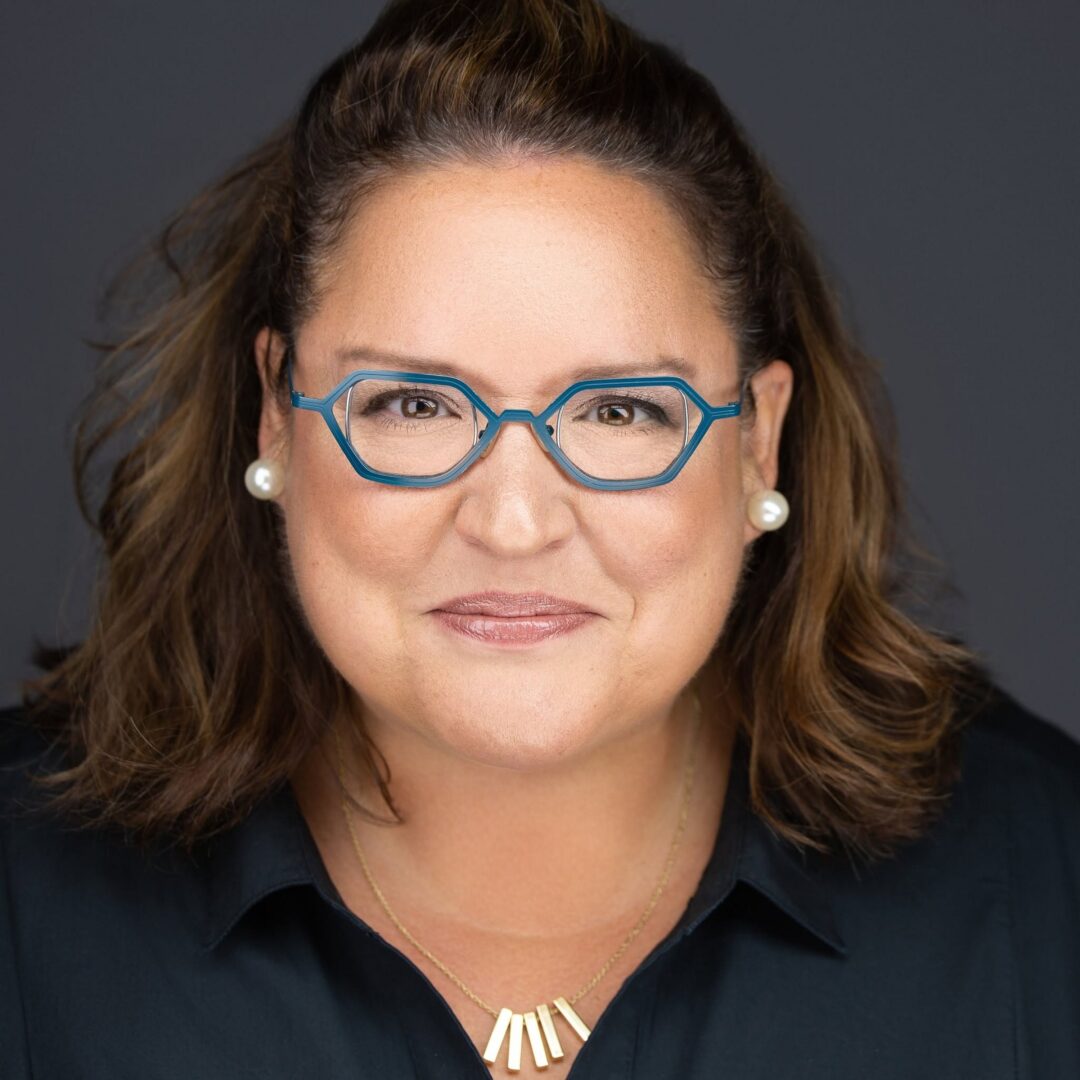
Welcome back to the show, my fellow extraordinary Americans. Today’s guest is Catrina Craft. The tax code isn’t fair, but that’s our opportunity as a business owner. This is the perspective Catrina Craft brings as a CPA and tax strategist behind some of the most profitable coaches, consultants, and creators in the industry.
After climbing out of $100,000 in debt and losing 80% of her income overnight, she rebuilt her business using the same advanced tax strategies and well-building tactics that the top 2% of the wealthiest rely on to protect and multiply their money. Now she teaches her clients to do the same. Through her Craft Money Map System, she helps high-earning entrepreneurs cut taxes by 25% and boost profits by 20%, strategies most accountants won’t even discuss publicly. Catrina pulls back the curtain on what the ultra-wealthy know: how proactive tax strategy lets you keep more, grow faster, and build real wealth.
Listeners walk away with practical insights into entity structuring, overlooked deductions, and scalable income planning. She’s an extraordinary American, and I’m glad and grateful to have her on the show. Catrina, it’s so good to have you on the show.
Catrina Craft:
Thank you for inviting me.
Cosmos:
No, thank you for being here.
Can you tell the audience a little bit more about yourself, your background, and how you got started?
Catrina Craft:
Absolutely. I realized that the wealthiest had secrets that they were not sharing. As an accountant, I felt I knew it because I had attended college, studied, and earned my master’s. I understood accounting and money.
But what I did not learn and did not understand until later was that the wealthy use tax strategies and experts to help them grow and build their wealth. I began studying under some of the best tax strategists and started working with them and the top 1% of earners.
And through working with that, I learned tax strategies and how to build real wealth. And that’s why I started teaching others, because I felt we didn’t all have a seat at the table. My family didn’t grow up learning about the secrets of the wealthy. That was always closed and hidden, and we weren’t invited to sit. But some people say that if you’re not given a seat, you should take a fold-up chair and make your own. And so now I’m uncovering some of those secrets because I feel like a lot of business owners don’t understand the tax code, how it could be used to their benefit, and how it can impact their wealth. And that’s what I do now: help other business owners use the tax code to build wealth.
Cosmos:
Catrina, there’s a lot to ask here, but one thing I wanted to know is that you took on $100,000 in debt. My question is: how did you get there, and what did you do to get out of it? And what is the story about that?
Catrina Craft:
The story is: I want to make one major point. Don’t put all of your eggs in one basket. I had a client who accounted for 80% of my income, and when she decided she no longer wanted to be in business, I was left unsure how I would pay my fixed expenses and my employees. I had just purchased a home and was using my credit cards to cover all my business expenses. There is good debt and bad debt.
So, understand that not all debt is bad debt. I used that debt to continue and grow my business. I eventually purchased 12 rental properties. And that was a piece, too, of how I utilized other types of income, not only my business income, but income from rental properties to grow wealth. And that allowed me to pay off the debt within two years and continue growing my business.
Cosmos:
Yeah, Catrina. I wanted to follow up. What is your financial status? Like, what, what was your mental state when you went through all of this? How should people experiencing financial stress handle this situation when they’re in debt?
Catrina Craft:
I know many people are fearful of money and of the IRS. Luckily, I did not have a fear of money. I didn’t have a fear of using and leveraging money. Perhaps because I studied accounting, I knew that money is just a tool.
And so you shouldn’t let the money that you are now possibly, you know, hundreds of thousands in debt, stop you from just keeping with your plan, because that was just a setback that the client decided to stop their business. From that, I learned several lessons. I learned not to put more than 30% of my business in one client’s hands.
That was the first lesson I learned. I learned perseverance and endurance because, although I had that, I knew that I had a plan. You need a strategy to change the circumstances you’re in. Make sure you have a strategy and someone working with you to ensure you’re following it.
So that’s where the guides and coaches come in to really help you do that. I had strong family support and a background that always told me I could do things, start businesses, and succeed. And so, because I had that within me, I was not depressed. I was not, you know, saddened. I just pushed harder. It encouraged me and drove me to ask, “Okay, how can I get more clients?” I did more networking, I learned more, I studied more. I entered real estate and bought. I was then able to use different systems that wealthy people use.
When I purchased my first house, I did so with zero down. I was able to make zero down payments, buy a house, and generate rental income. You need to learn the tools available. And I think that’s what we don’t have. We end up in a situation where we feel we don’t have a way out. But I think studying and looking at other opportunities and other things, going outside of your box and looking at people that are successful in what they’re doing, that’s what I did.
Cosmos:
Catrina, what do you, from your perspective, what are some of the wealth-based strategies that the wealthy and the one percenters use or the two percenters use that the middle class and poor don’t even think about?
Catrina Craft
One of the best strategies people can use is entity structure. Most people know about LLCs, so they’ll say, “I’m forming an LLC.” People say “former LLC” online, on TikTok, everywhere. But they don’t understand that an LLC is only a state-level structure. The IRS does not recognize an LLC as a taxable type of entity. You need to understand that you can be taxed as an S corporation, C corporation, partnership, or sole proprietorship when you are an LLC.
That’s important because, depending on how you’re taxed, it will determine your deductions and credits you can use. Also, I like to partner with various entities. You may have an LLC filing as an S Corp, but we can also establish a C Corp to help you maximize certain deductions, as C Corps have different deductions than S Corps in some cases. So, really understanding how to utilize entity structures, I think, is the most important area, especially when starting a business, because you need to understand if you’re planning to sell, if you’re planning to get investors, if you’re planning to have partners, then that type of entity is going to be different for each person.
And I think a lot of times people don’t know when they’re starting a business. They just get into something because LLC is a common entity name.
Cosmos:
So, for the sake of the audience, so that the audience can understand better from you, what is the difference between an LLC, an S Corp, and a C Corp?
Catrina Craft:
An LLC is a state-level entity, so it’s a limited liability company. At the state level, you set up your entity structure, then you must elect how you want to be taxed at the IRS level or the federal level. If you do not elect it, you’re an LLC with only one member. That’s what an owner is called. It’s a member. If there’s only one member, it defaults to a sole proprietorship. In most cases, a sole proprietorship is not the best entity for people. A sole proprietor means you file your personal tax return and report the business income on Schedule C. Schedule C is the most commonly audited business form.
So to avoid audits. That’s one reason you don’t want to be a Schedule C. Another reason is that you are paying 100% of your business’s profitability. You’re paying into the federal government, Medicare, and Social Security. You must pay that tax. Where, if you are an S Corp at a certain level, like I usually say $50,000, you are best to elect another type of status so you can avoid some of those extra taxes you’re paying into Social Security and Medicare.
So that’s the llc. It can be taxed as an S Corp, a small business corporation. And a small business corporation allows you to pay yourself a salary and then take a distribution. I know some people use the business bank account to pay bills and take out money as a distribution or draw. But there are certain guidelines around that. Especially when you have an S corporation, you need to pay yourself a salary.
When we talk about commingling funds, it’s very important not to do so. Commingling means you’re using your business funds and your personal funds and intertwining them. That’s not a good thing. If you’re audited, the IRS can review all your personal funds. For example, if you’re receiving payments and claim a deduction for a meal. And it’s in your personal account.
Now, if you’re audited and they see that personal item that’s been deducted, they may audit your entire personal bank account. So it just opens you up to more auditability within your personal. So don’t commingle. That’s a bad thing. A C Corp is a larger corporation with its own tax rates. S Corp income flows to your personal tax return through a K-1, a partnership return that reports your share of the partnership’s income or loss. But a C Corp has its own tax rate. It doesn’t flow to your personal tax return.
So it’s a standalone company. Those are the ones you have. Sole proprietor schedule C. Your partnership and your S Corp will flow. It has its own tax return, but it will flow to your personal tax return. A C-Corp has its own tax structure. It will not flow to your personal tax return.
Cosmos:
So, Catrina, many people know that the rich pay little to no taxes. And from your perspective, is it because they have a very good understanding of how the tax code and how the IRS work that they’re, that they’re able to do this?
Catrina Craft:
Absolutely. It’s all about the tax strategy because I believe the IRS code is unfair. But it is your opportunity as a business owner and an investor. The IRS code is designed to benefit business owners and investors, who know that we spur the economy and that, if we get benefits, we’ll hire more people. We’ll be able to buy more products and provide more services, or purchase additional services.
The code is designed for business owners and investors. If you understand that and start using it as the wealthiest do, it makes a real difference in your business’s profitability. The wealthiest have asset protection attorneys. I work with asset protection attorneys. Because the last thing you want to do is to grow your wealth and then lose it all because someone is suing you or something happens in your business, like a liability, or, you know, something could happen, and you want to make sure that’s protected. Asset protection is another critical area for wealth creation and preservation.
And they have a team of people, and as I said, they’ve been at a table. They’re hearing about this. They’re growing up around these types of secrets and this knowledge that most business owners are not getting.
And it’s time we understand the tax code and the loopholes it contains. And, they have lobbyists, and they have different interests, political interests, that they’re going and they’re talking to people so that their agenda is pushed. We need to understand that.
Cosmos:
So, Catrina, let’s say somebody in this audience is like, watching this, right? And they’re starting a business, but they’re unaware of all these loopholes and the IRS tax code surrounding them. They have a basic understanding. How would you advise this person to create an entity structure and, at a minimum, advise them on one tax or wealth-saving strategy?
Catrina Craft:
So what I like to say is, like, all my customers. Customers are customized. I develop a customized strategy for individuals because everyone’s different. Like, everybody’s goal is different. Not everyone’s goal is to grow into a $20 million company. Some people have a lifestyle and agenda, and they say, “I’m good with 200,000 if I could work two days a week.” Every strategy will be different for each person. But some of the strategies that I definitely love to use are income shifting.
And income shifting means you may be in a higher tax bracket, but you can hire your children or maybe your family members, who could be in a lower tax bracket. You’re shifting income from your higher bracket to the lower bracket, where you pay a lower tax rate. Make sure they have a job description, and they’re doing work for you. It has to be legal. It must be a reasonable wage, and you can hire your children. As far as your family members, they may be on your board of directors. If you have a board of directors, you can pay them. Also, I like to say: with corporations, you have to hold a board of directors meeting. That meeting could be anywhere.
So why not plan it at a place that you all love? When you have a board of directors meeting, you need to ensure that any business travel is covered, and you spend four hours a day doing business. Those four hours can include travel time. Let’s say you leave on Thursday. It takes you three hours to fly and an hour to get to your hotel. That’s four hours of business. The rest of the day, you’re free.
Then, on Friday, you have a four-hour board meeting. The rest of the day is free for you. Since you’ve spent Thursday and Friday, all meals are covered on business days. Your travel, airfare, and hotel are all covered. And that could be for you, your children, or employees, your family members, or your board of directors. So that could be covered. Saturday and Sunday are not business days.
So you’re free. However, you’re still deducting your hotel expenses. You can’t deduct meals unless you have a business meal with prospects or associates. Then, on Monday, you may have a one-hour meeting, followed by three hours of travel.
Again, that’s your fourth business. So that’s a way to really utilize the code, you know, with four different strategies. It was income shifting, hiring your children, travel, and meals. So four strategies in one.
Cosmos:
Wow, Catrina.
I know, like business owners, I do it myself, like where we do deductions and everything. But can you tell the audience how the wealthy use things like airplanes, or buy a yacht, and everything?
And people are like, “This is such a huge expense.” But literally, they use it as a business deduction, so for the sake of the audience, can you explain how the wealthy buy these supposedly expensive things to use for deductions?
Catrina Craft:
Absolutely. There’s something that just got renewed through the one big, beautiful bill: bonus depreciation. It gives you 100% bonus depreciation. Depreciation is the allocation of an asset’s cost as an expense over its useful life. So that’s what depreciation is. But when you have bonus depreciation in the first year of purchase, you’re able to take 100% of that bonus depreciation. Also, Section 179 allows you to claim a deduction.
If you’re using it for business, we can deduct the airplane expenses for that period. For example, a client purchased an airplane, and we were able to deduct those expenses because he used it for business.
So it’s not for a hobby. It’s not like I just want to buy, you know, an airplane to fly. But he really needed to get the plane so he could fly to his appointments, because he lived in an area without access to an airport within an hour or two. It would have been easier for him to fly his own plane to his meetings.
So that’s how you can use some of those items. Now you don’t just buy a plane just to, you know, for vanity’s sake. It definitely needs to be a deduction that’s going to be beneficial for you. I just had a client purchase an electric SUV that cost $85,000. He will receive a tax deduction. He gets the deduction of 85,000, a piece.
Almost 100% of that is due to his plan to use bonus depreciation under Section 179. But when you look at that, that deduction is a deduction from your profit. But he’s going to save $22,000 in taxes—$22,000 from a single tax strategy.
But just think if he continues to buy equipment, like you need equipment for, like, for you, your podcasting, so your podcasting equipment, your cameras, you know, your computers, so heavy, types of equipment that people need to buy. Now, with bonus depreciation and Section 179 combined, that’s a significant impact, thanks to the one big, beautiful bill.
Cosmos:
It’s actually pretty amazing. One reason I’m asking is that many people want to transition to business, but when they do, they’re just in it. All of this becomes like something new. And then they come into this whole different world, and it’s almost like a paradigm shift, you know, because what you’re describing right now is like a different world to 95% of the population.
They have never seen a world where you can actually use a paycheck and have taxes deducted from it. But to reach this new reality, we have to undergo a paradigm shift to accept it.
Catrina Craft:
Absolutely. Unfortunately, as a W-2 employee, the tax code is not friendly to W-2 workers. I typically don’t work with W-2 workers unless they have a business and are W-2 employees themselves, or they have investments or real estate investments, because that’s where the tax code benefits them. Real estate is a great way, if you have a W-2 job, to generate passive income and claim deductions. That’s a great way.
Also, start a consulting firm. There are ways that you can, if you don’t have a non-compete agreement, maybe you have a skill, and you can start a consulting business, and you can get income from that consulting business, then do these same types of strategies, but as a W2 worker, you cannot do them.
That’s why I really promote some type of business ownership, investing, or real estate because it’s going to really impact your bottom line when it comes to your profitability and
your generational wealth.
Cosmos:
So, Catrina, one thing I wanted to know, at least on a personal level, is what motivated you to enter this field versus any other? Because, many people, they don’t end up working with wealth strategists or going into wealth secrets like this. It’s a very small percentage of people. What was the driving reason for your decision?
Catrina Craft:
Well, I always say that God gives you your passion and your purpose. I don’t know why I love it, but I love numbers and taxes. And some people are like, oh, you’re crazy.
I bless you because I could not do it. But I studied accounting in high school, so in college I knew I wanted to pursue it. But then I learned about tax secrets and strategies, which propelled me even further. I’m passionate about it because it’s always changing.
The laws are changing. We have bills that pass and impact the strategies. Business owners can then use these strategies. And I see how it’s changing lives, because they may be paying 40%-50% in state and federal taxes.
But then, after we put these strategies in place, it’s a craft money map. The system that I work with clients through. Once we run them through the craft money map system and develop a customized strategy, I can see savings. I had one client making about 3 million, very fast. Just grew a digital business to 3 million in four years and had no idea how to use the tax collection code. We saved them $160,000 in one year. And when you think about that, those strategies are not a one-year, once-a-year opportunity. Next year, you will continue to use some of the same strategies. In the end, he’s saving millions in tax costs through his tax strategies.
So seeing that type of impact, I get excited. Just seeing: when I tell a client, “Okay, I can save you $50,000 from just two calls,” I can see it. I’m excited about that because I know it’s life-changing.
Cosmos:
So, Catrina, most people want financial freedom, right? They aspire to financial freedom, but most don’t know how to achieve it. From your perspective, if someone is in business and wants to be financially free but doesn’t know the right approach, how would you advise them to get there?
Catrina Craft:
I think the first thing you need to understand is your definition of financial freedom. So they need to understand whether it is a number or an event. Because I see people chasing-“I want to have a million dollars a month or a million dollars a year”-but really, it’s not the money; it’s just a tool for something. It’s something else that they want. So, defining your dream life and goal is the first step we take. Next, we assess your return on investment. If you know you want to, or need, $5 million to achieve financial freedom.
So we calculate: it will take five years to reach 5 million, or whatever you need to live the life you want. We’re going to come and determine what’s that return, on investment you need every year to meet that financial numbers so that you can live that lifestyle or whatever that you’re trying to accomplish, Whether it’s just to have so much in generational wealth that you want to leave your family, or if you want to leave a legacy, to charity, whatever your goal is, what is that number, and then we back out. Okay. To get to that number, let’s backtrack and see how long it will take based on your return on investment. We need to review your business and assess profitability.
So if you are in a business that’s 30% profitable every year, we’ll know how long it’ll take. We review the return and may mix it. We may say part real estate, part investing in stocks or other assets, and part business. We review all of those and ask, what will you focus on?
And let’s see what we need to do to achieve your return on investment. So that’s what we start with, you know, really your dream and your goal. People say, “I want financial freedom.” Define that. What is that really? I think we have to think about that, because sometimes it may be closer than we think. You know, until you put the numbers in place, you don’t know what, really, financial freedom is for you.
Cosmos:
So, Catrina, during your entire time, like, in this industry, right, and when we’re consulting entrepreneurs, what are some of the greatest mistakes that they make when it comes to, when it comes to their taxes and how they’re building wealth?
Catrina Craft:
The biggest mistake is trying to do it yourself.
I see people trying to do it themselves, maybe looking at TikTok or Instagram. I do some Instagrams and YouTubes, but I tell people every situation is different. You need to work with your specialist and your tax advisor. I can say, for example, I gave you the board meeting example. It may not work for everyone, so you should avoid doing it yourself. Find a tax strategist who works with you. They need to know your industry, as that’s important, too. The IRS says the business deduction is for ordinary and necessary expenses.
So what is ordinary and necessary in one industry is not in another. For example, in entertainment, you can go to a concert; if you are a performer, you can go to one while studying. That’s research and development. But I, as a CPA, work with entertainers, so it’s a little different for me. But if you were a standard CPA and you didn’t have any entertainment clients, and if you went to a concert, that’s not a deduction, because entertainment is no longer a deduction. That’s why you need to understand people’s industry. I work primarily in professional services, digital business, coaching, and entertainment.
So that’s my niche. I don’t work with restaurants. That’s a whole different niche. If you own a restaurant, please look for an accountant, bookkeeper, or CPA who specializes in the restaurant industry. If you’re in the construction business, look for someone who specializes in that.
Also, I do work with real estate investors. I work with many real estate investors, and that can range from fix-and-flip projects. I have worked with some builders, people who have multi-unit complexes, 100-unit complexes, wholesaling, you know, long-term rentals, Airbnb. You need to understand that this is a whole different industry. Don’t work with someone who doesn’t understand that. So that’s what I found: if you’re not working with someone who’s a specialist in that area or has that expertise, it could be detrimental to you as well. So please don’t do it yourself.
Don’t just use ChatGPT. I use ChatGPT, and they miss $40,000 in a tax strategy. And so, you know, ChatGPT hallucinates. And then when I called them, I called that to their attention, they were like, ” You’re right, Catrina, I did miss this. You know, so it’s really funny. But don’t just depend on that because if you are audited and the IRS asks you for your source, because you need to have proof and you need to know the guidelines, I would hate for you to tell the IRS agent that Chat GPT told me, I don’t think that would be good.
So I’ve seen that as a mistake. Also, the wrong entity structure. It’s important to note that once you start, it can be hard to get out—especially for real estate professionals. If you buy a property in a C corporation, that’s not a good structure for it because you don’t want to buy that appreciating asset in a C corporation. And I’ve seen people do that. And then when it’s time to sell, they pay massive taxes, and it’s hard to unwind that.
So, really knowing from the beginning the entity structure that’s going to be best for what you want to do, and waiting, waiting until you’re in trouble to talk to someone, it’s too late. Be proactive instead of reactive. Don’t wait until tax time to try to get your tax deductions. Be proactive and develop a tax strategy in advance, as the time to save taxes is the year before you file. So now is a great time.
At the end of the year, if you’re looking at tax savings, it’s a great time to start looking because April is around the corner, and you need to implement the tax strategies before the end of the year. So, being proactive rather than reactive is another thing I see people not doing.
Cosmos:
No, I mean, you’re right. We have to be proactive. A lot of times, we’re just reacting to life, and a lot of times, we’re also playing in defensive mode. But I know, from your perspective, we have to do that.
So, in your view, how do you play offense when it comes to tax strategy? In terms of mindset, you know.
Catrina Craft:
Yeah. One thing is realizing you need to meet with your tax strategist at least quarterly. You need to know that it’s not an expense; it’s your loss if you don’t meet with a tax strategist because you probably don’t know what you can deduct or what you’re missing. So instead of thinking of it as an expense, it’s really an investment because you’re probably going to save more in taxes than what you’re paying that person. I only work with clients after I’ve completed an initial tax evaluation and know I can save them significant money. I never charge more than I can save, even in the first year.
However, I know that if I save 40,000 in the first year, they’ll probably save 30,000 the next year. It just depends on what we’re doing. But we’re looking at how we can impact your generational wealth and bottom line. I’m not an expense; I’m an investment that will deliver a return.
So I think, for people with a mindset, the first step is to reframe it as, “I’m outlying money.” But really, this is going to allow me to get more money, and it’s going to help you understand and think differently about wealth. Because I’m going to throw out ideas like investing in oil and gas, there are ways to invest in oil and gas drilling, solar, and real estate.
So, with those different types of strategies, you may not know it’s even possible. But working with someone who talks about wealth and wealth-building helps you understand the opportunities available.
Cosmos:
No, for sure, Catrina. Yeah. These things are very important.
Catrina, could you tell us a bit more about your company? I think it’s Craft More Cash, right? About the premise of how you started and what it’s about.
Catrina Craft:
Yeah. So Craft More Cash is really about crafting more cash, like, in your life, having more wealth in your life. And I think sometimes people think, you know, money could be bad. It’s not. It’s how you use the problematic money. I always say, look at your company’s profitability, and it’s empowering to know that, whatever I do, I can use my money to impact my communities and my family as I want. You don’t have to depend on the government. Let the government refund your money and process your deduction so you can invest in your business as you want. That’s why we call it Craft More Cash: we talk about different ways to use and invest cash.
So, whether it’s real estate, we talk about wealth, intelligence, like just understanding a balance sheet, understanding an income statement. As a business owner, sometimes your accountant provides that, and then you do what with it because they don’t think you need to understand or review it.
It’s important because it impacts your business, and just getting it and saying someone’s done your bookkeeping and you think you’re all good, you’re not, because you’re not taking the time to strategize. We use dashboards and monitor the five key performance indicators to assess how you’re performing in the business. As a CFO advisor and tax strategist, I work with business owners to maximize their cash and profitability. And then, of course, tax savings.
Cosmos:
This is amazing, Catrina. And Catrina, how can the audience reach out to you and learn more about you and your work? And your company? And if they want to. If someone comes to you for, let’s say, taxes, how would they go about it?
Catrina Craft:
Yes, absolutely. We work with business owners and provide customized tax strategies. I’ll provide a dedicated link for your audience to access a tax strategy. They’ll have a 20-minute complimentary call with me, and from that, we’ll develop an initial strategy for them. You’ll have the link in the meeting notes, and they can contact me that way.
Cosmos:
That is amazing, Catrina.
And Catrina, I’m so glad you took the time to join this podcast and share your expertise on tax strategies, wealth, and more. And, because this is very important to save money, right? Especially in today’s environment. I hope you come back to this podcast later.
Catrina Craft: Absolutely. I really enjoyed it. I love talking about money, as you probably can tell. I love discussing taxes, business, and entrepreneurship.
Cosmos:
For sure, Catrina. And I want to end this podcast by letting my fellow extraordinary Americans know that there’s an extraordinary within each of us. It’s our duty to awaken it and unleash it. Until next time, bye for now.

 Amazon Music
 Apple Podcasts
 Audible
 CastBox
 Castro
 Google Podcasts
 iHeartRadio
 Listen Notes
 Overcast
 Player.fm
 PocketCasts
 Spotify
 Stitcher
 TuneIn