Cosmos
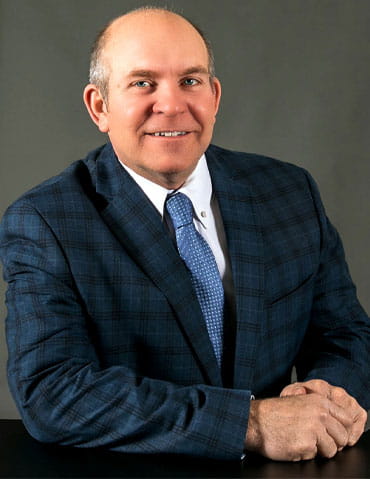
Welcome back to the show, my fellow extraordinary Americans. For today’s guest, we have Marcia Dawood. Marcia is an early-stage investor who serves on the Securities and Exchange Commission Small Business Capital Formation Advisory Committee.
She’s a venture partner with Mindshift Capital, a member of Golden Seeds, and chair emeritus of the Angel Capital Association, a global professional society for angel investors. She’s the author of Do Good While Doing Well, Invest for Change, Reap Financial Rewards, and Increase Your Happiness and an associate producer on the award-winning documentary Show Her the Money. A TEDx speaker and host of the Angel Next Door podcast, Marcia always walks the walk and holds investments in over 50 early-stage companies and funds.
She’s committed to expanding support for diverse companies that overcome the world’s biggest problems and accelerate positive change. She’s passionate about bridging the gap from early-stage inception to building thriving, profitable companies. Previously, Marcia worked in sales, marketing, and operations for Kaplan Education for over 16 years.
She’s an extraordinary American, and I’m glad to have her on the show. Marcia, are you there?
Marcia
Yes, thank you for having me, Marcia.
Cosmos
Thank you so much for taking the time to do this podcast with us.
You’re an investor and have participated in TEDx and other events. Can you tell me more about yourself, your background, and how you started?
Marcia
Sure. So, I was invited to an angel investing meeting in 2012, and I thought, what is angel investing? I didn’t even know that that was something that you could go to a meeting about. But I was invited, and I went and saw some entrepreneurs talk about their companies. I was so fascinated to learn about the innovation in my backyard. I was living in Pittsburgh, Pennsylvania, at the time, and I thought innovation only happened in Silicon Valley or New York, and I certainly didn’t think I could get involved in it. However, I kept attending meetings and learning more about some entrepreneurs doing things locally. And I started to think, well, maybe I can get involved.
So, I became an investor in a couple of companies and a mentor to some of them. And, quickly, I realized how little funding goes to women. So, I thought, well, this has to change. And we ended up moving quite a bit. Because of my husband’s job, I lived in Pittsburgh, New York, San Francisco, Dallas, and Charlotte for over ten years. But it gave me a lot of insight into what’s happening around our extraordinary America and what Innovation and the type of change we want to see.
And I realized many people didn’t know they could be a part of it. Hence, I wanted to demystify it for people, which I’m talking about today.
Cosmos
So, Marcia, one thing I wanted to know about, just for the audience’s sake, is the connection between entrepreneurship and angel investing. I know people have an idea of how to get funds and raise money, but they don’t really, truly know the nature of how this is done.
So, can you elaborate on exactly what and how this is done?
Marcia
Yeah, well, back in the day, and when I say that, maybe 10 or 15 years ago, which wasn’t that long ago, you had to be invited into a room. If you were an entrepreneur trying to raise money, you had to go to individual investors. Sometimes, they would be in a group, but you would go to them and ask them to write a fairly large check. Sometimes, that was doable, and in many cases, that was not doable for many people.
So, it’s changed a lot, though, especially in the last eight to 10 years, because the Securities and Exchange Commission has changed the rules, and now anybody can invest for as little as $50 equity. Crowdfunding. So that’s one avenue. There are debt crowdfunding platforms as well that entrepreneurs can fundraise through. So, there are many ways to find funding if you are a founder, but it’s not discussed much.
So that’s really why I wrote my book, Do Good While Doing Well, because I kept seeing how frustrating it was for founders to try to raise money. They would spend a lot of time researching and conversing with people who were not a good match for them to raise money. So, I hope people can listen to my podcast, the Angel Next Door, or read my book and learn more. I try to let kind of people see behind the curtain and get a glimpse of how fundraising works.
Cosmos
So, to continue understanding what I wanted to, Marcia, I asked what angel investors look for when an entrepreneur pitches their product or idea. What are they looking for before they invest their money into their business?
Marcia
Yeah, I would say there are a couple of things, but. And, of course, there’s a whole due diligence process that angels go through with companies before they make an investment and write a check, which is why I’m a huge fan of angel groups and angel funds.
You invest with other people because one person doesn’t have the expertise to do due diligence on many companies, especially over different industries, and you need a group to help with that. But the thing that we’re looking for is the problem that’s being solved.
And if the problem isn’t big enough, then it might be a product or service that will not be scalable. And if it’s not a scalable company, and we don’t think there will be a relatively lucrative exit, then angels will not want to invest their money. It is a risky asset class. It means that it’s illiquid.
So, it’s risky, and you might not get your money back for months or even years once you invest. So you want to be careful not to use the money you need immediately. But simultaneously, you want to ensure you see an exit path that could be quite lucrative. So that’s really what angels are looking for.
So, they’re looking to see if a big problem is being solved, and then who will take that problem to market? Are they going to be able to build the company? Do they have the right team in place now? Do they need to hire people? You know, what stage are they at? All of those things are things that angels consider before making a decision.
Cosmos
Wow.
So, Marcia, what exactly motivates angel investors, and how do angel investment groups typically operate?
Marcia
So, I would say that angels are motivated by the potential financial returns. However, if that was the only thing we were focused on, I don’t know if that would be our best focus. I say that because there are other reasons why angels would invest in a company, and a lot of that is because there are other emotional and intrinsic rewards to helping an early-stage company.
Because these companies are working on huge changes that we want to see in the world. All kinds of innovation, health care, technology, consumer products. So, if we want to see that change in the world, we can’t rely solely on charities. Charities are wonderful, but they are extremely underfunded, and they can’t be able to do everything themselves.
So, if we put the burden on charities to solve all the world’s problems, that’s unfair. So, I always say if you can help a startup company, there are so many perks you could get along the way. You’re helping to create jobs; you’re helping to see an innovation in the world.
As an investor, you could first see the type of technology, product, or service they’re making or building. The other thing I wasn’t expecting was that once I became an angel investor, I would have access to people I didn’t know I would have never met otherwise. For example, I had worked in the education industry for a long time, so my network was mainly other people in education. And now, when I joined an angel group, and we would talk about various companies that we were interested in investing in, I was meeting people from all types of industries, healthcare, legal, all different types of professional organizations, and things that.
So, I would have never met those people if it hadn’t been for angel investing. So, there are a lot more, a lot bigger reasons that people become angel investors. I started my podcast because I wanted people to understand that anybody can be an angel investor. Why do people become angel investors, and what is their motivation?
And so I feature different people on the podcast. It’s kind of morphed into even more than that because now we talk about all different types of things related to angel investing and being able to help entrepreneurs make money and also be able to, you know, get the innovation into the world we want to see.
Cosmos
Yeah.
I’m noticing that when people first get into angel investing, they have concerns or it’s new.
So, from your perspective, Marcia, what are the common pitfalls that angel investors fall into? Also, entrepreneurs looking for funding fall into pitfalls while they, on the one hand, are trying to get the money, and the other is trying to give money.
Marcia
Yeah. Okay.
So they’re very different. I would say that the pitfalls for investors. Let’s start there. They probably don’t realize how much diversification plays a big part in making smart investing decisions. I have an example in my book about two people who went through it. They’re both members of an angel group; one invested in three companies, and another invested in three companies, which were different. The one had very successful exits and made a lot of money. And the other one, which doesn’t typically happen just on three investments, but the other one lost all his money.
So here are two extreme examples of, you know, one person who thinks angel investing is the greatest thing in the world and another who thinks that they will never want to do it ever again. They will tell everybody that they know never to do it.
So those are two extreme examples, and I usually don’t see either happen often. You usually don’t see people with a diversified portfolio, meaning at least 10 or even more companies they’ve invested in. That usually doesn’t happen if you are making sure that you’re diversifying. And the best way to diversify is to invest through a fund.
And so, I’m a big fan of using venture capital funds, which people have probably heard of. But there’s a lot more that is accessible as far as price points. Sometimes, you must invest a quarter of a million, half a million, or even a million dollars with venture capital. Angel funds can be as little as $1,000 or $5,000.
So, you know, it’s much more approachable for people. But a fund will sometimes invest in 8, 10, or 15 companies, and right, right off the bat, you have a diversified portfolio with one investment. So I’m a big fan of that.
So, I think one of the biggest mistakes I see at the beginning is people think, I’m really. I know that I. They are going to be winners, but that is not true. Every very experienced angel investor could say that, and they will probably be wrong at least 50% of the time.
So, you must be careful, check your ego at the door, and ensure you have a diversified portfolio. That’s the name of the game. As far as the pitfalls that entrepreneurs run into, they think they’re limited in whatever they know of, where other people have gotten money in the past, which is another reason why I’m trying to demystify this whole space. Because I’ve seen entrepreneurs just waste their time. And I hate to see that because they’re trying to build a company. They don’t want to spend an entire, you know, other 40 hours a week. They’re already spending 40 plus 60, even 80 hours a week, trying to build their company. They don’t Want to spend another 40 hours a week, you know, trying to raise money, so they’re. Or they won’t sleep or see their family.
So, I hate to see that they’re, you know, not able to utilize their time wisely. So, the pitfall is that they can only go after the type of money they’ve seen people raise. So, you want to make sure as an entrepreneur that you know all of the funding sources out there, and every day, there are more that are added and some that go away. So, it does matter who you’re talking to, who your advisors are, and then who can help you open the doors for that.
Cosmos
So, Marcia, I know you’ve invested in many companies and have experience in angel investing. So, from your perspective, what exactly do you look for in a company or the people running it before you invest your money and time in it? And how do you go about it? How you. How do you go about doing that?
Marcia
I think parts all depend on the type of company they’re building. But the biggest thing is to see who the team is. Especially when I say the team, I mean the founders. Usually, there are two, maybe three. It’s typical for you to see two or three founders. Sometimes there’s one, but, you know, they’re not. There are not a lot of actual founders in a company.
But they need a team around them to execute and build up the company into something scalable and where they could sell whatever their product or service is, you know, and take it to market. So, I’m just making sure people can work on that collectively. Do they have the right type of team that can do that? In a lot of cases, I’ve seen founders who are. One example would be. They’re extreme visionaries. They’re amazing at figuring out, you know, what they could do to build this or build that. But can they build it, or are they just good at visualizing it? If those types of people surround themselves with other visionaries, then they’re just going to sit around all day and think up all kinds of great things, which are great, but are they going to be able to build them?
So, you need to have that team. One could be a visionary, another needs to be an executor, and then you have, you know, the team around it to build it up Right. Then, the other example would be if you had people who were very technically knowledgeable. Still, they’re surrounding themselves with other people who are very technically knowledgeable, and that’s great. But again, will they be able to be operationally minded and build the company?
So, these are some examples of what we’re looking for. We’re not just looking at the person who came up with the idea or the person who’s the CEO. We’re looking at the collective to see how this company will grow and scale.
Cosmos
Yeah, that’s something an angel investor I talked with a while ago told me. They look at the team and the person more than the product or the idea because, you know, the mindset and mentality of the person and the team they have determines success and failure for a company.
Marcia
That’s right.
Cosmos
So, from your perspective, when people think of investing, they look at Shark Tank, and they’re, oh, okay, this is what it looks like to put money and pitch ideas and stuff that. But then there’s the real world of angel investing, which is kind of different, which I know is different from Shark Time.
But for the audience’s sake, what do you think, or what do you think is the difference between the Shark Time type of investing versus actual angel investing?
Marcia
So, Shark Tank is doing what angel investors do. They’re looking at a company; they’re seeing what type of funding they’re looking for, how much of the company they’re willing to give up bringing on that, those investors, and to see if the product is scalable and if they could get a return out of it. If you hear and think about Shark Tank, you know that each of the sharks asks many different questions. Am I going to be able to get a return?
Now, the thing that you don’t see on a TV show because they don’t have the time is the actual diligence process that companies and, or, that the company has to go through then and that the angel investors or any investor would go through before they would make that decision on tv. It looks like it’s very quick.
For example, the decision is made in five or seven minutes. But that’s not the case. You know, with angels, what we’re doing is trying to, in those five to seven minutes, you might see a company pitch. We hear a lot of pitches from companies, and in many cases, we only want a three- to five-minute pitch because there are a lot of companies looking for funding.
But in those three to five minutes, what I find, entrepreneurs, kind of where they get it wrong a little bit, is that they’re trying to tell the entire story in five minutes. But what you’re trying to do is in those three to five minutes, just you see on TV, you’re trying to get somebody interested in learning more. You’re not going to decide to invest. I don’t care who you are in three to five minutes; you will decide in those three to five minutes. Do you want to learn more? Is this something you want to investigate further, that you could potentially be an investor down the road?
So, I think that is, you know, some of, there’s a lot of similarities, but there’s a lot of differences and the other big differences that we just don’t, you don’t have to be a billionaire flying in private planes and things that. You know, nowadays it’s much more accessible, as we talked about earlier.
Cosmos
So, let’s say, as a continuation of this, you’re an entrepreneur, and you’re looking into starting a business and want to attract initial funding. How would you do that if you’ve never heard about angel investing or venture capital? All you’ve done is see Shark Tank.
Still, you’re looking for an angel investor. How should you go about pitching your product or service? And what should your general vibe be from your perspective?
Marcia
I mean, there are a lot of resources online that will help you to build your pitch deck and make sure that you’re putting out, you know, in your materials the information that investors would look for.
But at the end of the day, I think it comes down to what type of company you are building, what type of funding you have taken, if any, money so far, and what it is that you would want to, you know, what is it that you’re looking for now? Too often, I see entrepreneurs that they’re, well, I just need money. I just need money. If I just had money, then everything would be fine, and I’d be able to grow my company, I’d be able to build my product, and it’s all fine. Most of the time. That attitude, if that person got funding, they would run through the funding quickly and tank the company.
And I say that because they’re not thinking strategically about the type of funding they need when they need it and then the type of funding they will need once they start to hit milestones as the business grows. I have a mindset of desperation. I just need money to grow the product. That is not the case; that’s a big red flag for investors. If we hear that, we’re probably going to walk in the other direction because we want to see a plan of where people are and what type of funding they’re looking for, what type of milestones they want to hit along the way, and then what will drive them to an exit. In many cases, entrepreneurs cannot raise money at the very beginning. They’re going to have to bootstrap for a while.
Cosmos
No, I’m. One of the things I appreciate about you, Marcia, is that you’re showing awareness of how investing is done. This is it’s even though it is important; people don’t realize how important it is that entrepreneurs find the funding because the initial two to three years is one of the crucial moments for entrepreneurs when they’re beginning their thing, and funding plays an important role.
So, I do appreciate the work that you’re doing.
Marcia
You know, I appreciate that.
I will also say that we talked for a minute about equity crowdfunding, and that’s how investors can get in for a low price.
But to your point about where an entrepreneur goes, especially if they’re at that, early St. And I have no friends and family, I got nothing. But I have this great idea, and I believe in crowdfunding. Sometimes, it could be equity crowdfunding, but let me explain briefly.
But crowdfunding, especially if you have some type of product or service that’s a direct-to-consumer type of product, it would, it’s a great place to be able to a, find investors one, but also to be able to figure out and get some market, reactions to what you’re, what it is that you’re building. Will people pay for this? How much will they pay for it? You can learn a little more about how you need to market your product. If you have a minimum viable product, meaning you have at least a prototype, you could start to let people try. Will people it? Do they want to try it?
So, there are places on Indiegogo and Kickstarter, which most people have heard of before, where you can do that without giving away any equity in your company. There’s equity crowdfunding, where you may give a little bit of equity away to get some money and funding. However, the other thing that I don’t think people realize exists or is accessible to them is debt crowdfunding.
So, through debt crowdfunding, you could take on some money. And in many cases, especially if you don’t need a lot of money, if you need millions of dollars, it’s a different story. But let’s say you’re just starting and think you need 50,000 or maybe $100,000, which is a lot of money, but in the grand scheme of things, it’s not a lot of money. When you’re billing a company, debt crowdfunding platforms such as Honeycomb Credit are.
That would be a great place to go because now, you know, that’s an option, and that wasn’t an option before. And what you can do is you take in the money, but then you’re paying it back over time as your company is growing, as you’re getting revenue, so you need to have something that’s going to be able to bring in some revenue so you can make those debt payments.
But it’s another way to potentially fundraise when you don’t have friends and family around, and you know, some people claim they can have to start their own company.
Cosmos
So, Marcia, one thing I wanted to know personally is the catalyst that brought you into this industry of investing and interacting with entrepreneurs. Because, you know, many people just want to do nine to five and all that, but something about you motivated you to go into this and gain an interest in investing.
So, what is that motivational factor or catalyst?
Marcia
I think part of it was I did, you know, to see the innovations being worked on. I had no idea that so many things were happening in every city, every town, and worldwide. I mean, but across the US, I thought it would be cool to get involved in it quickly. I personally, you know, I ran out of money. I. You can only invest so much. It is a risky asset class.
So, I’ve sat on the board of the Angel Capital Association, and we usually say to people, look, you’d only want to put in about 5, you know, maybe 7% of your investable assets into alternative assets, which is what angel investing is. It’s an alternative asset that is different from the public market, stock markets, mutual funds, retirement accounts, etc.
So, you just want to take a little bucket of money to do that, right? So personally, I. The little bucket of money that I used for angel investing went dry. So, I still saw all these cool, amazing entrepreneurs doing neat stuff. I still want to invest in them but can’t because I’m out of money.
But then I would talk to people and say, hey, you could do this. And they’d be, oh, me? No, I thought it was for rich people. I thought you had to fly in a private plane. I thought you had to have, you know, billions of dollars. I thought you had to have a finance degree and all these things.
So that kind of led me down this path of starting the podcast, writing the book, just, can we demystify this a little bit so that not only does. Does it become easier for entrepreneurs to fundraise? It becomes easier for people to feel they are contributing to the change they want. And a lot of times, people as individuals think, oh, I want to be the change.
You know, the saying, be the change you want to see. Yes, I want to be the change. And then they’d be, wait a minute, how do I do that? I’m only one person, and this is something you can do.
Cosmos
So, another thing I wanted to know is that there’s a lot of human nature involved in business. It can sometimes get political, especially when investing in business and all of that stuff. There’s a lot of. One of the things I wanted to know is what it is. What lessons did you learn about human nature while you were in the investing and entrepreneurial space? And, that you would want the.
Marcia
Audience to know: Well, as we discussed, people who build the company are. They’re the important pieces.
So, there’s a saying that in angel and lots of investing, you bet on the jockey, not the horse. So, while the product or service needs to be great, it needs to be something people will want to buy and use. You need that team to be solid and able to take the company to a higher level.
So, the one thing, if you talk about human nature, a friend of mine who’s an investor, one of her exercises when she’s contemplating if she’s going to invest in a company is she gets the entire team into a room together.
So that might be four people, it might be eight people, it might be 10 people. And she goes around the room and asks them to introduce the person next to them. And I thought this was extremely interesting because you get to know how well a team works together and how well they know each other if they can introduce themselves to somebody instead of just introducing themselves. So, I think that’s a little human nature in there, too.
So, you want to see how well people work together and if there’s an issue with founders with, if they get along, who’s doing this, who’s supposed to do that job. If there’s a lot of that at the beginning, that’s a big red flag.
Cosmos
No, I mean because there’s the psychology of people, and then there’s a psychology of people when money is involved. And it’s just.
Marcia
Exactly.
Cosmos
It’s kind of an intersection because there are many people. They’re really good and proper, but when there’s a high stake, money is to be lost because, let’s say, you’re investing a hundred thousand dollars, or if a company is. They got it, and then now the team is squandering.
That’s when you’re tested. It’s the times of stress when people show their true colors. But it’s something that I found interesting: how people react and become when a lot of money is involved.
Marcia
Yep.
Cosmos
So, yes.
Marcia, is there any chat? It is in. During your time doing all this, was there a challenge you had to face, one of them, a challenge you had to face where you found, which you managed to overcome, and what that, what is that challenge regarding angel investing altogether?
Marcia
Well, I think people, I said, have to be careful about how much money they’re putting into this asset class. And you know, that’s where I don’t know if I’d call it a challenge to me personally because I knew the bucket of money I had set aside. Once that was depleted, I needed to wait until a liquidity event or an exit would bring money back from my previous investment to make new ones. And I think those are some of the lessons people should take away.
You don’t want to use your kids’ college fund to do angel investing. You don’t want to use the money you need in the immediate future because you just don’t know what type of time horizon you would have if you were holding a public stock and needed to turn around and sell it. That’s pretty easy to do.
Cosmos
As a continuation of this, I know that while I was reading about you doing a documentary, you were an associate producer for a documentary. Show her the money. So, could you tell the audience a little bit more about what this documentary is about?
Marcia
Yeah. As I mentioned, women don’t get very much venture capital funding. Less than 2% of the money goes to female founders. And much of this is because we don’t have enough women writing checks. But this spans even past women, people of color, and LGBTQ founders. They are very, very limited in the type of funding that they can get.
So, this documentary is meant to showcase some incredible founders, women founders, and the types of women funds that are investing in those founders. The film is about awareness and how we can let more people know. I didn’t know until I became an angel investor that so little funding went to women. I thought, well, geez, we’re 50% of the population, we should be getting, you know, 50% of the funding. But that isn’t how it works.
Cosmos
So why are women entrepreneurs getting less funding comparatively? From your perspective, I think.
Marcia
It comes down to who’s writing the checks. And it’s predominantly men.
And so, men tend to invest in other men. And that’s just how it’s been for a very long time. As women become more and more entrepreneurial, they graduate from college at a higher rate. If you think back, women have only been in the workforce since after World War II.
So how do we reach a point where there’s more equality for women building these entrepreneurial companies, especially in women’s health? Women’s health is an area that has been sorely neglected for a very long time. But we need to get more people who look at the people who are raising the funds to be the ones who are in the decision-making seat.
Cosmos
No, I mean totally. I appreciate that you’re raising awareness about all these different issues, so that’s pretty great.
And I know, M. Marcia, that you wrote this book doing good while doing well. Could you tell the audience a little more about the premise of this book and what got you to write this book?
Marcia
Yeah. So, you know, back then, I ran out of money, and I wanted other people to know how to do this. When I would talk to them, they’d seem they’d say, oh, that seems so overwhelming. And I believe, no, it’s not that overwhelming. It’s just. But I did learn over a pretty long period.
So, I tried to take a lot of the stories, the experiences that I had and put them into extremely digestible, short books to allow people to get kind of a sense of what angel investing is, what it’s to invest in an early-stage company, without necessarily having to make all the same mistakes that I did. I did make quite a few mistakes at the beginning. I was investing without a diversified portfolio, which is what we discussed. I also wrote the book, though, so that entrepreneurs would have a better idea of all the types of fundraising.
So, I will talk about crowdfunding in the book, all the different types of crowdfunding. I talk about using philanthropic dollars to invest in a for-profit company. Why do women get less than, you know, 2% of the funding? All those things are in the book to try, not just to help investors realize. Potential investors realize that they can do this, but also to help entrepreneurs get a look behind the curtain so it can save them a lot of time and money.
Cosmos
I recommend that my audience listen to your book because many people want to know how to get funding. And this will be pretty good for that.
So, I appreciate you writing this book, and I know you also have this podcast, the Angel Next Door. Could you tell the audience a little bit more about this?
Marcia
Yeah, the podcast started in 2021. I didn’t write the book, and it didn’t come out until September of 2024. But I started the podcast for the exact reasons that I said earlier. I just wanted to showcase people and say, hey, here’s an average person who is an angel investor, and ask them questions: why do you do it, and what are you looking for? And you know, what makes you want to use your money to invest in this type of asset class? That’s how it started, and then it morphed into even a little more than that.
So, while I still highlight a lot of angel investors, I try to showcase things I’ve had two entrepreneurs who raised over $750,000 on equity crowdfunding platforms so that people can see how that was done. I’ve also had people talk a lot about using philanthropic dollars to invest in a for-profit company and how that’s done. I’ve had several Congresspeople talk about what they care about as part of the U.S., you know, Congress, and how they think about how entrepreneurial companies can grow. I sit on the board or the advisory committee for Small Business Capital Formation at the Securities and Exchange Commission.
So, I’ve had a couple of the commissioners come on and talk about their views on it. So, the podcast has become a bit of everything you ever wanted to know about angel investing but were afraid to ask or didn’t even know you should ask. That’s really what it’s come into.
Cosmos
That is amazing, Marcia. I would want my audience to check out your podcast, too.
But out of curiosity, Marcia, how do Congress people and people in office and power view investing right now? Is it a divided view, or is it a uniform view?
Marcia
it can sometimes be a divided view from the standpoint that, in some cases, there’s more of an investor protection type than a capital formation type of view. But really, that’s what, you know, that’s why we’re always trying to work across the aisle. Entrepreneurship is what drives our economy, and small business drives our economy.
So, we must ensure we’re talking about getting more funding for entrepreneurs and the innovations we want to see in the world. And all of that is not political. It’s all about how we help get that change we want to see in the world.
Cosmos
In today’s world, there’s so much political polarization. So. But when it comes to business investing, you have to have small businesses to keep the economy. So that’s.
Marcia
Right.
Cosmos
That’s something that most people can agree upon, you know, know.
Marcia
Exactly. And that’s what I think about it. It doesn’t have to; it doesn’t matter what your political views are because when you see some of these entrepreneurs and the incredible things that they’re working on, everybody bands together to be able to back them. And. And I love that.
Cosmos
No, I mean, it’s awesome. And Marcia, if somebody wants, the audience wants to connect with you and learn more about you and your work. How would they do that?
Marcia
So, yeah, I have a website. It’s just my name, Marcia dawood.com, and on there, people can get a free. The first chapter of my book is for free if they want to. There are a lot of resources from the book’s perspective. Links to all the podcasts are on there. I started to put playlists together because people would, say, an entrepreneur want to hear those episodes I just mentioned about equity crowdfunding. They can go onto my website and look for the playlist on equity crowdfunding and be able to find the episodes that match that.
So, I try to make it super easy so that whatever people seek is easy to find and, in most cases, free.
Cosmos
That is amazing, Marcia and Marcia. I’m so grateful that you took the time to come to this podcast and share your knowledge and expertise about angel investing. Because, you know, as entrepreneurs, we want to know how to get funding.
And, sometimes, there’s so much information, and there’s so much doubt about how to go about doing that. Shark Tank is there, but how is it in the real world?
So, I appreciate you doing this.
Marcia
Well, I appreciate you having me. Thank you.
Cosmos
Thank you. And I would like to conclude this episode by letting my fellow extraordinary Americans know that, hey, look, there’s an extraordinary within every one of us. We must awaken it and unleash it. Until next time. Bye for now.


 Amazon Music
 Apple Podcasts
 Audible
 CastBox
 Castro
 Google Podcasts
 iHeartRadio
 Listen Notes
 Overcast
 Player.fm
 PocketCasts
 Spotify
 Stitcher
 TuneIn