Cosmos
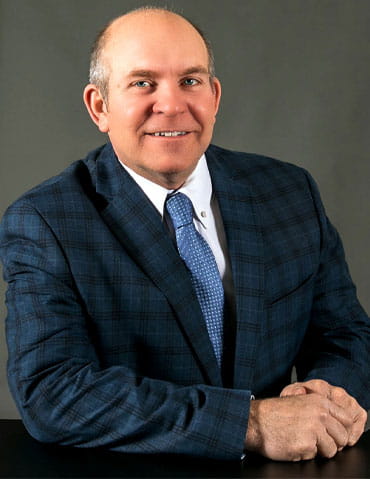
Welcome back to the show, my fellow extraordinary Americans. For today’s guest, we have Janna Scott. Janna is the founder and visionary behind Defy Tax, a groundbreaking platform designed to bring clarity and compliance to the complex world of cryptocurrency tax reporting.
With a career rooted in precision and innovation, Janna’s journey began in December 2021 when her accounting clients raised concerns about the accuracy and reliability of existing crypto tax solutions. She embarked on a rigorous two-year research initiative driven by her commitment to excellence. She collaborated with leading institutions, the SEC, the IRS, and prominent universities to uncover and address gaps in crypto tax compliance.
Janna’s work has set a new standard in the industry, earning recognition from regulatory bodies and academic experts. DeFi Tax is now celebrated for its audit-ready reporting, direct blockchain data integration, and user-centric approach. By combining her expertise with a deep understanding of the evolving financial landscape, Janna has made it her mission to empower individuals, businesses, and institutions to navigate cryptocurrency taxes confidently. Her dedication to precision, transparency, and client protection continues to shape the future of crypto tax compliance.
She’s an extraordinary American, and I’m glad to have her on the show. And Janna, are you there?
Janna
Yes, I am. Thank you for having me.
Cosmos
Janna, thank you so much for taking the time to do this.
Can you tell me more about yourself, your background, and how you got started in this industry?
Janna
I was born and raised in Germany; math was always my dad’s specialty. Math was always something that came easily to me, logically. After graduating in Germany, I went to America to go to school and do an exchange, and well, here I am 20 years later, loving it. And I have been, I said, you know, numbers work well for me, especially when I first came to the US. English was my second language, but numbers are universal.
So, I stuck with numbers and got into accounting and got my degrees, got my, you know, certifications, my licenses, and worked my way through multiple positions. Whether it is, you know, in the public accounting world or government agencies. I’ve worked for various government agencies. And I decided at one point that I could do better in the real world.
And so, I moved back into public accounting, worked across many different companies again, and found that my client satisfaction and protection standards are a little higher than some of the firms I’ve encountered. And that’s when I started my own tax and accounting firm, and it’s been. It’s done well. And we, well, you said, I had clients approach me and ask how I report my crypto taxes. And here we are. Here we are, almost four years later. Yeah.
Cosmos
So, Gina, cryptocurrency. The crypto industry is a whole new industry that started in this century. And I want to get more, deeper, with it, with you.
But first, I wanted to ask if you are looking for a tax account for your company, from Germany to America. Right. What was the strategic goal and vision that ultimately led you to it? To found a company in December 2021, from Germany to here. Was it something you wanted to do from a young age, or was it something that, the vision, developed over time?
Janna
Listen, I always wanted to work with numbers. And so, my passion still is tax and accounting and helping people understand their financials, to reach their goals, and not be so scared of tax season. That was my ultimate goal. And my business partners always say, Less is more. But I’m very. I don’t have a filter. Maybe it’s the German in me. I never saw myself building a software product. I never saw myself building anything like this. It became. It happened more out of necessity. When I embarked on the research, the clients came to me and said, Hey, what do I do with it? I had this very small wallet that had, maybe at that point, three or four hundred transactions between 17 and 21.
And I said, okay, let me test everything on the market. And I have done that. So. Right. Every new emerging product, from 21 up until now, I still test new products. And what I found was concerning. I took a little one-wallet that had very minimal transactions. As you know, in the crypto world, 300 is nothing, right?
So, I connected it to every single product. I paid the fee, connected it, and had them calculate the capital gain and loss in income. And every single product gave me a different outcome. And it wasn’t that seven products were about the same. The other, you know, seven I looked at were different. Now, every single one is different from the other.
And that is concerning because, as we all know, in the crypto world, we have multiple exchanges, we have multiple wallets, we have multiple, you know, we use so many different avenues to buy, sell, and trade our crypto that if these platforms cannot get 300 transactions from one source accurate, what is the problem? And that’s where my OCD kicked in.
I said, Okay, I’m going to figure this out. I pulled the raw data from every single one of the products, and then I built an API connection to pull the data directly from the blockchain.
So I had the raw data, the raw data from the blockchain, and the products. I compared it and said, Okay, what is missing? And I got to the bottom of it. I found out the inaccuracies within the APIs and when they’re pulling the data to calculate it. I figured out the algorithm issues in the back end and the mathematical errors they’re making, and I compiled all that.
And then what I did was, because I did, again, I didn’t want to build any product. I went to these products and said, Listen, I am not asking for any monetary reimbursement. I’m not asking for money. My first sentence is that I’m not asking for money. I found the issues with the IRS back then, so, you know, getting ready to start the crypto tax audits, I said, This is detrimental to your users. While some of these products significantly overstate your income and capital gains, others significantly understate them.
So either way it goes, it will be detrimental in one way or another. Either people overpay, and then they get audited, or they underpay. Great, right? They get a refund, but some will be hit with penalties, interest, etc. And especially in 21, when that little checkbox on your return appeared, right, that said, did you buy and sell crypto these, you know, during, during the tax year? That’s important because if you check no and have crypto, you’re lying on your tax return. When you sign your tax return, it says very clearly on the bottom that you’re signing this, and you’re saying everything is accurate to the best of your knowledge. Of course. You knew you traded crypto, right? If you said no, you deliberated, so I went to the products and said, Here’s the issue, or I found issues in your algorithms. Right.
And the response was, honestly, very disappointing. I was told, We don’t care. That is not our problem, according to 90% of them, and 10%. I met with. And they actually—I still laugh about it. We tried to explain their problems to them. I also met with the company’s CEO and tax attorneys, who said they turned around and tried to sell us their product.
To this day, I get sales emails. I’m contacting you because there are issues. I don’t want your product. I don’t care about your product. Please fix it because the people out there who are using it and relying on you will be the ones who will be hurting, not you. I mean, you’ve made your billions of dollars. They’re valued at almost $2 billion at this point. Some of these products have made them money. They don’t care, but I’ve seen it because I work in the tax world. I work. I’ve worked in the tax world on this, on the government and private sides, with the taxpayers. I’ve seen the stress and the anxiety the IRS letter causes. An IRS letter causes them. It doesn’t have to be a bad one. I get clients who get a letter saying, You’re getting a refund, and they panic and send it to me.
And I say, you’re getting a refund. Be happy, but the IRS set itself up very well. And you can Google this too. On Justice.gov, you can find that the judge signed off on the IRS sending out a thousand John Doe letters. That means that the IRS, the judge said, okay, send out these John Doe letters to all the exchanges and products on the market that use KYC. That does not just mean exchanges. It means MoonPay. It means that anything you need to do to cash out or buy, you have to verify your identity. They sent those out. All these products responded.
The IRS knows very well which U.S. citizen or resident. Right? Anybody with a Social Security number who has touched crypto. They know you touched it. They know if there’s no, you know. Yes, and I’ve heard it before. Well, it’s on a cold wallet.
Well, I don’t, you know, I don’t trade it on a KYC exchange. But you bought it. You bought it. They’ve also partnered with Chainalysis. There’s a government contract you can go to, you know, contracts.gov, the US contracts website, and you can see their contracts there. The chain analysis is helping the IRS trace crypto. Whether it’s for hype, you know, for people who are hiding assets and are using them, they’re looking for them due to tax evasion, whatever it is, they have help. Okay? So, that is one of the issues because, you know, if you cannot report it correctly, you will be hurting. Not, not the products, not anybody else. It’s you individually. Now. Now the second part is that. Well, let’s back up.
So in early 2023, by the end of 2022, I decided they don’t want to listen. They don’t care. I will figure out how to build an accurate and reliable product. Lacks. And this is important: it lacks the features that make the other products not audit-ready. Okay? My product lacks features. And that’s a good thing. And we do. Can get into that later. But in 23, the SEC got wind of what we were doing, and we met with about 50 of the division chiefs and reported all of our findings, research, and backup for it. And they said, Oh, crap. But, but, right? A big but. We are not regulating crypto, which means we’re not regulating any crypto products, even crypto tax products. So they said, “Let’s get you to the IRS, okay? They should have a say in this.
So we met with the IRS. While meeting with the IRS, we asked how you conduct your audits. How do you get the data? Our research proved that the way they conducted the IRS audits and received the data was inaccurate. It was not producing an accurate audit result. Fortunately, they stopped the audits. Okay? The audit stopped back in 23 due to the research, and in 24 it stopped again. They were trying to start the audits again, but the universities at that point that we were working with gave them the research again and said, Look, you know that you don’t have the internal processes accurate to do audits. So the audits were passed again in 24. So that’s good, right? So we passed the audits and avoided having a bunch of false audits, false penalties, interest, overstated income or gains, you know. But in 2024, the IRS released a publication saying they expect to replace a third of their budget by finally starting the IRS crypto tax audits again.
So they’re coming, okay? Now they know full well that these products are inaccurate. They haven’t said anything. Nobody has said anything to warn the public. I can scream from the rooftops, and people will think I’m insane. Right? Because I am technically a nobody in this world. You know, I don’t have to say, now I did, I did have, I do have all the validations by multiple universities. All of my research has been published and peer-reviewed by multiple universities. It is with congressional committees. They know I’m right; they know I got this right. The publication should come out here in the next couple of weeks.
And you know, my problem is just the lack of care these products have to protect their users. We went even further, though. We went ahead and said somebody has to have gotten this right. And we audited about 53 of the so-called crypto tax experts on the M. People, individuals, and firms, right? Not software products, but people, you know, who are on Instagram and TikTok and yelling, Oh yeah, you need help with your crypto taxes; I can help you. We audited every single one of them, 53 in total. Okay. They’re law firms, they’re accounting firms, and they’re individuals. We gave them a set of data that we knew exactly what it was because we created that data and paid the outrageous fees.
Okay, I gave somebody a set of 500 transactions, and they charged me $3,000. Wow. Well, it gets better. They send us the data back. We ran these 500 transactions through all the products on the market. You want to know why? Can you tell, can you imagine why we did that? Because these people gave us back our data, and we compared it to the products on the market that you pay $100 for to run your data through, and it matched one or the other one of the products.
So I paid them three grand to do it right, right? And they gave me data back that they ran through a $100 product and made $2900 for nothing.
Cosmos
Wow.
Janna
So there are a lot of issues on, on, you know, on this market, and there’s going to be a lot of exploitation going on. When the audits finally start, there are going to be a lot of people coming out of the woodwork saying, I can help you get through a crypto tax audit. No, you can’t. How will you validate that, whatever product you’re using, how will you validate that your numbers are right and the IRS is so wrong? Especially if you are one of the traders with 10,000, 20,000, or 30,000 transactions, you’re in DeFi, consistently trading, and using a bot. There’s no way, right?
So those people will come out of the woodwork and charge five, six, ten grand, or more, right? You know, to help you in an audit when they really can’t help you, especially with the products on the market. Especially because the government knows these are wrong. They’re not even going to accept any proof from those products.
And that brings us to the features, right? Because those features are causing the IRS to say, Nope, can’t use that immediately. You know, these products. What is one thing we all know about the blockchain? Once something happens on the blockchain, it can never be changed; it can’t be reversed. It is what it is. It is written in stone, right?
Janna
All the products on the market have editing functions. So let’s say you import your transactions and say, okay, I had this transaction that cost me an $8,000 gain. I don’t think this. You can go in and edit that transaction. You can change the date, you can change the time, you can change the currency that you traded, you can change the fee amount, you can change the basis, you can change the spot, you can change everything about that transaction to make it look more beneficial to you. And that is something that the IRS knows and will not accept.
Cosmos
So, Jay, many people are getting into cryptocurrency, but it’s still a new world for the public. For what? It sounds like they don’t; most people are going to these experts to get their taxes done.
So, who are the people? For somebody viewing this, how would they trust the right sources, and how would they navigate through the crypto world? Because there are a lot of people who use cryptocurrency. They’re gaining profits and all that stuff.
Janna
Yeah, yeah, look, I have not found anybody. And we keep looking, right? We keep searching because I do, you know, not just own my company, but I have a lot of partners in the company. I did not do a large raise, right? These products are worth billions of dollars. They have raised hundreds of millions of dollars in their capital raises to do whatever, yet they still don’t have it. Right.
And I can tell you why they don’t have it right in a minute. But the problem is, what I did instead was partner. I found the issues, I figured out what the issues were, and I partnered and I brought in people that understood what I was saying that are in tax, that are in accounting, that are attorneys and tax attorneys, that, that, that, that get it.
And I sat down with them and said, Listen, right, put your time in. I put my time in, right? We will work together, and we all get, you know, and I’ve given it and the equity away; it’s candy. Because I’d rather work with great people with the same vision and mission, right? It is about doing it right and protecting. Protecting. Not. I’m a crypto trader, protecting myself as well, you know, because I was in the same boat as my friends and my family. It’s not just about making money and being, you know, a two-billion-dollar company, but some of the products out there.
So it is very hard to say who you should go to. Okay. Because you don’t have an option, and that, I mean, the IRS will use that to their benefit, right? Because they will know if they do any audits right now, they will know that everybody will fail. Right? So.
Cosmos
Exactly.
Janna
Yes, once our product comes up and we’re about, we launch on the 21st. I’ve been putting it off because I’m picky, but we’re launching on the 21st. We have a waitlist and have integrated multiple different aspects of it.
And, yes, I can sit here and say I’m 100% right. That’s what all the other products are saying, right? They are 100% right. Audit-ready, IRS compliant, yada yada yada. Okay? The problem is that software engineers and coders built these products. And the reason it took me so long to build the product was that I ran into the same issue. When I met with a couple of different developers to work with, they said, Oh, we can make this easy. It’s an easy algorithm. And I said, okay, let me see. Because I knew the outcome, crucial steps are missing that would work on a normal, you know, inventory level, which would maybe work on something that is not as fast-moving and complex as crypto.
And that’s the problem. That’s where the issue came in. Steps were skipped to make it easier and faster to put together. Right. And ours is built by tax professionals, by people who understand the intricacies of accounting and tax in general, who understand tax codes and all the little details that go into this.
Cosmos
Okay.
Janna
That’s why, you know, we have reviewed our algorithms repeatedly. We have beta tested, we have, we have, you know, done them manually to verify that we have kept track of every single transaction we have done to know exactly what each transaction was, so that we know that the product is returning the right value.
So I am very positive that we will be in a position, especially with the lack of features that allow for data manipulation. We can defend you in an audit. And we do have audit protection in our product. We have the credentials and licenses that represent you in front of the IRS, which the other products don’t have. Right. We do have the regular trader version, but then I also built out an accounting version because more and more people, influencers, etc., and businesses are allowing them to take crypto. They’re using crypto.
And so you need an accounting system, especially with, you know, the current administration wanting to build up a crypto reserve and wanting to build up their cryptocurrency, as they have done. You know, the Cedar Project. Cedar has been going on for a while with the government. We will need bookkeeping software that gives you accurate profit and loss reports, lets you categorize all of your transactions, shows proof of your transactions, and anything else.
So we’ve built that out as well, and we’ve made it very affordable and not, you know, slapped a $25,000 a year price tag on it. We also have an accountant’s version where the accountants, CPAs, and tax attorneys can monitor their clients and see what’s going on, and they can use it themselves to defend it to the IRS.
And so we’re building in more and more aspects that hopefully get it there. It helps the people once the audits start, and gives an accurate picture of what it is. And again, I can go into so much detail as to what the little tidbits are that the missing products are causing the issues, you know, but then we would be here all day.
Cosmos
No, Jaya, this is a fascinating conversation because, ultimately, many people are doing cryptocurrencies, and when tax season comes in, they’re just going to the normal avenues. But now that. Now that we see it’s not done properly, there’s nothing. But, but, but.
This brings us to the next question. So, from your view, during your entire time in the cryptocurrency industry, what was another insight or revelation you had that you think the public and people should know? Especially regarding this, because there are so many cryptos out there.
Janna
Keep track of all your addresses. Keep track of all your addresses. I mean, it’s easy if you have an exchange, if you log in, you know, but we all know how many trust wallets there are. Have you created it? I know I have created too many that I can’t keep track of, you know, and even MetaMask, right? I have so many wallet addresses that I ran something through, and then it went somewhere else. Keep track of your addresses. You know, somehow keep track of them. Because while my product.
We have the ability. If you say, Oh, wait, this is something I transferred from Coinbase to MetaMask and then out of. For MetaMask, somewhere else, but I can’t find that MetaMask address anymore. We can pull it, right? It’s on the blockchain. We can get our hands on it, connect it, and have that data. But you want a full picture of your data. As I said before, Chainalysis works with the IRS. They’re going to have a full picture of it.
So, keep track of your addresses, right? I think that’s the biggest goal, the biggest thing to consider, that if you, you know, if you do. If you do anything, just somewhere, you know, not the private keys, just addresses, safety addresses, you know, have a spreadsheet, have something where you save your addresses, even if you only use them once or twice. You want to give a full picture and the least ammunition in an audit, so somebody says, Hey, you. You didn’t give us anything. You didn’t include everything because we found it, right?
Cosmos
So, Jaya, let’s say you have a crypto trader doing transactions on a daily and weekly basis. And then, and. And then, let’s say it’s more than a thousand transactions, and suddenly they get an audit. The. How will they go about going through all those transactions individually? They have to keep meticulous records of each of those. Right.
Janna
So, our product does that. Okay, so. So we pull data directly from the blockchain. So if you log in and just put in the addresses or your credentials, we can pull directly from the public blockchain if you use Coinbase or anything on the private blockchain. But then there’s private blockchain.
So we have the OAuth 2 and, you know, certain API requirements to pull it directly from their blockchain. So we track your data; we keep track of your data. Okay. If you get audited and have the audit, you know, because we have different tiers, obviously not everybody wants, you know, is worried about an audit.
But if you’re a trader, and I have some traders that I’m working with, they have 20,000 transactions a year because they use bots as well, you know, so if you get audited and you have the audit protection with us, you would send us the audit letter. We would get you one. What’s called the 2848 through the IRS tax system? Because we’re licensed, right?
We’re licensed. We have all of our credentials. And then we would be your representative. Okay. Ah, we would be dealing with the IRS. You get the letter, and we call the IRS. You don’t ever have to talk to the IRS again. We will handle all of that. We will validate the transactions. We will, you know, ensure that we validate our gain and argue against theirs. Right?
Because we can, we can because I know what they’re doing internally. I can’t argue against it. In the worst-case scenario, I can go completely and do them manually. I’ve done 20,000 transactions manually before. I’ve done the calculation. Thanks to me. Wah. But I can still do it. That’s how I started and figured out I did it all manually because I had to understand all the intricacies. And the only way to do so was to learn to do it manually. It isn’t very pleasant. I don’t want to do it daily, but it’s doable. And if need be, you know, it can be validated. And I’ve taught other people to do this as well. Right.
So it’s not just me. Now, if you get audited on a return per se, let’s say you get audited for other reasons, and then they add your crypto to the audit. Right. Because it can be a full-fledged audit. It can be an audit for just a schedule. It can be an audit for multiple reasons. Right. We could work with you. Well, we have firms that we work with that we can refer you to to help you with that full-blown audit. Or if you have a tax expert or a CPA accounting firm, we can work with them, too. He defends you in the other aspects of the audit, and we defend you on the crypto tax aspect. Right.
So we’re going to make sure that you’re covered either way, you know.
Cosmos
So, Gina, what do you think is the future of cryptocurrency? In the entire world? Do you think it’s going to be a permanent feature? Do you think the new world will have a digital cryptocurrency and replace our current system? Or will it combine gold, fiat currency, and crypto?
Janna
I think it will be a combination of both while we’re alive. I mean, the Bahamas and Jamaica already came up with their cryptocurrency that people can use to shop, where they can already pay with crypto in certain countries. Right. Not just those two.
So you know, I mean, look at us. We have ATMs, crypto, and Bitcoin at the moment. Right. We have many things out there. So, I work with a lot of physicians. They’re building other products. So physicians can be paid with crypto.
So it is going to; it’s going to rise. Right. Don’t think it will replace our currencies, you know, while we’re still here. I think it will take a little while because, you know, many people are not ready for crypto yet. They’re not ready to buy and sell and have that. I mean, I could never see my parents buying and selling crypto. Not. I don’t think they could even set up an exchange. Right. So, I don’t think it will replace it, but I think it will be a combination of both.
Cosmos
So, Janna, what are your thoughts on that decade? Many people say that blockchain will take over in the future, and then the government can track every transaction you’re doing, versus right now, when you’re using money.
They cannot track everything. But it’ll be a. More of it will lead to a world where blockchain can eat. There are two roads right now for the future, where blockchain can either liberate us or enslave us if it’s put under an authoritarian regime. So, I wanted to know your thoughts.
Janna
Technically, the IRS can track, or the government can track us, very well. Right. Try sending a wire. Try, you know, anything that has anti-money laundering regulations going on. You know, there’s. Yes, you can still take out cash, and they can track what you do with the cash. Right. So you still have that. But how many of us use cash? Right.
So it doesn’t make a difference. It doesn’t. Right. You can be tracked now, you know, unless you use cash. And this is the issue, right? If crypto is regulated or gets regulated to a degree where it is more traceable, I mean, look at it. We lost a lot of exchanges and wallets in the U.S., right? We’re limited to, you know, a certain amount because we just can’t get into those anymore. You know, in finance, there are a lot of exchanges in Europe and Asian countries that they can use that we cannot use. Right. We’ve already been limited, so we are digital with our bank accounts, PayPal, and Venmo. And how many people walk around with cash? I don’t think it would make a big difference regarding the regulation.
But, you know, it’s always a scary thought no matter what, right? I don’t think it will be. It makes. It will make a big difference, but it will be a scary thought if. Yes, you said that if we have a totalitarian government in place. Yes. You know, they can freeze those. They can take them. They can. You know, somehow, they could do it now with bank accounts. Right? They can freeze your bank accounts. The IRS puts liens on bank accounts; you can’t touch your money. You know, there’s. The government is already involved to that degree.
Cosmos
So, if you take two nations outside America, China and India, you see two different things. In India, they’re restricting Bitcoin activity. And then, in China, they’re trying to get their digital cryptocurrency because they see all the different cryptocurrencies. And so, but it’ll. It’s utilized as a means of influencing society and the government. So.
Janna
Yeah, yeah, because listen, I have employees, you know, in other countries. I have employees in the Philippines. I have employees, you know, in other countries. And, and yes. Would it be so much simpler for me to pay them in crypto without jumping through all the hoops and constantly being questioned by my. I asked my bank why I’m sending money, right, when it’s been a daily occurrence?
And why are you telling me what I can and can’t do with my money? Right? It’s not yours. Stop that. It’s my money. Ultimately, crypto has opened the world up a lot more. You know, it is easier to send money to family members. In other countries, it is easier to do so, but banks are still more picky. Try cashing out; let’s say you made $10 million in crypto. Try cashing that out. Good luck with that. Right? You have it. But try cashing it out. It’s not; it’s difficult. I discussed with Chase the other day how to cash out crypto.
And then, you know, as soon as they see it comes from an exchange or anything crypto-related, they immediately flag it as a money laundering possibility, and this and that. Prove where it came from. Show us where. You know, so, so it is difficult. It is difficult, you know, because, and I. Listen, I don’t blame them, right? Money laundering. Crypto has made money laundering extremely simple, right? It has made it very simple for the dark web to function. The Silk Road, you know, I mean, Silk Road, you know, places to function, because it doesn’t make it traceable.
So. I understand; I understand that part. And unfortunately, I mean, if you, you know, if we’ve learned anything, mistakes of a few create rules for all, right? And so people, you know, somebody’s doing something on a large scale. I mean, look at them. What was it, Bybit? Was it by bit that was just, that was just, breached, and one and a half billion dollars worth of crypto disappeared? Can you imagine, you know, a bank being breached? If you want the protection of having something with FDIC insurance, right? A bank, if you lose $250,000 because your bank gets breached, you get it back. It’s insured crypto; it’s gone right now. It has to be traced, and, you know, it’s gone through a mixer, it’s gone through this and that, and it’s no, you know, you can’t trace it anymore at one point or another. So, you know, I crypto, but I also understand wanting to stay with regular currency, so I do both. I use both.
I use crypto for certain things, and I use, you know, my regular bank account for other things. I think I have a good balance.
But I understand that for a lot of people in a lot of other countries, crypto is easier for them. Crypto is easier for them to survive, you know, especially because the government has to control, you know, the income. I mean, look at the Philippines. They make about a dollar thirty a day, and it’s also heavily controlled over there. So, in some countries, crypto would be a lifesaver, enabling them to live a better life. But again, does the government want that? Do they want to keep them down or want to build them up?
So, we’ll see many more discussions about this in the future. And again, every government, not just the U.S., you know, I mean, most of the products on the market here come from other countries, whether Germany, Australia, or India. They come from other countries because every country wants a piece of the pie, right? They don’t want their people to make money without them getting a piece of the pie, even though you put the work in, right? You put all the work into making, learning, and understanding how to do it, but they still want a piece of the pie.
And so it’s just that the question is how they will get it. Are they going to get too much? Are they going to get too little? Right? And that’s what my research was all about. Because I didn’t just look at the product. I also looked at how the government is doing its audits. You know, I looked at it from both sides.
Cosmos
Well, I mean, the future of crypto is fascinating. It’s only been around for 16 years, but it has revolutionized how we do things, banking, and money. And so, let’s say somebody in the audience wants to reach out to you to have their, they. To do things with cryptocurrency, taxes, and all that. How do they contact you and your company, and where should they go?
Janna
So currently, we have a waitlist on Defy Tax Us. There’s a waitlist. But we also have, you know, contact information there. You can reach us through Instagram, LinkedIn, and Facebook. Somebody is monitoring all of those. If you have specific questions. If you are in a bad situation, I think that’s the best way to contact us.
And as of right now, I’m still heavily, heavily involved. My involvement might drop a little bit. Once we’re launched, everything will be clean, and I will have more backend. But right now, I still might be the person who reaches out to you when you have a problem or a question.
So, I’m not giving direct, you know, contact information because my inbox would probably overflow. But, you know, the best way to do it is, you know, Instagram, Facebook, LinkedIn, send a message, or, you know, sign up for our waitlist. Look at our website. It’s going to come up. As I said, we’re launching on the 21st, I believe. So yeah, I’m looking forward to it.
Cosmos
That is amazing.
Jay and Jaya, I appreciate that you took the time to inform the audience and me more about how auditing and taxes are done around crypto, because it’s still a relatively new area for many people. And I do hope that you take the time to come to this podcast at a later time.
Janna
Oh, I would love to. Yeah. Once we. Once we make some strides and. And went back into discussing certain things with the IRS, such as the 1099s, which they want to require all the exchanges to be sent out. I don’t know if you heard about that. That’s very detrimental. I would like to give you that information if we have a minute.
Cosmos
No, sure.
Janna
Awesome. So the IRS wants all the exchanges to send out 1099s, right? So, you get it from a broker, right? You get a 1099B from Charles Schwab. They want. The IRS wants a 1099-DA digital asset. This is the problem. Let’s say you bought $2,000 worth of coin, Bitcoin, on Coinbase, okay, you let it sit there. It’s not worth $8,000 or $10,000. Let’s say it’s worth $10,000. Yay. Great. Amazing, right? You say, Well, I will send it to Gemini, Kraken, or some other exchange where you want to trade certain points that Coinbase might not have. Okay?
So you go and send it there. According to the IRS, it is not taxable because you send money from your checking account to your savings account, right? It’s not new money. You already paid taxes on it. Okay? However, Coinbase doesn’t know you’re sending it to your address on another exchange. What that means is Coinbase says, Okay, you sent this taxable event, $8,000 capital gain. I’m going to send a 1099 to the IRS. There’s no taxable event. However, Coinbase does not know that because they don’t talk to Kraken or Gemini. They barely talk to the people who use their product.
So now, the IRS receives a 1099 with an $8,000 capital gain. But look what Kraken and Gemini do. They say, Oh, look, somebody sent you $10,000 worth of Bitcoin. According to the IRS, this is supposed to be income because they don’t know whether you send it from one of your wallets or exchanges. So now Gemini, Kraken, Robinhood, or whoever says, Okay, I’m going to send a 1099 to the IRS that states you received $10,000 worth of income. Now you’re being taxed on $18,000 when there was no taxable event in the first place.
Cosmos
Oh, wow. Wow. That is. That is wild just to think about it.
Janna
Yeah. I got a call from the universities when they told me the IRS is revisiting the 1099 and getting 1099s out. Let’s work on this together to see that they don’t.
Cosmos
Yeah, I think there must be more. There should be more awareness of how taxes are done for the crypto world. And I’m grateful you’re putting out this information because I don’t think this is the case. After all, there are a lot of experts out there. But it’s the good people who do good research and everything; this is important.
Janna
Can back it up, right? I can back up everything. I can back up everything I’ve said. It is in publications and on the government website.
And, look, test it yourself. Take a small wallet you have, sign up for all the products, let it run through, and see how everything is different, or go on Coinbase. Coinbase gives you a capital gain and loss statement, right?
Take that Coinbase account, run it through all the other products, and see how it even differs from Coinbase itself. Even the products that Coinbase endorses do not match what Coinbase calculates for itself. So, it’s easy to validate that what I’m saying is really what is happening.
Cosmos
No, Andrea, I appreciate you sharing this information with us. And I would ask, I’m curious about this as well, but there is so much to talk about. But it’s only a one-hour podcast, right? But I appreciate you taking the time to do this, and I hope you come back to this podcast at your convenience to share more information.
Janna
Oh, I’d love to. Yeah.
Cosmos
Thank you, Janna. And I want to take this time to tell my fellow extraordinary Americans that, hey, look, there’s an extraordinary within every one of us. We must awaken it and unleash it. Until next time, bye for now.


 Amazon Music
 Apple Podcasts
 Audible
 CastBox
 Castro
 Google Podcasts
 iHeartRadio
 Listen Notes
 Overcast
 Player.fm
 PocketCasts
 Spotify
 Stitcher
 TuneIn