Cosmos
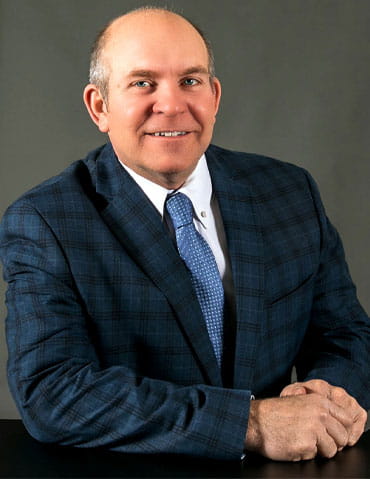
Welcome back to the show, my fellow extraordinary Americans. For today’s guest, we have Ronald Beckner. Ronald is the owner of Peaks Integrity Wealth Management, a third-generation pipefitter and retired military, bringing his real-world working-class American experience to the financial industry.
Ron works with individuals who have never received education on preparing for their financial future. He knows it is the working class that continues to build America up. But these same workers have never been sure how to create a retirement plan or how to put their hard-earned money to work.
His goal is to teach others that, through thoughtful strategic planning, they can become educated in setting goals for their future and understand the basics of financial literacy so that they don’t find themselves in a debilitating situation come retirement age. Ron has a BS in business and 11 years of experience as a financial planner.
With his team at Peaks Integrity Wealth Management, Ron teaches their trademark Our Time formula and financial start process. His book, A Blueprint and Financial Guide for the Working Class American, was also released in 2022.
He’s an extraordinary American, and I’m glad to have him on the show. Ron, thank you so much for taking the time to be here.
Ronald
Hey, thank you, Cosmos. I’m really excited to be here. It’s kind of funny that in all the time that I’ve been working in the trades as a pipe fitter, welder, and in the military, they taught us how to do a job really well. They taught us how to be safe and how to be efficient, but they never taught us how to use money as a tool. And that’s really what my whole focus is, man. It’s all about education, education, education.
And it’s kind of funny you brought up our Time formula. My dad taught me, as a pipe fitter, that if you give a person time, they can do any job in the world. Cosmos. But TIME is an acronym. It stands for tools, Information, Material, and equipment. And if you’re missing any one of those four elements, it’s almost impossible to do the job. And I’ve really kind of incorporated that into the financial industry, if you will. If people give me time, I’ll get them where they need to go.
But we have to understand what the tools are. And that’s our, my education, the client’s education. The information is everything we need to put our money to work, thanks to the wealth of information available on investments. And then the equipment is my computer, my telephone, my office, and my vehicle, because I’ve been known to sit at people’s kitchen tables.
Cosmos
So, Ron, there’s a lot to cover, but first, I’d like to ask a bit more about your background and how you got started in your industry.
Ronald
Man, that’s a great question.
So it’s actually my wife who got me into the financial industry. I was working at a powerhouse while attending college at night to earn my business management degree. I met her, and after a couple of months of dating, she asked, “Hey, have you ever thought about being a financial advisor?” I’m like, what are you talking about? I lead men, I work on steel. You know, I don’t. What do you? But then I got to thinking about it, and we ended up moving to Hawaii because I got a job opportunity to be a pipe fitter for the government in Hawaii. Transferred college, going to school at night over there.
And I got to thinking to myself, I have made millions for companies because I’ve been everything from a project superintendent right down to an apprentice. I thought maybe I could help people understand that money’s a tool. And I really hadn’t even gotten there. I just wanted to see if I could help people. And that’s really where it got started, my wife introduced me to this business. And she’s been in it 40 years, so she is a partner with me here at Peaks Integrity.
Cosmos
So, Ron, one of the things I wanted to know was, like, what was like, so, I know your wife got you into this industry, but, like, what is, like, the motivational factor that kept you going for 40 years?
Because you need a reason, and there’s something that drives you through struggles and everything. So what was that for you?
Ronald
Yeah, that’s a great question. My “why” has been the same since I started in this industry, and even before that, I’ve found that nobody understands that money is just a tool. Cosmos. Everybody knows how to make money. We all know how to spend it, but we don’t know how to utilize it as a tool. And I have worked with so many working-class Americans in the time that I’ve been in this business that I feel like that lack of education is tremendous.
And what I’ve been able to bring to the table for my clients and get their financial literacy up to where they can make good, educated decisions with their money has been tremendous. And that’s why I wrote the book, too, because I thought, man, my clients are getting some really good information, but there are tens of thousands of working-class Americans out there that just have no idea. And that’s really my why, I just want to educate.
Cosmos
So, Ron, one of the things I wanted to ask you is, like, how do you think the 99% see money versus the 1%?
What are the pitfalls that the 99% are going through that you think that they need to know that the 1% just avoid?
Ronald
You know, in my mind, I think one of the things that is lacking, especially with the education, we’ve all been told to save our money or put it into a 401k or figure out what we can do, but nobody educates us on what is in that 401k.
I mean, I got a great story for that. I had a guy come in, whom I had just met, and he showed me a camper trailer he had just acquired. He could tell me everything about it, from the size of the sewage tank to the tire pressure and the BTU rating of the furnace. And I said, Well, how much did you pay for that? He says, Well, I paid $35,000. And I said, okay, ah. I said, Now you’ve told me you’ve got half a million dollars in your 401k. Tell me about that. What do you have your money in? He gave me that deer-in-the-headlights look.
And I said, “Isn’t it odd that you can tell me so much about a $35,000 investment that’s going to decrease in value, yet the bulk of your money is in something you can’t even tell me where it is?” And he starts laughing. He said, You know what? You’re right.
So there’s that lack of education, even though you’re doing what you’re being told to do, right? Tell me what to do. Okay, I’m doing it. But you still don’t understand what you’re doing and why you’re doing it. And then I want people to think about them. That’s really what we’re saving for. I want to make it clear that I don’t provide tax advice, but I want people to be aware of the four tax quadrants and the three buckets of money, which include the employee and the small business owners. We pay the highest taxes when we have 500 employees or more. You pay a little bit less, but the investor pays the least tax.
I also want them to understand that there are three buckets of money: the taxable, tax-deferred, and tax-free. I love tax-free. Because that means I’m taking care of it with my taxable dollars now. And anybody who knows what’s going on with the debt and looks at usdebtclock.org, man, if you don’t think taxes are going up, you’d better take a second look at those numbers.
Cosmos
Could you provide more details on the tax-free strategies in comparison to the other two categories?
Ronald
Sure. You know, there’s a lot of different tax-free strategies, I think, that are out there. The ones that I like the most are similar to the Roth 401(k). If you’re working for an employer that provides a Roth 401 (k), you can put over 20 thousand dollars a year away into that. Tax-free. Yes, you’re going to get taxed on that dollar, but later on down the road, when you need that money in retirement, you’re not going to pay a dime in tax. I also like the traditional Roth.
And if you’re under 50 years old, you can put up to $7,000 now into a Roth, and that’s going to grow tax-free. There’s also what they call a Roth conversion. If you have a tax-deferred bucket of money and are worried about taxes, consider taking advantage of the current conversion opportunity to move some money into a Roth.
Yes, you’ll pay taxes on it, but there’s an opportunity to do so. There are also some life insurance opportunities available that offer tax-free benefits. And that’s going to be like an IUL or a whole life.
Cosmos
I see.
So, Ron, I know we mentioned retirement, right? Many people think about retirement and all that comes with it, but we live in a world right now where job security is scarce. We’re living in a world where people are in debt, inflation is a problem, and the savings we once had aren’t enough to last us many years beyond retirement.
So, how do you think people should adapt to these changing circumstances?
Ronald
I think you’re bringing up something really poignant. We have to realize that what’s happening with the value of the dollar, what’s happening with the cost of living, what’s happening again, going to look at the debt clock, what’s probably going to have to happen for the tax rates, even though they’re telling us, hey, this thing just locked in this big, beautiful bill that just locked in.
You know what? I still say there’s legislative risk. I mean, if you’re making $50,000 a year and you’re spending 60, you’re going to have to figure something out to get that boat back, right? And I bring up the boat because I was in the Navy. And you’ve got to be able to have that buoyancy. You’ve got to stay afloat. And if you’re constantly bailing water because you’re sinking, you’ve got to do something to change that. And that’s where some discipline comes in.
You know, there are some really good folks out there. You’ve got Dave Ramsey, you’ve got some other folks that if you’re in a situation where you’re making 50 but spending 60 or more, those people have some really good plans that I think you need to pay attention to get yourself out of the debt situation that’s drowning you, then, can really start thinking about your future and saving. But I prefer to focus on others and prioritize my own needs, setting aside 10% for myself once I’m debt-free. Because if you can pay yourself that 10%, dude, that to me, cosmos is the key. Pay yourself first and then live.
Cosmos
So, Ron, I have to be honest with you, the system is designed to get you into debt, which basically leads to more people ending up in consumer debt. But once they do that, you have the credit card interest rates, you have the mortgage interest rates, and it’s just like different kinds of debt. But on top of that, they’re dealing with the stealth tax through inflation.
It’s so insidious that people don’t even notice it. Back in the 50s and 60s, one person could earn an income and feed the entire family. But now every household is required to have at least two income-earning individuals. So, when you have a debt-based system and see the national debt clock, many Americans wonder what to do, both nationally and individually. I know discipline is there, but from your perspective, is there a concrete strategy to overcome it? At least on an individual level?
Ronald
You know, the only concrete strategy is going to be that discipline and understanding again.
So again, I’m going to go back to Dave Ramsey, kind of. They got the snowball effect. You know, if you’re in debt, look at your highest interest rates, and those are the ones you’ve got to get rid of first because that will keep you bound up for a long time if you can’t get that monkey off your back. I mean, Cosmos, you’re bringing up some really good stuff.
And what a lot of people don’t even understand is that inflation is a taxation, right? I mean it’s like a, it’s without the government taxing you, but it’s still a taxation because the taxes that you’re being paid, even though it’s a higher priced item, well that’s more tax going into the government’s pocket because the tax rate is the same whether it’s $10 or $100 for the same product. Right. So, you just have to be disciplined and attack these things. And if you’ve got an elephant man, you’ve got to eat it one bite at a time.
Cosmos
I want to give a lot of regard to retirement. I’m discussing this because many people are listening. They want to know in advance, right? Because the normal thing was to go to 65 and then retire.
However, with inflation taking over, people must adjust their retirement plans. If you were to advise someone 5 to 10 years in advance, with a 5-year or 10-year plan, how would you approach their retirement planning? What advice would you give them?
Ronald
First and foremost, I would want to know what they’re doing at work. If they have a 401 (k) with a match, I want them to use as much of it as possible for the match. If they have extra cash after the employer matches their contributions, we’ll consider a Roth opportunity since that’s essentially free money. You know, that’s where I really want people to start having cash available for themselves. Next, I’d like to explore ways to protect their life, health, and wealth through an IUL. I believe there are opportunities to accumulate tax-free cash, allowing us to build wealth over five or 10 years. I know because I’ve done this myself.
And what we really want to be able to do is, yeah, if we’ve got money in the market and the market’s down. Taking distributions during retirement isn’t ideal, especially when your portfolio’s value is down. If we have another bucket to draw from, that’s where the tax-free bucket comes in. Suppose we can take something that we’re not experiencing or have buffered, what I call volatility, and ensure we can protect it. In that case, we can take money out of that volatility-protected bucket during those down markets. We’ll have sustainability for that tax-deferred bucket down the road, allowing us to recover from those down markets.
So, you know, it’s a five-to-ten-year plan. I think adding to these buckets will really be the key. But you’ve got to be disciplined once again. It’s almost like we’re paying ourselves in the future. Now we have to think about the promises that have been made when it comes to Social Security as well as Medicare. When you look at the unfunded liability debt, that’s also when the debt clock comes into play; we’re talking about $200 trillion, which is an unfathomable number.
But if you’re going to take Social Security early, you know you’re going to take a very large cut at 62. And if in 2035 or 2040, when we are at a 150% debt ratio with that debt clock, and they cut another 25% off of your income, you’re in a big bind. You’re probably already in a bind because you won’t be able to keep up with the cost of living because of the things that you’re saying. So, I want to help people understand it now and start planning for it. And I’m going to plan for the worst and hope for the best, because if the best occurs, you’ll be in a much better situation than you ever thought possible. But if the worst occurs, we are prepared for it. And that’s my military training there.
Cosmos
So, Ron, since we’re talking about like the five to ten-year time frame, right? I wanted to get your opinion on this. So, you know, AI was released a couple of years ago, right? And right now it’s advancing at a rapid pace. And I just went to this conference, right?
They said that within a five- to ten-year time frame, AI will eliminate many jobs. It’s going to become obsolete, and a lot of people will lose their jobs, leading to a massive recession when the transition period ends.
So, from your perspective, how do you see technology affecting the job market and also the economy?
Ronald
You know, I think we can go back in time, and technology is always advancing. Cosmos, right. I mean, 100 years ago, we were still riding around in horses and buggies. Yeah. And now look at us, we’re riding in rocket ships that can literally come back to Earth, be captured, and be reused. You know, it’s incredible what’s happening.
So you’re exactly right. There are going to be industries as well as trades that are going to be effective, but there are going to be trades that you just cannot have, replaced by AI. I came from the piping trade, and yeah, we have orbital welders, and there’s some welders, but somebody’s got to set that up. I can tell you right now that AI won’t be able to do the things some of us can.
And even plumbers crawling under a house, repairing pipes, doing things that you just can’t have artificial intelligence do. Even having what I like to call eye-to-eye conversations and having empathy, you know. Yeah, you can maybe fake empathy, but it’s still not real empathy. Right?
Cosmos
Yeah.
Ronald
So, I think what people need to get their heads around is that if they are in a work environment where they know AI will take over, they might seriously consider looking for something else. And remember, these machines, these robots, and the technology still need humans to operate them, whether it’s at the computer board or physically fixing the hydraulics, joints, or whatever might break on these things. Because they will, they will break.
Cosmos
No, I mean for sure. But it’s just so absurd how technology is rapidly advancing, and everything is changing. For thousands of years in human history, things have been slow. Right.
And in some cases, I feel like a huge section of our population will be left behind, which will affect them financially, while others will adapt. But I think at least in the short term it’s going to create a schism. But I don’t know, like what would be your opinion on that matter?
Ronald
You know, again, we’re just going to have to see kind of how things fall out, you know, and that’s the funny thing about us humans, right? We are survivors and we’re explorers. We are a species that has consistently demonstrated our ability to overcome and adapt to any challenge. And I mean, I’m going to go back to the rockets.
You know, I just had a grandson who did this whole exposé, if you will, on SpaceX and their mission to Mars and what’s really happening there. I mean, you’ve got a gentleman that’s in Texas at a place called Spaceport Texas that wants to basically launch a rocket, or build a rocket a week, and launch over a thousand of them to Mars and build a whole other planet, really. Right.
So what kind of work is that going to be? What kind of technology will be advancing there, offering people opportunities that might not even exist on this planet? It could be a space station on the moon, a space station in general, halfway between Earth and Mars, or even Mars itself. You know, I think we really need to have open minds and realize our human capabilities for adapting and overcoming. And I think there’s so much yet to come, and I’m excited about a lot of things, but there’s some apprehension too, and I think that’s with everybody and everything being said.
Cosmos
No, I mean that adaptation is a key part of the human experience, and we have to adapt; that’s going to be necessary.
But speaking of that, Ron, I know you created a process called the Financial Star process, as well as the R-type method. Can you tell me a little bit more about these two processes in the audience?
Ronald
Sure, sure. So again, like I said at the beginning, my dad is the one who brought up the time, and I added an R because time is real cosmos. That clock only goes one way. I’m yet to see it stop, and I’m yet to see it go backward. It’s just going to keep moving forward. And I feel like the older I get, the faster time seems to go. But it’s the first point of my five-point financial star process, and I call it my R time formula.
And I did trademark our time, but the form and formula are my basis here. So, once I discuss our time, I go into the form, and that’s what I want to know about your family. I’d like to know about your occupation, your hobbies, and what you enjoy doing in your free time, and then we’ll discuss your finances. This really gives me a foundation for understanding my client, including their thoughts, work, and hobbies. Then I move on to the second point of the star, discussing their spending and income. I ask them if they’re working with a tax professional. I want to know what their thoughts are.
And it’s kind of funny when you get into the spending, I get into a psychology where I start telling people, you know, you do this and you do it, whether you’re buying a meal or a car or a house. And I call it a fundamental analysis. I’m hungry, so I’m going out to lunch. That’s the fundamental analysis, that I want food. Then you go into the technical analysis of what kind of food you want. Do you want something that’s going to upset your stomach, or just eat a sandwich, or do you want a steak? Right. Or do you want pizza? Once you do that, you go into the risk. Oh, wait a minute, if I have pizza, it’s going to give me heartburn. But the bottom line is, what do I get out of it? And we do that no matter if we’re buying gum, food, cars, houses, whatever. And I get into that.
During this second point of the star, I also bring up the dead clock. I want people to understand our current situation and what the future will likely look like. And I educate people on history. I may not be able to predict the future, but if history is any kind of an indicator, and I ask people, what was the highest tax rate in this country, and when was it? Many people are unaware that, in 1944, immediately following World War II, our national debt was so substantial that the highest tax rate reached 94%. And people are like, what?
Cosmos
Yes, insane, right?
Ronald
Crazy. But that doesn’t mean that you don’t.
Cosmos
Have that much height. Yeah, right.
Ronald
But that doesn’t mean that we working-class Americans were in that tax rate. Looking at the tax rate we were in, it was likely around 42 to 47%. Cosmos. That’s half of the money that we make going to the government. Yeah. And if they don’t get our fiscal picture in order, if that dead clock doesn’t get taken care of and within the next 15 years, I am thinking we’re going to be back in that boat. And that’s why I want people to be aware, right? Let’s plan for the worst and hope for the best.
And we go down into the goals. I want to talk to people about their goals. What are their long-term goals? What are their short-term goals? Understanding that retirement goals can extend 5 to 10 years, or possibly 20 years, depending on your age.
But I want them to get a Good picture. Just create that mental picture and then say, “Okay, here are the vehicles or here are the things that we can do to start planning for that future.” And as you know just as well as I do, as time goes on, things change. But that’s why we work together. That’s why we meet regularly.
And sometimes I like to meet two or three times a year with my people because life is always changing. From there, I focus on protection, as I am committed to safeguarding life, health, and wealth. You know, when I’m talking about life, I’m talking about life insurance. And I know people are life insurance. You know, that’s a crazy thing. I can get that at work. But if you lose your job, you usually lose the life insurance as well.
But the kind of life insurance I like is something that will also provide a chronic, critical, and terminal illness opportunity, that if you lose two of the six activities of daily living, you get to use that death benefit while you’re still alive. I don’t want you to have to die to have somebody else be able to enjoy the tax-free money. You should, because you’re the one who paid for it. You should be able to use that money for your own care. But the third protection point is that I want to safeguard the money you can build up in these investments from market downturns and taxes. Because, depending on how you strategize and take that money out, it can be tax-free. And I really like that. And then the fifth point of the star is all about legacy. And this is where I like to bring in attorneys.
So, I go to the tax professional and the attorney. I like to make sure that people’s legal documents are all in order. You know, probate is something that every state has. Even with a will in place, you must still go through the probate process. It simplifies the process because the state doesn’t take over the estate and handle the legal matters. But I really like the idea that you get to choose, not leaving it to the state to choose for you. And that’s why I like having that attorney there. But then the final legacy point to me is, what are we teaching our children? Are we teaching them that money’s a tool?
Because that’s going to be key, right? Nobody taught us, and we’re having to learn this on the fly. And that’s why I work so hard. You know, we’re going to go back to. You asked me what my “why” is. My why is right there, man. I laid it out in five Points. If we can teach our children to avoid the mistakes we’re making and prepare them for the issues our elected officials aren’t addressing, then we should be ready for it, man. How much, a great world would this be? Right?
Cosmos
No, totally, Ron. I mean, this is amazing.
And Ron, I wanted to ask you, as a continuation of this, since you mentioned it, what about people like our children in the future? Right.
Currently, many people are pessimistic about the economy and America’s financial future, particularly in terms of the system’s performance. So, from your perspective, how do you see America’s financial future playing out over the next five to ten years?
Ronald
Well, I always say to be cognizant of taking advantage of everything we can find in what I call the tax guide. The US Master Tax Guide provides a comprehensive guide on how to save on taxes, along with formulas to help us plan for future tax savings.
And I think that’s key. Having money in a tax-deferred bucket is not a bad thing as long as there’s always going to be a standard deduction. Because the standard deduction means if I’m getting the standard deduction over here in my taxable dollars, when I take that tax-deferred money out, I put it in my taxable dollars if it’s equal to or less than my standard deduction. It’s like a tax-free cosmos. Right.
So I’m still taking advantage of everything inside the legal book called the US Master Tax Guide. This is why I like working with professionals. So when I’m telling people about my financial star, I advise them to surround themselves with professionals. Your tax professional, your legal professional, and your financial professional get that team around you because that’s what the wealthy have been doing for years. So again, if we are all paying attention to what’s going on in the future. Getting back to your question, our team is fully aware that we’re preparing for what’s going to happen. I believe taxes will go up. I believe they will go up a proportionate amount.
And remember, in that tax-deferred bucket, we are in partnership with the government, whether we like it or not. And when we go to take that money out in the future, they’re going to tell us what the tax rate is and how much we owe them, not how much we’re going to get. We’ll get whatever’s left over.
Cosmos
Wow.
And so, Ron, you are into financial literacy and education. Right.
And you know, American identity is about freedom. How do you see, how do you think that on a national level, America should view financial literacy and financial education for the purposes of being truly free?
Ronald
You know, I really wish they were teaching it in schools. I don’t think they even teach how to balance a checkbook anymore. I remember going to school and having classes where we played the stock game. We’d go in, find a stock, and pretend to trade it.
But nobody really teaches what I would call financial literacy. You know, understanding the market itself, understanding interest rates, understanding the taxes, and how it’s going to affect you when you do go to work or how you do invest. Right. And how you can be taxed at a better rate than you are for the money that you make, even if you’re a small business owner or an employee.
You know, these are the basic things that I truly believe need to start occurring. I’ve got a 12-year-old grandson, like I said, and I’m teaching him now the different levels of taxation so he can understand what he’s currently living in. I’m also teaching him about the tax-free bucket. As he works, we’re adding money to a Roth. Additionally, he has a taxable bucket, which is his UMA (Uniform Minor Account) that we’ve created for him.
So he’s starting to see how money can be a tool. It’s not something he earns. He’s out there spending it as fast as he can, buying bicycles or bubble gum or whatever. He’s literally putting it to work. And at a young age. I wish somebody had taken me under their wing and started teaching me that.
So I feel very good about that. But I think we’ve got to get that in place. Cosmos. We need an educational system that genuinely aims to teach our children how to be self-sufficient. Right. And that goes back to us being survivors and the whole thing being human.
Cosmos
No, totally. I believe the traditional education system we have is outdated and essentially obsolete. It feels like the world is changing so fast, and we’re still stuck in the old ways. You go to school, work for 40 years, and then retire at 65.
But the world has undergone significant changes, so we need to adapt to this new world. Ronald
Don’t believe you need a college education. I believe that if there’s something you feel very strongly about, attending college for it is the right decision. You know, if you’re looking at the medical industry, if you’re looking into science, if you’re looking into things where you’ve got to have that level of education, that’s great.
But you know as well as I do, we live in a day and age with the information available to us through the Internet that we can become entrepreneurs, man. We can create our own destiny, our own world, our own jobs. Right. We can control that in this day and age.
And if there’s something that you really like and I’m going to go back to the trades thing, man, if you understand the trades and you know that AI can’t take that over, go to a trade school, become a plumber, an electrician, a pipe fitter. People in these trades, which we know AI cannot replicate, may be able to design them on a computer. However, someone will still need to physically cut, lift, weld, and install these components to ensure the application works.
Cosmos
No, for sure. Ron.
And Ron, speaking of that, I know you wrote a book called A Blueprint and Financial Guide for the Working Class American, which you released in 2022.
Can you tell me a little bit more about the audience and the premise of how you wrote it?
Ronald
Absolutely. You know, it really started when we created Our Time and got that trademarked. Then, we created this star, the five points of the star, and just went through it. I explained that in my book as well, and I wanted to put it on paper. But what I also really wanted working-class Americans to understand is that I get it. As a third-generation pipe fitter-welder, I saw what happened with my grandfather, I saw what happened with my dad, and I saw myself going down the same path.
So, once I was able to transition, I got to thinking about it and people in the trades, by the time they hit 60, their body is physically beat up. They are really hurting, and it’s hard for them to make a living like they did when they were 40. In my book, I provide examples to illustrate the impact of starting to put money away into a different vehicle at 25 years old, with an annual contribution of $5,000, and continuing for 20 years.
So if you can do it from 25 to 45, I showed that at the you have an opportunity where you can maybe take out a tax-free income where you can reduce your Exposure to that physical labor that you may not be able to do anymore, because first and foremost, you’re too young to start collecting Social Security.
And again, at 62, you’re still going to take a 30-plus percent pay cut on that. If you’re in a trade that offers a pension, you’re still too young to collect it, as you usually have to be at least 62 to start receiving it.
So, what I’m trying to do is show you different ideas and strategies that you can use while working. If you can put that money to work and plan for it, you might be able to retire early by the time you’re 60 and still have a sustainable, tax-free income for life.
And then, when you turn 62, consider taking your pension if that’s what you’re eligible for. But don’t take Social Security. Try to wait till at least 67 or take it at 70, because if my idea of the 200 trillion unfunded liability comes true. They cut 25% off of your Social Security as well as Medicare. If you wait until 70 and they cut 25%, you’ll still get 100% of the money you’ve put in during your working career.
Cosmos
Wow. No, I mean, I would definitely want the audience to like, take a look at this book and like basically financially educate themselves, you know, because there’s so much understandable finances and how to actually properly manage money.
So, this is pretty important.
Ronald
Absolutely, absolutely. And because I was in the Navy, as you’re building your portfolio, remember that a portfolio is not just stocks, bonds, mutual funds, and whatever else. It’s all. Also, maybe you’re investing in property, or perhaps you’re passionate about cars, motorcycles, boats, or something else entirely. Right.
These are really part of your financial portfolio. And that’s what I’m trying to get people’s heads around, too, you know. And yeah, if we get hit by a torpedo and it takes out a section of the ship, because of the watertight integrity, we’ve got damage.
But the ship is not going to sink because we’re still diversified. And that’s really what I want people to get. I mean, I even tell a story about the ship that I was on, and once it was decommissioned, they sunk it off the coast of Hawaii.
And what they did, Cosmos, is they hit that thing with missiles, they hit it with guns, they hit it with torpedoes, and it wouldn’t sink. They finally had to go on board and blow it up from the inside out, break her back to get her to go down.
And that’s the kind of portfolio I want my clients to have. Because life is going to hit us with torpedoes, life’s going to hit us with missiles, and we’re going to go through bad weather.
Cosmos
No, totally, Ron. It’s how we react to and thrive after surviving that truly matters. So, Ron, what you’re doing is truly inspirational.
How can the audience connect with you and get to know more about what you’re doing, and if they want to gain financial advice from you, how do they go about doing so?
Ronald
Thank you for asking.
You can reach me via email Ron@peaks-integrity.com
or by phone at 719-581-7325. That’s my office number. Just talk to Rebecca, and then you can also look at our website, which is peaks-integration.com, and you can reach us through that.
My book is available on Amazon as well as Audible. It’s an easy read and a quick listen, lasting 2 hours and 22 minutes. Man, it’s. And I got a great guy who reads it. He’s fabulous. But, you know, it’s. And if they do, I do want to mention this. If they mention Extraordinary America when they call to make an appointment, I’ll ensure they receive a free book.
Cosmos
That is amazing, Ron. I mean, thank you so much for that. I really appreciate that. I appreciate you taking the time to join this podcast and share your insights on financial planning and retirement, which is particularly relevant in today’s age. You know, the world is changing rapidly, and we must adapt to that. I hope you’ll take the time to come back to the show later.
Ronald
Man, I would love to. Cosmos, thank you very much for having me. And I’m really excited just about helping people.
Cosmos
No, I can see that, and I really appreciate that, Ron.
And I want to conclude this episode by letting my fellow extraordinary Americans know that, hey, look, there’s an extraordinary within every one of us. It’s our duty to awaken it and unleash it. Until next time. Bye for now.

 Amazon Music
 Apple Podcasts
 Audible
 CastBox
 Castro
 Google Podcasts
 iHeartRadio
 Listen Notes
 Overcast
 Player.fm
 PocketCasts
 Spotify
 Stitcher
 TuneIn