Cosmos
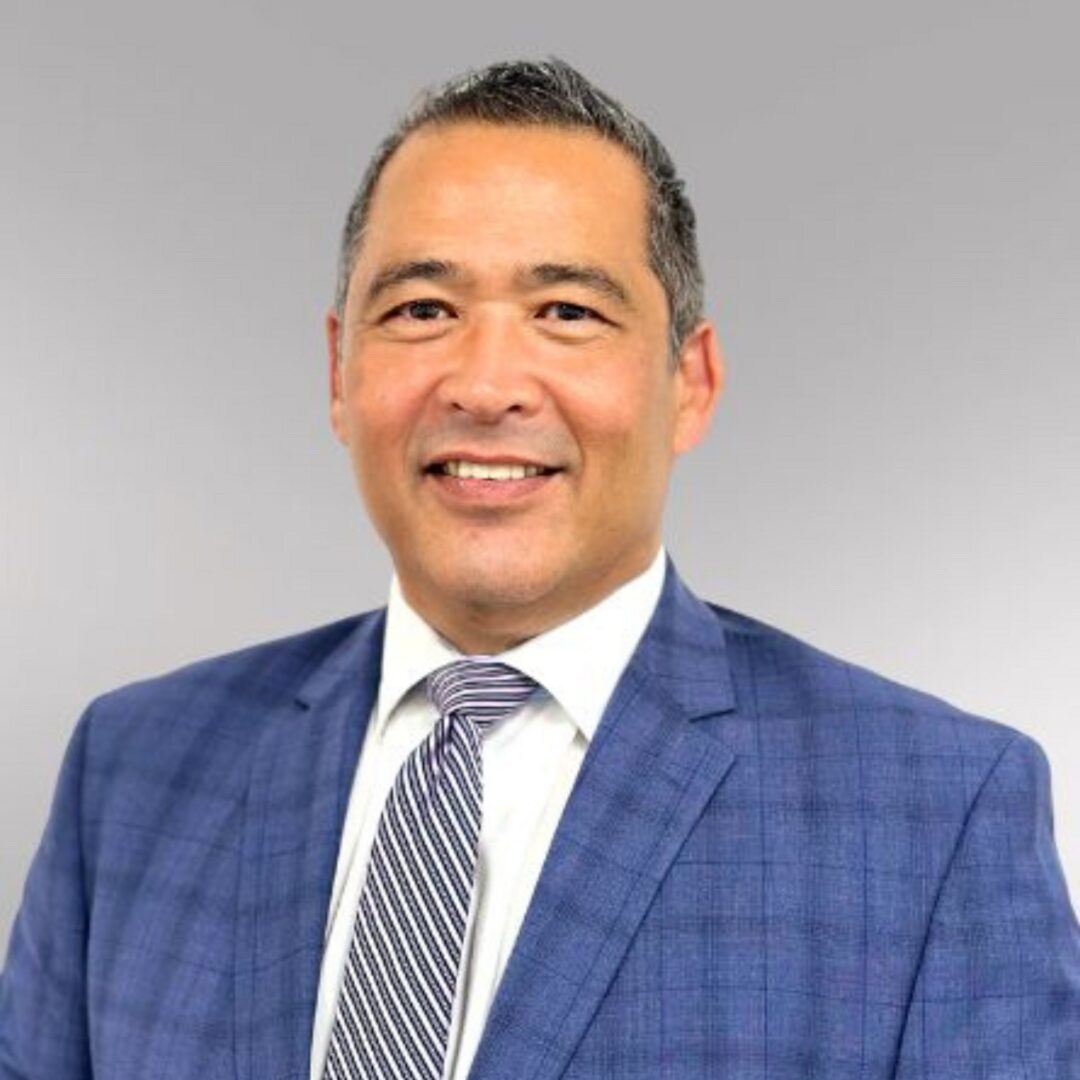
Welcome back to the show, my fellow extraordinary Americans. For today’s guest, we have Jay Connor. Jay is the president of the Private Money Authority. He began investing in real Estate in 2003 and, at the start of his career, relied on his local banker to put together a few deals. However, that also meant coming up with large down payments, paying origination fees, and signing personal guarantees on every deal.
After years of feeling owned by the bank and being stressed out, he learned how to buy properties using creative financing, including subject-to and subject-to lease options. After the market crashed in 2008, his banker cut him off. Jay had to abandon everything he knew about how to finance his deals. And then he heard about the world of private money.
He developed his own system for gathering millions of dollars for real estate deals. And over several years, Jay refined his system until it was repeatable and dependable. When he put it to the test, the first person he approached gave him $250,000 in private money. In just a few short months, he raised $2,150,000 in private money.
Despite initially cursing his banker, Jay now thanks him. His unique system allows him to enjoy seven-figure profits year after year. And he also has the freedom to work less than 10 hours per week in his real estate investing business by leveraging the power of automation. He’s also the author of the book Where to Get the Money Now. He’s an extraordinary American, and I’m glad and honored to have him on the show.
Jay, are you there?
Jay
I’m right here, Cosmos. Thank you so much for inviting me to come along and talk about my favorite topic, which I’m so passionate about: private money. The reason I’m so excited about private money is that this number one strategy has caused me to never miss out on a real estate deal. Ever since 2009, when I started using private money, I’ve found it to be incredibly powerful.
Cosmos
Hey, yes, we all want to know more about that. I’m so thankful that you came on this podcast to share your story and your knowledge.
So, can you tell me a bit more about yourself and your background in the audience? How did you get into the world of real estate and private money?
Jay
Sure. Well, my wife Carol Joy and I live in a very small area of eastern North Carolina. We’re in Morehead City, North Carolina. We only invest in two counties, so our total target market that we really focus on is only 40,000 people.
Now we do two to three deals a month, but our average profit per deal is $86,000. Now, I don’t share that to brag. I share that to make a point. And there’s an argument to be made for dominating a smaller tertiary market instead of competing with other real estate investors in the bigger cities. We started investing in single-family houses in 2003, which was quite a few years ago. We’ve rehabbed and flipped over 500 single-family houses since we started here in the area.
And so, here’s what happened, Cosmos.
From 2003 until January 2009, my only option for securing funding for my deals was to visit either the local bank or a mortgage company, where I would apply for loans and provide financial statements. And they pulled my credit score and all that. And they always had to get an appraisal and et cetera. Well, that worked out okay, so to speak, from 2003 to January 2009.
But Cosmos, then in January 2009, everything changed. Everything changed. I called up my banker in January 2009, and his name was Steve. I had two houses under contract to purchase, and I thought I still had a line of credit at the bank. However, when I spoke with my banker, I discovered that my line of credit had been closed without my knowledge.
And I said to my banker, “What in the world are you telling me you’re closing my line of credit?” We’ve had a great relationship here for over six years, and I’ve made my payments on time. I got a great credit score. Why are you closing my line of credit? And my banker said, Jay, don’t you know there’s a global financial crisis going on right now?
And I said, No, but you just gave me a financial crisis. I don’t have a way to fund these two houses or my deals. And my banker said, Well, we’re just not loaning money out to real estate investors. So I hung up the phone. And this is where everything changed—the trajectory of my company and my approach to investing in real estate. I sat at my desk, thought for a moment, and asked myself a very important question. The power is in asking the right questions, because with the right questions, you get the right answers.
And the question I asked myself was, “Jay, who do you know?” It’s not how, it’s who. Who do you know that can help you fix your problem? And immediately, I thought of a good friend, Jeff Blankenship. He was living in Greensboro, North Carolina, at the time, and he was investing in single-family houses.
So I called up Jeff and I told him what had just happened. Be getting cut off at the bank. And Jeff said, Well, Jay, welcome to the club. And I thought to myself, I’m not sure I want to be a member of that club. But I said, Jeff, what club are you talking about? He says, well, that’s the club of having the bank shut you down. He said, My banker shut me down last week. I said, “Well, Jeff, how are you going to get your single-family house deals funded?” He said, Well, have you ever heard of private money? I said, No. He says, Have you ever heard of self-directed IRAs and how people can use retirement funds and be a passive real estate investor and loan money out to us real estate investors from their retirement funds, and then the interest we pay them would be either tax deferred or tax free, depending on the type of retirement account they’ve got. I said, Jeff, I don’t have a clue what in the world you’re talking about. I said, What is private money? He said, “Well, I’m not exactly sure.” He says, but there’s a gentleman down in Jacksonville, Florida, by the name of Ron Legrand.
And he said, Ron says he can teach us about private money. I said, Well, what is it? Jeff says, I don’t know. But Ron says we can get a lot of it really, really fast. So Jeff and I went to that conference all the way back in February of 2009, and boy, Cosmos, I learned all about private money. And we’re not talking hard money, we’re not talking institutional money. When we say private money. We’re discussing business with individuals who use their investment capital and/or retirement funds to fund our real estate investment deals.
And so I was able to raise $2,150,000 from just ordinary people who had never heard of private money or self-directed IRAs. You know what’s interesting, Cosmos? I never asked anybody for money, and I still don’t ask anybody for money. And how do I do that? I do this. I put on my teacher hat, which says private money teacher.
So, I’ve been teaching people in my own network, those I attend church with. They’re in the Rotary Club, they’re in my cell phone. We had 47 private lenders, none of whom had ever heard of private money or self-directed IRAs until I introduced them to this opportunity. So as a result, I never asked for money. I lead with education, and then the money’s chasing me instead of me chasing the money.
Cosmos
Wow, Jay, there’s so much to ask over here. The 2008 financial crisis was particularly traumatic for millions of people, especially in real estate. But you somehow rebounded. And so, what I wanted to ask for the sake of the audience is how, like most people, when they think of mortgages, they think of the bank, right? They cannot. I plan to get a loan from the bank, pay the mortgage, and then pay it off over time.
So, from your perspective, how do you go about finding private money to get real estate deals and fund your mortgage, basically?
Jay
Yeah, great question, Cosmos. There are three categories of where private lenders are. The first category is what I call ordinary people who are in your own network. You go to church with them, play golf with them, and attend the Rotary Club together; they’re coworkers. Ordinary people whom do you see every week? Where do you go every week?
So that’s the first category. Your own network of people who are unaware of private money. They are unfamiliar with self-directed IRAs. All right, that’s the first category. The second category is what I call your expanded warm market or your expanded network. In other words, if you want to scale and grow your business, you’ll eventually run out of your own connections. So how do you grow your network?
Right?
And I’ll tell you, one way to grow your network very, very quickly is to get involved in the local BNI, which stands for Business Networking International, and that organization. And, each chapter comes together to give each other leads, helping each other do business. The third category of where you find private money is existing private lenders. Existing private lenders. These are ordinary individuals, just like you and me, who are already lending money to real estate investors, either from their investment capital or their retirement funds.
So the question is, where in the world do you find those people? Well, I’ll tell you, there are several places to find them, but I’ll tell you one really easy place. And that is, did you know that over 70% of account holders with a self-directed IRA account want to loan you money on your real estate deals? They aim to become a passive real estate investor by acting as a private lender and funding your deals. But here’s the interesting thing. That’s not going to be an educational conversation. You’re not going to be teaching them about private money. They already know about private money.
So now that’s going to be a negotiation conversation, because they’re already a private lender. They’re already loaning money out. And you know why, Cosmos? I’d rather be an educator than a negotiator.
Because, you see, when I’m educating, I make the rules. You see, that’s what’s so different about this world of private money. Traditionally, when borrowing money, you assume the lender is the underwriter. That’s the traditional way of thinking. And whereas the traditional way of thinking is that whoever has the money to loan out makes the rules, sets the terms, sets the interest rate, sets the length of the notes, and sets the frequency of payments.
But I turned that upside down. In this world, we make the rules. You see, instead of the traditional approach of asking or applying for a mortgage, we’re offering a mortgage and an opportunity. Primarily, the people who have never heard of this world. Therefore, we make the rules. We’re offering the opportunity.
You know, here’s what’s interesting, Cosmos. I’ve been paying my private lenders the same interest rate, 8% all the way, since 2009. And then the market’s gone up, and now it’s going down. People ask me all the time, “Jay, how in the world have you been paying your private lenders the same interest rate through all these years?” And they love it. Well, there are two reasons. Number one, 8%, has been a whole lot more money than you can get at the local bank, even in a certificate or deposit, ever since 2009.
And the second reason I’ve been paying them 8% all these years is because I make the rules. Remember, we’re the borrower. We’re offering an opportunity. We’re not asking, we’re not applying. We’re offering the opportunity.
Cosmos
So, Jay, this is a big shift, right, for a lot of people. And they think of making real estate deals. They consider the traditional approach versus using primaries.
From your perspective, what are the limiting beliefs that the audience would have? What limiting beliefs do you think most people have about real estate and private money that they need to overcome to succeed in this line of work?
Jay
Well, the very first limiting belief is what I just said. They believe they must cower and succumb to the lender’s underwriting and terms.
So, as you just said, this is a huge shift, right? So people ask me all the time, How do you get started raising private money? And I’ll tell you how you get started raising private money. You’ve got to own the real estate between your ears first. You’ve got to have the right mindset. And that part of this mindset is no begging, no chasing, no selling, no persuading, you’re educating, and you’re offering the opportunity.
So that’s the first mindset shift. Another very, very limiting belief. Oh, my lands. This is one of the biggest limiting beliefs. I’m so glad you asked. Cosmos.
Many real estate investors seeking private funding believe they must pitch deals. They think you have to pitch a deal to your private lender. You know what, Cosmos? I’ve never pitched a deal in all these years, and I get every one of my deals funded.
So, what I’d like to share with you, Cosmos, and your audience is the exact script I use when I have a deal ready for one of my private lenders to fund. And I get it funded 100% of the time, every time, without pitching the deal or asking for money. So here’s how it works, Cosmos. Let’s do the setup. Let’s do a couple of hypothetical assumptions. All right, Cosmos, let’s say you’re one of my private lenders, okay? And here’s how you became one of my private lenders. In this example, let’s say that you and I go to church together, and we know each other, and we’ve known each other for some time, and so we like each other, we trust each other, we know each other, we see each other all the time.
And let’s also assume that I have taught you, I’ve exposed you to this world of private money and being a private lender, okay? And you like the interest rate. You like how you’re protected. You appreciate the option to get your money back in case of an emergency. And let’s also assume that you worked with a previous employer. And let’s assume you had $150,000 still in a 401 (k) with the plan administrator of that previous employer. And you’re not liking. You’ve left the company and moved on, but the program you’ve learned from me is still in the stock market, which is volatile. You’re not liking that, but you do like the program and the opportunity it offers. Because, you know, when you invest your money. You know exactly what your rate of return is going to be, regardless of what happens to my deal or the market or anything.
So let’s also assume I have introduced you to a self-directed IRA company that I recommend. You’ve moved that $150,000 over to the self-directed IRA company with no tax effect, no tax consequences. You moved that money over because you wanted to invest with me. You wanted to be a private lender. And where we left it was, I said, cosmos, I will put your money to work for you just as soon as possible. So that’s the setup.
So now let’s assume I got a house under contract, and now I’m ready for one of my private lenders to fund it. So I’m going to call you up, and here’s exactly what I would say. I call this the good news phone call. This is what this is called, the good news phone call. And so I call you up, you answer the phone, we have a little chat, and then I say, “Here’s exactly what I say.” I’ve got great news for you, cosmos. I can now put your money to work. I’ve got a house under contract in Newport, North Carolina, with an after-repaired value of $200,000. Now the funding required for the deal matches up to what you’ve got in your self-directed IRA. It’s $150,000. Closing is scheduled for next Friday.
So I’ll need you to have your funds wired to my real estate attorney’s trust account by next Thursday. I’m going to have my attorney email you the wiring instructions. That’s the end of the conversation. I mean, there are three main reasons why Cosmos is excited about funding my deal. Here’s the first big reason. For goodness’ sake, Cosmos trusted me to move his $150,000 over to the self-directed IRA company. He’s already done that.
Right.
You see, here’s the secret sauce. I’m not discussing the opportunity or a deal in the initial conversation because here’s a writer’s downer. Desperation has a smell to it. Desperation has a smell to it. The worst time to raise private money is when you need it for a deal. Cosmos, I don’t know if you’ve ever heard this, but how about those gurus who stand on stage and say, “Oh, just get the deal under contract; the money will show up.” Have you ever heard that? Yeah, that’s the stupidest thing I’ve ever heard in my life. Where’s the money going to show up? Is it going to rain out of clouds or something? Somebody’s going to drop you a box of money on your front door because you got a deal under contract. Or they’ll say, Oh, money finds good deals. Have you ever heard that?
Cosmos
Yeah, yeah.
Jay
What’s money got to do with M? So I say get the money lined up first. There will always be deals, right? So, let’s go back to the three reasons why you are excited to fund my deal. First, you’ve already transferred your retirement funds to the self-directed IRA company. Although I haven’t discussed any specific deals with you yet, I’ve assured you that I can get your money working for you quickly.
The second reason Cosmos is excited to fund my deal is that they know I won’t bring a deal unless it meets the program’s criteria, which I’ve already taught them. Did you hear the numbers? The after-repaired value is $200,000. The funding requires 150,000. Well, that is 75% of the after-repaired value. Cosmos knows I’m not going to borrow more than 75% of the after-repaired value. I didn’t say 75% of the purchase price. 75% of the after-repaired value.
So, as a result, I’ll always bring home a big check when I buy the property. I mean, who wants to get paid to buy properties? I take none of my own money to the closing table. The third reason Cosmos is excited to fund my deal is that he won’t make any money until I invest his funds and put them to work, after which he’ll fund one of my deals. So unpack what just happened. I wasn’t chasing somebody for money for some deal I got under contract, right? That’s the worst time in the world to be looking for money. We educate people on how this deal works, and they get excited about it. Then, they tell us how much they’re willing to invest. We then find a deal as soon as possible to secure funding for them. We call them up with the good news, and that’s when your deal is funded.
Cosmos
Wow, this is amazing. It’s almost like a system where you can repeat this and basically start getting deals.
But Jay, I had one question. You mentioned you used to work as a banker, right? And I’m asking for the sake of the audience because many people rely on banks and other financial institutions. They believe that institutions have a certain level of trust in private money. Could you explain to the audience the inherent differences you’ve noticed between banks and private lenders?
Jay
Sure. And when we say banks, I’ll also include hard money lenders, because hard money is institutional, and hard money lenders are not private money.
Right.
A hard money lender is a broker of money that raises funds for their portfolio and then lends those funds to real estate investors. So there are 20 reasons why I love private money over institutional money. Don’t worry, I won’t share all 20 reasons, but I’ll cover the key ones. Number one is the interest rate that you pay.
Right.
So I pay my private lenders 8%. Even a commercial lender at the bank now is more than 8%. A hard money lender typically charges between 12% and 15%.
Cosmos
Yeah.
Jay
So the interest rate’s a lot higher with institutional money. Private money is much lower. The second reason is that there are no origination fees, including no points. When you’re borrowing private money, you always pay origination fees and points. Then, institutional interest saves you money. Another big reason is extension fees.
All the notes we borrow money from private lenders are two years or five years. When borrowing money from an institutional lender, the term is typically 6 months, 9 months, or 12 months. So with private money, there’s no hurry to pay it back. Another significant difference is the maximum amount the lender will advance or loan to you at the point of purchase.
Right.
So with private money, you get all your purchase price up front. If you’re rehabbing a house, you get all that money up front. And here is a downside: a potential checkpoint if you can’t bring home a big check. When you’re using private money to buy a property and take none of your own money to the closing table, you paid too much for the house. Okay.
Another significant reason is that there’s no limit to the amount of private money you can have. When I was borrowing money from the banks, there was a limit to my line of credit. Another reason I love private money is that there’s no limit to the number of private lenders you can have. Another big difference, Cosmos, is how fast you can close the deal. I can close a single-family house deal in seven days. Seven days from the time of going under offer to purchase. No way is that going to happen with institutional money.
So, private money puts you in the driver’s seat, where you’ll never miss out on a deal because you lack the funds.
Cosmos
The money you’ve made throughout your entire career from real estate deals.
What are some of the biggest revelations you had regarding the entire, entire industry of private money and real estate?
Jay
Well, one of the biggest revelations I had in the world of private money is that private lenders need us as much as we need them. The private lenders need us. I mean, they have a problem. They’re looking for a better rate of return than they can get in the local bank. They’re fed up with the volatility of the stock market. They want a reliable rate of return, and we provide that solution.
And so, a big revelation is that I’m providing them a service, right? I’m providing them a service. At the same time, the old way of thinking is that the traditional banker is providing me a service. Well, with private money and real estate investors, it’s a win-win scenario. Everybody’s winning, right? Another significant revelation is that many new real estate investors often wonder, “Who’s going to loan me money on a real estate deal?”
And I’ve never done a deal like, who’s going to loan me money if I’m new? And here’s the answer. If you don’t pay the private lender, the property will be taken over. And what I mean by that is, we never borrow unsecured money. We never borrow unsecured funds. We’re going to give our private lender a mortgage. In North Carolina, it’s a deed of trust. In Texas, it’s a deed of trust, but it’s that legal instrument that allows your lender to foreclose on you if you don’t pay them. So, the bottom line is that if you’re the borrower and don’t pay, the property does.
Cosmos
Yeah.
So, Jay, I know you’ve made millions in real estate deals, right? And like, you had so much success in this venture. Many people make one or two deals, but they’re afraid of financial risks when they venture into this line.
So, from your perspective, how do you assess and calculate risk, especially when it comes to money in this matter? There are two answers.
Jay
Number one, never borrow personally guaranteed debt. So, when you borrow institutional money, whether from the bank, mortgage lender, or hard money lender, you’re personally guaranteeing that debt. In contrast, private money is not personally guaranteed. Now, the private lender will obtain a mortgage or a deed of trust to secure the house.
But if everything goes upside down, you’re not personally guaranteeing debt with all your other assets. All right, that’s big. Number two, how do you mitigate risk? You’ve got to buy, right? And look, let me tell you something. You don’t buy based on what HGTV tells you to do, right?
Cosmos
Yeah.
Jay
So, the money is made not by calculating the renovation cost exactly because it’s never exactly correct.
Right.
You mitigate your risk by buying it at a discounted price. So never let your emotions come into play to decide what’s the most you’re going to pay for a property.
Right.
So you let the math make the decision. So, I have a formula, and I follow it strictly. The math determines your maximum offer when using private money, rather than emotions. And you do not stray from that formula. And you let the math make the decision, not your emotions.
Cosmos
Because, you know, sometimes in real estate you meet shady characters, and so, what would be your way of knowing whom to trust and whom not to trust?
Jay
Are you talking about which private lender to trust and which not to trust? Yes, that’s an excellent question. Do not attempt to borrow money from a private lender that you do not know. Never. Let me give you an example. You’ve got scam artists on Facebook who are pretending to be private lenders. And they’ll post on their social media that they’re only charging 3%. Hey, if something sounds too good to be true, it usually is.
To be true, right?
So they’ll say, and we fund in seven days. We only charge 3%. And here’s where the scam comes. They have a short form application, but in this world of private money, there’s never any need for applications. Remember, we’re teaching, we’re not applying for a mortgage. But they’ll have a short-form application, and they’ll be presenting themselves as a private lender. And they’ll come back to you right away, saying you are approved.
And they’ll say, Submit your deal to me. So you submit the deal, and they say, Your deal’s approved. And then here’s the scam. You have to send in a $3,000 processing fee upfront before funding. There’s the red flag. If a private lender you don’t know asks you to send money before closing, be cautious. Run the other way. Just don’t borrow money from people you don’t know.
Cosmos
Yeah, I mean, the reason I was asking is that a lot of people’s biggest fear is that they’re going to get scammed. They want to get into real estate, but they’re unsure who to trust, who to avoid, and where to find a good deal, as well as about lending money.
Jay
Correct? Yeah. Well, it all comes down to relationships and knowing who you’re doing business with.
Cosmos
Oh, totally, Jay.
Jay, I know you wrote this book. To get the money now, can you tell me a bit more about it and what inspired you to write it?
Jay
Absolutely. So, as you said, this is a bestseller. It’s called Where to Get the Money Now. The subtitle explains how and where to secure funding for your real estate deals without relying on banks or institutional money lenders.
And you know what this even has in the book? The opportunity is to educate new potential private lenders on the process of becoming private lenders and joining Cosmos. I would love to mail this book to your audience via express mail. It’s $20 on Amazon, but I’d love to autograph it. Express mail it to them. Just cover shipping.
And I’m also going to include two tickets to my private money conference valued at $3,000. I’ll include those two tickets with the book, and your listeners can pick it up now. I’ll ship it to him at https://www.jayconner.com/book-details/ and I’ll rush it right out.
Cosmos
Thank you so much for that, Jay. I really appreciate that
Could you tell me more about the Private Money Authority, including what it does?
Jay
Well, the Private Money Authority is what people call me. So, the Private Money Authority is not a company. I heard in the intro that you said, I’m the president of the Private Money Authority. Private Money Authority is just what people call me. That’s my title.
And so, what do I do? I’ve been raising private money and making my own deals since 2009. And in 2011, I started teaching other real estate investors how to get all the private money they’d ever want for their deals. And that’s why I’m thrilled to share this new book with your audience. I’m interested in giving back and making an impact with other real estate investors, so we can avoid getting taken advantage of on deals and take charge of our own rules.
Cosmos
Thank you so much, Jay. I like that. This is amazing. And the impact you’re making is really good because many people are becoming financially free through real estate. And then there’s a saying. A lot of millionaires are created in the real estate industry.
Jay
Absolutely.
Cosmos
Yeah. And so, Jay, just one more time for the audience. How can they connect with you, learn more about your work, and understand what you do? If they’re interested in consultations, how do they go about scheduling one?
Jay
Yeah, the best way is just to pick up my book, because all my contact information, my phone number, and everything is right there in the book. Just pick up the book at jconnner.com, and you’ll find all my contact information inside.
Cosmos
That is amazing, Jay. And Jay, I’m so glad that you took the time to come on this podcast and share your knowledge about private money and real estate, because this seems like the surest short way that people can become millionaires in this industry, and also become financially free if they do it the right way.
And I do hope that you take the time to come back on the show at a later time.
Jay
Thank you so much, Cosmos. I love being here, and thank you so much for having me.
Cosmos
Thank you for being here as well, Jay. And I want to conclude this episode by letting my fellow extraordinary Americans know that, hey, look, there’s an extraordinary within every one of us. It’s our duty to awaken it and unleash it. Until next time, bye for now.

 Amazon Music
 Apple Podcasts
 Audible
 CastBox
 Castro
 Google Podcasts
 iHeartRadio
 Listen Notes
 Overcast
 Player.fm
 PocketCasts
 Spotify
 Stitcher
 TuneIn