Cosmos
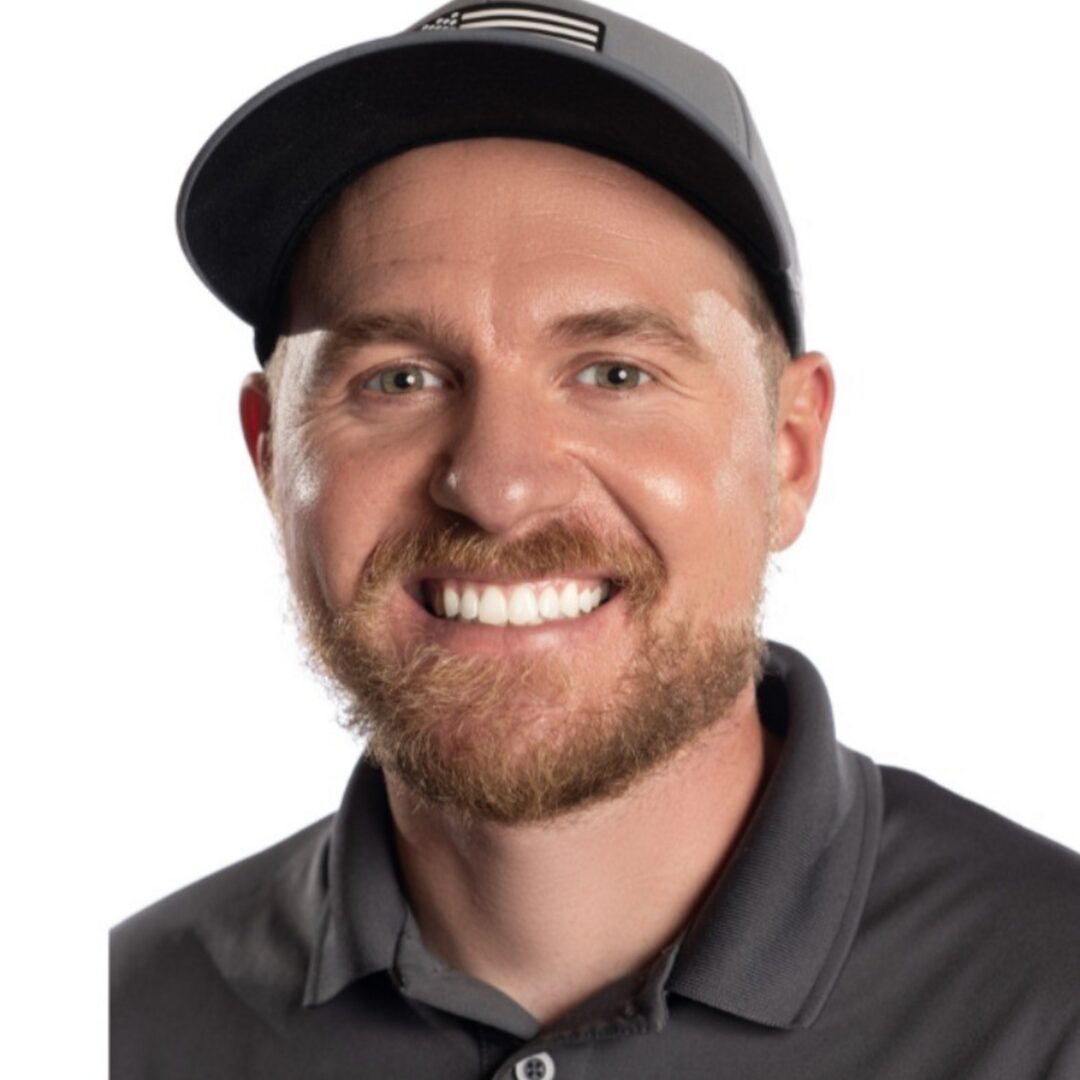
Welcome back to the show, my fellow story Americans. For today’s guest, we have Brent Kessler. Brent is the CEO and owner of the Money Multiplier. He’s a former chiropractor who implemented the Money Multiplier concept, an innovative personal finance strategy he used to pay off nearly $1 million in debt in just over three years.
This life-changing experience inspired him to become a passionate advocate for, well, building strategies. For over a decade, Brent has been on a mission to educate others on breaking free from financial bondage through smart investing and banking practices.
He lectures extensively on the infinite banking concept, which is a 3,200-year-old wealth management method that empowers individuals to keep and grow their money through specialized whole life insurance policies.
Brent’s unwavering belief is that everyone, regardless of income level, deserves access to this powerful financial knowledge. He’s the author of the book Mapping out the Millionaire Mystery. Step into the secrets of the wealthy. He’s an extraordinary American, and I’m glad and honored to have him on the show. Brent, are you there?
Brent
Cosmos, thank you. Glad to be here, man. Excited to share with your viewers today.
Cosmos
Thank you very much for joining us on the podcast today, Brent.
Brent, could you please share with our audience some information about your background and how you began your career?
Brent
Yeah, absolutely. Right, well, I’ll kind of take you back. I’m a chiropractor. I’m a former chiropractor. I guess I’m still a chiropractor. I just don’t practice anymore. I had five clinics in the Kansas City area. I haven’t been practicing myself in the clinic since 2008. I had associate docs in the clinics, and I sold my last clinic in 2017. I now live in Port Orange, Florida, right next to Daytona Beach, about an hour east of Orlando.
So that’s home base. Now, I’m coming to you today from my house in the Lake of the Ozarks in Missouri, between St. Louis and Kansas City. I spend most of my summers actually, up here in the Ozarks, in the Lake of the Ozarks. We love doing water sports, and my wife and I spend the summers up here. Anyway, back in 2006, I was at a chiropractic conference when I heard somebody talk about the infinite banking concept – how to become your banker.
And I heard it and I. And it was about an Hour or so they were talking, and I was like, wow, that is some really good stuff. That is some powerful information. However, I thought it was too good to be true. I thought there was a catch. And I’m sure you’ve heard things like that before. You’ve, you know, kind of heard stuff and you thought it was too good to be true. Well, I heard everything. I listened.
After that event and conference, I went home and didn’t do anything with the information I had just heard. I went back to my normal chiropractic life. About two years later, I returned to another chiropractic conference in 2008. About 10 or 12 of my colleagues from the previous conference are also here.
And so they were talking and.. Right. We just started discussing the infinite banking concept, which involves becoming your banker, and how they applied and implemented it in their lives. They were paying off their debts, recycling, and recapturing their money. They were building wealth, keeping control of their money. They were just going on and on about how cool this concept was. They were throwing up all over me about it.
So I thought to myself, there has to be something to this method. Right? There’s no way that 10 or 12 of my closest colleagues are lying to me. Maybe one or two, but not 10 or 12. So I came home, and I told my wife, and it was in February of 2008. And I said, Honey, we have to start implementing this concept in our lives.
And at that time, I was $984,711 in debt—almost a million dollars. Now, you’re probably thinking two things. Well, so how do you know exactly how much it was? And how in the heck did you get in that much debt? Well, it was part of the exercise to find out how much it was. And so, how did I get in that much debt?
Well, I had the house that I lived in. I had my. I also just paid off my student loans from chiropractic school. I had a house on the Lake of the Ozarks between St. Louis and Kansas City. And if you have a house on the lake, guess what you have to have? You have to have a boat and a Waverunner, right? Yeah.
Because, yeah, man, you can’t have a house on a lake without a boat. And Waverner. I’m also an airplane pilot. As an airplane pilot, I needed my airplane. So, it didn’t take me long to accumulate almost a million dollars in debt. I successfully applied this concept in my financial life, paying off that debt in 39 months, or three years and three months. And all I did was add one step to my financial life. That’s it.
In other words, I didn’t have to change my cash flow. I didn’t have to work any harder, take any additional risk with my money, or lose control. I simply added one step in my financial life, and I became passionate about it. I was telling everybody about it. And then kind of fast forward, I started teaching this in 2012, right?
So I first heard about it in ’06. I never implemented it in my own life until 2008, when I was both a customer and a client. And then I started teaching it in 2012. I worked with someone else from 2012 to 2017, specifically the person with whom I initiated my first process or policy.
And we’ll get into a little bit about what that means by policy. In 2017, I went out on my own and started the Money Multiplier. Fast forward from 2017 to now, and we’ve helped serve over 17,000 clients across every state in the country. About 180 new clients join us every month. Sometimes a little less, sometimes a little bit more, but on average about 180. And again, we achieve this through venues like this, where people can hear us on podcasts, webinars, GoToMeetings, or Zoom calls. The thing is, even a quick Google search for my name or the money multiplier will show tons of our content out there—plan designs, case studies, success stories, testimonials. We travel around and speak at live events, live stages, and conferences on this concept as well. You know, before Covid, which, I mean, to me it seems like Covid was like yesterday, but now we’re going on five years, right? So, it was all live events, just like before COVID. After COVID, it shifted to Zoom and virtual meetings. And now the live events are back, and we’re doing a little bit of both.
I learned about the money multiplier and the infinite banking concept, which you mentioned, through my mentor. He wrote a book on the subject, “Becoming Your Own Banker,” by R. Nelson Nash. R. Nelson Nash passed away at age 87 back in March of 2019. So, it was a little over six years ago. But anyway, this book and R. Nelson Nash completely changed my financial life. I recommend that everyone who can hear this right now go out and find the book Becoming Your Banker, wherever you buy your books, and add it to your wealth-building library. It is a complete game-changer for your financial life.
He also wrote a couple of other books. One was called the Case for IBC, and there’s one called Building Your Warehouse of Wealth. If you can’t afford all three, start with Becoming your banker. This is the bible in my opinion of money. Right? So, I continue Nelson Nash’s legacy by teaching this concept. I wrote a book with my colleague, well, client now colleague, Chris Nol, called Mapping out the Millionaire Mystery. Suppose you’ve never heard of Chris Noggle; just Google Chris Noggle. Chris Nogle.com Naugla Chris has a lot of content out there. Online, social media, Instagram, TikTok, Facebook, all of that stuff. I don’t know most of it. I have a hard time checking my emails. But anyway, you guys know what it is.
So yeah, Chris and I wrote the book Mapping out the Millionaire Mystery. I will send your viewers the ebook version of Mapping out the Millionaire Mystery. Visit our website, themoneymultiplier.com, to learn how to access the book and ebook. Alternatively, you can send me an email directly to Brent at moneymultiplier.com, and I’ll send you the book, “Mapping out the Millionaire Mystery.” If you want to buy a copy of it, you can. I don’t think you need to.
But because you have the ebook version. But yeah, you can go out there and find out how to buy. There’s even an audio version on Audible. You can find that as well. Please don’t ask me how to find it other than on our website. But again, no sense in buying the book. I’ll just send it to you. I’ll email you the ebook of Mapping out the Millionaire Mystery.
The concept of infinite banking is to teach people the truth about money and how it works. Okay. It teaches you how to build, maintain, and create wealth through your existing debts and expenses. Right?
For example, if you have debts or expenses, it doesn’t matter. The thing you do is that you have money coming in, and anytime you buy something, let’s just take a car as an example. Right, A car. The thing you have to do is buy that car in one of three ways. And there are probably only three ways that you’ve ever bought a car. You can pay cash for it, finance it through a bank, or lease the car. Right? I don’t think you guys stole the car you’re driving, but I’ll assume you’re honest and didn’t.
So you pay cash, bank finance it, or lease it. So, you have to do it in any way. So, let’s pretend this is a $20,000 bill and you’re about to buy a $20,000 car. The thing you need to do is give the money to the car dealer. It doesn’t matter if you pay cash, finance it through a bank, or lease it. The money goes to the car dealer. And in exchange for that money, they give you the car. They get the money, you get the car, everybody goes home happy, everybody got what they wanted, you got the car, they got the money, the transaction stops, it’s over.
But if we add one simple step into that equation, now what you can do is not only buy the car, yes, the thing you’re going to do is give them the money, you’re going to get the car. But now, by adding that step of the infinite banking concept, you’re going to not only get the car, but you’re going to recycle and recapture and get all that money back that you bought for the car. So you get the car and the money back, right?
So essentially, that’s one of the things that we teach you. We teach you how to recycle and recapture all the money you spend on things you’re buying anyway. It doesn’t have to be a car. It could be a boat, a wave runner, a piano, a chandelier, a big screen TV, a computer, or an iPhone. It could be a college education. It could be just for a vacation.
For instance, if you’re getting married, you might have to pay for the wedding. The thing we’re doing is turning every depreciating asset into an appreciating asset. We’re turning every liability into an asset. The concept of infinite banking is not new. This concept is not new. It’s been around for a long time. I didn’t invent it. R. Nelson Nash, who wrote this book, didn’t invent it. If you do any research on the wealthy, the Rockefellers, the Rothschilds, the Morgans, the Stanleys, the Barclays, this is how they built wealth.
This is how they kept and built wealth in their family by using this concept. Please go out and see how it is. All right, the thing is, go out and look and see how Walt Disney built Disneyland. How did Ray Kroc build McDonald’s? How did Warren Buffett? Okay, purchase Pampered Chef. This concept has been around for over 200 years. It’s not on trial; it’s not being tested. All we’ve done is take the concept and simplify it.
How does it work? Well, the concept works by you purchasing a whole life insurance policy, a policy that, for most of our clients, is over $ 17,000 in every state in the country, growing every day. Right. And that’s just us at the money multiplier. Right. Other people teach this concept. There’s not a ton, but there are other ones out there as well. So anyway, how does it work? Well, the thing you do is decide, “Hey, I want to be my banker.” Now, you go and purchase a life insurance policy.
Now, I know I’ve probably just turned off half of the viewers and lost half of the audience because I mentioned the word “life insurance.” And I know what your listeners are thinking. They believe life insurance can help build wealth. That’s a crazy idea. Well, why in the heck would I ever want to do that? Well, the reason you want to do it is because you don’t know everything there is to know about it. And you don’t know what the wealthy are doing. Cosmos, the world’s leading purchaser of whole life insurance, is a conventional bank. Conventional banks own more whole life insurance than all of their land and buildings combined.
As a matter of fact, since 2013, conventional banks have quadrupled the amount of life insurance they have purchased. Quadrupled. Now, why do you think banks are buying so much in whole life insurance? Because. Because they’re stupid or they know something the rest of us don’t know. They know something the rest of us don’t know. Now, let me be clear. This is not any type of life insurance. This is not a term policy. It’s not a variable policy. It’s not a UL, it’s not an index, universal, or IUL policy. This is a specifically designed, specially engineered whole life policy in a mutual company that is designed for high immediate cash value. One more time. High immediate Cash value. So what does that mean? That means when you put money into this policy, you immediately have cash value. Now, my definition of “immediate” is within 30 days.
All right, so it’s not the type of policy that you can call your life insurance agent, or possibly not. You all have a brother-in-law who sells life insurance, right? We all have a brother-in-law who sells life insurance. It’s not that type of policy. It is a specifically designed, specially engineered type of policy that is used primarily for this concept.
I mean, not only, not solely, but it’s all in the design of the policy. I was on a podcast earlier, and someone asked me, “Well, what’s the best company to do this policy with?” Well, it’s not the company, it’s the design of the policy and how we design it. Now, with that being said, some companies will not even allow you to design a policy this way. But there are enough companies that will. And some won’t allow you to design it this way because the company doesn’t want you to access the cash value immediately. They just don’t want it. What they want is for you to invest your money in the policy. They want to keep control of it. Even though they don’t have the right to do so, they want to maintain control over it.
So they don’t want to give you access to the cash value. All right, I’m not saying those are bad policies, but again, there are just different steps that you may go through, and you may have to have that policy for longer to get the cash value. And some people come to us all the time, and they say, “Well, I have one of these whole life policies, and man, I wish I had gotten it from you because it seems like yours is a better design.” Well, it’s not about that, it’s about, it’s about the way the policy was designed.
But the thing is, if you have a true whole life policy, you’re probably in a pretty good spot right now. Even if it wasn’t designed for the banking concept, the older it is, the more efficient it gets. At the money multiplier, our mentors will be happy to review any policy you have and provide their honest assessment of its strengths, weaknesses, and potential issues. You know, we’ll tell you exactly what’s going on.
And if it’s a true whole life policy in a mutual company, it’s probably pretty good, no matter how it was designed, you know, so don’t be discouraged about that. But again, that’s something we offer. Everybody will look at your policy to see exactly what you have. But yeah, that’s the concept, that’s what it’s based on. What we’re doing is different from the conventional bank. I’m not saying eliminate the conventional bank, but again, to the majority of people, here’s what they do. They get money in however you make money, just from your job, active income, passive income, or investment income. It could be a check in the mail you receive from grandma for your birthday, okay? The thing you do is you take that money and you put it in somebody else’s bank. Wells Fargo, Bank of America, Chase, US Bank, right?
Now, what you do is put your money in that bank account, and guess who makes money off the money you leave in there? The stockholders and the shareholders of the bank, not you. They’re making all the profits and dividends on your money. So, why not add one step to your process instead of putting your money in a conventional bank? Put your money into your banking system. Please create your banking system by placing it within a specially designed, specifically engineered whole life policy offered by a mutual insurance company. All companies that have been around for over 100 years have been paying dividends for over 100 consecutive years without fail. Even if the company stopped paying a dividend today, you still have the guaranteed growth inside the policy, where you’re able to use and access that money just like you could at a conventional bank.
But now the money is in your banking system. There’s no money getting leaked out to other people. There are no shareholders or stockholders because it’s a mutual company. What does that mean? Do you own the policy contract? You don’t own the company; you own the policy contract. What does that mean? You have the first right to the cash value in your policy.
So when you come knocking on the door and want that money, you are number one in line to get that money. When you use that money for anything that you’re buying in life. Buy a car, buy a house, buy a boat, go to college, whatever it is, big or small, it’s all part of the infinite possibilities. It could be paying your electric bill, buying groceries, or even just filling up your car with gas. There’s nothing. You cannot use the money for just anyone. Why do you want it? How long are you going to have it out for?
Nobody asks you those questions. It’s totally up to you when you put it in your policy first and then go out and do the things you’re going to do with the money. Buy the stuff you’re going to buy in life anyway, pay the debts and expenses you’re paying in life anyway. Now that money is staying in your banking system.
The money is growing internally, internally in your banking system. It’s growing tax-free, uninterrupted compound interest. What does that mean? That means there’s no interruption in the interest that you’re earning because whenever you go to use that money, you’re not borrowing your money out of the policy. No, no, no. You are taking a loan from the general fund of the insurance company. M. So all of your money that you have in the policy is continuing to grow in a tax-free environment, grow uninterrupted compound interest. And what I like about it is that the government is completely out of your hair. Wow.
And when you have your money in the policy, you pay tax only once. See, any money you put into the policy is with after-tax dollars. You’ve already paid tax on that money, which is a great thing because now it is going into an environment where it grows tax-free, uninterrupted, and the government’s out of your hair. So, all that tax value growth is growing tax-free, and the money is tax-free. Additionally, you have complete control over that money.
Cosmos
Brent, one thing I want to understand is that, for the audience’s sake, some people might say it’s too good to be true. And then the others would like to inquire, how do you use this as a good asset? How would you use this to get out of debt in a relatively short period?
Because there are a lot of people listening to this that might be in debt, you know, either with mortgage or credit card debt, and all of that.
So, from your perspective, what is the practical thing to do to get out of debt
Brent
Yeah, great question. And you’re right. That’s probably one of the biggest challenges that we run into. Even though we have lots of clients, including many new ones, they just come in and do this. Now, keep in mind, I don’t ever get paid a dime from you. If you decide to start one of these policies, you’ll never write me a dime.
See, I get paid one way, one way only. I get paid the way your car insurance agent gets paid. For example, if you go to John Smith, the Allstate man, to buy car insurance, the check that you write is not to John Smith. You write a check to Allstate, and Allstate pays John Smith a commission for the policy you bought. I am a licensed life insurance agent in every state in the country, and many members of my team hold the same license. You know, all my team, you know, all of our mentors that we have on our team.
So no matter who you buy this policy from, somebody gets paid a commission, right? So I don’t determine the commission, and you don’t determine the commission. The insurance company determines the commission. But I’ll tell you, designing this type of policy is a bit of a secret. Many agents are reluctant to discuss it because they must take a 60 to 90% cut in their commission to create the policy for this concept. And they’re not willing to do it. They are not willing to take that hit on their commission.
And that’s why you don’t hear about it a lot. I was also in a mindset that seemed too good to be true. Remember, it took me two years to get started. We hear that sometimes from other people. So I always tell people, “Don’t take my word for it.” Look and see what. Go, go to those testimonials, hundreds of testimonials of how this is working for other people and what they’re doing, their plan, plan designs, case studies, success stories, testimonials.
On our website, moneymultiplier.com, I have a full 90-plus-minute video that goes into great detail on how this concept works. It includes downloadable attachments and handouts that you can print out to follow along and see exactly how this concept works. After watching that, it becomes a requirement before we discuss the concept: you must watch that video. You have to watch the video or read the book, either one.
The reason we do this is that without a general understanding of how the concept works, the call doesn’t go very well. You, the potential client, and we, the potential agent. It’ll be a very frustrating call, and everybody will get about half an hour in, and we will all feel like we need to take showers. We just want to get off the call. It doesn’t go very well because it is a paradigm shift in how you think about money.
And yes, you’re going to have questions. Even after watching the video, most of you will likely have questions. There are going to be some people who say, Oh my gosh, I get it, I see it now. I knew there had to be something to this. I just didn’t know what the heck it was.
And I see it. Some people will be like that, and others will say, Well, I don’t know about this or that, but again, keep an open mind. Look, even if you don’t do this with us, if you ever decide to do it in your life and you don’t do it with us here in the money multiplier, there are other people you can do it with. Now I hope you’ll do it with us, as you’re learning from us.
But if you don’t, you know, for some reason, maybe our personality doesn’t jive, or you don’t, you know, like the way we talk about it, or whatever. This is a game-changer in your financial life. It is an absolute game-changer. I don’t know of anything on this planet that offers such features and benefits at a financial level. And I asked the question all the time. I’ve been teaching this now for about 13 and a half years. I’ve been a client for over 18 years, since 2008. Right.
I’m not aware of any concept on this planet that allows you to build, keep, and create wealth with these features and benefits. And I challenge every one of you to come to me and tell me what works better, if not this, then what else? Because here’s what you want. I would think you would want. You want control of your own money. You want that money to be liquid. You want to be able to access it whenever you want it. You want it to grow in an uninterrupted tax-free growth environment. You don’t want to have to ask and answer questions to get money right. You also want to leave a lasting legacy for your family, your spouse, children, grandchildren, and charitable organizations. Whatever your cause is or purpose or whatever you’re truly doing, that you’re keeping money inside your banking system, which is a closed system. There’s no money being leaked out to other people.
In this book, specifically on page 70, it is proven 100% that you recycle and recapture all the money spent on other people. And that money stays within your family, and it can be used for anything that you’re doing. In life, finances are a bit like that. You’re doing everything right now, buying stuff, having debts, and covering expenses. Credit cards, house, car, whatever it is you’re buying. Groceries, electric bill, right? Gas bill, whatever it is that you’re doing, the money you’re spending, you’re spending, whether it’s a big amount or a little amount.
And anytime you buy a product or service, what happens to the money? It leaves your family. Forever. It is gone. It leaves your family. Add this one step, and it stays within your family. It stays inside your banking system. So did I answer your question honestly? I forgot what your question was.
Cosmos
I think I was asking for a practical example that the audience can use to understand how to apply this concept to get out of debt.
Brent
Got it. I remember now, in particular. Yeah, yeah. So again, I had $984,711 in debt. I paid that off in 39 months, as shown in my presentation. That’s a recorded presentation. Downloadable attachments, right? You can look at it online. There is tons of stuff online. I go over what I call a money multiplier map. And in the map example I’ll be using, you’ll see it’s a client. It’s a, it’s a, it’s a, it’s a client. It’s a real-life client. This individual was a chiropractor in the state of Minnesota.
He came to us with $470,000 in debt, including 12 third-party debts. He had a car, a condo, a house, a private loan, and a boat. He had credit card debt to Discover, American Express, and Chase, right? He had 12 third-party debts, and he owed $470,000. And he says, “Brent, help us get out of this mess that we’ve created for ourselves, because nobody else created it, other than him.” He showed up at the door with that debt.
So, the question is, what if you have $470,000 of debt? How much would you like to put towards that debt? Now, again, he’s paying off all those debts with monthly payments, right? He’s paying it down. They all have different interest rates and terms, just like the audience, with varying debts and payment terms.
So we said, “Okay, the question was, how much do you want to put into your banking system?” I never tell a client. I’ve never told a client ever how much to put in. Now, I don’t ask you, how much death benefit would you like on your body? Because I don’t care. I want to know how much money or cash value you’d like to invest. The cash value you enter will buy you a certain amount of death benefit, based on your age and health. It’s just, I mean, you know, like, if both. And if both of us were twins, you know, and we’re in the same health, then that would buy us the same amount of death benefit. But I’m older than you, and if I put in the same amount, it’s going to buy me less death benefit than you. Right? Because I’m older than you. But the cash value doesn’t change. The cash doesn’t change; only the death benefit does.
So it doesn’t matter how much you put in. And I’ll tell you, we have clients who put in as low as $80 a month. And I think our largest client puts in $540,000 a month. You pick a number between them. Whatever fits you, okay? You can pay your premium monthly, quarterly, twice a year, or annually. You can change it, you can always lower it. Whatever you want to do, you’re in control. So, in the example, this individual says, “I want to put in $25,000 a year.” That’s just his monthly income, which is around $2,000. But he said, I want to pay it annually. He says, “Every year, I want to pay 25,000, which is 2,000 a month, 25,000 a year.” So, what we did next was create a money multiplier map for him, and we took all of his debts, which, remember, totaled right around $470,000 of debt. And we put all those debts into this map. He’s putting $25,000 a year into the policy.
So he puts in $25,000 in the first month of the first year. It doesn’t matter. He could have put in $2000 in the first month and paid monthly. He just wanted to pay it annually. It’s similar to paying for your car insurance. You can choose to pay it annually or monthly. Right? You know, I mean, how that goes.
So the mode is not as important. In this example, he invested $25,000 and immediately had a cash value available to borrow from. He took out that cash value. In this case, it was. I’m going from memory, it was around $15,000 that he borrowed out. Now, he could have borrowed out more, depending on the policy’s design, or he could have borrowed out less, but in this case, it was around $15,000. He borrowed that $15,000. He paid off and paid down debts that totaled around $15,000. Okay, so now what he did is he continued to make his monthly payments to the creditors, but now those debts that he paid off, he no longer owes those creditors anymore, does he? He’ll take the same monthly payment he was making to them and pay himself back the same amount.
So he’s not changing his cash flow because he was paying it out anyway. The only change he’s making is to the recipient of the money, which was previously going to those creditors. And now it’s coming back to him. He’s paying himself back.
So now we go to the next year and put in 25,000. He borrows more money, plus the amount that he’s been paying himself back, and he uses that money again. All the money you pay back to yourself is available to you anytime. Not 30 days. I say immediately, it’s 30 days, but this is like, today, immediately, any money you pay yourself back, okay, you have access to right away. I know some viewers are probably thinking, well, why would I want to pay myself back? It’s my money. Well, if you borrow money from a bank, are you going to pay them back with interest? Sure, you are.
You’re not going to skip a beat. Because if you know, because if you skip a beat, they’re going to. Then it’s going to hurt your credit. If your credit score goes down, they might take away the things you’ve bought. They’re going to foreclose on you.
So, you wouldn’t borrow money from a bank and not pay them back with interest. So why would you treat your money any differently? Why would you treat your money any differently from a bank’s money? If you borrow money from yourself and don’t pay yourself back with interest, but you borrow money from a bank and pay them back with interest, what you’re saying is that your money is not as valuable as the bank’s money.
So all we say is, treat your money the same way you treat a bank’s money. And most people after that, you know, they see that, and they get it, and not only that, is when you pay yourself back with interest, guess what happens inside, internally in your policy? It grows even bigger, more exponentially. In this book, Nelson Nash discusses the equipment illustration examples on pages 54, 59, 60, 61, and 62.
In each of those examples, the very first one is where he puts the money in the policy, lets it sit, and never does anything with it. It’s not a bad gig, but it’s the worst of all the examples because he’s not using his system or this banking system. He created one, but he’s not using it. It’s kind of working for him the same way my treadmill works for me, not working because I’m not using it, right? Now, in each of the examples (2, 3, 4, 5), he’s using it more for the equipment he’s purchasing. I say equipment just in this example. R. Nelson Nash’s nephew owned the logging business in Georgia.
So we had to buy trucks, tractors, and tree shears. And he’s buying his trucks, tractors, and tree shears through this system. He’s not buying them all at once, but as he gradually buys, he says, “I’m going to buy this one, then I’m going to buy this one, then I’m going to buy this one.” So, we may still need to seek external funding because, initially, your banking system isn’t necessarily equipped to cover all your debts and expenses.
And it’s generally not you, it’s, it’s you gradually get there, you continue to, to, to increase all of the time. And that’s just what happens. So, now let’s go back to my example. By the end of the first year, say, month 13, you put in another 25,000 into your premium policy. You pay the second year’s premium, and now you borrow an even higher percentage. Plus, you have all the money you’ve been paying yourself back over the previous 12 years. Now what do you do? You take that money and pay off and pay down more of those 12 third-party debts.
Now, you take the same money you were paying to the third-party creditors; you no longer owe them, okay? After paying off the ones you’ve already paid off, you now pay yourself back the same amount of money, and this cycle continues. And in this example, here’s just what happened, and I have it again. Simply visit the website, download the file, and follow the instructions. At the end of, at the, at, at the end of five years, month 61.
So five years in a month. Here’s what he did. He paid off $470,000 of his third-party debt. Anyway, he showed up at the door with the debt. He paid off $470,000. It was going to take him 18 years. Why was it going to take him 18 years? Because if you took. And again, I don’t want to confuse the audience, but remember; he said he wanted to put in 25,000 a year. So let’s make believe he had $450,000 of debt. He had 470, but I like to under promise and over deliver. So let’s just say you only had 450. If you were to put $25,000 a year towards your debt and owed $450, how long would it take to pay off? 18 years. 25 goes into 45018 times.
Right, but because he ran it through this policy first, he paid off all of that debt in 61 months. It didn’t take five years. It didn’t take 18, 15, 10, or five years in one month. And now, more importantly, here’s what he did. He didn’t even use it; it didn’t even cover his debt of 470,000. It didn’t take $470,000 of outside money to pay it off. He did it with, I’m going from memory, $160,000. He put in 25 in year one, 25 in years two through four, and 25 in years three through five. So that’s 125, 125 plus. The following year, he put in 35 for 160. So we had an outside injection of $160,000. Paid off all the debt in 61 months. Not 18 years and five years. And he did it with a $170,000 outside injection. Kept his cash flow the same, didn’t work any harder, take any additional risk, or lose control of his money.
So how did I pay off $984 in 39 months? I just did a larger number. I exceeded 25,000 in premium. See, that chiropractor from Minnesota could have paid off his debt faster. How could he have paid it off faster? He could have started additional policies. He could have paid more premiums into his policy or Policies; he could have paid himself back more than just what he was paying back the third-party creditors. He could have gone faster, slower, or not started with such a big premium amount. He could have decided not to pay him back. He could not have started a second policy at the end of the fifth year.
So how you use this concept is 100% in your control. You decide how slow or how fast you want to go. There’s no right or wrong answer at all. The important thing is just to start right. I tell people all the time, “If you want to learn to swim, you’re not going to be able to sit in a lawn chair on a beach or the pool deck.” If you want to learn how to swim, you’re going to have to get wet in the water. Now, I don’t suggest you jump into the deep end or the ocean on your very first day of swimming. Instead, start by going to the pool and taking baby steps. You might even have these floaties around your arm and stuff, right? You have to get your feet wet to learn how to swim.
And that’s what we teach people. Now, some people come out of the gate, and they just want to go fast. I mean, especially my real estate investors, they want to go fast, but we sometimes have to slow them down and say, “Yes, we know you want to go fast, but start here first.” See how we work with you, understand how the system and concept work, and then take it further. Now look, I love it when you want to do more and when you want to go fast. Because, remember, I get paid one way, one way only. I get paid a commission from your policy.
So if you do $10,000 or $100,000, assuming the policy is designed the same way, I make more commission on $100,000 than $10,000. So I love it when you want to go fast. But this is not a sprint; this is a marathon. This is not about you starting one policy and stopping. This is a system of policies. I will tell you that we have 17,000 clients, and I haven’t looked at this stat since the end of last year.
But out of our 17,000-plus clients, 91% have more than one policy. They have more than one. And 70% of those come back and start a second policy before the first year is up. Now, why do I tell you that? I tell you that because if this concept wasn’t working for People, do you think 91% would come back and do more? There’s no way they’re not going to come back and do more.
Cosmos
Brent, this is amazing. So, can you tell the audience more about how they can connect with you and learn more about what you do?
Brent
Absolutely. And, again, if you want to send me an email, Brent, at themoneymultiplier.com, I answer all my emails. Nobody else answers my emails at all. I’ll send you the ebook. I can also send you some other stuff, like places you can visit to explore and watch things. And if you don’t want anything, that’s fine. We don’t. We’re not sending you email after email. And if we ever do. And if you ever get an email that you don’t want, just unsubscribe or whatever and get out. You know how that stuff works. Right.
Or you can just go to our website, themoneymultiplier.com, and we have, like, again, the main thing is watch the 90-plus-minute video. It’ll say, watch Brent now. You’ll see a tab that says, Watch Brent Now. You can also get the ebook on there. I’m not entirely sure how to do it. I’m not a techie guy. We also have 70 other videos there. You can also follow our podcast, the Money Multiplier podcast. My daughter, Hannah Kessler, is the one who does that podcast.
And again, I suggest you have Hannah on your podcast as well. You can hear it in her, even in the younger version. I’m about to be 58, and Hannah will be 26 next month. And, you know, she’s been around this, doing this for a long time. We all speak on stages around the country. You can Google us, see where we’re at. You know, Hannah just wrapped up two TV shows. One yesterday in Sarasota, Florida, the other one, I think, in Raleigh, North Carolina, or somewhere in North Carolina, today.
So she’s on a lot of TV shows teaching this as well. Check out our website at chrisnaugle.com. L. Chris Naugle was very active in real estate. He had a show on. On. He hosted a show on House Hunters and another on HGTV, called Risky Builders. Risky Builders. He had a TV show and was very active in the real estate world as well. But yeah, like if you just get around the campfire, you’ll start, you know, kind of seeing all the content that we have out there. Also, we host a Wealth Wednesday webinar every Wednesday, which Chris leads. Wealth Wednesday webinar, 1 pm Eastern time. There’s another segment, I think it’s at 4:30 Eastern time on Wednesdays, called Ask Me Anything, where clients, anonymous people can call in and ask any question they want. You know, also, that it’s important to get around the people who are doing this in their own lives.
So please don’t take what I say as gospel. See what our clients say. And even if you wanted to start this today, you’d be like, “Brent, I see everything.” I’m ready to go. You can’t start yet. You’ll likely be at least four to six weeks away from starting your policy. Never, ever, ever accept your policy, sign it, or pay for it until you see what is going to happen inside your policy. Make sure you see the policy contract and understand exactly what will happen, and when I say exactly what happened. Always look at the guaranteed side of any policy. You can look at both guaranteed and non-guaranteed options, and they’re all good, but focus on the guaranteed side.
And if you ever think or somebody ever tells you that you can practice this concept with an IUL Index Universal Life Policy, you can’t. I’m just telling you you can’t. People will argue about it, but you can’t. It’s almost impossible because you have no control over what that IUL policy is going to do. So be careful about all the noise that you hear out there. Now, look, I could sell you an IUL policy and make a really good commission on it, but I wouldn’t sell you one because I wouldn’t buy one myself. If I thought it was good for this concept, I would have them myself. I currently have 29 policies. I buy at least one every year or every other year. I mean, I have 29. That’s a lot of policies. We have some people. I know one guy who has 108. You know, so again, this is a banking system. You’re adding to your banking system. Why do you want to add to your banking system? Why more policies? Because each policy is a contract. So, when you start a policy, say you want to put in, say, $500 a month, and now you’re like, “Oh, this is working well.” I want to put in 1,000amonth. Well, you can’t just add that much money to the policy, since you’ve already set it up for $500 a month. Because if you do, you’ll create a MEC status.
MEC stands for Modified Endowment Contract. And if your policy becomes a mec, it’s no longer treated as an insurance contract. It’s treated as an investment and subject to taxation. And you don’t want that. That’s why we introduced additional policies. I know I’m kind of going off on a tangent, and you asked me how to get a hold of me. Brett@themoneymultiplier.com is the best resource. And we have many experienced mentors on our team as well.
So, it’s not just me and everybody on our team; we practice this concept in our lives, right? So we do this. We do this in our lives. So we understand how this concept works in our own lives. And I’ll kind of just say this. There was a guy named Warren Buffett. A couple of you might have heard Warren Buffett in October of 2000.
I don’t know when Warren Buffett said this, but in October of 2008, here’s what Warren Buffett said. And I think about this quote almost every day of my life. And Warren Buffett said, if poor people would just start doing what rich people do, they wouldn’t be poor anymore. How much sense does that work? Right? How much sense does that make? All we’re doing is mimicking and imitating what the wealthy have been doing for over 200 years. We’re not going to reinvent the wheel. We’re not going to reinvent the wheel. We’re just going to do what they’re doing.
And I just have a very. Or, we at the Money Multiplier have a very systematic approach, because this is all we do. We’re 100% the infinite banking concept. We do nothing other than this. This is what we do. People, sometimes people say, well, if I go to this guy, he does other stuff, not us. We are the specialists in this.
And I say, let me ask you this. If you have a problem with your heart and you’re having heart problems, do you want to go to the general practitioner, the one that dabbles in everything, or do you want to go to the heart surgeon, the one that only specializes in the heart? So we are the heart surgeon in the infinite banking concept.
Cosmos
Brent, this is awesome, and I’m so glad and grateful that you took the time to come on this podcast and explain this because a lot of people want to know about methods of how to get out of debt, and also how to use compound interest.
After all, it’s a relatively lesser-known concept. But it’s crucial to understand when it comes to becoming your bank. And I do hope that you take the time to come on this podcast at a later date.
Brent
Absolutely. We should do parts two and three. Maybe in our next part, we can explore how this concept and process influence my investment decisions. My investments include real estate. I buy property, including short-term rentals, long-term rentals, and some land. I also do a lot of lending. I loan money to other people.
And how I do that through this process, process, and this concept, as well. There’s a lot of different stuff we can talk about. We can have many, many parts. But in the meantime, I would just encourage your audience to go out and look at some of those resources. I always say the more you get around the campfire and drink the Kool Aid, you know, the more you’ll get this. It is a paradigm shift. It’s too good to be true for some people.
But keep an open mind. Just keep an open mind. Don’t. Okay, just remember, God gave you two ears and one mouth, so that means you should be listening twice as much as you’re talking. I’m still trying to learn that trade. I haven’t mastered that yet, but I’m still working on it.
Cosmos
No, thank you.
Thank you so much, Brent, for taking the time. And I want to conclude this episode by letting my fellow extraordinary Americans know that, hey, look, there’s an extraordinary within every one of us. And we must awaken it and unleash it. Until next time, bye for now.
Brent
Thank you.


 Amazon Music
 Apple Podcasts
 Audible
 CastBox
 Castro
 Google Podcasts
 iHeartRadio
 Listen Notes
 Overcast
 Player.fm
 PocketCasts
 Spotify
 Stitcher
 TuneIn