Cosmos:
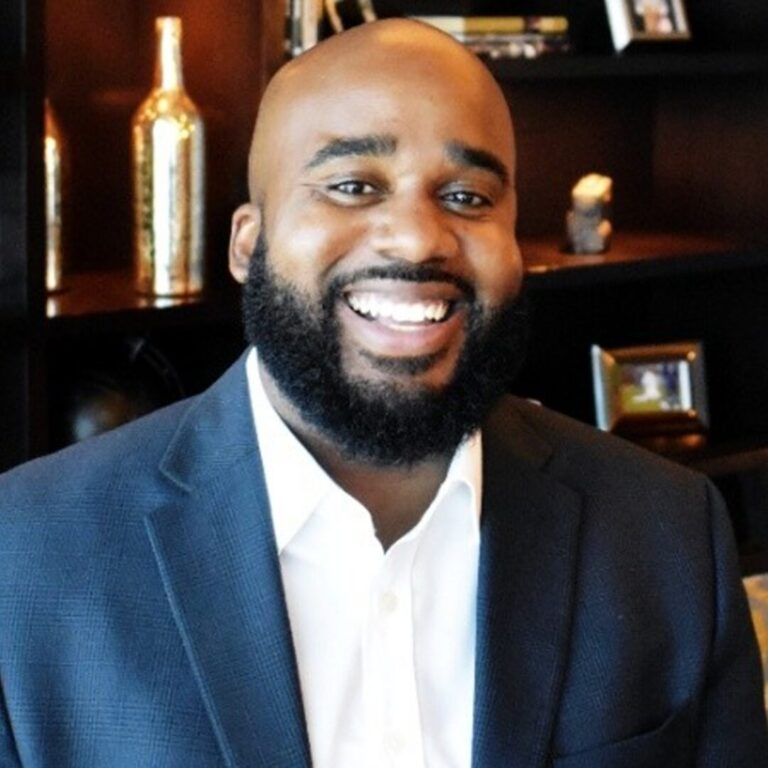
Welcome back to the show, my fellow extraordinary Americans. Today’s guest is Roger Realman. He’s the co-founder and CEO of LegalEase, a seasoned founder and Howard alumnus. He builds AI-driven tools to simplify legal access and help people clear their criminal records, unlocking second chances that are often needed to regain a financial footing under his leadership.
Fresh off a $1.3 million pre-seed round, Legalese aims to process 1 million expulsions by 2030, directly addressing the barriers to economic mobility faced by thousands of individuals. Roman first proved his mettle at Banneker Ventures, managing a $50 million public-private build that became Washington D.C.’s fastest constructed school.
He then pivoted to the studio, steering Platinum Records as CEO of Young Heavy Records and SVP at Patron World Music. As co-founder of AfriBlox, Roman wrangled 20,000 freelancers across seven African nations, sealed payout partnerships with Western Union, Visa Direct, and MoneyGram, and raised a seed round backed by Techstars and Google. He’s an extraordinary American, and I’m glad to have him on the show. Roman, thank you so much for being here.
Roger Roman:
Thanks so much for having me, man. I appreciate it. The bio is a bit humbling, I must say. When you reflect on the amount of work you’ve put in over the past few years, you move forward, rarely resting on your laurels or dwelling on the past. But it’s quite, quite a bio, if I do say so myself, Roger.
Cosmos:
Could you please tell me a little more about yourself and your story, as well as how you arrived at your current position?
Roger Roman:
Yeah, so I’m originally from Chicago, Illinois. I was born and raised on the west side: a great community and a great family. We dealt with our hardships. Of course, we weren’t wealthy by any means. But, but I was very rarely privy to that information. You know, I didn’t find out how poor we were until I was much older.
I would like to take a moment to acknowledge my parents and immediate family, as well as my aunts and uncles, and everyone who gave us opportunities as children, including my cousins and siblings. Beyond that, I attended high school and was always a very voracious reader. I thought I was going to be an attorney. That was the path laid out for me by my parents, and that was the path I was on as I matriculated to Howard University. And when I went to Howard, it truly changed my life, opening me up to the world and the possibilities that existed beyond the small bubble I had grown up in. I met a lot of people. I’m not sure if your community is familiar with Howard University, but it’s an HBCU. We like to think it’s the premier HBCU in the country in terms of the success and greatness it produces. However, there I met many like-minded individuals, including high achievers and confident, ambitious people. And it allowed me to embrace that part of myself, as well.
And I eventually met my co-founder, Lawrence Legalese. He’s an attorney and a state representative. We actually met. I met him when he was a freshman. I was a couple of years ahead of him. We met on the mock trial team. Right.
So we were competing on a mock trial team. Just kind of struck up a friendship, and it developed from there, you know, just two college buddies. The ambition is to be attorneys. That was our goal. Like, you know, he was going to go off and be this great attorney. We were both inspired by Johnny Cochran, and we thought we were going to be these trial attorneys. And eventually, down the line, we’re in a full-circle moment where we’re here, building a legal tech or justice tech company. It’s revolutionizing the legal space and providing people with opportunities.
Cosmos:
Well, so Roger, you know, a lot of people, when they come from like middle-class backgrounds or poor backgrounds, they don’t really end up becoming serial entrepreneurs. So, did you have a particular vision since you were a child, or did your vision evolve over the years?
Roger Roman:
It absolutely evolved over the years. As I mentioned earlier, I planned to become an attorney. I studied for the LSAT. I did pretty well when I took it. And at that point, I decided not to attend law school, much to my mother’s chagrin and the dismay of those around me, especially since I had performed so well on the LSAT. I had many opportunities to attend some excellent schools. However, during my undergraduate years, I completed several internships with various law firms. Right. I interned at two Power 10 law firms, which are among the largest firms in the country.
And I saw that experience firsthand. I had the opportunity to work closely with some of the younger associates and follow their processes, as well as those of some partners, to gain insight into their day-to-day lives in the practice. Additionally, I completed an internship with the Cook County Public Defender’s Office in Chicago, Illinois, my hometown state.
And I got to see that process as well. And through it all, I decided that maybe the law wasn’t for me. Right. It didn’t really spark my ambitions for what I wanted to do to change the world. Right. You know, I take my hat off to lawyers. They do a very important job, and it’s a very challenging one. Right. It wasn’t that for me.
And I spent a few years really trying to figure out what that meant. I had always been a self-starter. I had always been a person who wanted to build new projects or launch new things. I launched a nonprofit organization while I was in undergrad and essentially built it from the ground up, focusing on messaging, operations, and other aspects. That was something I liked, but I wasn’t entirely sure how to apply it. Tried out several things, you know, I built a music record label and kind of built that from the ground up, and I built a marketing agency.
So, just like all these things, they evolved from my position as a natural builder. I never set out to say I wanted to be a serial entrepreneur and start these things. It really just happened. It’s kind of just personal or personality, so to speak, right? Being a builder. And after a while, I looked up and said, Wow, I’ve started a lot of things. Right. You know what I mean? I’ve had some success, as well as some failure, of course. Failure comes with that. And I think the strongest muscle that you can have as an entrepreneur is to be resilient and be able to fight back. Right. When you do fail, if you can bounce back and improve, it is well worth it in the long run. Yeah.
Cosmos:
So being a serial entrepreneur is never easy, right? You need to have a specific motivational factor or reason for doing what you’re doing. So, for you, what was the driving force that kept you pushing on, despite the risk of failure and everything else?
Roger Roman:
I think it’s an unwavering belief in myself, right? Throughout my life, I’ve had successes and been able to take on new challenges, achieving success in them. And I think beyond everything, beyond the world, beyond people close to you and nose and the doors being slammed in your face, you’ve got to really have a self-belief, almost delusional self-belief that keeps you going and keeps you focused on your overall mission. I think that’s been the secret sauce, right?
It’s not, and I know it sounds cliché because you hear it everywhere. However, I think that’s what has really driven me and allowed me to move forward and achieve success beyond those initial doors closing. And even today, as a startup founder, I often say it’s a roller coaster, right? You’ll have the best morning of your life. You’ll get some great news, or you have an influx of customers, or this partnership that you’ve been working on has been sealed and then that same afternoon you might, the site might go down or you have someone who’s requesting a refund or you know, there’s a lot of things that could happen in the day of a startup founder.
So, just being resilient and understanding that you have a bigger mission, your ambition fuels you, and believing that you can accomplish the things you set out to do.
Cosmos:
So, as a continuation of this.
I’ve noticed a certain mindset that is prevalent among multimillionaires and successful entrepreneurs. And it is this resilience against setback. To gain a better understanding, when you experience a setback, how does your mind process it, and how do you keep pushing forward?
Roger Roman:
I’ll give a lot of credit to my mother for kind of laying the groundwork for that. So my father died when I was very young, I was about nine years old. And he was very influential in my life. I wanted to be like him. He was like the Superman of my life. And he was the leader of our household. When he died, it was a shock, right?
He died very young. And my mother, the way that she was able to push through, she would always just say, We’ll figure it out, right? Half of our income, more than half, actually, was the majority of our household’s income. And the person who led us was gone. And she would just keep saying, We’ll figure it out, we’ll figure it out. Everything’s going to work out. Do you want to attend this university? We don’t necessarily have the money to do that.
Well, you’ll figure it out, right? You’ll figure out how to find some scholarships, you’ll figure out where, take on a part-time job, and so on, and we’re going to do it. And that’s kind of been the driver at every setback I’ve experienced, and there’ve been many, right? I’ve talked to my mother about it, and she gives me the same advice she always gives.
And sometimes I’ll admit there have been times where I’m like, oh, you don’t have anything more than that. Right. You don’t have any advice or anything, but the fact that she believes in me and really means it when she says, ‘ You’ll figure it out, ‘ helps drive me. So that’s kind of been the thing. You know, I tell my children that, you know, have conversations with my wife, and I kind of have that same mindset of, you know, we’ll figure this out. Whatever problem comes our way, there’s a solution to it. We just need to take our time, weigh the options, and consider the pros and cons to find a solution to the problem. That’s really what has driven me so far.
Cosmos:
No.
So, Roger, this is very important. I want my audience to know that regardless of, like, social, economic background, or, like, race or culture, or like, whether you’re an immigrant or you’re somebody from a foreign country, whatever your background is, if you have the right mindset, you can achieve success in business or anything else in life.
And it’s important to hone in on that point, because a lot of people blame their environment, their circumstances, their family background, and everything else for why they don’t succeed in life, but that’s simply not true, you know?
Roger Roman:
Yeah. And I mean, and to push back on that a little, I do think a lot of that can have a lasting effect. I do think you can come from some of those environments, or you can be a victim of those environments as well. Luckily for me, I had a strong support system and positive people around me to push me throughout. I think that’s important as well.
Even if you might not be in the most advantageous environment, or you might be in a situation where it’s a very bleak socioeconomic culture around you, you have to find those people who can kind of build that support system for you and make it out. I won’t say that it’s black and white, though. I would say it’s a very precarious situation, with luck playing a significant role. I think being born into the family that I was born into gave me a little bit of luck. I think some of the opportunities I was presented with also gave me a bit of luck.
I will say. Not to make an excuse, but to say, you know, I could have been one of those people who fell by the wayside. I could have easily been one of those people who didn’t have that support and didn’t have those opportunities presented to me. I often think about some of my childhood Friends, one in particular, whom I won’t name, but we were always considered the smartest in our junior high class. Right.
And we kind of competed against each other to be the smartest guys in the class, and spelling bees, and all those things. We visited two different high schools, and he fell into a situation where he was more influenced by some of the negative elements of society and our neighborhood. And by the time I graduated high school and I was getting ready to go to college, he was already a two-time felon.
So really, I wish it were as cut and dry as pulling yourself up by your bootstraps. And that applies, right? There is some self-responsibility there. You do have to be motivated and push yourself. However, there are numerous pitfalls to be aware of. There are a lot of roadblocks. Luckily, to this day, I’ve been successful in navigating that. And that’s part of why we build legal leaves, right? You know, the mission to give people a second chance who have probably made some mistakes in the past, and they’re looking to move on and be socially mobile, or economically mobile, or just simply remove that blemish from their record. It really drives it.
So I agree with you partly. You know, I think we’re on the same page there, that there is the ability to pull yourself up and grind and have some ambition. But the environment does play a role in that. I wouldn’t say it’s the premier role, but it plays a small part.
Every action has a consequence. Right. Before making a decision, consider the potential consequences.
Cosmos:
So, Roger, I wanted to know this for the sake of the audience. So, let’s say somebody’s watching this and they’re coming from an environment that is basically scarcity-based, right? When people are negative and their thoughts are primarily poverty-based, but they want to adopt a mindset of thriving and abundance, and then strive for success, just as you have been successful. How would you advise this person to go about his life, and what action steps would you advise him to take?
Roger Roman:
I would say you’ve got to start with yourself, right? So there’s that personal responsibility again. You have to go out and seek these environments, people, and like-minded communities, and they exist. Right.
And I think the advantage we have today is that these communities have congealed online, allowing you to find places and people, and there’s a ton of information available if you just go out and look for it. Right.
So, I would say, of course, be smart and try your best not to be influenced by any negative things, people, ideas, or processes. However, I would also say that you have to consider the consequences of your actions. Right. Every action has a consequence. And before you make a decision, think about what can go wrong with this. Right.
And the bad outweighs the good, then it’s probably not a good decision. Right. And if there’s a slim chance that the good can win for you, it’s probably not a good decision. That’s essentially been my decision-making process: evaluating the consequences of every action. It’s kept me out of trouble in many cases as well.
Again, I recognize that seeking out mentors is important, and I understand that the term ‘mentor’ is often used loosely, referring to individuals who may not be the best fit. People you don’t know. Right. For instance, there are people whose careers you’ve been following, tracing their footsteps, and using that to inspire, motivate, and guide your own career. Right.
So seek those people out. Seek the people who are succeeding at something that you want to succeed in. And then try to find a community of people and just ingratiate yourself with those folks. Right. Leave the negativity behind and try your best to move away from it. And eventually, you’ll find yourself surrounded by a community that supports your goals and dreams.
Cosmos:
So, Roger, your entire time as a serial entrepreneur, right? What are some of the biggest lessons that you learned that you think the audience should know regarding entrepreneurship and just life in general?
Roger Roman:
Yes, so I think I hit on the most important aspect in terms of just believing in yourself. You can’t quit. So there’s a fine line. Right. As a serial entrepreneur, I suppose I have theoretically quit some things. Right. And started. You must know when to stop and when to keep going. Right.
And you can’t quit at this first sign of difficulty. Right. You can’t quit at the first sign of. Or the first no. Right. Or whether you’re investing, building, or trying to recruit team members. Right. You’re going to get nos, you’re going to get people who don’t necessarily believe they can’t quit then. But you also have to know when what you’re doing is not working and it’s time to go back to the drawing board. Right.
So there’s a fine line. I wish I had the magic bullet or the silver bullet to tell you, ‘Okay, this is the point where you should pivot.’ It’s really up to you, and having some discernment. And the more research you do, the more you understand that you’ve kind of hit this wall, and this idea is not going to go any further. To get to where you want to go, you may need to pivot, start something new, merge with someone else, refine your approach, or adjust your process.
But at the same time, having a delusional belief and being the crazy person in the room to believe that what you’ve built is going to work. You know, there’s a fine line of balance. There’s a difference between the conviction and the reality. And I think if you can master that, you can figure it out again. I’ve pivoted so many times in my life. I’ve failed so many times in my life. And in some instances, I think about the process and I’ll think back, and I say, well, you know, the writing was on the wall six months before we actually had to shut the lights off, right?
I saw this coming, but I didn’t pay attention to the signs, and I was a little too delusional; I let the situation drag on too long. But there are lessons in that, right? So now I’m more aware of that. Hey, we have about this many months of Runway. We’re only converting this many users. You know, at scale, we’ll need this much more money, actually, to do it.
And, that doesn’t look likely, right? So being aware of that and being able to read the tea leaves while at the same time having ultimate confidence, I think, is really the secret power. There is no right answer. I think it’s trial and error and being willing to fail, being willing to mess up, being willing to say, Hey, I’m going to stick with this until it doesn’t work, and then I’ll figure something else out from that point.
Cosmos:
You know, Roger, conventional wisdom holds that you have to keep striking and drilling deep into the ground until you hit the oil. You know, like, you keep going.
So, like, what you’re saying is very interesting. You have to know the fine line between when to pivot and when not to, and keep going until you succeed. And that’s kind of like, it’s almost like an intentional thing. But do you think it can be taught systematically to people?
Roger Roman:
I think Systematic? I don’t know, man. I think life. I think life and just going out and doing it, I think that’s the best way to learn it. It’s hard to teach that in a class because a lot of it is subjective, right? And there is no cut-and-dry process or method behind it. It’s a little, it takes a little bit of. What’s the word? Foresight, I guess. It takes a little foresight and self-understanding in whatever market you’re in. Whatever market you’re in.
So, yeah, I’m not sure if we can package that up and teach it. I believe the best teacher is one who is experienced, and the best teacher is also one who has failed. And you learn from those mistakes and you take them into your next venture. I do think hammering away at a bad idea, though, can be detrimental. Right. And once you have enough evidence that it’s a bad idea, it’s time to take that and process that and do something with that going forward.
Cosmos:
However, I’ve noticed, Roger, that many people, even though the idea is flawed, are emotionally attached to their own or business ideas and are not willing to pivot because their egos are invested in them, you know?
Roger Roman:
Yeah. Yeah, absolutely. And I’ve been there before, right? You know, like a marketing agency. Push consulting and marketing. It was my baby. I built it from the ground up, and it kept the lights on, allowing me to take care of my family and myself.
And the problem for me was that I was working almost constantly. I mean, I work a lot now, so I can’t say it’s too different, but there was a lot on me. You know, I was the salesperson and the customer service person. I was the person who worked directly with our clients and customers on the campaigns. And I kind of had stretched myself too thin, and I knew it wouldn’t be sustainable even if we brought in more money, right? If we brought in more clients. I hadn’t built a system that was scalable, right? It heavily relied on my involvement in all these different verticals. And I kind of understood that for me to achieve the success that I’m looking to achieve, I’m gonna burn out way before I get there, at this current rate.
So I started to think about what I could do differently at that point. I had worked with numerous startups and their founders, and I had learned a great deal. However, I knew I wanted to re-enter the technology startup space and figure out how I could solve a problem. And that’s what eventually led me to build Afriblox. It was similar in the sense that we were still. I was working with talent, right? Talent. I would hire for these different projects with customers at the agency.
But, I can do it at scale, right? We built a platform similar to Fiverr or Upwork for Africa, connecting a large amount of talent with gigs worldwide. And, as opposed to managing these projects for different companies and startups, I was now connecting them with talent on a larger scale. Was it a similar passion, then? It was a similar role.
However, I figured out how to do it at scale. And that was hard. I’m not saying that to say that it was easy. In fact, push consulting and marketing continued to thrive while I was building Afroblocks, and it probably lasted longer than I had anticipated. It was hard to close the doors on that and move on to the next phase. But you’ve got to take kind of what, take the good part of that, whatever drove you in that previous venture, and apply it to your next venture, and you’ll keep that same passion in most cases. It’s hard, but it’s something that you have to deal with as a founder.
Cosmos:
So, Roger, in your life, was there like a challenge that was like, pretty huge, and if so, like, what is the story behind it, and how did you go about overcoming it?
Roger Roman:
Yeah, I think the biggest challenge, again, I’m saying this, I’m saying this, is being very realistic about the world we live in. But I think the biggest challenge, to be clear, is being a black founder, right? As a black tech founder, we raise the least amount of money among all founders. There’s starting to be more support and capacity building around Black founders and supporting them. But when I started, there was nothing for the most part, right?
A few people were working, but there wasn’t much guidance. I didn’t know how to set up a fundraising process. I was unaware of the tech accelerators that exist. When I first started, I had to go out and learn these things by trial and error. And I laugh a lot with my co-founder, Lawrence, because we started a startup years ago when I first got into the tech space. And we were so clueless and in over our heads, right?
We would simply do the things we thought were customary in the business, but they weren’t. It was like some of the things that they tell you not to do, right? As we would, we were hustling so we could convince very important people and VC funds to meet with us. We didn’t have an MVP, right? We didn’t have an eminently valuable product; we didn’t have anything built. I don’t think we even had a technical co-founder on the team. However, we were able to secure meetings with some of the largest VC firms, investors, and companies. For context, it was a video game startup. We were able to meet with Electronic Arts and Andreessen Horowitz. Like we had all these meetings and we didn’t even have a product built in the time. But it was trial and error. Right. As we learned from those meetings and from repeatedly talking to people, it’s clear that this is the process and this is how you approach these things. We respect your ambition, and that’s great. However, you have to follow these steps.
So I think that’s been the biggest challenge. Just jumping into the tech space without proper education on it and just being a black founder, that’s all the biases that come with that. According to the data, black founders have an easier time raising pre-seed funds these days. Right. And raising a seed round, they tend to drop off once we get to the Series A round. Right.
There are several reasons for this bias among investors. However, even with us as founders, most people in that position are ambitious and accustomed to doing without. Often, you’ll see that black founders are raising funds, but they’re raising significantly less than what they should be raising in that seed round. And that handicaps them down the line because they run out of money a lot faster; their Runway is not there, and they’re never able to hit those milestones or metrics to reach the Series A. Right. Understanding the challenges and how to mitigate them has been crucial. Beyond that, I think the biggest roadblock for a black tech founder, beyond the trials and tribulations, has been access to funds. You know what I mean? Fundraising is a crucial part of it. And when you step into this space, you spend a lot of time fundraising, which takes you away from the actual building of the company or customer discovery.
So just kind of navigating that process and refining it as you go along. I believe that with my most recent startup, Legalese, I have developed a robust process that enables us to be both aggressive fundraisers and invest a significant amount of energy into the company. What we’re building is not necessarily something we rely on; for instance, we’ve been building, launching, and rolling out new features even before closing our pre-seed round, right?
As we knew how much money we needed. How much money did we need to get to each milestone? And once we had some funding, we started working towards that, as opposed to waiting and saying, ‘Hey, okay, we need $ 0.3 million to get this off the ground and launch in these states.’ Let’s focus on that for three to six months, maybe even a year.
Before we actually start building, we decided that it would be more beneficial for us to build and then go out and raise funds while simultaneously building.
Cosmos:
So, Roger, I know, you’re into AI, right? The combination of technology and AI. So, for the sake of the audience, how do you think AI is going to revolutionize this business and entrepreneurship in the coming years?
Roger Roman:
It’s quite alarming because, on the one hand, I’m a strong advocate of AI. I’ve mentioned this analogy before, but I think of it as the calculator of our day. You know, I don’t know how old you are, Cosmos, but, you know, when I was in school, okay, so I’m a few years older than you, but I’m sure you understand, you know, when I was in school, it was sacrilegious to use a calculator. Right.
Like teachers, you know, we had the TI-83s and fancy calculators later on, and here we are today. I think every person in this country has a calculator in their pocket, thanks to their cell phone. For any fraction or equation they need to figure out, they can simply reach into their pocket and do it. I view AI as a similar tool. I think there’s a proliferation of it now in many spaces that are not necessarily useful.
However, I do think the technology and the underlying technology will be very instrumental in making a better. I would say that it can be instrumental in creating a better society, leveling the playing field, and providing more opportunities for people across the board. The opposite of that, or the flip side of that, is that it can be used to harm as well. Right?
It’s not necessarily all great, right? There are ways in which it can hurt society. I think the reliance on it for students in particular can detract from some of the abilities we have in literacy. Right. Or simply being able to write a coherent sentence.
Therefore, moderation becomes crucial in this context, and the use case becomes particularly important. And because we’re still in the early days, we’re seeing a lot of mixed use, as well as a significant amount of deepfakes and similar content.
And parents and teachers are trying to figure out how to regulate it for use with students. We’re seeing it used to exacerbate some of the biases in our society. However, I do think there is a proper use for the technology, and I believe that if harnessed in the right way, it can be very effective in making things better for us, easier for us, more equitable, and ultimately building a better society across the board.
So I’m a big fan of AI. I know that at some point, there’s a possibility that we can all fall and become victims of our AI overlords. And this will probably be used to say, Hey, this guy voted for that. I have faith in humanity, I have faith in us as a people.
Cosmos:
Will we face a Skynet-type situation?
Roger Roman:
If we do, I’ll accept full responsibility for being one of the people who push that agenda.
Cosmos:
Speaking of AI, I know you founded Legalese. Could you tell me and the audience a little more about that, including the premise of how you got started and what it’s about?
Roger Roman:
Absolutely. As I mentioned earlier, my co-founder, Lawrence, is a terrific trial attorney. He’s won a lot of big cases. Civil rights attorney as well. We went to school together. We started our first startup years ago. I want to say this was around 2014. Had a video game startup. It failed miserably. Moved out to California. Two other guys and I moved out there. And after the startup failed, we ran out of money. Lawrence went back to law school.
So, he went to GW to complete his law school degree. And I stayed in California, working whatever job I could get in the tech space. I worked for many different startups. I did everything from social media management to taking out the trash, right?
Whatever I could do just to get into the space to learn. I figured that would be my career path, and it worked out pretty well for me over the years. But I would always get these text messages or phone calls from Lawrence, and he’d be like, ‘ Hey, I got this idea, or maybe we should try this. ‘ The startup bug had bitten him, and even though he was having a successful career as an attorney, he always thought about how to build scalable solutions and solve problems.
And though I received a lot of text and many ideas, some were better than others, the one that he kept coming back to was building an engine for expungement. He said he would get a few clients a day. At that time, he was practicing in Mississippi. He said we get a few clients every week who have seen that an expungement is available. And he would often volunteer at these expungement clinics as well.
And he said it was a very annual, paper-heavy process, but it was essentially a copy-and-paste job. Right. The laws are written very plainly. It’s black and white. If you qualify, a lawyer can inform you that they will fill out a form, which you then submit to a county clerk or a judge. The judge then files the order, effectively granting the expungement. It’s a straightforward process. The legislator statutorily prescribes the laws, so it’s black and white. He said there has to be a way we can streamline this.
And so eventually we started working on it. You know, he convinced me to help him out a bit. And I was just helping out a friend, right? I had built an MVP, a minimally viable product, and we put it on his website. He used it with some of the organizations he was working with on his pro bono expungement clinic. And a few weeks after that, I thought it was great. I helped my friend out and built something. It was cool. He called me back and said, This, this, we’ve got something here. It’s been a major success. It cuts down onboarding time at the expulsion clinics. 30 minutes or so. Right. And it works until the point where we have a backlog of people trying to use the product in just Mississippi. The issue was that we hadn’t figured out the back-end process.
So we solved the onboarding process. We made it very easy to obtain the information to determine your eligibility. However, in the background, Lawrence was still processing these expungements. He was on a hamster wheel doing the Q&A and everything.
So at that point, we decided to take our MVP down. We took it off his website. Our partners were using it. We told them, Hey, we’re going to refine this model and go from there. At that point, we were fortunate to be accepted into Techstars. So Techstars is a tech accelerator. It’s probably the gold standard of tech accelerators. It’s one of the largest, if not the largest, alongside Y Combinator and a few others that have emerged over the years and been accepted into the Techstars Social Mobility Economic Development accelerator, which was a great achievement. We spent three months in New York. We had a chance to refine our process and business model, essentially doing what an accelerator does, right?
It helped us kind of accelerate what we were building. And at the same time, our development team brought on our CTO, Rashid Ali, who’s a genius, and we started building out our 2.0. What we launched in July of this year, just two months ago, was our 2.0, which is a significantly improved version of our MVP. It’s.
So we’ve built an AI agent. We’ve named her Wilma. She’s your guide, right? She’ll tell you if you have a conversation with her, and she’ll let you know if you are eligible for an expungement. And once she does that, you can decide which package you want to purchase. You enter your information, and we generate the petition forms for you. You can then submit them directly to the clerk. Different counties have different processes. Some accept the E-file, allowing you to submit them directly through our platform.
You can pay all your state fees right through the platform. Additionally, some require a more manual process, where you must physically bring the copies of the petition. But we’ve solved that problem and we’re actually building it out at scale. We launched in Mississippi two months ago. As I mentioned, we’ve had 3,000 users join since then, and we’re looking to expand to five states within the next two months.
So things have been going really well. What we found is that there isn’t a lot of information nationally on expungements and what record clearance is. We’ve had to educate some people in the process of building this company. You know, it’s not a loophole, it’s not a workaround, and it’s not someone not taking responsibility. This is for people who have taken responsibility for their past mistakes. They’ve paid their fines, served their time, and fulfilled all the court’s requirements, and the correct amount of time has passed.
And they have the right to remove this thing from their record, this blemish that stands on their record. And not is it a boon for person the individual, it helps them out whether it’s being able to get a job promotion or qualify for a home loan or, you know, I had one guy who we just helped recently, who he couldn’t pass a background check to, coach his son’s team, his son’s football team, because, of a mistake that he had 20 years ago that he had completely moved on from. However, here, he’s simply trying to be a good dad and contribute to the community.
And he couldn’t do that because this expungable offense hindered him. It’s a really important tool that we, as citizens, can use—especially considering that there are 70 to 100 million people who actually have a criminal record. And when we say criminal record, it’s not just a person who has been convicted and gone to prison—any interaction with the law.
Right?
So, even if you’re arrested and it’s dismissed, or in my co-founder’s case, you have a misdemeanor arrest and are 19 years old, it’s thrown out, right? It’s thrown out, it’s dismissed. So, it’s something that we saw. There was no one addressing this on a national scale. There are a few people who are addressing it regionally and state by state.
We identified a significant gap in the market, not only to establish a reputable company and a scalable business, but also to impact a large number of people in the process positively. This led us to our goal of processing 1 million expungements by 2030. And we’re well on our way to achieving that.
Cosmos:
This is amazing, Roger. And Roger, how can our audience connect with you and learn more about you? If they wanted to reach out and ask questions, how would they be able to do so?
Roger Roman:
Yes, so they can visit our website, legalese.com. It’s right here on my sweatshirt. They can send us an email at info@EgaleseLaw or support@EgaleseLaw. Our contact information is available on the website, so feel free to reach out to us there. You can also find us on social media, where we’re active on all the major platforms, or search for Wilma. These are our mascots, if you will.
And she’s out there as well. I’m also on social media. I usually use my full name, Roger Roman. You can find me on LinkedIn or Twitter. I’m there, happy to answer any questions. However, if you’re looking for an immediate answer, I’m afraid I have a lot going on. I would recommend visiting our website, navigating to the contact page, and sending us an email. We’ll respond to you promptly.
Cosmos:
That is amazing, Roger. And Roger, I’m so glad that you took the time to join this podcast and share your advice on entrepreneurship and everything else, because this is so relevant for people who want to take their business to the next level. I hope you take the time to return to this show at a later date.
Roger Roman: I appreciate you, Cosmos. Thank you for having me.
Cosmos:
No, I appreciate you as well. And I want to end this podcast, but I want to let my fellow extraordinary Americans know that. Hey, look, there’s an extraordinary within every one of us. It’s our duty to awaken it and unleash it. Until next time, Bye for now.
Roger Roman:
Peace.

 Amazon Music
 Apple Podcasts
 Audible
 CastBox
 Castro
 Google Podcasts
 iHeartRadio
 Listen Notes
 Overcast
 Player.fm
 PocketCasts
 Spotify
 Stitcher
 TuneIn