Cosmos
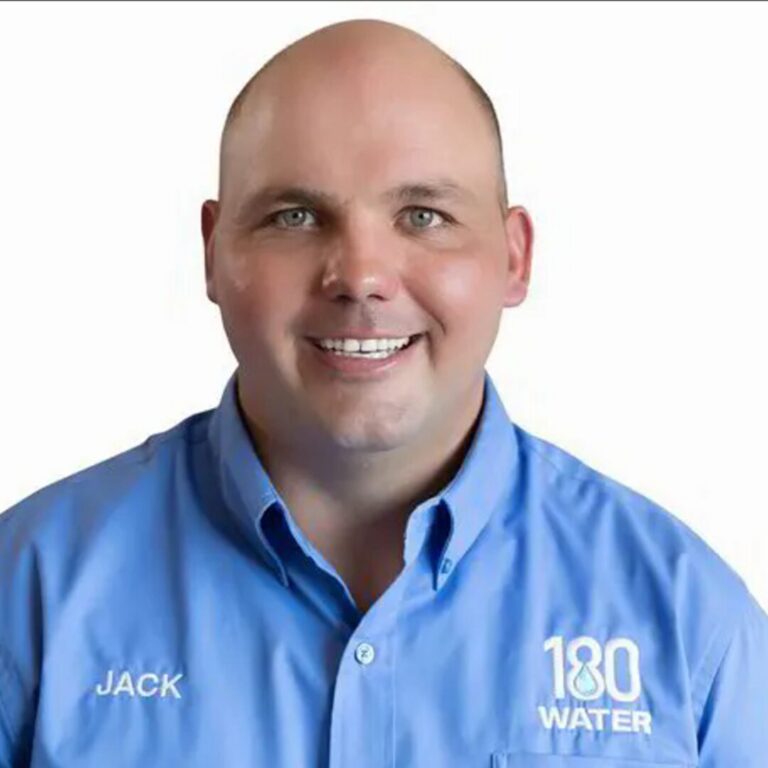
Welcome back to the show, my fellow extraordinary Americans. For today’s guest, we have Jack Clark. Jack is an entrepreneur and the founder of 180 Water. He grew up in a small, 11800-person town of Chateau Montana.
His family owned a small ranch and several small businesses throughout his childhood. After college, and a lot of pushback from the industry, Jack started his own water well drilling company, Western Water Wells, with a single drill rig that barely ran.
After working long hours and countless days, he slowly improved the equipment. It took a lot of hiring and some firing, but he finally started acquiring employees with a similar mindset. And that is to move the industry forward. The water well industry has been stagnant and afraid of change for decades. And so realizing after realizing that the learning curve for drilling was too steep to go nationwide, he decided to franchise water well pump servicing.
And so 180 Water was born. Jack hopes to grow the company to a thousand franchise locations nationwide.
He’s an extraordinary American, and I’m glad to have him on the show. Jack, are you there?
Jack
Yes, I am.
Good morning.
Cosmos
Thank you so much for taking the time to do this, Jack.
Jack, I know you’re like an entrepreneur, and you’re also the founder of 180Water. Can you tell the audience more about yourself, your background, your story, and how you got started?
Jack
Yeah. So, like you said, I mean.
I grew up in a small town.
And you know, I was raised on a cattle ranch. And then, you know, we subsidized that with different businesses. And so it really kind of gave me a broad outlook in terms of different businesses that we did. Because, you know, with the cattle market, it kind of depended on the year and what projects we took on.
And so it kind of gave me a wide variety from, you know, selling meat on Main Street Bozeman, to, you know, cutting concrete, to doing excavation and pipeline, and kind of, you know, allowed me to kind of jumble together the skills, become a water well driller. And you know, as we did all these different things, my neighbor across the street was a, was a water well driller. And that’s how I got started: watching him run his business and seeing that he got to take weekends and had a nice work-life balance and all those things that you hope to build into your future life. He, he was a good example of that.
I took it from there and knew I was interested in the water well industry. And then I found apprentices and got my license, and then you know, took off from there. That was oh, 10 years ago now. I bought my first rig when I was 19, and you know, sold my ranch horse and put a down payment on a drill rig, and you know, it was a $50,000 rig, which was a lot of money. But the same banker I have today took a chance on me, and now we’re, you know, we opened five locations last year and hope to do about 20 to 30 this year.
And so we’re trying to grow.
Responsibly, and just make sure that we take our time, have success, and be patient, which I’m not always good at. But it seems like these guys are doing well and having a lot of success, and breaking into the franchise market is slightly different from what I was used to. It’s much more calculated of a business than I had before. I mean, we had to put a lot more systems in place and operate our business efficiently, which has been, you know, a fun challenge. But it’s fun to watch it evolve, become what it is today, and hope for the future to be bright.
Cosmos
So, for the audience’s sake, Jack, can you tell the audience a little bit more about what the water well industry is about and how the entire thing works?
Jack
Yeah, so we service water wells. So, you know a drill rig.
Comes out and punches a hole for.
A new home, and then that pump expires in about 10 years. So it goes out, a problem happens, and then they call 180 water. We come out, diagnose the problem, and fix it. So, before we fix that problem, they typically don’t have water.
And so these are emergency out-of-water calls. You know, they’re bigger ticket items. I mean, a lot of our projects run about $5,000. And so it’s a good service-based business. And we like that about it, you know, in terms of being able to help people and make a difference.
And so 180 does many different things to make that system last as long as possible. And so we try to build in a lot of structure and a lot of, you know, warranties and a bunch of other structures in terms of making it last as long as possible.
And so we found a few niches in the market, such as when you’re a one-person band or even if you have 10 employees, certain things go wrong in a water well system that you just don’t worry about. Like a $20 part goes out, you lose five or six a year. It’s not that big a deal. But as you start to scale it up, you realize that man, that will be 500 of those.
And so you start to kind of do a deep dive or nerd out on those little issues that, you know, we can address to make our systems better than everybody else’s because we have the scale. And so, it’s been interesting to start building everything into our program and package it up to add a lot of value for our customers and franchisees.
Cosmos
From your perspective, what do you think was your why or your motivational factor that got you to like not only do this business but like continue to do so even when, like you had like, like in your, in the buyer itself, there was like some hiring and firing and like there’s some. Yeah, there are difficulties in every business.
What motivational factor keeps you going to make your business successful and scale it?
Jack
Well, I mean, so I went down the road. I had two paths and thought I would build a giant company, right? And so I bought another company. I had, you know, 35 employees and lots of trucks on the road, and we were hustling.
I mean, we were doing a lot.
In sales, and you know, we’re going down that road, and it just, it never was for me, you know, and we bought that other company because the doors were going to shut. 50% of the water well industry is at retirement age.
We picked it up to ensure those clients stayed serviced. But it wasn’t the right fit for me in terms of being the best husband, dad, and boss I can be. And it just never jived. You know, I was sending my best guys the worst projects.
Sending my worst guys to the best.
Projects and nobody was getting the best version of us, right? And so that’s where the franchise model came from. It’s like, man, when I was just a, you know, four or five-person crew. My customers had great service. Our communication was sharp, and it was fun.
Right?
What happens if we ball that up, put it into a model, and then let other people run these, you know, five- or six-employee companies? That is super fun. The customer gets great service. They get to, you know, deal with a small company. Who doesn’t like to deal with a small company that provides great service?
Great value. And so we just put that into a package and then spread it across all the locations we were servicing because I want to run a small company, be home, and catch the t-ball game. And so that’s what I did. And we just put together, like, we have 15 employees now. And that’s a nice size. You know, I mean, I know every one of them by name. I know how to work with each one of them. I’ve worked beside each of my employees, which makes it nice.
Sorry about that. Representation of myself, you know, is with those employees, and it allows them to go out, and you know, this is 180 water. And this is what we’re about, and be, you know, really great parts of their community and their families.
Cosmos
When we hear about the franchise model, we hear about McDonald’s, Wendy’s, and fast food restaurants, but the franchise model and the water well industry are relatively unknown.
For the audience’s sake, can you explain how the franchise model works in the water well industry? Like, from your perspective? I like how the entire thing works.
Jack
Yeah, and it’s the same structure as your bigger companies like McDonald’s or whoever else you want to, Chick-fil-A, all those other restaurant food items. Right. But you’re running a lot higher profit margin with a service-based business. For example, your McDonald’s is running at a 6% net margin, and we run at a 21% net margin.
The service based companies get a lot more traction in the franchise space because it allows us to build in all of the structure of a large company in terms of like, hey, we buy as a group so you know, there’s only really three or four suppliers across the United States that we buy parts from. And so it’s easy to go in with, you know, a bigger company backing and negotiate all our prices and get a better deal.
We’re seeing many guys pay for their royalties completely out of price reductions. We’re buying many parts compared to companies that allow us to do that. And then, you know, if you want to go on vacation, we have a franchise location next to you, and they can come in and service you.
So it’s a service to your location. So it allows us to have a lot of that structure built into it where you get the benefits of being a large company and all that support and all the backing, but at the end of the day, you’re still your boss and you’re still running your crew and you’re still managing your own time.
All of those things are just kind of built in. It’s a weird thing because everybody wins with the franchise model when done properly, which, you know, we feel like we do. And that’s kind of the issue with 180. It is like we need something bad to say about it, right? Because it sounds too good to be true.
What we always go about comparing ourselves to McDonald’s or whatever is that we’re skilled labor, which is a downfall. And so like, if you want to open a McDonald’s, you know, it’s easy to find a guy to flip a burger. It’s hard to find a guy to run down the road in a 20,000-pound service truck and service water wells.
We built a lot of that training into it and built everything into a flowchart. And so we’ve taken as much skilled labor as possible out of it. So, if you lose an employee, we should be able to have you back up and running with a new guy in two weeks.
Cosmos
So yeah, one of the things that I realized, Jack, is that the franchise model is good for scaling. However, many don’t restructure their businesses to include a franchise model. But you did. When did you realize that a franchise model would benefit your company? And like, what, what is, what is, what is that catalyst, period? Like.
Jack
I’ve always kind of had it in the back of my mind because the water well industry is on a downturn in terms of, you know, all the guys retiring and the workforce and everything, all the normal problems you hear with a new company. But the big thing is here: they don’t have water if we can’t make it to a call.
And so, that is personal to me in terms of, like, that is a responsibility. If I’m going to service water wells, I must ensure my clients have water. And so, we got to the point where we had too many clients, and couldn’t keep everybody’s water running. Like, I mean, if you call me in the morning, I’m hoping to have you watered by that afternoon. That’s the purpose, right? That’s why you have a relationship with a water well guy. And then we got to the point where we were so busy that we couldn’t service all our clients.
And then the wait times get longer, and you’ll see it in many water well companies that, you know, you might call them, and it might be two weeks before they get your water turned back on. And to us, that’s just something that we find unacceptable.
And so we want to make sure that our clients get fast service. And so that’s where we kind of broke out in the franchise model is because, you know, it was either have 100 employees and try to run that show, which you know, wasn’t very much fun to do, or break it out into all these little areas that can service each other. That’s where we came up with the franchise model.
Cosmos
So, Jack, one of the questions I wanted to ask you is because I know it’s something that business owners struggle with, and it is human resource management.
Jack
Right?
Cosmos
How do you deal with employees? How do you deal with people like that who are in the franchise model? So from your perspective, what are the lessons you learned regarding how to deal with people in a business and how to retain, like get the most productivity out, and all that stuff?
Jack
In our current business, we run a lot of side-to-side accountability, which we call it. We run many bonus systems and many things that break it up, so your top guys are paid more. Like, I always showed up at 5:30 in the morning, an hour before everybody else, and got trucks ready. That’s just my personality, and I hated it because I got paid or compensated the same way as everybody else. Right. And like, my truck’s clean, it’s ready to go, it’s organized, and like, I can work way more efficiently.
When we got into the business side of things, it was like, how do we make sure that guy is rewarded for that effort? Right. And so that’s where we went into bonuses on gross sales. I run a 2% bonus on gross sales for all my guys operating their trucks. And then that allows them to be paid for that extra, you know, organization and making sure they had all their parts and everything was done right. Take the extra five minutes and check the job to make sure there’s no leaks and everything’s operating perfectly.
Then they go to the next one and don’t have to come back because if they come back there, they lose out on that bonus. And so, so a lot of it’s that side to side accountability and then it just starts to build from there, you know, and then you know, they want to make sure that all their other techs are doing good work too because they’ve seen those results of you know, making sure their trucks are clean and organized.
And so that’s a big thing for us, you know, having the right guys on the bus, of course, but having that, you know, this is your guy’s responsibility, and if something goes wrong, you’re going to go back and fix it, and you get paid less for doing that.
Cosmos
So no, I mean that’s amazing. As it is, having an incentive structure is important to ensure productivity. But I don’t know, like a lot of businesses like they don’t, they don’t get that, you know, So we have to make sure that we are, we’re having like that fine line where we make sure that the employees are accountable but we also give them, it’s like a reward and like a reward and accountability system essentially.
Jack
And it gives them good measurables, you know, you need to know that you’re doing a good job and being successful.
And that’s the other side of that.
It is making sure that you guys have good measurables.
Jack says a big part of his success has been through mentorship
Cosmos
So, Jack, while you’re like, while you’re doing 180 water and like you’re on your entrepreneurship path, what was the greatest like revelation you learned regarding this like business and life in general?
Jack
You know, I mean I’m a big mentor guy, you know, I mean that’s what happens when you show up on job sites at 6:00 am and don’t leave till 6:00 pm. You, you know, you get noticed by people who want to take you under their wing. And so, you know, a big part of my success is accounted to great mentors, you know, and, and so it kind of seems like you kind of cruise through life and then you hit a, hit a wall and then, you know, that mentor comes along and then he takes you over that and into the next hurdle.
And so that’s been a big part of what I’ve accomplished through mentorship, you know, and staying humble. And, you know, I believe you can learn something from everybody and just staying curious and humble to be able to learn those lessons that, you know, might come from places that you didn’t see coming.
Cosmos
No, Jack, you’re right about the mentorship part because many of my guests have had a common theme while I’ve been doing Strong America, a podcast for two years. I was in mentorship and like the right community where they had like-minded people. But mentorship played an important role in getting them to have what is called time compression, where they, what would take them several years, they just learned in six months to a year instead.
Jack
Right. Yeah. So cool. It’s amazing. And that’s what’s great about the 180 platform: it allows us to do that for others.
Cosmos
Yeah.
And Jack, like, what, like during your, entrepreneurial journey regarding the water level industry, like, what do you think are, like, some of, like, the challenges that people have in this industry, like, like to get into this industry and like, how would they go about, overcoming that?
Jack
Yeah, the barriers to entry in the water well industry are high, allowing us to make a good profit. But, I mean, just making sure those mistakes are not made. I mean, you know, we know what tool needs to be on every truck, what parts need to be on every truck, what kind of inventory you need to cover, and, you know, how many jobs you’re going to do, how to answer the phone, how to bill an invoice, how to have all of your, you know, all of your financing, options all in place. Like, all of that stuff’s packaged up to lower that barrier to entry.
When you buy that expensive equipment, we know that you will get a return on it, and we know how to ensure that you’re running as efficiently as possible and that your marketing strategy and all those things are built in. And so, it all comes back to being a good mentor on our side to ensure these guys are successful. But it’s nice to see it snowball and build into something.
Cosmos
No, I mean, yeah, like, you mentioned a lot of things that you make it sound easy, but, like, yeah, like, for somebody, like, wanting to start the, like the business and everything, like, to know all of these things can be, like, pretty stressful altogether, like, to, like, how to handle a bill and all of that stuff.
Jack
Oh, absolutely. And, you know, how to be safe driving a truck down the road, working with electrical, you know, I mean, how do you make sure that, you know, you get to go home at night to your family?
Cosmos
Jack, from your perspective, what do you think is the biggest difference between the blue and white-collar worlds regarding how the businesses operate in those two worlds?
Jack, I don’t know. You know, I mean, I’m kind of a. I mean, I’m transitioning. I’m just a blue-collar guy. Like, let’s be real about it. I like to roll up my sleeves. You can’t lock me in this office all day. I mean, I. I’m usually out of here on a project by noon. And it’s just who I am.
I’m not super experienced in the white collar world. I’m much more of a blue-collar guy, and so, I mean, with being a blue-collar guy who sits in an office and does a lot of paperwork. And builds out a franchise, I mean, I think, I hope that the difference would be that, you know, the boots on the ground make a difference and that leadership that we show by showing up every day and working hard and, you know, being the first guy on the job site continues across across the office and into our white collar work.
For me, you know, I like to lead by example.
It’s a little bit different transitioning from blue collar to white collar because, you know, it’s easy when it’s blue collar to, you know, make sure that you run the shovel a little harder than everybody else. But as you move into the office, those things change slightly. So, you know, with that, in closing, I mean, it’s. It’s about making sure that your measurables are clear, your vision is clear regarding the white collar work, and that people know that you’re, you know, putting in the time and the.
Jack
Efforts to move them forward.
Cosmos
I mean, Jack, I’ve had A few blue-collar friends. And like they, they’ve told me that one of the things about blue collar people is that they tend to be more honest, but like, and blunt, but once.
So once you develop a friendship, like they tend to be more true friends than, let’s say, in the white collar world, like where they’re polite and nice, but like it’s just like a veneer, you know, like it’s an outside kind of thing. So that’s something that they would say. But I don’t know how much of that is true.
Jack
Well, I think a lot of that’s true. You know, I mean.
If the wrong guy shows up for the job, I have to do the job. So, of course, I will try to explain to him what the job is, how he needs to prepare, what he needs to pack for his lunch, and how much water he needs to carry to ensure he’s successful in that job. Otherwise, I know I have to go out there and do his job, which will affect my work.
It’s back to that side-to-side accountability. We have to be honest because it’s not like, oh, well, that didn’t get filed on time. It’s like, those cows don’t have water, and now it’s 6 pm, and I’ve got to go out there and get it going. And so you must be accountable in the blue-collar world because you have to deliver to your customer.
Cosmos
Jack, if let’s say somebody wants to, like they’re starting from scratch, and they want to enter the war well industry, and they want to start a business in it, and don’t know how to do that. How would you advise this person on how to go about this world?
Jack
I think we’re a great resource, and I hope we are. You know, and it’s just 180water franchising.com we have an online thing there that you can fill out in a form, and you know, we’ll contact you within 24 hours of filling out that form and you know, and at least we can have a good brainstorming lesson even if 180 is not the right fit for you.
We aim to get more people involved in the water industry to ensure that everybody has clean access to water. And so even if 180 isn’t the right box, that’s fine. We just want to hopefully, you know, make more successful business owners.
Cosmos
Jack, on a different note, I want to ask you how? So, I know you go about doing the work, and I think you’re very passionate about this. So, from your perspective, like, you know, American identity is about the pursuit of happiness and attaining, ah, the American dream. So, what is your version of the American dream, and how would you pursue happiness?
Jack
Yeah, and I think happiness is. I mean, it sounds very good, but I don’t know. For me, it’s all about the journey. Like when I find myself the least happy is when I’ve already hit the goal. You know what I mean? It’s that lull after, like, we nailed it. You know, we 180hit a thousand franchises. That’s going to be a sad day for me because it’s that journey’s over, and then I know there’s another journey.
But it’s all about moving up in the world. You’ll see that with your employees, too. They’re happy if they work towards a goal and advance in the company. And I think that a big part of happiness is ensuring you’re always moving up that scale and forward. And even if you get knocked down a peg, you continue to work up that peg.
I think that’s a big part of it, is this always being on the right journey and the right path to where you want to end up. And you know, when you end up, that’s usually when you’re the least happy, because it’s all about the journey. But it’s hard to see those chapters close when you know you’ve hit the top of the rungs. And you know, and I think that that’s been part of my life too, is just dreaming bigger and bigger and bigger to make sure that I don’t top out on that happiness scale.
Cosmos
You have a point regarding the journey and everything. For example, there’s a lot of anticipation when you’re going through the process and achieving. It’s ironic, like how some people reach their goal, and now what, what’s next? You Know.
Jack
Yeah, well, they’re after that journey, they’re after moving up, you know. So dream big enough that it takes a long time, and you get to settle in and enjoy that journey. How long is it going to take us to build this thing out? 20 years. Well, that’s a lot of happiness on this journey. So, dream big, hope for the best, and enjoy the path.
Cosmos
Jack, just so that the audience can know how to have a vision, goal setting. So, how do you go about setting your goals and vision? Do you have a one-year plan, a five-year plan, a ten-year plan, and so on? And do you break them down into months, or like a certain thing in certain metrics you must achieve? And how, how would you go about, how do you go about doing that?
Jack
Yeah, so I mean we, we set a one year goal and then you know, we come up with a to do list and then ah, we knock out the to do list in quarterly basis and then you know, once that’s done it kind of moves us forward, you know, in terms of the long term stuff. I don’t know.
You know, I mean I just dream big enough where you know, hopefully we fall short and it’s still amazing. But you know, I mean it’s one of those things that if you think about it, it’ll kind of happen, definitely go down that road. But in terms of goal setting and things like that, I don’t know.
You know, I’m just not one of them.
Those guys are super caught up in that. I’m not a big numbers guy or anything like that. I’m more concerned about our franchise guys’ customer care and success. And you know, we’ll measure our success off other people’s success, and so kind of a, I don’t know, one of those things that everybody does a little differently.
Cosmos
Jack, if somebody is listening to this, they want to start a business like you, like in the blue-collar world, but they’re afraid of the financial risks. They know it’s a high-risk investment, or like, and all of that, what advice would you give somebody who wants to follow their dreams? Still, they’re afraid to do so because the risk is too high?
Jack
Yeah, it’s pretty easy as long as you go to work every day, right?
Like, I mean, all you have to do is
Do I go to work every day? If there’s no job, then your job is finding one. And so I mean if you treat it that way, where you’re like, I’m going to give this thing everything I got, it kind of takes the risk out of it.
And you’re willing to make those sacrifices to make sure that man, if I get a call on Saturday, well, I mean I’m in this thing and it sucks to go to work on Saturday, but I got the call, let’s go. And so as long as you’re willing to put in that effort, we’re seeing great success across all the blue-collar fields. I think so.
Cosmos
whether you realize it or not, like people such as yourself, who are entrepreneurs that start their companies and they’re growing into everything like it’s a, it’s an inspiration to this nation because that’s how like jobs are created and that’s what, that’s where the real economy is, you know.
And people must see this and get inspired because it’s. Because most people don’t think that they can do it. But if they see examples where people just started from a relatively humble pattern and are growing, like they will do it as well, you know.
Jack
Oh, you know, and if I can do it, anybody can do it. I mean, I’m dyslexic, and I read like a fifth grader and spell. I mean, you couldn’t even read my writing, you know. And so, I mean, I’m a good example of a guy that shouldn’t be able to do it. And I feel like we’re doing just fine at it. So. So surround yourself and know what your weaknesses are. I think that you know, success follows.
Cosmos
Jack, if somebody wants to contact you and connect to learn more about 180 water. What do you do, and if they have any questions regarding this industry, how would they do so?
Jack
Yeah, our website’s probably the best, just@180water franchising.com, you know, and if you just go 180water.com. I mean, that’s our franchise website. You can see all our locations there. Yeah. And so, we’re pretty easy to get a hold of. We’re still pretty old school, shake hand looking in the eye kind of guys, so we’re pretty easy to get a hold of.
Cosmos
That is awesome. I appreciate that you took the time to come to this podcast and share your understanding of the waterwheel industry and franchising in general, because I love it. Because it is a very good scaling model, I hope you return to the show later.
Jack
Yeah, that’d be great. Thanks for having me.
Cosmos
No, thank you. And I want to conclude this episode by letting my fellow extraordinary Americans know that, hey, look, there’s an extraordinary within every one of us. We must awaken it and unleash it. Until next time. Bye for now.

 Amazon Music
 Apple Podcasts
 Audible
 CastBox
 Castro
 Google Podcasts
 iHeartRadio
 Listen Notes
 Overcast
 Player.fm
 PocketCasts
 Spotify
 Stitcher
 TuneIn