Cosmos
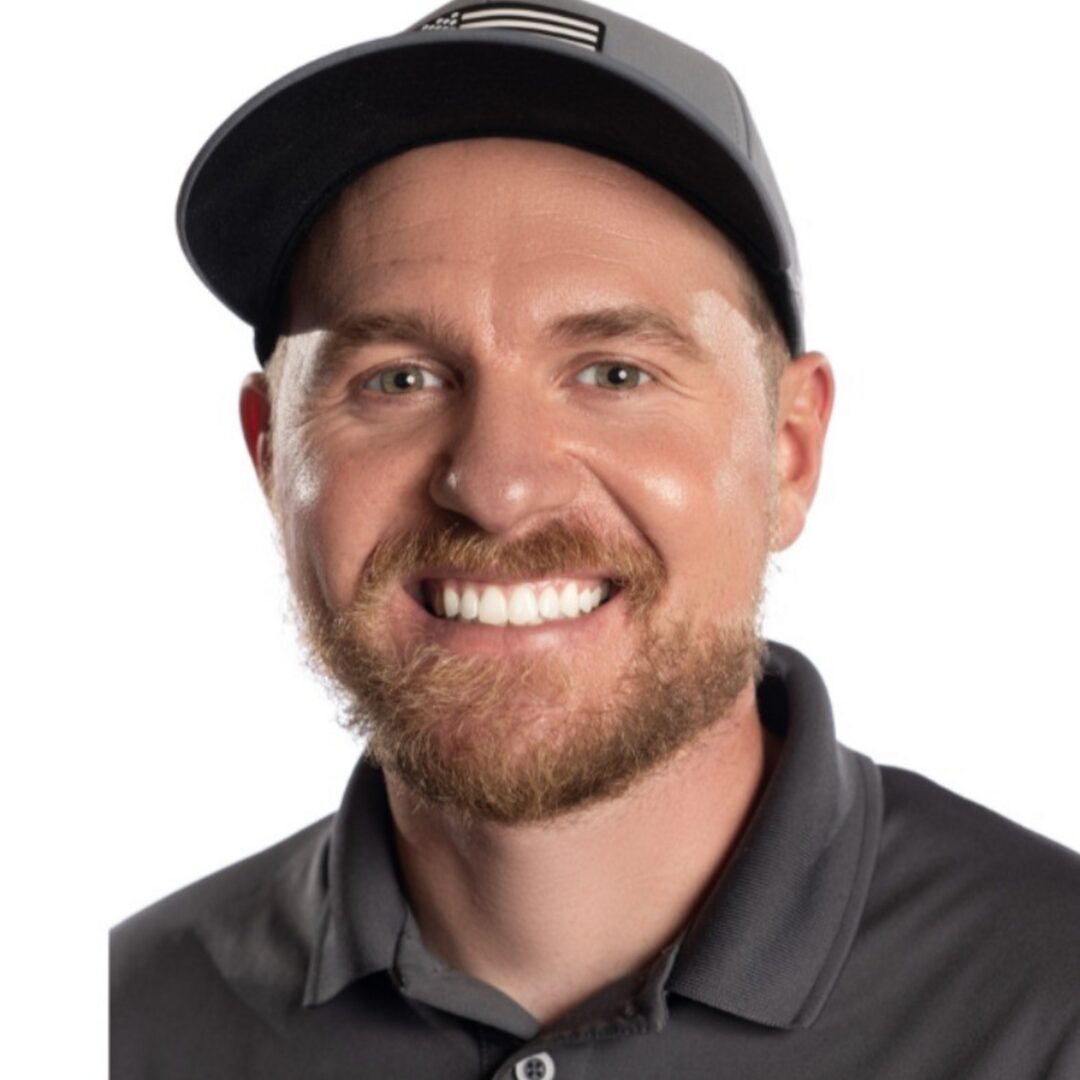
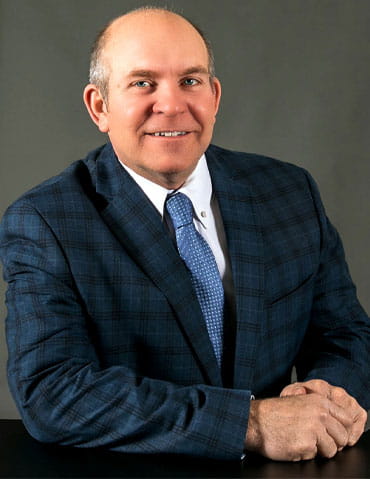
Welcome back to the show, my fellow extraordinary Americans. Today’s guest is Dan Vega, a special guest I’ve had the pleasure of interviewing before.
Dan is a highly successful entrepreneur, investor, business coach, strategic advisor, talk show host, and speaker. He has coached everyone from celebrities to some of the top companies found in Forbes magazine. He also specializes in helping companies maximize profits while reducing their costs and overhead. He’s recognized today in the nation as one of the top speakers out there.
Dan and his clients have been featured in TV appearances such as Ellen, AC360, Fox News, ABC, the Boston Globe, Yahoo, NBC, and Good Morning America. Dan started his first business at 19 and has been writing and speaking in the field of business for over 20 years.
He has been hailed as America’s number one results guy. He has achieved extreme success in several careers, including sales, marketing, management, corporate restructuring, and consulting. He also understands the business world from top to bottom and specializes in helping companies become profitable multi-million-dollar enterprises.
He was considered one of the top experts in the country, assisting companies to secure funding, and he has been connected with as many as 400 private equity investors, institutional investors, venture capital groups, and angel investors. He now holds ownership in several successful companies and has personally invested in several spaces in the market. Some of these include film and television, technology, health, environmental, spirits, arts, and fashion.
He’s also one of the co-founders of a book publishing company and has nearly a dozen best-selling authors. But of all of Dan’s accomplishments, his most significant is the pioneering of a completely new economic system for the US and abroad. This revolutionary new structure is based not on scarcity, as our current global market is, but rather on the perspective of thrive and abundance for all. He has taught the system to billionaires, thought leaders, and global titans, impacting millions. He’s an extraordinary American, and I’m glad and honored to have him on the show. Dan, it’s so good to have you over here.
Dan
Wow, thank you, man, that’s a lot. Appreciate being on, man. Good to see you again.
Cosmos
But Dan, can you tell me a little bit more about your story, your background, and how you got started in the audience?
Dan
Yeah, you know I’m from Los Angeles. I grew up in the LA area, and both my parents were great people. Never had any financial success. My father worked in retail, my mom was a teacher’s aide and a waitress during the summers, and again, they were really good people.
But you can’t teach what you don’t know. So, obviously, most of us were raised in a scarcity-survival situation, which is not conducive to thriving in abundance. So, which bills do we need to pay? Which ones do we have to push and buy? Timelines and rob Peter PayPal kind of thing. That was my upbringing. But fortunately for me, I excel at mathematics. And because of that, I got the eye and ear of some mentors early on when I was very young. And I was fortunate enough to have some really great people who wanted to mentor me. I’m stubborn sometimes.
So they were very patient. But eventually, that led to a multimillion-dollar investment in traditional education, along with the action steps and elements required to achieve success. So a lot of my success over the years has been just applying what I learned and what somebody was courteous enough to teach me.
Cosmos
Dan, I know, you came from extreme poverty and scarcity, right? And then you went from there to an abundance mindset and having abundance in your life. So, could you tell the audience how you transition from that stage to the stage of abundance? Because a lot of it is difficult to achieve.
Dan
Yeah, I mean, there’s no shortage of books or podcasts like this that can show us exactly what we need to do or what we have to learn to be successful. But that’s not really the problem. What people often overlook is that, regardless of the level of success we achieve, 80% of success hinges on mindset, while 20% is based on mechanics, action steps, and strategy. Right. I was having a conversation with someone yesterday about whether having the mindset to achieve low six figures means you can hit nine figures. And that’s a big difference because, once you start thinking a certain way, it’s not just about the action steps. We can learn that from many books and other media. But it’s the mindset. And it’s hard to let go of paradigm thinking and limiting beliefs. I was helping a couple. They’re asset-rich millionaires worth a few million dollars, but their income is around half a million a year, and they want to reach the eight-figure mark.
And so, I said, Okay, how do we get to that $10 million mark or even higher than that? So, I had them play a game where they started at $100,000 a month. So, I said, if you get, let’s say, a $250,000 extra paycheck, $100,000 a month, and, excuse me, $ 25,000 a week. And I said, “What would you do with the money?” And they were like, “Okay, I made $ 25,000 this week.” I’m going to do this and this, this. Okay, next check-in, what are you going to do? There will likely be some upfront purchases and payoff things, but after a while, it gets a little ridiculous. What are you going to do with the third check? Well. Oh, sorry, next check’s already in. What are you gonna do now?
And they just start laughing. And what that’s saying is that their mind is subconsciously just laughable, right? You can’t even wrap your mind around an extra $ 25,000 a week or an extra $100,000 a month. Well, if we can’t even wrap our minds around whether that exercise seems ridiculous, it’s going to be impossible for it to become a reality. Our mind isn’t even accepting it. It sounds boring and ridiculous. The first thing is we have to get comfortable with wealth.
Once we’re comfortable with that, it’s like, “Look, you said you want to be in the eight figures.” What would it look like to be a million a month? How about 250,000 a week? And they just crack up, laughing because it’s so ridiculous. Well, until it’s not ridiculous and we know exactly where the money would go, and it seems logical, then our mind won’t accept thinking in those new patterns. And then again, it’s never going to become a reality.
So, there are many ways we can help transition from a scarcity mindset to thriving in abundance. I’ll give you two other things. Is somebody in a scarcity mindset? They’re very competitive, and I think competition is very healthy, especially in sports. You know, I don’t believe everybody should get a medal. But in business, I think that all competition really comes from a scarcity survival thinking.
I spent years in the seminar business doing financial seminars, and people would ask me all the time, How do you protect your intellectual property? People just steal your talks. How do you mitigate that? And I go, I don’t. If anybody wants the talks, I’ll send them all the PowerPoints, right? I think that just because someone else is making way more money, I automatically make less. There’s plenty for everybody, so it’s not like there’s only so much to go around. Everybody can be successful.
Plus, it’s in the execution and follow-through, which most people won’t do anyway. And even if they did, there’s plenty for everyone. And if we run out of resources, the universe will create more. But we can’t think so much about scarcity. And the other piece of a thrive and abundance mindset is giving. We aim to give back a significant part of our lives, dedicating our time and resources to doing good. They always say that if you ask a student to become a teacher immediately, he becomes a different, better student. Right? Because he has to switch roles from student to teacher, and it’s going to mean growth. It’s going to have him look at things in a different light.
So, we need to start teaching ourselves the things we’re weak at, becoming astute in those areas, and then find ways to give with our resources, time, attention, and even finances. And that’s going to help us make that transition into prosperity and abundance.
Cosmos
Dan, you bring up an interesting point about competition, and also like scarcity versus abundance. On a macro level, both nationally and globally, capitalism as we know it today is a significant contributor, as Adam Smith is an important figure. They say that resources are finite, and essentially, they operate from a competitive mindset. So, from your perspective, what do you think about the economic system we have right now?
Dan
You know, if you think about just our study of, say, economics. Economics means that if you and I do a deal and I walk away saying I got the better of it, that means you got the worst of the deal, right? Because it’s like 51, 49, or 60%. 40% and that’s not the way the world works. I mean, technically, that’s how dollars could work, but it’s just not how things work.
I remember hearing a story years ago about a certain plant. It only grew in certain areas. This team of scientists and doctors heads to a remote area, where the people have never encountered modern-day civilization. They’ve never seen a helicopter before. They don’t even. Right, yeah. They found this plant, and the people eat its properties. They use it for their part; there’s very little to no disease in these villages. And they want to make a joint venture deal. They want to harvest this plant.
And he tells the guy, everybody’s using machetes and doing everything by hand. The villagers and the person from outside the village say, “Let’s do a deal.” Here’s what we’ll do: if you provide us with X amount of this plant annually through Supply, we can use it for medicinal purposes. We’ll buy you a big tractor. And it’s this high-level thing. It’s going to be able to do what you guys do in a month, probably within an afternoon, right? And the person who ran the village says, “That’s not a good deal for us, right?” That’s not a good deal because how would we sustain the tractor? How would we get access to gasoline? How do we have roads when we don’t have them, right? How would we repair it?
And the guy was like, well, I was going to spend a lot of money on this. And then the villager says, Listen, here’s a better deal for us. We’ll provide you with all the supplies and plants you need for this. We are looking for 20 brand new machetes and 10 sharpening stones. Now you go from spending, let’s say, quarter million dollars, half a million dollars on this piece of machinery to 20 machetes and some, that’s like hundreds of dollars, not even thousands, right? But to them, it was a better deal because it’s something sustainable.
And the villagers said, “Listen, now that we have more machetes and sharpening stones, we can actually meet our needs within three months of the year. This gives us better tools for another nine months, which will be better for us.”
So it’s not just a dollars and cents thing. Both walked away with abundance, right? They both walked away saying, I definitely got the better part of that deal. But economics teaches that if one side gets the better deal, the other side gets the worst deal.
And that’s just not how the world works. And following that model helps us stay in scarcity and survive, you know what I mean? Because our mind is very interesting. We have an operating system running all the time in our subconscious, and that operating system is recording 24/7. So even if we do things that are scarcity behavior, let’s say we’re driving a car every day that we hate. And we’re doing it because I’m happy to drive for now, as I don’t want to take on too much. I want to save money. And it’s not an asset, it’s a liability.
So right now I’m just going to drive this, and I’m going to live here, and I’m going to live way under my means. I get the sense of that. And a lot of people do it. But you know what it also does? It keeps you in a Scarcity mindset. Every day, when you’re driving, your mindset is recording it, and your subconscious is saying the same thing: “It’s not work; we need to do something different.” By upgrading to that new car now, you’ll get used to the payment. But your mindset is getting daily verification that this is working. What else can we do?
And it’s more important to adopt the mindset of thriving in abundance than it is just to hoard cash. Hoarding cash and living under your means is a defensive move. It’s not an offense, it’s only a defense. And getting a thrive in abundance mindset is going to lead to not only offense, but winning.
Cosmos
Now you bring up a very important point about a lot of things in our world; ultimately, it’s like a zero-sum game. Many people have a particular mentality. And one thing that I’ve noticed per personally and I would want to know your perspective is in this world where there’s a zero sum game and then there’s a scarcity mindset, in this economic structure that we have, there’s also a lack of ethics or where it starts ethical, but over a period of time, society degenerates as a result of this thing. But from your perspective, how do you see this?
Dan
Yeah, it’s a major problem. If you think about big business right now, their barometer is what, legal or illegal? So, you have companies, which then trickle down into small businesses and even the family unit. And you have these companies that are like they’re just not breaking the law. That’s the minimum bar we try to meet. We don’t break the law. And then they’re hailed as these amazing companies to work for, known for their very ethical practices. Look, just because something’s legal doesn’t make it ethical. Right?
So we have to get used to following a higher moral code that is just set forth by our local federal and state laws. And we have to get in the habit of doing what is right, not just what is legal. So when we think about our values and ethics and doing what is right by others, treating them the way that we would want to be treated, being other-focused, if you’re going into doing deals together, thinking in terms of abundance in their best interest, how do I do a deal that’s good for me? Leave them with an abundance of value.
And those are going to lead to long-term partnerships that will create wealth over time. But you’re right, it starts with our ethics and our value systems. We’ve also relied too heavily on big business and schools to shape our personal value systems.
You know, if you go to somebody and you say What do you do? What are they going to say? They’re going to tell you what they do for a living. Because what we do for a living has become so definitive as who we are as people.
So, when companies impose rules on us and say, “We want you to make money and do these jobs under these parameters,” we’re faced with a dilemma. We won’t break the law, but we’ll do it this way. We allow that because we have to. We feel like we have to, well, that we don’t realize it trickles down into the family unit as well. You know, I have friends who are teachers at elementary school, and these kids are using very foul language and talking about very inappropriate things.
The parents are saying, “Well, you’re the teacher; it’s your responsibility.” We can’t let our teachers or corporations raise our children or dictate the value system we’ll have in our families. We need to establish a written code of family values that outlines how we treat others, and then integrate these values into our business practices. And that certainly is going to help us not only get to and maintain a thriving in abundance thinking, but it’s going to help us be the catapult to lead lots of other people into that thinking.
Cosmos
Dan, I have a question I’d like to ask you, acting as a devil’s advocate, if that’s okay. Some people argue that many have achieved success without compromising their ethics. And then we’ll point out Wall Street and some of the big business leaders that we find today.
So what would you say to those people who think that immorality pays? And what is your opinion on that?
Dan
Yeah, there are a lot of people, especially in big companies, who are under the misconception that we have to get into the gray areas because our competitors are willing to cheat, lie, and steal. We need to reach the cusp of that at least to stay competitive. Not only can I tell you it’s not true, but increasing your ethics and integrity also leads to making more money.
Ultimately, we prefer to do business with people we know and trust. That’s just it. That’s how humans, at the end of the day, are people, regardless of where they’re from. When you approach things ethically and focus on deep, long-term personal relationships, rather than one-off deals, you can increase your ethics and consider how to provide real value to others over time.
Maybe you can make a little more money short-term by cutting corners, but long-term, you’ll not only make more money but also sustain it. You know, we read about all the Epsteins of the world and the movie producer guys, and all these people who eventually create wealth.
However, because they built their empires on shaky foundations, their ethics and morals eventually led to their downfall. We don’t want to invest decades of work into something that will be undermined because we haven’t built it on a solid foundation of ethics and values. So I think that it’s certainly a key to not only big success, but long-term, sustainable success.
Cosmos
I really appreciate that you’re discussing this because there’s a perception about capitalism right now regarding big business, Wall Street, and everything. But then society needs to recognize that there’s also the other side. Long-term integrity and ethics lead to long-term success.
Dan
Yeah, I think about the word capitalism so many times now, and people even associate it with a political party. Right. And the fact of the matter is, when you look at Wall Street and some companies, they’re capitalists. Yeah, they have bad behavior, which is giving it a bad name. I don’t need a lot of stuff. I’m not a stuff guy.
But what I want is for it to be nice and of quality. If we don’t buy quality, we’ll have to buy it again. But at the end of the day, I don’t need a lot of stuff. And I think one of the keys to happiness is a relatively simple life. But I do believe in free enterprise. You know what I mean? If everybody’s wealthy, then that’s going to be harder for us to create wealth.
And I don’t want anybody to struggle. But the information is available today for people who do the work, get in the know, and adopt the mindset that they could become very successful. And that’s a good thing because money is a great protection for our families. But if we have a lot more money than that, then we can use it to fund really important things that impact millions.
Cosmos
Oh, that is amazing, Dan.
And Dan, on another note, I wanted to ask you about your perspective on debt. The middle class has a certain idea of debt. And it’s usually negative. But how do the wealthy and the elite people view debt, and what’s your opinion on it?
Dan
So, this is one of my favorite subjects because, as a mathematician, I love talking about debt. And I used to do a lot of big seminars for the public. I don’t do a lot of public-facing stuff anymore, but I used to do a lot of financial seminars. The public and I would ask people, “How many people want more debt?” No hands go up. How many people want more investments? All hands go up.
And that’s really our skewed perception of those words because they’re neutral words. Most people think about debt as a negative. We don’t want any more debt, but we love investments. What people understand, if you think about it like 2008 or Covid, is that not every investment’s a good one. If we truly understand how debt works, we can leverage it to pay off our debt and build wealth.
So the wealthy don’t think about saving money, hoarding cash, and living way under their means. That’s the upper middle class—Dave Ramsey’s 30-year plan. Not knocking Dave, he’s a good guy. But that’s like investing in 401ks, annuities, and the S&P 500 over 30 years, living under your means, and hoarding cash.
And then we had the last 10 years of our lives. We have enough to die in peace and not outlive our money. That is not a great quality of life, and it doesn’t have to be. But the wealthy are consumed with taking on strategic debts for the accumulation of assets and passive income. And that’s really the key to wealth. And there’s a clue here because if you think about our government, all income is taxed, and debt is untaxed.
So, what’s the best way to create wealth? It’s going to be through taking on strategic debt. And so we have to think about it differently. Now I understand what people are saying. They’re thinking about negative debts. And there’s a really simple strategy that I’ll give you just to get out of negative debts. Step one, really.
So let’s say somebody who’s listening or watching this podcast has a lot of debts. Let’s say they have 13 debtors every month; they have to pay. Whether they write a check or it’s an automatic withdrawal, 13 people are taking a pound of flesh every month. We have to suffice, right? Most people are thinking about Negative debts in the wrong terms. They’re thinking in terms of reduction.
So I got 13 debtors. How do I get to 12? So, if I get my tax return, I can use it to pay off that thing. Now I only have 12 debts. Now I’m going to 11. Since we were already accustomed to paying 12, we could either stick with that or go for 13, and then double down on 12. And that’s how they’re thinking. But that rarely works because of unforeseen occurrences. You’re getting close to paying off one of those debts, but then your mower breaks down, your fridge stops working, and your car insurance goes up. Living in Florida means you can’t get insurance because you’re on the water. This happens, that happens. And it’s constantly like this, a moving target.
So we don’t want to think about absolving our negative debts in terms of reduction. We want to consider adding it. Right. So, for instance, if you have 13 debts and I’m helping somebody get out of debt, which is very easy to do, I wouldn’t be thinking about how to take this person from 13 to 12. I’d ask, “How do I help this person move from 13 to 14 debts?” Debts.
But that 14th debt is very strategic. It absolves seven bad debts, bringing us down to seven. Now, once we’re at seven, I don’t think six is enough. How do I walk them back up to 8? However, that $ 8 debt is a strategic debt that mitigates four other debts. And now we’re down to 4 negative debts. And then at 4, I don’t think 3, I think 5. How do we get 5?
But it absorbs another four, bringing us down to 1. And then at 1, I don’t think I’ll be debt-free. I’m wondering how to bring this person back up to 2. However, the service aspect of the debt more than compensates for the debt. And we’re now on the passive income wealth side of things.
Now, let’s tackle smart debt. A simple way to do this would be to trade our revolving debts for a single-term loan.
So, let’s say you have seven credit cards, and the total amount to pay off all those credit cards is $35,000. Well, you’re probably paying $ 1500-$ 2000 on those credit cards. Yeah, you can get a term loan, which is essentially one loan with a fixed term, plus a revolving credit line. You’ll never pay it off because very little, like a dime or so, goes to principal. Everything else gets interesting. It goes into interest and fees.
So you’re not paying those cards off. So, if you trade seven revolving debts, such as credit cards, for one term loan, you get a $35,000 term loan. Even if it’s 18 APR, that’s only about 1.5% interest monthly, right?
Cosmos
Yeah.
Dan
Now, your payment will likely be in the hundreds, well under a thousand, and you’ll have positive cash flow, ranging from $ 700 to $1,000, which should be back within your budget. Plus, you just paid off these debts within five years, and then you’re done.
So we got to trade our bad debts for good strategic debts. That’s the way to get debt-free. And then start taking on debts to create passive income.
Cosmos
Man, Dan, it’s a paradigm shift for many listeners, as they’ll now assume you have to pay off debts, the norm. But the concept of getting in debt to get out of debt is counterintuitive.
Dan
It goes against your cut. This doesn’t feel right. But it is the strategy for sure.
Cosmos
Throughout your entire life, what is the biggest paradigm shift that you personally experienced, which contributed to your thriving and abundance? And what was the greatest revelation you had regarding work?
Dan
Well, I think there are a couple of them. One would be work-life balance. Everybody talks about work-life balance. And we’ve gotten into a society today where everybody thinks that if you want to be a millionaire or beyond, you have to wear a badge of honor, like many entrepreneurs do, 80 hours a week. Have a job and then build your business on nights and weekends, and go hard and embrace the suck. Right.
Embrace the pain. I’ve never subscribed to that. I’m certainly not afraid of working hard. I think I have a good work ethic. And back when I was young, I was a grinder. But Grindr’s never going to get you to a millionaire. You have to be strategic. Anyone can create wealth in just five to six hours a day. You don’t have to do 10-hour days. You can do 25 hours a week, but no more than 30. And you can be extremely wealthy. But you have to be a better planner. If you don’t have plans and you just run into the day, saying, “I’m going to get as much done as I can,” then you’re a grinder, and it’s going to take a long time. But if you take 90 minutes in the morning to get quiet and think about a strategic approach, then you’ll cut a 10-hour day into a 5-hour day.
And I’m going to gain 5 hours by having 90 minutes of self-time and personal reflection. That’s a big one; we think we could be busy in motion for those 90 minutes. But no, I want to take a 10-hour day and get it all done in four to five hours. And for that, I need to be strategic and have 90 minutes to strategize—the second revelation. Eventually, most people think about the problems in their way, whether it’s their family or the challenges they face that might be holding them back from wealth. When I ask them what the problem of being wealthy is, they often struggle to answer. What’s holding you back?
Generally, when they tell you it’s actually not the problem, it’s a symptom of a deeper problem. So, for instance, lack of money is never a problem, okay? It’s when we have problems that one place where it’s going to rear its head is in the pocketbook, saying we have problems, but it’s not the problem. It is because money is controlled by causality, which is actions versus reactions. And it’s about how I can take 4 or 5 good actions a day, not 10 or 15. It’s about taking those actions and having a good reaction to them as I go about my day.
And how can I minimize mistakes or avoid doing things that lead to negative reactions, thereby negating the good I’ve done? I often think about this statement, which is at the root of many problems, including financial ones. It’s about being unable to perform in a way that aligns with your self-image consistently.
And so I can’t consistently perform in a manner that is like, let’s say, towards being a millionaire if my subconscious doesn’t believe it, and it’s inconsistent with the way I view myself. Some people might say, Well, I have a money problem currently, but it’s an identity problem a lot of times. Or it’s a value problem. Not that we don’t give enough value, but we don’t credit ourselves enough, and we don’t see ourselves in the right light, right? Other people are like, “Man, the value that the cosmos gives.” But maybe we don’t see ourselves that way yet. And that’s a personal work thing that we have to work on ourselves and our self-image, right? But we can’t consistently perform in a manner that’s inconsistent with the way we see ourselves. So, we get to put it on paper and say who we want to be. What’s the 2.0 version of me? And then we got to start feeding not our current routine, but that guy’s routine. And then it becomes so.
Cosmos
So, Dan, many people go through a process called imposter syndrome when transitioning from their old self to the new self. They struggle with self-doubt and negative self-talk.
Dan
Yeah.
Cosmos
Often, it stops them from reaching the next level. So what would be your advice to people who are trying to transition to this version of themselves?
Dan
You know, I remember Tony Robbins, years ago, telling me that he was already getting a lot of traction with his seminars. He would go out and do these seminars, and people would say, “Tony, he’s a guru.” He’s amazing. And then he would go back to his one-bedroom apartment and wash dishes in the bathtub. Right?
And he was like, earlier in the day, he’s a rock star. And then he’s going home, and he’s like. And he just had a breakdown. He started crying and laughing, and then said, “What’s wrong with me?” Right? Because you do get imposter syndrome.
As you start to stretch yourself, add more value to others. It feels like you’re leading a lie, as if there are two different lives. And your subconscious thing, come on, dude, this ain’t the real you. Right? And what I have to say about that, first of all, is if we’re not experiencing imposter syndrome, then something is wrong. If we don’t have imposter syndrome, it means we’re not thinking big enough. We’re not thinking in big enough terms when it comes to impact. We’re not helping enough people because we’re not being stressed. We’re not experiencing enough discomfort. We’re not taking massive actions that are scaring the crap out of us.
So if we don’t have imposter syndrome, we have a problem. How do you stay? Well, the key thing is that you have to draw it out on paper. It’s not a natural thing. It’s not organic; you don’t just become a better person by studying so much pain. You become a person who can make more wealth. It’s a conscious thing.
You have to draw it on paper. What is the two-point-zero version of you? What do they look like? How do they carry themselves? How do they dress? How do they talk? How do people respect them? What weight are they? Right? How Fit are they? How do they eat? What’s their morning routine today? We might not be able to handle it, but we’re creating a different entity on paper. And then we start following, let’s say, Dan 2.0. We start following that person’s routine.
And, there’s an old story about this tribe of Indians, and the father was the chief of this tribe, and he’s teaching his boy a lesson, and he’s telling his young son, as an elder and chief of the tribe, a story about these two wolves. There are two wolves: a black one and a white one. One represents good, one represents evil, and they’re constantly fighting their enemies. And. And he’s telling his boy the story. And the boy goes to his father and says, “Well, Father, which one wins?” And the answer is whichever one you feed the most. Yeah.
And so we’re going to have certain elements of the day where we’re maybe taking these new actions. We’re getting on that 2.0 routine. We’re feeding it, which is likely a better morning routine, better organization, fewer active hours during the day, but more strategic action.
And then, there will be times during the day when we feel like the black wolf is actually lying, and we’re an imposter. The one that wins is the one you feed the most. So, if we constantly feed the routine to the white wolf, eventually this person will become so strong that they will kill off the other version —the flaky version, the one that couldn’t cut it. And then now it becomes. So that action brings a reaction of success.
Cosmos
No, Dan, I heard about that story. It’s a very famous quote that I like, grew up on, regarding the world. Because there’s always a light side and a dark side inside all of us, and it’s about what you feed daily.
Dan
Right.
Cosmos
So.
But Dan, on another note, I wanted to. I know you founded a university that helps people understand the entrepreneurial mindset and become entrepreneurs, starting their own businesses. Can you tell me a little bit more about that in the audience?
Dan
Yeah, sure. As you know, I was in. I achieved considerable success in the seminar business. And when you’re in the seminar business, you do coaching. Many people aspire to be a business coach. And we were very successful. And when I grew up as an entrepreneur, I was self-educated, as I mentioned. And I was looking at the leaders on the block at that time, which were like Zig Ziglar, Brian Tracy, Tom Hopkins, Les Brown, like, these were my idols. So much, or at least my mentors in business. Right.
I started reading and self-educating well, eventually moving into the seminar business. I was in my 20s and early 30s when I started, and I caught up to them, at least financially. We were in the same area, and I was like, well, what? I’m unsure about the next step; how far can I go? It was during that seminar that a university owner attended and asked me to be their coach. And when I got under the hood and really started looking at what we’re doing, it was more of a traditional-based university, specializing in trade skills and crafts. But they were doing 300 million a year in private jets.
And I thought that having a university was the next level.
And this was back in 2006. And I said, okay, I’m going to do five stages. Number one is to develop a comprehensive curriculum. Because I’m in front of a live audience twice a week. I’m going to write a bunch of curriculum, see what lands, and what’s really good. I’m going to get other instructors that I know. And hey, if I ever build a university, would you be an instructor? They’re like, yeah.
Next, we had to figure out the software, work out the bugs, enroll several dozen students, and then achieve broad adoption. And then eventually not just us, but global adoption. Right. And so that’s where we’re at now. We have a lot of students. We have a brick-and-mortar location in Nairobi, Kenya. We try to do a lot of good.
But the difference is that this is for a specific purpose. So, it’s Blue University Blu, which, years ago, stood for Business Leaders Unite Blue University. And the key difference is that this is a school for people aiming to join the 1%. It’s for people, whether they’re young and want to avoid a lot of debt, or they’re older, maybe a business owner, doing okay, surviving well, but not thriving. Or maybe somebody who’s an asset-rich millionaire, but they want to get in the big game. This is the kind of school because it’s for entrepreneurs and business leaders, by successful entrepreneurs and business leaders.
So all of our instructors are at least millionaires, if not billionaires. They’ve done it in the real world, teaching real-world strategies, and they’re not just giving you a list of what to do or how to do it. But they’re breaking it down into more detail; here are the action steps. It’s the five-step process. Here’s how to do each step. Order exactly this way.
And if you have any questions, just reach out to us. So, it’s not just about presenting a bunch of successful metrics and information; we genuinely participate in helping our students. Sometimes we fund their projects, invite them to live events, get to know them as friends, and mentor them. And, it’s been very great. And I don’t do it for the money. I help a lot of people. I even give scholarships away very regularly because it’s more about my return on investment. My ROI as an investor has not just been return on investment but has now largely become return on impact. So, it’s something I’m very passionate about, helping others.
Cosmos
That is amazing, Dan. I hope that people in the audience will take a look at how to become entrepreneurs and start their own businesses, and change their mindset, because this is very important for us as a society.
And Dan, are there any other projects you’re working on that you’d like the audience to see?
Dan
We’ve been fortunate enough to have a lot of success in our lives, so we invest in things we’re passionate about or those that could impact a lot of people. The ROI in terms of return on investment might not be for 30 years. You know, I’ll be 55 this month, so I’m not even sure I’ll see those returns. But it’s important for the world. It’s the right thing to do.
And so I am working on some passion projects as well. I wrote a movie during COVID, a feature film called The Strange. It’s a sci-fi thriller that just got shot with Eric Roberts, Dee Wallace, and some other actors. And that will likely premiere early in the year, probably in January. And then I just finished the second film, which is likely more of a rom-com, believe it or not. It’s more about impact and relationships. And that’ll be shot around March.
So we’re doing some fun things. I also wanted to add some value to the show, as mentioned in the intro. I’ve been on the show before, and I really think a lot about what you do and helping other people realize the American dream. And I really appreciate that. I also wanted to make an offer to give away five full scholarships to the university. You know, education is a real deal – $25,000 to attend a two-year program. But to completely forego the $25,000 for five people and give them a chance as well. Because I believe everybody deserves at least one chance. If they mess it up, it’s on them. Everybody should have the opportunity to succeed and learn valuable lessons.
And I was fortunate if somebody gave me that chance. I know you were as well, and I like to remember that and give back. Hopefully, that’ll add some value.
Cosmos
Dan, thank you so much for that, and I really appreciate it. I hope our audience sees this as an opportunity to apply for one of your scholarships. And Dan, how can the audience connect with you and learn more about your work and what you’re doing?
Dan
If they want to take advantage of that offer, they can visit danlueuniversity.com or danlueuniversity.com. The other thing is just follow me on social media. I try to do everything I can. As you know, posting on social media has never been a big part of my plan because I’ve never had to do it. But now I’m more in the philanthropic vein, and helping others is where I’m at in life.
So, I try to get on there and add value by teaching lessons and strategies that can help people. So, follow me on social and feel free to reach out to me. DM me. I answer all of my messages. All the responses I get, regardless of how many I answer and how much time I spend connecting back.
Cosmos
So, Dan, thank you so much for that. I’m truly appreciative and grateful that you took the time to join this podcast and share your insights on various topics, including debt and the current economy.
We also like to give people the opportunity to become entrepreneurs and businesspeople. I hope you’ll join us on the show at a later time to share more knowledge.
Dan
Yeah, my pleasure. Cosmos, thank you so much for having me back. And I certainly would make myself available at any time. By the way, huge fan of your show. Love what you do, man. Keep up the good work. Keep impacting people as you do.
Cosmos
No, I appreciate it, Dan. And I want to conclude this episode by letting my fellow extraordinary Americans know that, hey, look, there’s an extraordinary within every one of us. It’s our duty to awaken it and unleash it. Until next time. Bye for now.

 Amazon Music
 Apple Podcasts
 Audible
 CastBox
 Castro
 Google Podcasts
 iHeartRadio
 Listen Notes
 Overcast
 Player.fm
 PocketCasts
 Spotify
 Stitcher
 TuneIn