Cosmos
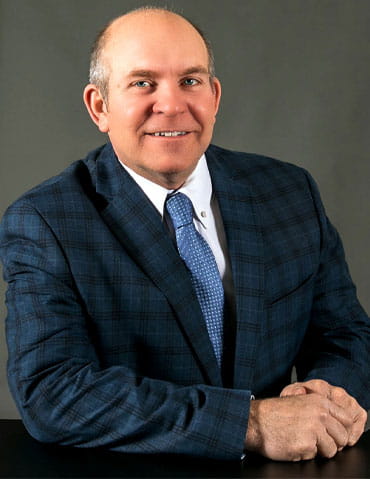
Welcome back to the show, my fellow extraordinary Americans. For today’s guest, we have Dan Rogers. Dan is the award-winning author of Escape the Clock, your program guide for financial freedom and early retirement. After a successful 20-year career in the tech industry, he achieved financial independence and retired early to pursue his passion for helping others. Driven by a desire to give back, Daniel wrote Escape the Clock to provide a clear roadmap for anyone seeking financial freedom.
Today, he continues to empower individuals by volunteering to teach financial literacy in Washington state, providing free one-on-one financial coaching, hosting the Escape the Clock podcast, and continuing to write.
His work focuses on demystifying personal finance and helping people build achievable plans to live life on their terms. He’s an extraordinary American, and I’m glad to have him on the show. Dan, are you there?
Dan
Yeah, I’m here. Thanks for having me.
Cosmos
Dan, thank you so much for being here on the podcast.
Can you tell the audience a little bit more about yourself, your background, and how you got started?
Dan
Absolutely. I’m not a financially trained person; I stumbled into where I end up today. Many people start with debt.
You know, I was the first in my family to go to university. I ended up borrowing my way through college because I had no plan or direction to pursue anything else. And you know, even the degree I picked was based on this debt.
So many things were informed by it. I remember back then, just doing some research and trying to figure out what kind of job could pay enough income to cover the triple digits of loans I had to borrow.
After that, I was trying to figure out how to organize and educate myself to get my life under control. And many people, you know, I started a family. I was trying to do my best with work. And over the years, as I educated myself more and more, I realized there is a lot to kind of figure out. And the system is designed in a way that they kind of prey on your ignorance, to be honest. It can make it hard to be successful and develop wealth, especially generational wealth, but anyone can do it.
And as I was going through it, I realized, wow, I’m doing better than some of the wealthier people that I know. I ended up retiring early. I was young when I retired. I was working at one of the top corporations in the world. And it shook people when I left. It surprised them. I was making a good income. I finally got to a point where I was at the top of my income career. People were making a lot more money than I, and they said they were nowhere near close to any possible retirement.
And they just really wanted to know how I did it. And I realized that’s my purpose in the future. I, you know, when you retire young, you still have a lot of energy. You’re not just sitting around doing nothing. And I wanted to give back. I’ve spent my life now educating people and providing free financial literacy education.
Cosmos
Dan, this is amazing because many people assume they’ll work for 40 years, up to 65, and then rely on their 401 (k) and Social Security. But early retirement is something that many people have limited beliefs about. They don’t believe it can be done.
But from your perspective, what are the keys that are necessary to attain retirement at an earlier age?
Dan
It only comes down to time and income. If you have time and some income, you can do it. There is discipline involved, depending on how much income you have in your lifestyle size. That’s going to depend on how quickly you can achieve your goal.
In the guide, I start by trying to help you demystify your number. Unfire, the financial independence retire early movement has a magic number system, but I know everyone’s number is personal to them. Cosmos. You have your own goals in life, your own financial needs and visions. And your number is going to be different than my number. So, it starts with trying to figure out that math.
And so, I put the math there. I have a free tool that anyone can use to calculate this stuff as well. But it starts with your retirement goal. Right? There are retirement accounts that have tax advantages. There are. You also mentioned Social Security. That is a retirement benefit. You can get a specific age, and there are strategies about when you claim that benefit as well. If you want to retire early, which isn’t necessary for everyone, you’ll need to have enough wealth built up in non-retirement accounts because the strategy isn’t to put your longer-term retirement at risk. It’s about having enough in brokerage accounts and other places to bridge the gap between when you’re working and when you can start withdrawing funds from your retirement accounts.
So, call those the bridge years. And really, what I’m helping you realize is that once you have your number, you can break down your goals into measurable milestones, see what’s working and what’s not, and measure progress. And you’re working in a program, so you’re always looking ahead for risk. You have something really easy to understand and share. Always biased for action.
Over time, you can achieve your goals, and with financial freedom, you’ll have the choice not to work. Believe me, some people work hard, and that’s perfectly fine. In fire, there’s barista fire. It’s the idea that you’re just going to do a part-time job or something you enjoy, you don’t need the money, you’re doing it because you’re working. Working isn’t a bad thing. It’s about freedom of choice.
Once you’re free from financial stresses and motivations, you’ll have your time back and can do things the way you want.
Cosmos
From your perspective, is there a difference between financial freedom and time freedom, or do you see them as essentially the same thing?
Dan
I believe financial freedom can lead to time freedom. I don’t think they’re necessarily the same thing. I do know, though, in the society we live in, the lack of time freedom is usually a financial reason.
So, you know, we have to go and earn that paycheck to maintain our standard of living. And therefore, the job stipulates that you have to work X number of hours. If you’re working part-time, you might know I need to put in a certain number of hours to maintain my livelihood. Overtime can be enticing because it helps me reclaim some of my time. Right. I could earn more money for working fewer hours.
And so, there’s a competition over time for salary work. There’s a 40-hour minimum. That came from somewhere, I’m not sure why, at least in the United States. And that has now increased. Most jobs expect you to do way more than that.
And so, on top of that, though, there’s this idea of competitiveness. I need to be seen as doing better than my coworkers, so I must be shown to be taking the extra effort. I’m going to take on that extra job, work on the weekend, or do whatever it takes. All those things. All they’re doing is teaching you that if you want to make more money, you’ll give them more time, but there’s no loyalty there. The corporate agenda is what it is. It’s not based on your value, your effort, necessarily.
So, I think a lot of people have woken up to that fact. And when layoffs happen or you don’t get that raise or promotion, people realize, “Oh, wow, maybe I should redefine my measure of success here.” It’s not based on whatever this job is telling me.
Cosmos
Dan, a continuation of this, you know.
Many people believe that achieving financial independence requires earning a high income or working as a hiring manager. So, my question to you is this: Is financial independence for everyone, or is it just for people who are making high numbers?
Dan
It’s for everyone. I know people who make high numbers who can’t achieve it because they’ve inflated their lifestyle too broadly. They can’t afford financial freedom. They’re stuck with their job as much as anyone stuck with their job, doing paycheck to paycheck. That’s what I wanted to mystify a bit.
So, if you know, for instance, that your annual cost of living is somewhere around $100,000 a year, and you have a general idea of what your life expectancy is based on, your family’s history, or what you just believe would be a reasonable amount of time to live. There’s data and other information you can use for this; it’s essentially a math problem at that point.
And what you can do is be even more nuanced. You can say, well, my target lifestyle might be more than that. I’d like to live on $120,000 a year in the future, either because I’ll be traveling more or because I might start a business. Once you figure out and average that stuff out a little bit, you’ll have a more specific target tailored to you.
And then it comes down to hitting those numbers. And when you hit those numbers, you don’t. Your discipline doesn’t stop. People don’t stop acting the way they act just because they, quote, unquote, became financially free or wealthy. What you see is a person who lives frugally. They can’t seem to stop it. I know I’ve been this way. I’m still, I still care about the value of money. I still care about how I spend.
And so those averages are powerful. They, they’re pretty accurate. So the way you live now is going to be roughly the way you live in the future. Except in cases of major life events, such as getting married, going through a divorce, or having a child, you should consider that the cost of living can change significantly. But mostly, you reach a point where the target homes in on those averages, becoming more and more precise.
And so really what it comes down to is cash flow. You’re only going to make so much money in your entire life. It’s a finite number, and if you knew what that was, that’d be a powerful thing. But we don’t.
So, what we’re trying to do is maximize the cash we can get. If you know you’re going to get $1 million total in your lifetime, how do you turn that $ 1 million into more? So, this is where saving, investing, and budgeting come in. There are tricks and strategies you can use to turn $1 into many more dollars. One way is by removing the temptation of spending it automatically, contributing it to savings accounts, using high-yield savings accounts, and implementing automatic investing and smart investing strategies.
And then that money just keeps growing, and you’re making money without trying to make money. And you can also create passive income sources as well on top of that. But what I’m getting at is that a little bit of education goes a long way here. You don’t need a high, triple, or quadruple-digit salary to do this. You just have to be honest about your needs and be okay with having some cash flow left over.
So, you can’t spend everything that you have come in. You need to set aside a portion of it for savings and investing. And if you do it automatically, you’ll end up deflating your lifestyle a bit, leaving us to spend what we have. If I gave you $100, I bet you could spend it; if I gave you $1,000, I bet you could spend it.
So, you know your lifestyle will stick to the amount you get. And that’s why this is a problem for both wealthy and non-wealthy individuals. Lifestyles are what it comes down to. So, find your target lifestyle, stick to it, and have that extra cash flow work for you. And then it’s a time problem. How long will it take to have enough to live off of?
And with that, there are tricks you can do to accelerate it, smart strategies, and things you can do to make that money grow faster. But that’s it. That’s why it’s in every. It’s attainable for everybody. You just have some income. And sometimes those two pieces of the recipe will. Will create success.
Cosmos
I’m glad you’re saying it’s a, it’s available for everybody, Dan, because I believe that as well. However, many people hold limiting beliefs. So, I want the audience to know that with the right strategies and the right tactics, you can attain financial independence.
But since we’re talking about saving and investing, Dan, what do you think most people get wrong about saving, investing, and budgeting, and what holds them back?
Dan
You know, this is a fascinating topic because it comes down to just natural human behaviors, right? The psychology of how we live and think, our relationship with money.
And when we say people get things wrong, it’s not that they’re doing things wrong. I mean, a lot of things we do are based on the way our parents acted or the implicit biases we have. Ultimately, it comes down to being honest about our behavior and the reasons behind it, allowing us to take action for change and act in our own best interest.
And a lot of this comes down to the idea of money scripts. There was a great book written by Dr. Brad Kontz called Mind Over Money. He’s a financial psychologist who identified the idea that a money script is our unconscious belief and the emotional narratives we have about money. And it comes from our childhood, our first memories of money.
And even if we don’t think about it, let’s say your parents didn’t teach you about money. School isn’t doing it, but let’s just say parents aren’t doing it either. You’re still going to see things, right? You’ll see how they react to it and how they avoid talking about it. And that will create an impression on you, and it will help form your values about it. And we shape narratives around this kind of thing. And you might have a narrative that money is bad, or that rich people are greedy, or that I don’t deserve it. That’s all money avoidance scripts. Or you could have ones around my whole self-worth is based on how much net I have. And that’s more around status.
And you know, that can create enough ideas. There’s no, there’s no amount of money that’s enough. You’re always chasing more. Even if you’re a millionaire, you want to be a billionaire.
So, once you start to understand that our childhood and values can either hold us back, hinder us, or serve as strengths in our plan, the psychology suddenly becomes mitigated. The plan enables us to utilize the rational part of our brain to implement strategies for taking action on the things we don’t want to do. When it comes to saving and investing, they’re not as pleasurable for many people as spending is. Right.
You get a dopamine hit when you spend or use a credit card. And that’s why the system is designed the way it is. You know, the borrowing system is broken. It shouldn’t be so easy to get credit cards. It shouldn’t be legal to charge us the same premium we pay to borrow, especially when income varies so wildly and many people, 30%, struggle to borrow per dollar. And that compounds that are scary. There’s no return you’re going to find that’s going to pay you that much on an investment. I mean, there are options, but they’re very difficult to get, and there are no guarantees. However, you’ll pay a guaranteed premium on that credit card. Yet it’s so easy to do it.
And there’s a reason people do it. It’s because the system is set up to make it, to take away the barriers—one click. Spending, you know, on sales, advertising, and celebrating your status and appearance, you’re seen as someone who spends well.
But you know, they don’t celebrate you for saving and investing successfully. Not really. The system isn’t doing that. But in our, and it’s easier for us to feel good in the, in our present self spending something than it is taking something away from us or feeling we’re taking money away from ourselves for some future version of herself who may or may not, you know, you know, appreciate that.
So, there’s a psychology here that you have to overcome, and that’s why doing it automatically is much better, because you automatically have that. Let’s say your paycheck is $5,000. If you have $2,000 of that $ 5,000 automatically partially saved and partially invested, then your lifestyle fits the $3,000 left after rent, food, and other necessities. You then know that whatever’s left is your discretionary budget, which you live off of.
And as your money grows, so does your investing and saving threshold as well. So, we can take steps to overcome that irrational side.
Cosmos
Dan, you brought up a lot of interesting factors. First of all, I read this book, “The Secrets of a Millionaire Mind” by T. Harv Eker. I don’t know if you’ve read that, but it talks about exactly what you’re talking about.
In a child, the first few chapters are about childhood and the beliefs you have around money, especially when your parents talk about it. And I wanted to add, I think a lot of people have limiting beliefs around money based on religion as well. You know, they go to church and over there they say that it’s, I think, there’s a verse. Well, it’s very hard for a rich person to get through a needle’s eye versus a camel or something like that.
And so you just have all these limiting beliefs. But basically, you can do good things with money. And a lot of people don’t realize that you can help a lot of poor people, you can, and you can be generous, but you have to be wealthy to a certain extent to do that, you know, and it aids in the spirit of generosity. But I don’t know, what are your thoughts on that?
Dan
Imagine you’re raising a child and you want to put that child on an allowance of a hundred dollars a month. But the. You’re teaching the child that they’re not allowed to spend the hundred dollars they earn; instead, they have to give $20 every time to something they care about. You’re teaching them generosity. You’re teaching them that everything they earn shouldn’t be spent.
You could go further, right? You could say 20 has to be given and $20 has to be saved, and then the rest you get to spend. If we were teaching that and the system was built around it, I think we wouldn’t have all these problems. We would learn from a young age that giving is just. It just. It’s just right. It’s just something you do. I think the people who do this today they’re doing it either because, as you said, they feel they can afford to do it, or they’re doing it because there’s another societal reason.
It could be religious, cultural, or some other extrinsic motivator. There are intrinsic and extrinsic motivators that motivate individuals to take action. And it feels good to give it, especially as something that matters to you.
So, if the problem is that we have a lack of extrinsic motivators, and the nation, when it comes to giving, is lacking. It’s easy to justify not doing it. If you’re struggling with money, I’m sorry, but I just can’t afford to give. I got to take care of myself. I got to take care of my family. And I get that. It’s the same thing, though. It’s about cash flow management. You’re going to have so much coming in, and what you do with it is all. Several decisions need to be made.
And once you give yourself the room to start giving, even if it’s a tiny bit, you might find that this is one of those things that makes a difference. And if we all started giving just a little bit, just a tiny bit, all of us, let’s say we all found a way to give 1% every year to something that’s a lot of cash flowing around, that’s a lot of people learning how to be altruistic, and it could make a difference.
But I think it starts, though, with understanding your cash flow. Because if you don’t know where your money’s going, how are you going to do that? How do you plan to pull up? So, you start by building your plan and establishing a baseline of where you stand today. This helps you realize that you don’t need to be rich to do it. I just need to know how much room I have without adding risk to my life. Once you have that number, you’ll feel much more comfortable making decisions.
Cosmos
No, Dan.
And the other thing I think you mentioned was about status, right? And people are getting into debt. One thing that came to mind was the influence of social media and technology, which combine to create a psychology that leads us to borrow money through credit Cards.
And it’s just a cycle. It’s a dysfunction that just. It just keeps building up and up. And I don’t think it’s sustainable, to be honest.
Dan
Yeah, and. And it’s kind of even worse than that. It’s not that there’s someone in a dark room pushing that stuff. Everyone, right? Some algorithms are trained and learned on what’s effective. And this is why, in the media, you see, fear is used so often to push a point, kind of. It’s because it can be a very effective motivator for people to pay attention and take action.
But the algorithms are being kind of rewarded with this idea that, oh, you know, you did the borrowing thing, that kind of thing worked. I’m going to give you more of that. And if some other piece of information is trying to come in there, trying to show you that you could have done something different there, you could have saved this, you could have invested this, you could have given it. Well, that can’t get through because the algorithm isn’t built to surface that, as it’s not the kind of content most people are responding to right now.
So, it cannot be easy. There’s a saturation of noise. And that’s why, you know, what you’re doing, what I’m trying to do, is important. And this stuff needs to get shared. People, we share it with a friend or play it for our kid, to help them understand. It’s okay to talk about money. It’s not taboo.
You have to talk about it. It’s okay. It’s starting to try to reframe and talk about it positively. It’s not that we can’t afford this necessarily. It’s just. It’s not the right time to buy it—Things that matter.
And I know that’s come up before, but I just want to reemphasize those things because when we start to do that, we could start to break the cycle a bit, and maybe generationally we can start to see a shift.
Cosmos
And Dan, as a continuation, I wanted to ask regarding death, right? Because I know a lot of people are listening to this, they may. They probably would have gotten into debt, or they’re in debt, over a period.
And let’s say somebody who’s listening to this wants to. Wants to become financially free, but they’re, let’s say, $20,000 or $30,000 in credit card debt, or they got a mortgage, or they have other types of loans. How would you advise them to get out of that debt relatively quickly so that they can attain financial independence?
Dan
Yeah, first of all, just to admit the problem —that there’s a debt issue — is the first thing. Right? We have to put blinders up sometimes with this stuff. I dedicated a whole podcast episode to this topic because it’s such a common problem. It is extremely common. I think one thing everyone has in common is dealing with some level of debt. So, first, it’s just about being honest and taking the blinders off.
So, dump all those liabilities out onto a sheet. Look, say, okay, I have these credit cards, they have these interest rates, these balances, and in these, in these fees, and you can add loans to that as well. It doesn’t have to be a credit card, but for now, let’s focus on that. When you do all that one, you’re being honest about where that money is going. Because those interest rates are going even when you’re making your payments, anything, minimum payments are designed to keep you in that debt. You’re not going to ever get out of it. The interest is compounding, trapping you in the debt.
So, you have to pay more than the minimum. But where do you put that money? You only have so much money, right? You can’t just say, Okay, I’m going to take all the money in the world and just pay these things off. If you could be, you wouldn’t have the problem if you did that.
So, you have to pick your battles. And there are a couple of common strategies here. There’s an avalanche strategy where you just go for the biggest offender. You say, okay, that’s my highest interest rate, or with the biggest balance, it’s hurting me the most. I throw everything I can at that one while still paying the minimum balances on the others. That’s the optimized model because you’re chipping away at the problem faster.
The problem is that it doesn’t feel as good because you don’t see progress as quickly. Because there’s such a big difference in interest rates, it doesn’t feel like you’re eliminating the balance as fast.
So, this other strategy, the snowball approach, is one I’ve also helped people with. You don’t have to start with the biggest, scariest one; you can start with the smaller one and just get rid of it. And once you eliminate that, you can get rid of it for good. You can either freeze or cancel that card. You don’t need tons of credit cards in your life. The more you have, the more you’re juggling, the more it can sneak up on you and get you in trouble.
You’re okay with being honest with yourself about which ones are giving you rewards that you use, which ones don’t have a terrible interest rate. You probably should cancel the target credit card. I don’t think that’s ever going to be a good one for you. You know, things that. Just be honest about it.
And if you’re saying, “Okay, well, the extra payment thing’s still too hard,” consolidation strategies can work. You can, you know, don’t move the debt around, that hurts your credit score. But you can start merging your lower-interest ones if you have room. Or better yet, look for a 0AP watt or apron. Offer something because look, all these companies want your debt. They want you to pay them. They’ll offer you six months free. They all do it because they are betting against you. They’re betting you’re not going to pay it off, that you’re just going to keep having the interest.
Did you prove them wrong? Take that 0%, move it there, you’re getting yourself some grace period, and then really slam at it. But don’t let it have a higher interest rate, and when that six-month period ends, you’ll have a bigger problem. You’ll need to be disciplined. You have to be honest about. I’m taking this on and putting the extra cash flow towards it.
And then I’ll put things in my life, rails, to keep from getting into that problem again. That’s where canceling cards comes in. That’s where a credit freeze comes in, or where monitoring becomes important. You review your spending on a monthly or at least bi-monthly basis. You’re looking for fraudulent stuff, but you’re just trying to be honest yourself. Did I need to spend that on that? Maybe if you had tried using your bank accounts instead of credit cards, would you have been okay?
Every time you use your credit card, you’re borrowing, and I don’t think people understand that. It’s not just convenience you’re borrowing; sometimes you’re borrowing money you don’t have. And if you don’t have it, you’re paying a premium. All you’re doing is punishing yourself.
So, the best thing you can do is just be honest with yourself and avoid the credit card. And if you’re going to use the credit card, you should be able to pay the whole thing off. If you can pay the whole balance off every month, then you know you’re okay. You’re getting the rewards without paying anything, unless they have some fees. But you can avoid those as well.
So that’s my advice. I did a whole podcast episode on this because I think it’s such a common problem, and there are some good strategies. There are also debt relief nonprofits that can help with this. Be careful. There are scams out there that will take advantage of you, but there are non-profits that will do debt consolidation. They’ll walk you through it. They can even help you negotiate a lower interest rate with your credit card companies. They can help as well. And of course, there’s bankruptcy and other stuff, but that’s an extreme. If you’re desperate, you can look at that as well. But just start by being honest about the problem and taking a look at it. Just see where you stand with your balances and rates.
Cosmos
Dan, correct me if I’m wrong, right?
Debt is a huge issue, but many people in our culture have a “keep up with the Joneses” attitude, where they feel the need to maintain a certain status. However, due to inflation, prices are rising. Right?
However, their incomes remain relatively stagnant compared to the rising prices. So, would you advise people to lower their lifestyles, or how would you approach advising them when they’re honest about their situation, needing to keep up with the neighbors?
Dan
I think it depends on what your goals are in life, right? I think it’s okay if you, you know, whatever, a certain type of shoe or a certain type of car or whatever it is, that’s fine. You just have to be honest about what you’re looking for, what you can afford to finance in your life.
And buying premium on something is okay, but that might mean not doing premium on other things. I think people get in trouble when they view that status as encompassing every aspect of their lifestyle. All the clothes they wear, all the restaurants they go to, all the, you know, even the people they talk to, can create an expectation of keeping up. And that’s where borrowing becomes tempting because you don’t have the cash flow to do that.
But you know, if that’s not necessarily your real goal, if your real goal isn’t to be seen as someone of a higher status than you are, then, you know, be honest yourself. What is your real goal? Is it to be financially independent? That was mine, and that’s pretty good. Or maybe it’s because you have a cause you care about, or maybe you just want to own a home. That’s a tough one nowadays, but it’s possible.
And so, you just have to be honest with what your goals are. And there are always trade-offs. I think wanting everything in a way means you’re not sure what you want. You know, you just have to figure out what you want in life and try to focus on that and be okay letting that other stuff go. I think a lot of the status we strive for isn’t as rewarding as we hope it would be. It doesn’t leave a lasting effect. But having purpose and accomplishing our real-life goals is something we won’t have as many regrets about.
Cosmos
No, totally.
And Dan, I wanted to ask you about your journey to financial independence and early retirement. Retirement. What’s the biggest lesson you’ve learned throughout your entire career?
Dan
Whoa. Oh, yeah. I mean, look, I made mistakes. Not perfect. I was not educated. So, I’ve met many financial advisors over the years, and I’ve ended up firing most of them. But I would say one big mistake I made was buying our first home. We were starting a family, and we wanted to have a home. We bought a before we really should have. We had done our research well, and of course, we decided to sell in 2007. In 2008, the housing market collapsed, leaving us unable to sell our home.
So, we had multiple more. We had three mortgages, and we were struggling, which felt like it was about to destroy our whole financial plan. Luckily, HARP came up, and we were able to refinance it. Eventually, we were able to sell it short. And that was a learning lesson. I mean, I’m not too Ashamed to talk about making those mistakes. They happened.
That’s the one time I felt I got any type of relief from the government ever.
So that was nice. The government helped me out there. We were able to get back on our feet and were fine. I still beat my financial independence goal. The years are early, even with that horrible mistake that cost me hundreds of thousands of dollars.
But I would say the lessons are really about trying to educate yourself enough to be dangerous, which is about accomplishing your goals. There is a level of education needed, which is why these things are important. It’s not taught in schools, and with so much information online, it’s hard to know what to trust. You know, that’s why the books that I wrote, I was, I’m just going to put the book, real Learnings out there, the stuff that’s real, and make a guide for people. Because I don’t, telling someone to read 17 different books doesn’t work. I knew I needed to create a comprehensive guide for people, providing them with enough information on each topic to navigate it effectively. I draw from my own experience, including my first job and all the paperwork.
Okay, how much do you want to put in this? 401k. What is that? I don’t know. What other retirement accounts do you have? Oh, I don’t have any. Am I supposed to have one? There are pre-tax and after-tax options. What’s the difference? Health savings account. Oh, I don’t qualify. Why don’t I qualify?
There are so many of these things.
And so, I wanted to demystify all those things because people prey on your ignorance when you don’t understand them. Financial advisors, you know, there are great ones out there, but there are other ones that do kind of prey on your ignorance.
And they will say, I will happily take one and a half percent of your annual net worth and then do some of my magic for you. But no one can guarantee a return. No one is as biased for your financial success as you are. And you have all the tools you need to do this right? You have skills, and with a little education, you can create a plan that is tailored to you because it’s your plan. And that was my goal: to give people the education and the tools to do what I did. If we all did this, we’d all have our time back, and we could try to live the best lives possible.
Cosmos
Yeah, Dan, I think what you’re saying is relevant, but I often feel like people get overwhelmed by all the information out there. It’s as if they don’t know where to look exactly.
So, from your perspective, are there any particular resources you’d recommend the audience look at? Which is real.
Dan
It’s the only reason I wrote the book. I priced it as cheaply as possible since I couldn’t find a single place. There are many amazing places, and I have a resources page on my website that makes it easy for you to find some of those other ones. But I put a website up, Escapetheclock.com. That’s where I put the book, the newsletter, and the podcast. Everything’s free. I couldn’t. I wasn’t allowed to price the book for free for the distributors.
So, there is a price on the book, but I promise I tried to make it as valuable as possible. It’s almost 500 pages, and it’s full of everything from how to invest to what—all these. The key differences among these accounts lie in how to create a plan, execute it professionally, act as a risk manager, retire with purpose, and live a fulfilling life. How to thrive in all these different stages of your lives, how to think about withdrawal strategies. You can save in thousands of different places, but how do you know where to withdraw the money when there are all these different age requirements and things? I made that as easy as I possibly could because I realized I needed to hand myself.
I have a son and a daughter. I need to hand them one thing. I need to direct them to a single location. Okay, here are the seven books you need to read. And, you know, seven YouTube shows you should be watching. No, they’re not going to do it. There’s not. They’ll go to TikTok instead. So, I need to give them one thing.
So, I tried to make. Make the book that I couldn’t find. Now, I’m not to say there’s a book out there that is better than mine. I just couldn’t find it. But I’m pretty proud of what I’ve done. It did win some awards. It seems it’s helping people. I’m consulting for free. And I’m doing what I can to give back because there is a lot to navigate. But I promise you, a lot of these are math problems. Many of these are essentially about dreaming about what we want and being honest about the strategies we need to implement to get there. And that’s it. Anyone can do that.
Cosmos
So, Dan, your book Escape the Clock. What is the catalyst or the moment when you decide, “Okay, I need to write this book and share my knowledge with everybody”?
Dan
I didn’t mean to do it at all. I just. When I announced my early retirement, it just really shocked me. I was working for one of the top corporations in the world. And people were shocked by it. I made some moves and reached the highest income of my career. I was young. I was 43 when I announced my retirement. I had many conversations with people, and they were very eye-opening. People are admitting to me that they feel trapped by their jobs. They felt they didn’t; they were on autopilot when it came to money stuff.
And they, and people who are making a lot less, more money, significantly more money than me, who were very far, they were older than me and making more money than me, and they were decades away from retirement. They had no option. And that’s just because their lifestyles had expanded, and they had been outsourcing all the management to companies from which they weren’t getting a lot back. Right.
And so, they had no control. Anyway, it was through all that people started asking me to put together a guide, and it made me think, “Okay, I need to do this for my kids.” Anyway, I’ve talked to them about money. I need them to have the education I was missing. I should do it.
And then when I was in my early retirement. Look, when you’re young, retirement’s a bad word. There’s no word for this. I’ve taken my time back, and I still want to do something with it. I wrote this book, dedicating everything to it, which created a small community.
People would meet with me, and I’d volunteer and teach. I’ve been teaching the teenagers around my state. And now I’m pursuing a degree in wealth management. Because I’ve been so interested in how I’m helping people, I decided, hey, why not? This is the first time in my life that I can go to school. I want to know, because I have to. That’s how I want to spend my time. So I kind of stumbled on it, to be honest. And it’s been very rewarding.
Cosmos
No, I mean, Dan, this is relevant to what you’re doing, especially writing this book, Escape the Clock, because a lot of people don’t get this education in high school or even college. They don’t, they simply don’t teach this. It’s not part of the education system. People either discover it on their own, find it online, or listen to our podcast, which is how they come across something like this.
Dan
Yeah, absolutely. There’s no question too embarrassing because of that. Right. You can come and talk to me in a free consultation, or even with a paid financial advisor. It doesn’t matter. Give either with your spouse or loved one. It doesn’t matter when you talk about it. If you don’t know something, it’s not your fault, just that you’re willing to ask and admit you don’t know something and learn something. That’s power. And with that power, you’re already on the right track.
So, I love that. When I meet with people, every scenario and conversation requires a bit of vulnerability, but that’s what creates connection. And through that connection, both parties can be uplifted from it.
I’m delighted to have the time to do this. Me chasing corporate agendas, no matter how good I was at that, that, that is not the legacy that matters. I helped that company become one of the wealthiest in the world. Making them make more money, that doesn’t matter. But helping someone avoid debt, secure their retirement, or simply talk to their kids about money — those are the matters. And, it doesn’t have to be a me thing at all. What I’m getting at is that it can be in any one thing; anyone can start having a positive conversation with their kids about money. Anyone can set a goal to be a little more financially comfortable or to understand their financial situation. So they take the stress and anxiety out of their lives. Life. Those are just. Anyone can take those steps, feel good about it, and then help others once they’ve accomplished that.
Cosmos
Totally.
And Dan, I know you also have a podcast called the Escape the Clock podcast. Can you tell the audience a little bit more about that?
Dan
Yeah, I mean, I realized that, as much as I love to read, I don’t think everyone will read books, so I’m trying to share the information.
So, I started an ad-free education-focused podcast, Honest. It’s in the 14th week now, so I release one episode a week. I break down the ideas from the book into strategies for your project plan. And it’s just me leaning more toward going a little bit more detailed in some of the strategies. I also bring a guest every 10 weeks, so I’m looking to bring in experts.
So, it’s not just me talking about my journey and things that worked for me. Because I’ll be honest, I didn’t do everything. You know, I’ve done a little bit of crypto, but I’m not an expert, so I need someone else to discuss it. Same with real estate. I’ve been learning more about it, but I’m not the right person to teach someone how to get into real estate. I need an expert to do that. So, it’s about financial education, and I hope it can reach more people than just a book kid.
Cosmos
Dan, if someone in the audience wants to connect with you and learn more about your work or coaching, how can they reach out and get in touch?
Dan
I tried to make escapetheclock.com as easy as possible. It’s just one word: Escapetheclock.com. Simply visit it in any web browser, and you’ll find whatever you’re looking for. Hopefully, you can find it there. It can be the podcast, the YouTube training videos, or the free resources again—the book, which is on every major platform. You can find it at Barnes and Noble and Amazon. Ebook, paperback, and hardback copies. And a hardback copy. If you decide to invest, I’ve tried to make it as great as possible. It’s full of graphs, colored charts, and other visual aids that make the cost more expensive. But sometimes, when you hand someone something, you want it to make sense.
So, the charts and the color graphs help make the financial topics more interesting and easier to understand. Additionally, you can schedule time with me. I have two ways to schedule time with me on the site. You just book a time with me. It says 15 minutes free.
Honestly, I don’t put any limit on it. We can meet multiple times. Don’t worry about it. For anyone who needs extremely in-depth planning support, though, I do have a paid option. But don’t worry about that. Just do the free one. We’ll talk; we’ll figure it out.
And again, I’m just there to help as many people as possible. So, you know, if that’s something that you think would help, just grab a slot there.
Cosmos
Dan, thank you so much for taking the time to do this podcast and sharing your knowledge about financial literacy. Many people require this, and I appreciate everything you’re doing. I hope you’ll join us again on a future podcast.
Dan
I’d be happy to. I love what you’re doing here. We’re doing pretty much the same thing, and you are too. I’ve been enjoying listening to your podcast.
So, thanks for doing this. It matters. And there are a lot of topics. I know you know that, and you know, as anyone who gets deeper into their planning will learn, okay, there’s kind of a beginner’s course, an intermediate course, and an advanced course as we go through these things, and depending on.
And you can stay at the beginner level. And there are tricks you can use to automate things, making it easy while still achieving your goals. But I know some people want to hit the gas pedal hard. You want to optimize everything. They want to do Roth conversions and explore different stock market optimizations. I get it.
And you know, there’s plenty that we can dig into, and I try to cover that in my podcast over time, and I’d be happy to come back on here at some point in the future and talk, talk more about whatever topic you’d like to cover, for sure, Dan.
Cosmos
And I appreciate that. And I want to conclude this episode by letting my fellow extraordinary Americans know that, hey, look, there’s an extraordinary within every one of us, and we must awaken it and unleash it. Until next time, bye for now.


 Amazon Music
 Apple Podcasts
 Audible
 CastBox
 Castro
 Google Podcasts
 iHeartRadio
 Listen Notes
 Overcast
 Player.fm
 PocketCasts
 Spotify
 Stitcher
 TuneIn